


The First Bulgarian Empire stands as one of the most important and glorious periods in Bulgarian history. Founded in the late seventh century, it transformed from a newly established state on the Balkan Peninsula into one of the most powerful political, military, and cultural forces in medieval Europe. Over the course of several centuries, Bulgaria not only defended its independence against powerful neighbors, but also built a remarkable civilization that shaped the history of Southeastern Europe and the Slavic world.
For many people, the story of the First Bulgarian Empire is the story of determination, vision, and national identity. It begins with the arrival of the Bulgars south of the Danube and the creation of a durable state under Khan Asparuh. It continues through periods of military struggle, territorial expansion, Christianization, literary flowering, and political greatness. Its highest point came during the reign of Tsar Simeon the Great, when Bulgaria reached its greatest territorial, political, and cultural influence in what is often called the Golden Age of Bulgaria.
Understanding the First Bulgarian Empire helps explain the roots of Bulgarian statehood, culture, religion, language, and medieval prestige. It is not simply a chapter from the distant past. It is one of the foundations of Bulgarian identity and one of the greatest legacies in the history of Europe.
Timeline of the First Bulgarian Empire (681–1018)
- 681 – Founding of the First Bulgarian Empire by Khan Asparuh
- 705 – Khan Tervel strengthens Bulgaria after aiding Byzantium
- 811 – Khan Krum defeats Byzantine Emperor Nikephoros I
- 864 – Christianity adopted under Knyaz Boris I
- 893–927 – Golden Age of the First Bulgarian Empire under Tsar Simeon the Great
- 917 – Major Bulgarian victory at the Battle of Achelous
- 1014 – Bulgarian defeat at the Battle of Kleidion
- 1018 – End of the First Bulgarian Empire under Byzantine rule
Top 5 Key Moments of the First Bulgarian Empire
1. Founding of Bulgaria (681)
Khan Asparuh establishes a new state south of the Danube, recognized by Byzantium.
2. Tervel Defends Constantinople (717–718)
Bulgaria plays a key role in stopping the Arab siege, gaining international prestige.
3. Krum’s Victory Over Byzantium (811)
A decisive military triumph that proves Bulgaria’s strength.
4. Christianization of Bulgaria (864)
Boris I transforms Bulgaria into a Christian state and cultural power.
5. Golden Age Under Tsar Simeon (893–927)
Bulgaria reaches its peak in power, culture, and influence.
The Historical Background Before the Empire
Before the establishment of the First Bulgarian Empire in 681, the Balkans were a contested and changing region. The Eastern Roman Empire, known today as the Byzantine Empire, still claimed authority over much of the peninsula, but its control was increasingly challenged. Slavic tribes had settled widely across the Balkans during the sixth and seventh centuries, while various nomadic and semi-nomadic groups moved through the steppes north of the Black Sea and the lower Danube.
Among these groups were the Bulgars, a people associated with the steppe world and known for their strong military organization. They had previously been part of a larger political formation often referred to as Old Great Bulgaria, linked to Khan Kubrat. After Kubrat’s death, that polity fragmented under outside pressure, especially from the Khazars. One of Kubrat’s sons, Asparuh, led part of the Bulgar population westward toward the lower Danube.
This movement would change Balkan history forever. Asparuh and his followers crossed into lands south of the Danube, where they established themselves in alliance and interaction with local Slavic groups. This was not merely a migration. It was the beginning of a new state that would soon challenge Byzantium itself.
Quick Facts About the First Bulgarian Empire
| Feature | Details |
|---|---|
| Founded | 681 |
| Founder | Khan Asparuh |
| Capital | Pliska, Preslav |
| Religion | Christianity (after 864) |
| Golden Age | Tsar Simeon I (893–927) |
| Fall | 1018 (Byzantine conquest) |
The Founding of the First Bulgarian Empire
The traditional founding date of the First Bulgarian Empire is 681, when the Byzantine Emperor Constantine IV recognized the new Bulgarian state after military defeat and agreed to pay tribute. This moment is extremely significant because it marks the formal emergence of Bulgaria as a recognized political power in Europe.
Khan Asparuh is remembered as the founder of the Bulgarian state south of the Danube. He successfully united the Bulgar ruling elite with local Slavic tribes, creating a new political structure that combined military strength with territorial stability. This early Bulgaria was centered in the region known as Moesia, with Pliska becoming the first capital.
The recognition of Bulgaria by Byzantium was a major diplomatic and strategic triumph. The Byzantine Empire was one of the strongest and most sophisticated states in the world at the time. For it to acknowledge Bulgaria meant that Asparuh had created more than a temporary settlement or tribal confederation. He had founded a lasting state.
This early period was defined by consolidation. The new Bulgarian rulers needed to secure borders, integrate different populations, organize military power, and establish political authority. The success of these efforts explains why Bulgaria survived and strengthened while many other early medieval states vanished quickly.
Khan Asparuh and the Birth of Bulgarian Statehood
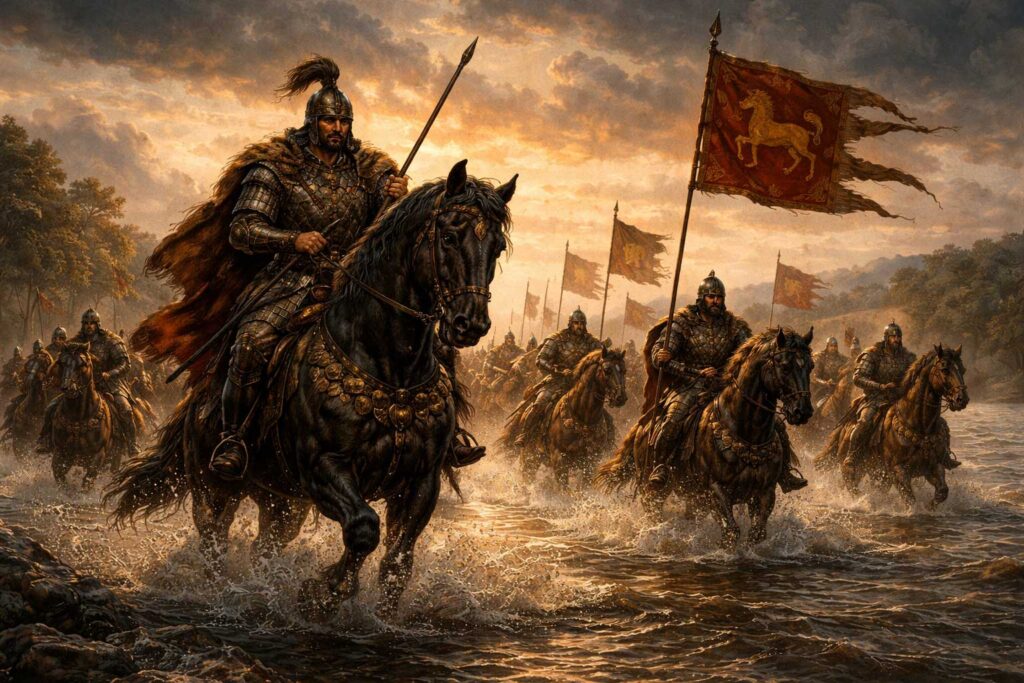
Khan Asparuh occupies a legendary place in Bulgarian history because he laid the foundations of statehood. His achievement was not limited to military victory. He established a durable political framework that allowed Bulgaria to endure through centuries of war and transformation.
Asparuh understood geography and defense. The lower Danube region provided strategic advantages, and the natural barriers of rivers, plains, and mountain approaches could be used to protect the state. At the same time, Bulgaria’s location gave it control over important routes between Central Europe, the Black Sea, and Constantinople.
Another key part of Asparuh’s success was his relationship with the Slavic tribes already living in the Balkans. Rather than trying to rule only through Bulgar tribal power, the early Bulgarian state developed as a political union in which Slavic communities played an essential role. Over time, this blending would contribute to the formation of the medieval Bulgarian people.
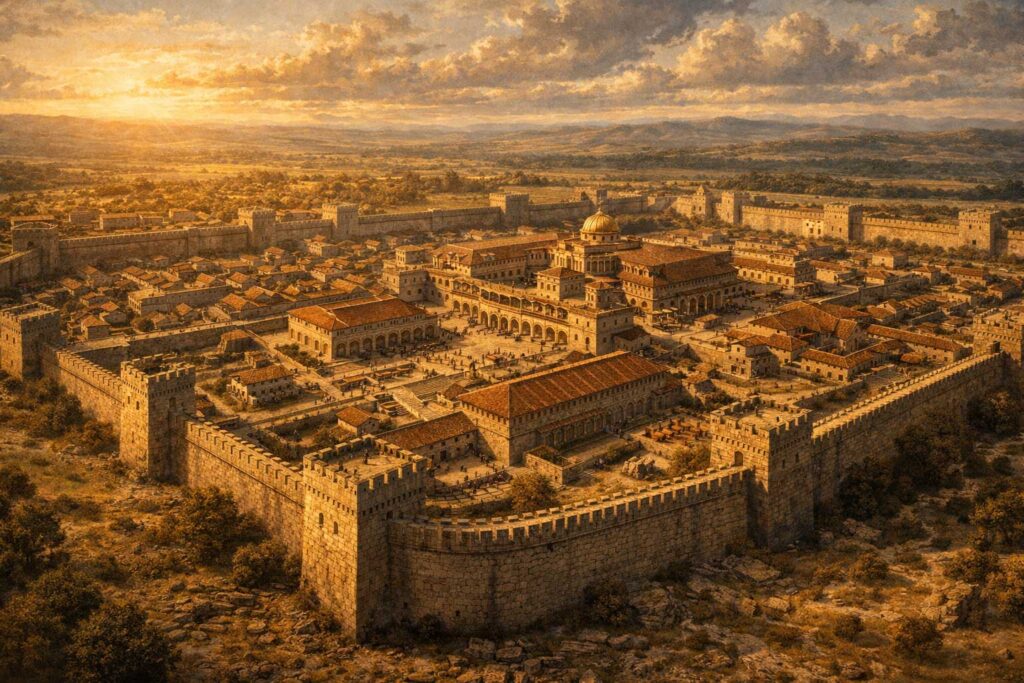
Khan Asparuh’s reign symbolized resilience, adaptation, and ambition. Without his leadership, there would have been no First Bulgarian Empire and no long tradition of Bulgarian statehood to follow.
Strengthening the State After Asparuh
The rulers who came after Asparuh faced constant challenges. Bulgaria’s existence was never guaranteed. It stood between powerful enemies, especially Byzantium, while internal cohesion still needed to be maintained. Yet instead of collapsing, the state grew stronger.
Early Bulgarian rulers continued fortifying the political and military institutions of the country. Pliska developed into a major center of power. The aristocracy, military leadership, and administrative structure became more organized. Bulgaria’s reputation as a disciplined and formidable state expanded.
Conflict with Byzantium remained a defining feature of this era. The empire in Constantinople often sought to weaken or destroy Bulgaria, while Bulgarian rulers resisted and sometimes counterattacked successfully. These struggles were not simply border disputes. They were contests over prestige, trade routes, influence over Slavic lands, and control of the Balkans.
The ability of Bulgaria to survive repeated imperial pressure shows how strong the new state had become. Over time, it evolved from a frontier power into one of the central actors in medieval European politics.
Khan Tervel and Bulgaria’s Rising Prestige
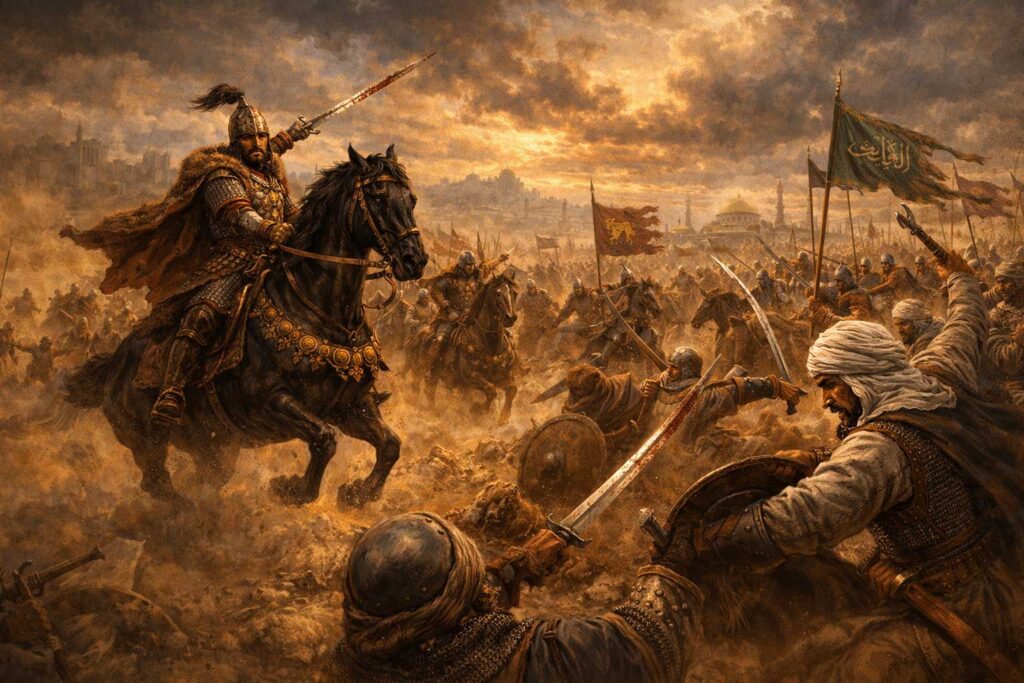
One of the earliest and most celebrated rulers after Asparuh was Khan Tervel. He played a crucial role in strengthening Bulgaria and increasing its international prestige. Tervel is especially famous for his interactions with Byzantium and his contribution to the defense of Europe during the Arab siege of Constantinople.
Tervel helped restore the Byzantine Emperor Justinian II to the throne and in return received honors and territorial concessions. This episode demonstrates that Bulgaria had already become powerful enough to influence internal Byzantine politics. Bulgaria was no longer just defending itself. It had become a force capable of shaping events in the region.
Tervel’s fame is also tied to the events of 717–718, when Arab forces besieged Constantinople. Bulgarian military support contributed significantly to the defeat of the besiegers. This has often been remembered as one of the moments when Bulgaria played a wider civilizational role in protecting Europe from external invasion.
Under Tervel, the First Bulgarian Empire gained military respect and diplomatic weight. His reign helped secure Bulgaria’s place among the major states of the era.
Expansion and Consolidation in the Eighth and Ninth Centuries
The eighth and early ninth centuries were marked by both instability and progress. Some rulers had short reigns, and Bulgaria experienced periods of internal tension. Nevertheless, the state endured and prepared for a new phase of expansion.
By the early ninth century, Bulgaria had become a major regional power. It was under rulers like Khan Krum that the empire entered a decisive era of military and political growth. Krum is one of the towering figures of early Bulgarian history, remembered for both conquest and state-building.
Krum expanded Bulgarian territory significantly and inflicted one of the most shocking defeats ever suffered by Byzantium. In 811, the Byzantine Emperor Nikephoros I invaded Bulgaria, burned Pliska, and seemed poised to crush the state. Instead, Krum organized resistance, ambushed the Byzantine army in the Balkan passes, and annihilated it. The emperor himself was killed.
This victory was monumental. It proved that Bulgaria could defeat even the might of Byzantium in open conflict. Krum’s success elevated Bulgaria’s prestige and strengthened its confidence. He also introduced legal and administrative measures that helped centralize the state and reinforce internal order.
Krum’s reign marked a turning point. Bulgaria was now a major empire in the making.
Khan Krum and the Making of a Great Power
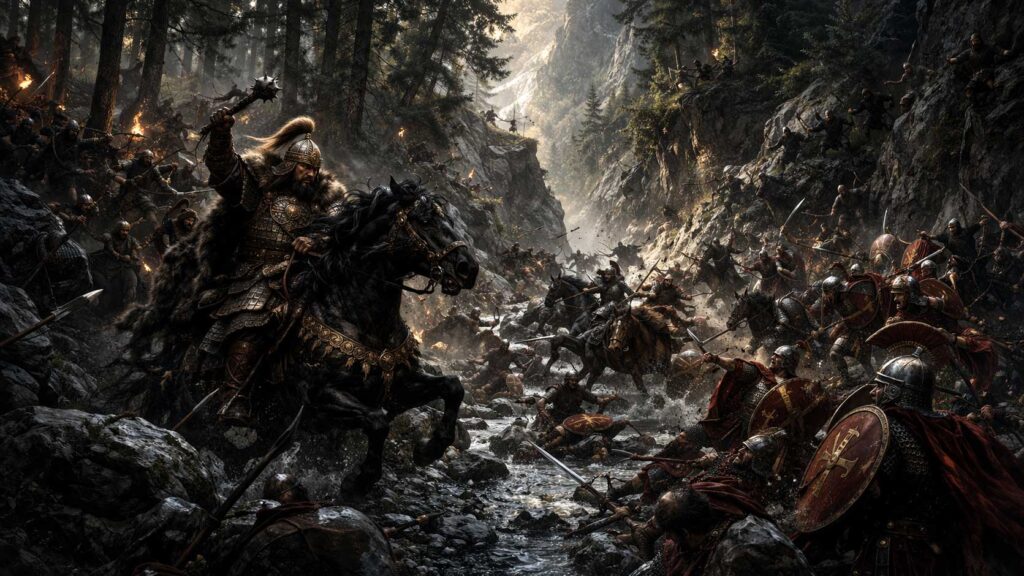
Khan Krum is often seen as the ruler who transformed Bulgaria into a dominant Balkan power. His military campaigns extended Bulgarian influence in multiple directions, while his internal reforms aimed to create a stronger and more unified state.
He is associated with the first known Bulgarian laws, which tradition describes as designed to impose discipline, reduce social disorder, and strengthen justice. Whether every detail is preserved accurately or not, the image of Krum as a ruler of both sword and law became central to Bulgarian historical memory.
Krum also recognized the need for central authority over a state that included diverse peoples and expanding territories. Bulgaria under his rule was no longer only a frontier kingdom. It was a complex, growing empire.
His confrontations with Byzantium continued even after the death of Emperor Nikephoros I. Bulgaria pressed close to Constantinople and demonstrated that the Byzantine capital itself was not beyond threat. Few rulers of the early medieval Balkans achieved such strategic impact.
Krum’s reign helped create the military and political foundations on which later rulers would build. Without him, the Golden Age of Bulgaria might never have been possible.
The Road to Christianization
As Bulgaria expanded, it faced a growing challenge common to many medieval states: how to unite a multiethnic and socially varied population under a stable and coherent framework. The old religious traditions of the Bulgars and the Slavic spiritual world were not enough to provide the kind of ideological unity required by a mature empire.
This problem became especially urgent in the ninth century. Bulgaria stood between two great Christian cultural spheres: Byzantium in the east and the Latin West in the west. Religion was not just a spiritual matter. It was linked to diplomacy, legitimacy, literacy, law, and civilization itself.
The ruler who resolved this question was Knyaz Boris I, one of the most important figures in Bulgarian history. His decision to adopt Christianity changed Bulgaria forever. It reshaped the state internally and transformed its role in Europe.
Boris I and the Christianization of Bulgaria
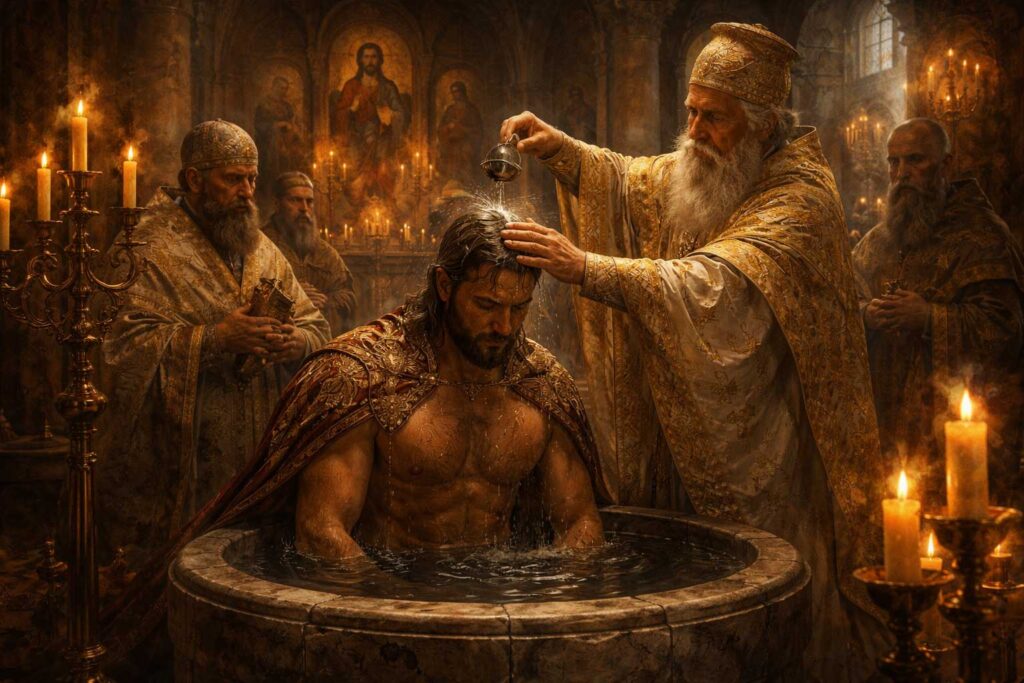
In 864, under Boris I, Bulgaria officially adopted Christianity. This was one of the most important turning points in the history of the First Bulgarian Empire. Christianization gave the state a new ideological foundation and aligned it with the dominant religious and cultural system of medieval Europe.
The conversion was politically bold. Boris had to manage resistance from parts of the old aristocracy, who were attached to traditional beliefs and old power structures. He acted decisively to ensure that the transformation would not be reversed.
Christianization had several profound effects. First, it helped unify the population under a common religion. Second, it increased Bulgaria’s prestige in international relations. Third, it opened the way for the development of a Christian literary and cultural tradition in the Bulgarian language.
Boris I also understood that true independence required more than baptism. Bulgaria needed its own ecclesiastical and cultural identity. He therefore worked toward securing an autonomous Bulgarian Church and supporting local religious life rather than allowing total domination by outside clergy and traditions.
His reign marks the bridge between early state formation and full medieval civilization.
The Mission of Cyril and Methodius and the Slavic Literary Tradition

The Golden Age of Bulgaria cannot be understood without the cultural revolution made possible by the work of Saints Cyril and Methodius and their disciples. Although Cyril and Methodius themselves worked primarily in Great Moravia, their legacy found its most enduring and powerful home in Bulgaria.
After facing opposition elsewhere, disciples such as Clement of Ohrid and Naum found support in Bulgaria under Boris I. There, the Slavic literary mission was given state backing and allowed to flourish. This was a civilizational achievement of enormous importance.
The use of Old Bulgarian, also called Old Church Slavonic in broader historical terms, gave Christianity and literacy a local linguistic expression. This meant that religion, scholarship, and state culture could develop in a language understandable to the people, rather than relying entirely on Greek.
The literary schools of Preslav and Ohrid became major centers of learning. These institutions helped spread literacy, train clergy, produce translations, and create original works. In this environment, the Cyrillic script emerged and developed as one of the great alphabets of Europe.
Bulgaria thus became the leading center of Slavic Christian literature and culture. This is one of the greatest achievements of the First Bulgarian Empire and one of Bulgaria’s most lasting contributions to world civilization.
The Rise of Simeon the Great
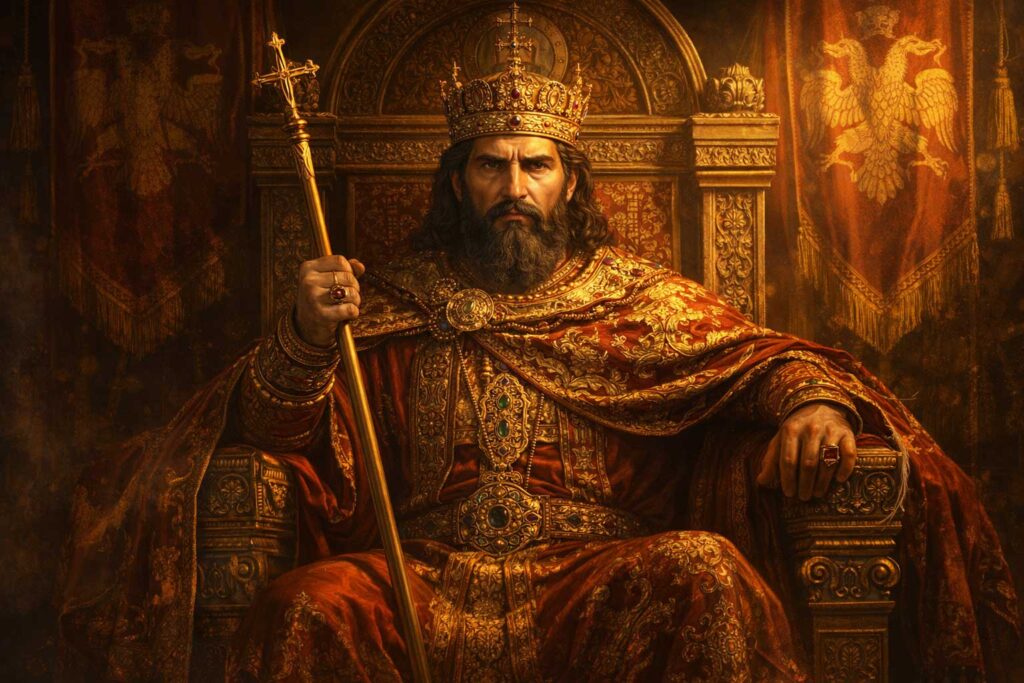
The ruler most associated with Bulgaria’s highest medieval glory is Tsar Simeon I, known as Simeon the Great, who ruled from 893 to 927. Under him, the First Bulgarian Empire reached the peak of its power, influence, and cultural brilliance.
Simeon had an unusual background for a medieval ruler. Educated in Constantinople and deeply familiar with Byzantine culture, he combined intellectual sophistication with political ambition and military determination. He understood both the strengths of Byzantium and the possibilities for Bulgaria.
When Simeon came to power, Bulgaria was already strong. But he took that strength to an entirely new level. Through successful wars, territorial expansion, and cultural patronage, he made Bulgaria one of the leading states of medieval Europe.
His reign is remembered as the Golden Age of Bulgaria, a period when the empire reached its greatest territorial scope and became a beacon of Slavic literature, theology, and art.
Bulgaria’s Golden Age Under Tsar Simeon the Great
The term Golden Age is not an exaggeration. Under Simeon, Bulgaria reached remarkable heights in politics, military affairs, literature, architecture, and spiritual culture.
Militarily, Simeon repeatedly challenged Byzantium and won major victories. He aimed not merely to defend Bulgaria, but to assert supremacy in the Balkans and rival the prestige of Constantinople itself. Bulgaria under Simeon extended across vast territories and dominated much of Southeastern Europe.
Politically, Simeon elevated Bulgaria’s status. He adopted the title of Tsar, emphasizing imperial dignity and equality with the Byzantine emperor. This symbolized Bulgaria’s extraordinary rise from a newly founded state in 681 to an empire of continental significance in just over two centuries.
Culturally, the Golden Age saw the flowering of Preslav as a literary and artistic center. Scholars, clerics, and writers produced translations, sermons, theological works, historical writings, and original literature. Bulgarian culture during this period radiated outward to other Slavic lands.
Architecturally and artistically, the era also stood out. The capital Preslav became known for its splendor, churches, palaces, and ceramics. The refinement of court culture during Simeon’s reign showed that Bulgaria was not only a military power, but also a highly developed civilization.
Major Battles and Political Successes of Simeon
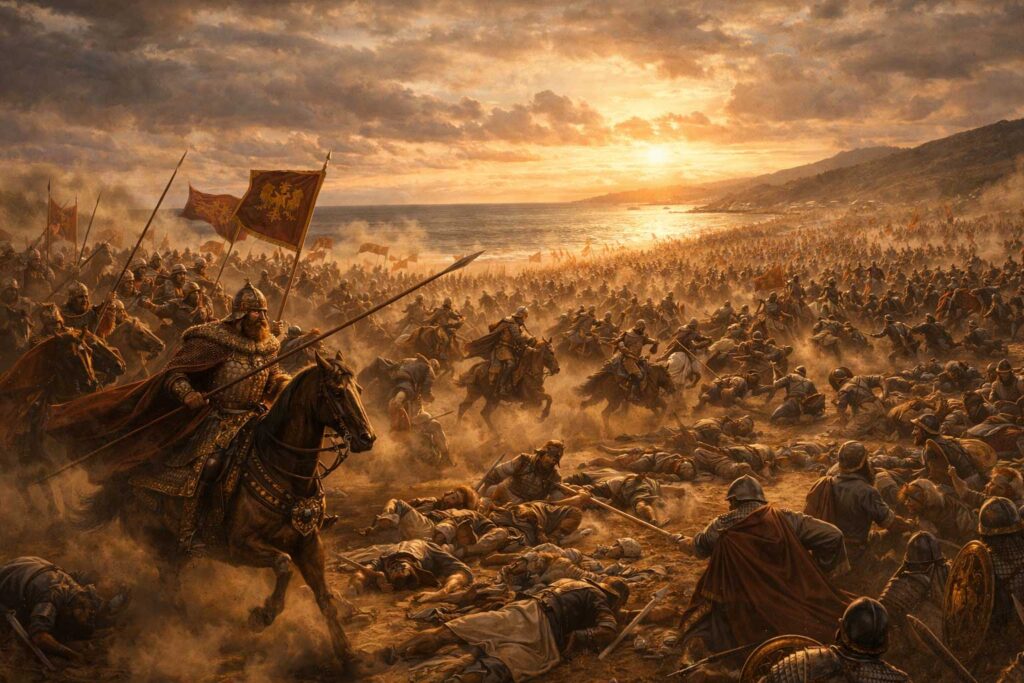
Simeon’s reign was shaped by a long struggle with Byzantium. Trade disputes, diplomatic competition, and imperial ambition repeatedly led to war. Simeon emerged as one of Byzantium’s most formidable medieval enemies.
One of his greatest victories came at the Battle of Achelous in 917, where Bulgarian forces crushed the Byzantine army in a decisive battle near the Black Sea. This victory is considered one of the greatest military triumphs in Bulgarian history. It established Bulgaria as the dominant power in the Balkans and shattered Byzantine hopes of quickly reversing Simeon’s expansion.
After Achelous, Bulgaria’s influence grew even further. Simeon pressed his advantage through diplomacy, military campaigns, and political maneuvering across the peninsula. His long-term goal appears to have been nothing less than recognition of Bulgaria as the supreme imperial force in the region.
Although he never captured Constantinople, Simeon came closer than almost any other ruler to seriously challenging Byzantine hegemony on its own terms.
Preslav, Ohrid, and the Cultural Splendor of the Empire
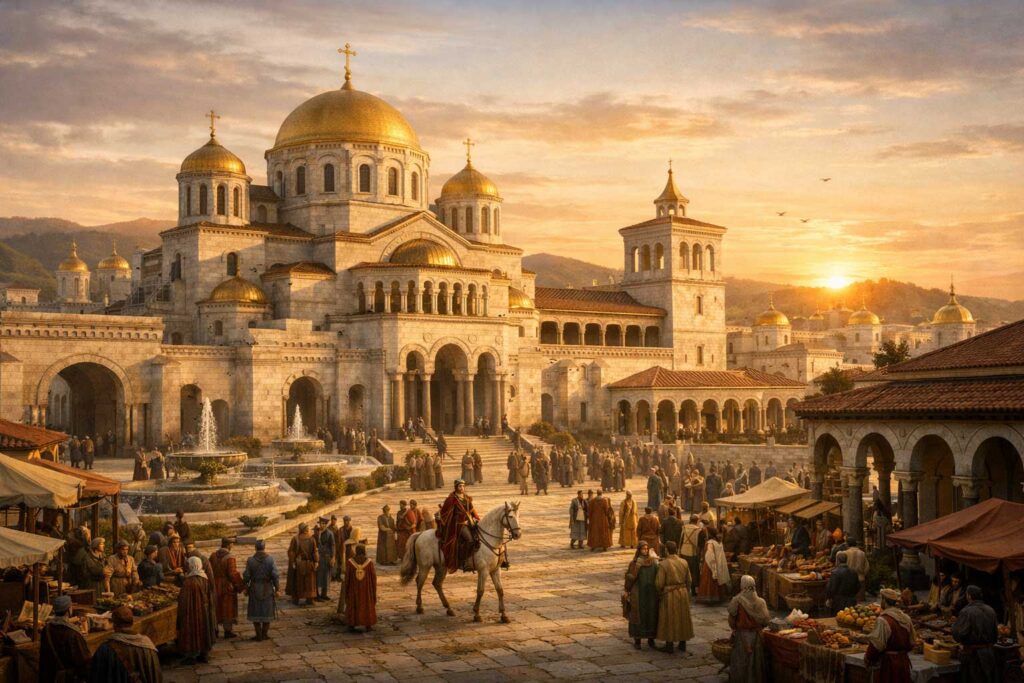
The Golden Age of the First Bulgarian Empire was not only about conquest and power. It was also about culture. Bulgaria became a center of medieval Slavic civilization, and this may be the empire’s most enduring legacy.
Preslav, the capital during much of the later empire, became a symbol of royal magnificence and literary brilliance. The Preslav Literary School produced influential texts and translations that shaped Orthodox Slavic culture for centuries. The city itself reflected confidence, sophistication, and imperial ambition.
Ohrid was equally important as a spiritual and educational center. Through the work of Clement of Ohrid and others, it became one of the key foundations of Slavic literacy and Christian teaching.
These centers helped Bulgaria create something extraordinary: a state culture that was Christian, literate, prestigious, and expressed in a Slavic language. This allowed Bulgaria to become a transmitter of civilization far beyond its political borders. The influence of Bulgarian literary culture spread to Serbia, Kievan Rus, and other Orthodox Slavic lands.
In that sense, the First Bulgarian Empire was more than a Balkan power. It was one of the great cultural engines of medieval Europe.
Decline of the First Bulgarian Empire
After reaching its peak during the Golden Age under Tsar Simeon the Great, the First Bulgarian Empire gradually entered a period of decline. While Bulgaria remained a powerful state for decades, internal divisions and continuous external pressure began to weaken its stability.
One of the major challenges was internal fragmentation. After Simeon’s death in 927, strong centralized control began to fade. Successive rulers struggled to maintain the same level of authority, and regional leaders gained more influence. This weakened the unity that had been essential to Bulgaria’s earlier success.
At the same time, the Byzantine Empire—long Bulgaria’s greatest rival—regained strength and adopted a more aggressive strategy. Instead of relying only on direct military confrontation, Byzantium used diplomacy, alliances, and political pressure to gradually isolate Bulgaria.
The most dramatic phase of this struggle came during the reign of Tsar Samuil, who attempted to restore Bulgaria’s power. Samuil led fierce resistance against Byzantine expansion and managed to preserve Bulgarian independence for a time. However, the prolonged wars exhausted the state’s resources.
A turning point came in 1014 at the Battle of Kleidion, where Byzantine forces led by Emperor Basil II defeated the Bulgarian army. According to historical accounts, thousands of captured Bulgarian soldiers were blinded—an event that deeply shocked the Bulgarian leadership and population.
After years of continued pressure, the weakened Bulgarian state could no longer resist. In 1018, the First Bulgarian Empire fell under Byzantine rule, marking the end of an era that had lasted more than three centuries.
Despite its fall, the legacy of the First Bulgarian Empire did not disappear. Its cultural, religious, and literary achievements continued to influence the Slavic world and laid the foundation for the later revival of Bulgarian statehood.
The legacy of the First Bulgarian Empire continued to shape later generations and inspired the revival of Bulgarian statehood in the medieval period. Read more in The Second Bulgarian Empire – Kings and Battles.
Why the First Bulgarian Empire Matters
The First Bulgarian Empire matters because it established Bulgaria as a permanent political, cultural, and spiritual presence in European history. It created the foundations of Bulgarian statehood, helped shape Slavic Christian civilization, and proved that a powerful empire could emerge in the Balkans and stand on equal footing with great powers.
Its rulers, from Asparuh to Simeon the Great, built more than an army and a territory. They built institutions, traditions, and a civilizational identity. The Christianization of Bulgaria and the rise of Slavic literacy were events with consequences far beyond Bulgaria itself.
The empire also showed extraordinary resilience. It faced invasions, wars, internal challenges, religious transformation, and diplomatic pressure, yet continued to grow. This ability to adapt while preserving political continuity is one reason the First Bulgarian Empire remains such a source of pride in Bulgarian memory.
When people speak of Bulgaria’s medieval greatness, they usually think first of this era. It was the age when Bulgaria rose, expanded, and shone.
The Legacy of the First Bulgarian Empire

Although the First Bulgarian Empire eventually declined and fell under Byzantine rule in 1018, its achievements were not erased. Its political traditions, literary culture, religious institutions, and historical memory survived and continued to shape later generations.
The medieval Bulgarian legacy lived on in the Second Bulgarian Empire and in the enduring prestige of rulers such as Asparuh, Krum, Boris I, and Simeon the Great. Even more importantly, the literary and spiritual influence of Bulgaria survived across the Orthodox Slavic world.
The Cyrillic tradition, the Slavic liturgy, and the concept of Bulgaria as a guardian of culture and sovereignty all have deep roots in the First Bulgarian Empire. Its Golden Age became a model of national greatness remembered long after the empire itself had disappeared.
That is why the First Bulgarian Empire is not simply an old kingdom from the past. It is one of the great pillars of Bulgarian civilization.
Conclusion
The First Bulgarian Empire was one of the most remarkable states of medieval Europe. From its founding under Khan Asparuh in 681 to its cultural and political peak under Tsar Simeon the Great, it developed into a powerful and influential empire that shaped the Balkans and the wider Slavic world.
Its story is a story of courage, leadership, adaptation, and vision. It rose through military strength, matured through state-building, transformed itself through Christianity, and reached brilliance through culture and learning. Its Golden Age remains one of the proudest chapters in Bulgarian history.
Its influence can still be seen in Bulgarian identity, culture, and historical memory. To continue exploring Bulgaria’s past, see Ottoman Rule in Bulgaria – 500 Years of History and Bulgarian Symbols and Their Meaning.
To study the First Bulgarian Empire is to understand how Bulgaria became not only a state, but a civilization.
FAQs
When was the First Bulgarian Empire founded?
The First Bulgarian Empire was founded in 681, when Byzantium recognized Bulgaria after its defeat by Khan Asparuh.
Who founded the First Bulgarian Empire?
The founder of the First Bulgarian Empire was Khan Asparuh.
What was the capital of the First Bulgarian Empire?
The first capital was Pliska, and later Preslav became a major imperial capital during the Golden Age.
Why is Tsar Simeon the Great important in Bulgarian history?
Tsar Simeon the Great led Bulgaria during its Golden Age, expanding its territory and turning it into a major cultural and political power.
What was the Golden Age of Bulgaria?
The Golden Age of Bulgaria was the period during the reign of Tsar Simeon I when Bulgaria reached its greatest power and cultural brilliance.
Why was Boris I important in Bulgarian history?
Boris I introduced Christianity to Bulgaria in 864, helping unify the state and laying the foundation for its literary and spiritual development.
What was Bulgaria’s role in Slavic culture?
Bulgaria became the leading center of Slavic literacy, literature, and Christian culture, especially through the Preslav and Ohrid literary schools.
What was the Battle of Achelous?
The Battle of Achelous in 917 was one of Bulgaria’s greatest victories, in which Tsar Simeon’s forces defeated the Byzantine army.
References
The information in this article is based on academic research, historical records, and authoritative sources, including:
- Encyclopaedia Britannica – First Bulgarian Empire overview
https://www.britannica.com/place/First-Bulgarian-Empire - World History Encyclopedia – Bulgaria in the early medieval period
https://www.worldhistory.org/Bulgaria/ - World History Encyclopedia – Khan Asparuh and the founding of Bulgaria
https://www.worldhistory.org/Asparukh/ - The Early Medieval Balkans
https://www.press.umich.edu/16884/early_medieval_balkans - Byzantium and Bulgaria 775–831
https://www.jstor.org/stable/10.2307/j.ctt1g69x6q - Bulgarian Academy of Sciences – historical publications
https://www.bas.bg/en/ - National Historical Museum
https://historymuseum.org/en/