


The history of Bulgaria stretches across millennia, representing one of Europe’s most continuous and transformative cultural narratives. Situated at a strategic crossroads between East and West, Bulgaria has absorbed influences from ancient civilizations, empires, and ideological systems while maintaining a strong and distinct identity.
What makes Bulgarian history especially compelling is not just its longevity, but its cycles of rise, fall, and revival. From prehistoric innovation to medieval dominance, and from foreign domination to modern sovereignty, Bulgaria repeatedly redefined itself.
Today, Bulgaria stands as a modern European state, but its historical layers continue to shape its culture, language, traditions, and global contributions.
Learn more about its global significance in Why Bulgaria Matters to the World.
Beyond its historical timeline, the story of Bulgaria is also a story of cultural continuity. Despite invasions, political shifts, and changing borders, the Bulgarian people preserved their language, traditions, and identity across centuries. This continuity is one of the defining features that sets Bulgaria apart from many other European nations.
Understanding Bulgaria’s history is not just about events and dates—it is about recognizing how geography, culture, and resilience shaped a nation that continues to play an important role in Europe today.
👉 This makes Bulgaria one of the most historically rich and strategically important countries in Europe.
What Is the History of Bulgaria?
The history of Bulgaria spans over 8,000 years, from prehistoric civilizations and Thracian tribes to powerful medieval empires, Ottoman rule, and modern European integration. Founded as a state in 681 AD, Bulgaria is one of the oldest countries in Europe and has played a key role in the cultural and political development of the Balkans.
Why Is Bulgaria Important in History?
The history of Bulgaria is important because it connects Eastern and Western civilizations, contributed the Cyrillic alphabet used by millions, and played a key role in shaping the political and cultural development of the Balkans and Eastern Europe.
Key Periods in Bulgarian History
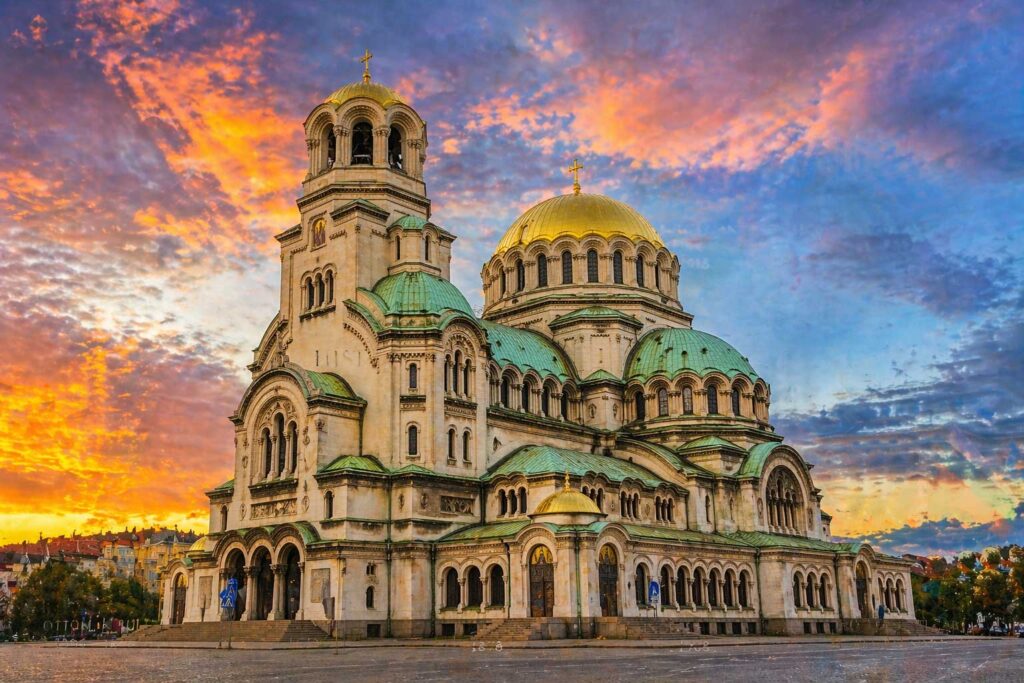
Timeline of Bulgarian history from ancient to modern
The history of Bulgaria can be divided into several major periods:
| Period | Years | Key Event |
|---|---|---|
| Prehistoric | before 1200 BC | Early civilizations and gold metallurgy |
| Thracian | 1200–45 AD | Thracian tribes and Odrysian Kingdom |
| Roman | 45–681 | Integration into Roman Empire |
| First Empire | 681–1018 | Rise of Bulgarian state |
| Second Empire | 1185–1396 | Cultural and political peak |
| Ottoman Rule | 1396–1878 | 500 years of foreign rule |
| Modern Bulgaria | 1878–present | Independence and EU membership |
Prehistoric Bulgaria: The Birthplace of European Civilization
The prehistoric period in Bulgaria reveals a region that was not peripheral, but central to early European development. Archaeological evidence shows organized communities with agriculture, trade, and symbolic culture dating back thousands of years.
Beyond survival, early inhabitants developed complex social systems, spiritual beliefs, and technological innovation. This places Bulgaria among the earliest centers of civilization on the continent.
The Varna Necropolis stands as one of the most significant discoveries in world archaeology. Its gold artifacts—over 6,000 years old—demonstrate early metallurgy and social hierarchy, making it one of the oldest examples of structured society in Europe.
Explore early innovations in Bulgarian Science and Technology History.
In addition, the Karanovo culture helped spread agriculture across Europe, further reinforcing Bulgaria’s role as a foundational region in early human development.
These early developments also suggest that the region was part of broader prehistoric trade and communication networks. Artifacts found in Bulgaria share similarities with discoveries across Southeastern Europe, indicating exchange of knowledge and goods.
As a result, prehistoric Bulgaria should not be viewed in isolation, but as a key contributor to the formation of early European civilization, influencing agricultural practices and technological progress across the continent.
The Thracians: Warriors, Kings, and Mythology
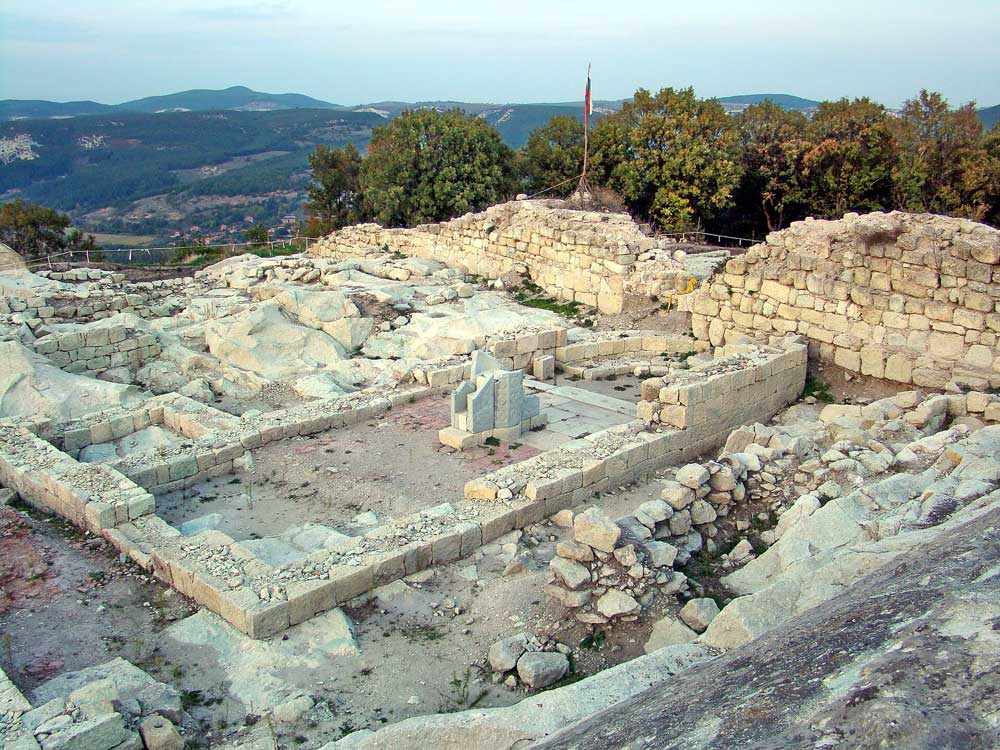
The Thracians were one of the most fascinating ancient civilizations in Europe. Organized into tribes rather than a unified empire, they shared a rich cultural identity rooted in warrior traditions, mysticism, and artistry.
Their gold craftsmanship remains among the most impressive in the ancient world, reflecting both technical mastery and spiritual symbolism.
The Odrysian Kingdom represented the peak of Thracian political organization. However, their independence was gradually eroded by larger empires, including the Achaemenid Empire and later the Roman Empire.
Although the Thracians never formed a long-lasting centralized empire, their cultural influence endured for centuries. Their burial practices, artistic motifs, and religious traditions left a lasting imprint on the region’s identity.
Even today, archaeological discoveries continue to reveal new aspects of Thracian life, highlighting their importance in understanding the early cultural foundations of Bulgaria.
Discover their lasting legacy in Bulgarian Culture and Traditions.
Roman and Byzantine Rule: Foundations of Religion and Society
Roman rule integrated Bulgarian lands into a vast imperial system, introducing urbanization, infrastructure, and legal organization. Cities like Serdica became key regional centers.
One of the most lasting transformations was the spread of Christianity, which became dominant by the 4th century and continues to shape Bulgarian identity today.
Related spiritual traditions → Saint George in Bulgaria.
Following Rome’s decline, the region became part of the Byzantine Empire, where it remained a strategic frontier.
The arrival of Slavic tribes during this period played a crucial role in forming the ethnic and linguistic foundation of modern Bulgarians.
This period also established long-term connections between Bulgaria and the wider Christian world. Religious institutions became central to community life, influencing education, art, and governance.
The legacy of Roman and Byzantine rule can still be seen in Bulgaria’s architecture, religious traditions, and cultural identity, making this era a foundational chapter in the country’s development.
First Bulgarian Empire (681–1018): Rise of a Medieval Power
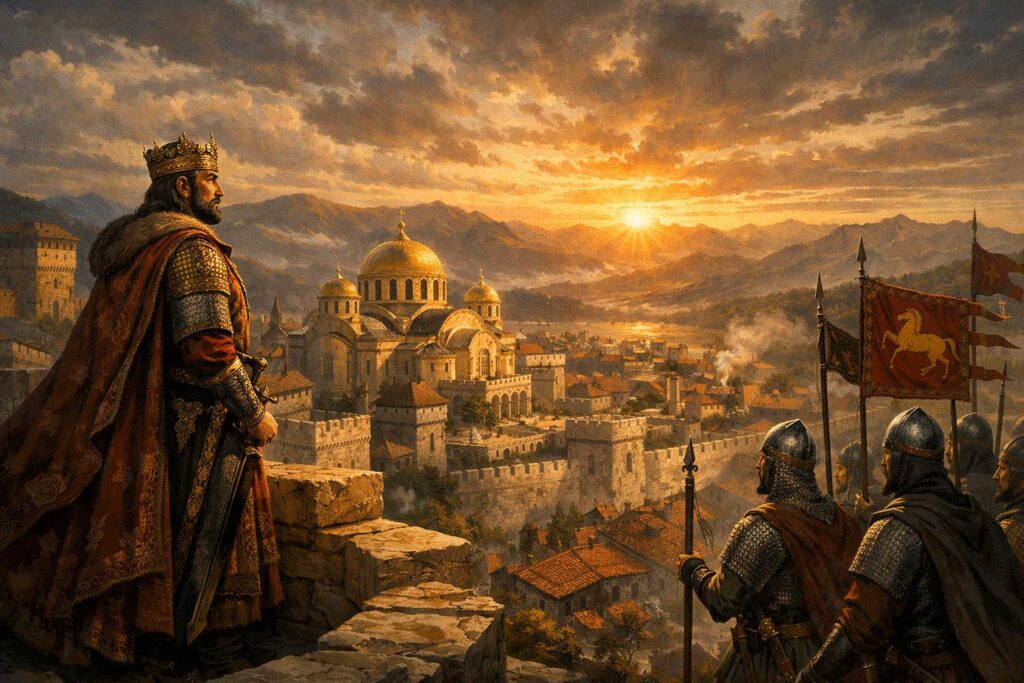
The establishment of the First Bulgarian Empire marked a turning point in European history.
Under Khan Asparukh, Bulgaria emerged as a recognized state, capable of challenging the Byzantine Empire. The unification of Bulgars and Slavs created a new political and cultural entity.
This period saw the development of strong institutions, including legal systems, military organization, and centralized governance. Bulgaria became one of the most powerful states in Southeastern Europe.
The adoption of Christianity under Boris I of Bulgaria was a defining moment. It not only aligned Bulgaria with the Christian world but also enabled the creation and spread of the Cyrillic alphabet, which remains in use today.
See its global impact → Bulgarian Contributions to Modern Technology.
During the reign of Simeon the Great, Bulgaria experienced a golden age of culture, literature, and territorial expansion, rivaling Byzantium itself.
The First Bulgarian Empire also played a crucial role in spreading Slavic literacy and culture across Eastern Europe. Through the Cyrillic script, Bulgaria became a cultural bridge, influencing nations far beyond its borders.
This cultural legacy continues today, as millions of people use the Cyrillic alphabet—a lasting testament to Bulgaria’s global historical impact.
Second Bulgarian Empire (1185–1396): Cultural Renaissance
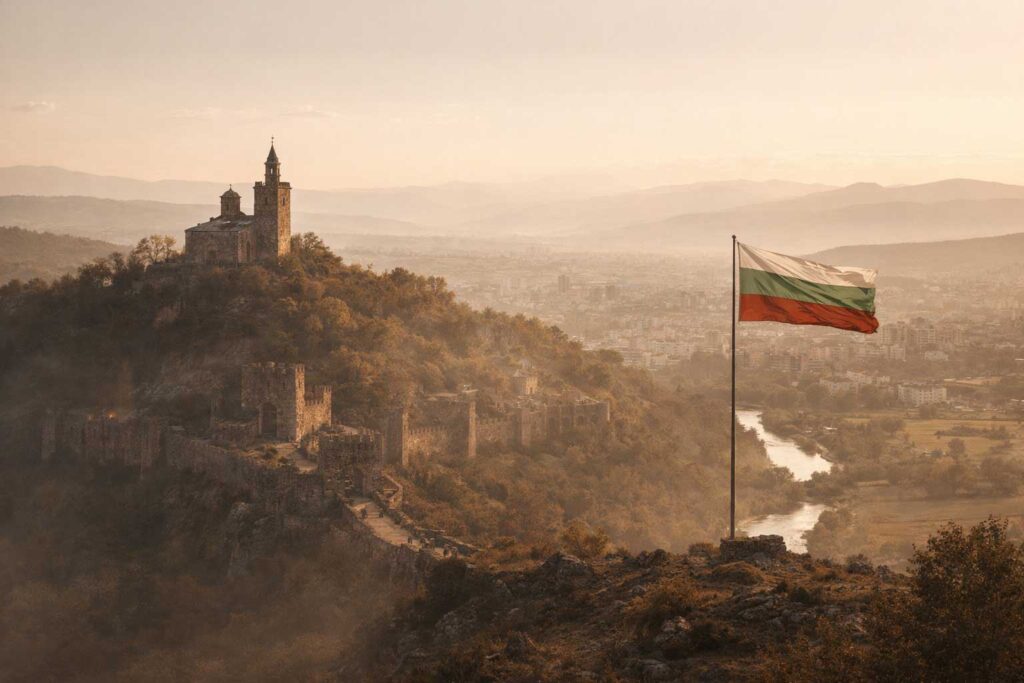
The Second Bulgarian Empire represented a revival of Bulgarian power and identity after Byzantine domination.
Founded by Ivan Asen I and Peter IV of Bulgaria, the empire quickly re-established itself as a major regional force.
Its capital, Veliko Tarnovo, became a center of culture, architecture, and political life. The empire’s influence extended across the Balkans, controlling key trade routes and fostering economic growth.
Explore historic cities → Bulgarian Cities You Must Visit.
Under Ivan Asen II, Bulgaria reached its peak, enjoying stability and prosperity. However, internal divisions and external threats gradually weakened the state.
By the late 14th century, fragmentation made Bulgaria vulnerable, paving the way for Ottoman conquest.
In addition to political and military achievements, this period saw the flourishing of Bulgarian art, literature, and architecture. Churches, manuscripts, and fortifications from this era reflect a highly developed cultural identity.
Even after its decline, the memory of the Second Bulgarian Empire remained a powerful symbol of national pride during later periods of foreign domination.
Ottoman Rule (1396–1878): Survival and Identity
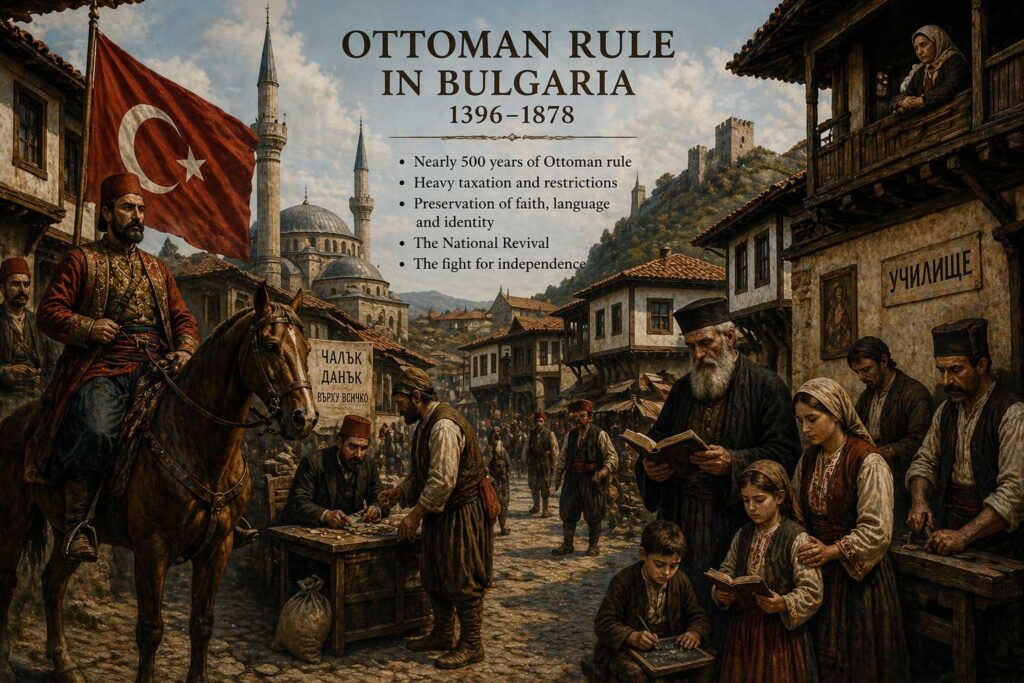
The Ottoman period was one of the most challenging chapters in Bulgarian history, lasting nearly five centuries.
During this time, Bulgarians were subjected to heavy taxation, social inequality, and restrictions on cultural expression. However, this period also demonstrated the resilience of Bulgarian identity.
Monasteries played a crucial role in preserving language, religion, and cultural traditions. They became centers of education and resistance, ensuring that Bulgarian identity survived despite foreign rule.
The 18th and 19th centuries saw the rise of the Bulgarian National Revival, influenced by Enlightenment ideas. This movement led to increased calls for independence and cultural autonomy.
The April Uprising and subsequent international reaction ultimately contributed to Bulgaria’s liberation following the Russo-Turkish War.
Read more → Bulgarian National Revival.
Despite the challenges of Ottoman rule, this period also strengthened the foundations of Bulgarian national identity. Cultural preservation became an act of resistance, and education played a key role in maintaining a sense of unity.
The Bulgarian National Revival transformed this preserved identity into a movement for independence, ultimately leading to the re-establishment of the Bulgarian state.
Modern Bulgaria (1878–Present): From Liberation to European Integration
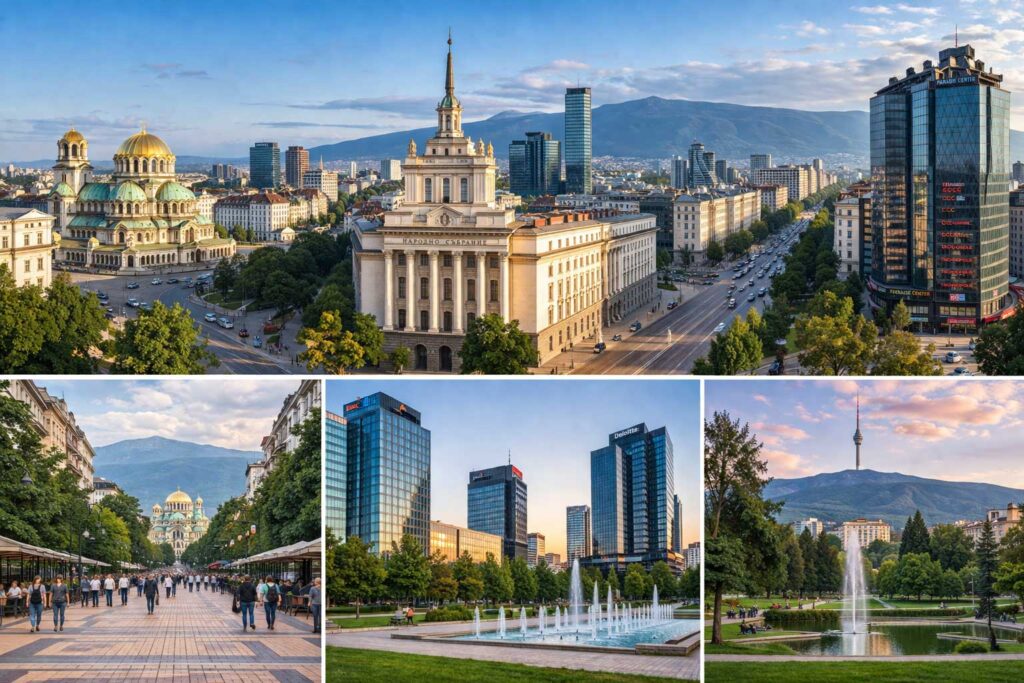
Modern Bulgaria emerged in the late 19th century as a newly liberated state following centuries of Ottoman rule, marking the beginning of a complex journey toward sovereignty, modernization, and global integration. The newly established principality faced immense challenges—political instability, economic underdevelopment, and the need to unify territories with large Bulgarian populations.
👉 To understand the roots of this transformation, see → Bulgarian National Revival.
State Building, Wars, and National Ambitions
The early decades of modern Bulgaria were defined by rapid modernization and strong territorial ambitions. Bulgarian leaders sought to reclaim lands considered historically Bulgarian, particularly in Macedonia and Thrace. This led to participation in the Balkan Wars, followed by involvement in World War I.
Although Bulgaria demonstrated military capability, the outcomes were largely unfavorable. Territorial losses and political instability shaped the nation’s strategic outlook for decades.
See economic growth later → Bulgarian Achievements by Industry.
These events left a lasting imprint on national identity, reinforcing a balance between ambition and caution in Bulgaria’s foreign policy.
Monarchy, War, and Political Transformation
During the early 20th century, Bulgaria was ruled as a monarchy under figures like Boris III of Bulgaria. The country navigated turbulent geopolitical conditions, including participation in World War II, where it aligned with Axis powers but notably avoided deporting its Jewish population.
👉 Explore scientific progress despite challenges → Bulgarian Scientists Who Changed Medicine.
The aftermath of the war brought a dramatic shift. In 1944, Bulgaria fell under Soviet influence, leading to the establishment of a communist state. This marked the end of monarchy and the beginning of a radically different political and economic system.
Bulgaria in World War II
During World War II, Bulgaria faced one of the most complex periods in its modern history. The country initially aligned with the Axis powers in 1941 under Tsar Boris III of Bulgaria, primarily to regain territories lost in previous conflicts.
Despite this alliance, Bulgaria maintained a unique position. It refused to send troops to fight on the Eastern Front against the Soviet Union and, most notably, resisted deporting its Jewish population to Nazi concentration camps. This decision saved tens of thousands of Bulgarian Jews and remains one of the most significant humanitarian acts in the country’s history.
See long-term development → Bulgarian Science and Technology History.
However, as the war turned against Germany, Bulgaria’s situation became increasingly unstable. In 1944, the Soviet Union declared war and occupied the country, leading to a rapid political shift and the establishment of a communist government.
These successive conflicts placed enormous strain on Bulgaria’s population and economy. Large portions of the population were mobilized, and repeated territorial losses created long-term instability.
At the same time, these wars shaped Bulgaria’s modern political landscape, influencing its alliances, governance systems, and national priorities throughout the 20th century.
Communist Era (1944–1989): Industrial Growth and Control
Under communist rule, Bulgaria underwent rapid industrialization, urbanization, and expansion of education and infrastructure. The state controlled economic production, political institutions, and public life, aligning closely with Soviet policies.
However, this progress came at a cost:
- Political repression
- Limited personal freedoms
- Centralized economic inefficiencies
Despite these limitations, Bulgaria developed strong capabilities in engineering, medicine, and education—sectors that continue to influence the country today.
Despite political restrictions, the communist era left a lasting legacy in areas such as education, industrial infrastructure, and scientific development. Many of Bulgaria’s modern capabilities have roots in this period.
Communist vs Modern Bulgaria (Comparison Table)
| Feature | Communist Bulgaria (1944–1989) | Modern Bulgaria (1989–Present) |
|---|---|---|
| Political System | One-party rule | Multi-party democracy |
| Economy | State-controlled | Market-based |
| Freedom | Limited | Expanded civil liberties |
| Global Position | Soviet bloc | EU & NATO member |
| Innovation | Centralized | Private sector driven |
Democratic Transition and Modern Development
The collapse of communism in 1989 marked a historic turning point. Bulgaria transitioned toward democracy, introducing:
- Multi-party elections
- Market economy reforms
- Increased global integration
👉 Explore more → Bulgarians Abroad.
The transition was not without challenges. Economic instability, inflation, and unemployment defined the early years. However, over time, reforms led to stabilization, foreign investment, and gradual economic growth.
Over time, Bulgaria has strengthened its democratic institutions and improved economic stability. Foreign investment, technological development, and EU integration have contributed to long-term growth.
Today, Bulgaria continues to adapt to global challenges while building on the foundations established during its transition period.
Modern Bulgaria’s development has also been shaped by its efforts to balance tradition with globalization. While integrating into European structures, the country has worked to preserve its cultural heritage and historical identity.
This balance between past and present is visible in Bulgaria’s cities, institutions, and cultural life, where ancient traditions coexist with modern innovation.
European Integration and Global Role
Bulgaria’s accession to NATO in 2004 and the European Union in 2007 marked its full reintegration into the European political and economic system.
These milestones brought:
- Expanded economic opportunities
- Infrastructure and regional development funding
- Increased global cooperation
👉 Related → Bulgarian Contributions to Modern Technology.
Today, Bulgaria continues to evolve as a modern European nation, balancing deep historical traditions with innovation, globalization, and technological growth.
Bulgaria in the 21st Century
Since joining the European Union in 2007, Bulgaria has undergone significant economic and social transformation. EU membership has provided access to funding, infrastructure development, and integration into the European single market.
Key sectors that have grown include:
- Information technology
- Outsourcing and services
- Tourism
- Manufacturing
Bulgaria has also emerged as a regional tech hub, with cities like Sofia becoming centers for startups and innovation.
👉 Related: Bulgarian Contributions to Modern Technology.
At the same time, challenges remain. Issues such as corruption, demographic decline, and income inequality continue to shape political discourse. Despite this, Bulgaria has maintained steady economic growth and increasing global relevance.
Modern Bulgaria Timeline
| Year | Event | Why It Matters |
|---|---|---|
| 1878 | Liberation from Ottoman rule | Beginning of modern Bulgaria |
| 1908 | Independence declared | Full sovereignty achieved |
| 1912–1913 | Balkan Wars | Territorial ambitions and losses |
| 1914–1918 | World War I | Political and economic consequences |
| 1944 | Communist takeover | Start of Soviet influence |
| 1946 | People’s Republic established | End of monarchy |
| 1989 | Fall of communism | Beginning of democracy |
| 2004 | Joined NATO | Military alliance integration |
| 2007 | Joined EU | Economic and political integration |
Why Modern Bulgaria Matters
Modern Bulgaria represents a bridge between past and future. Its journey from empire to occupation, from socialism to democracy, reflects broader European transformations.
It stands today as:
- A democratic nation
- A member of global institutions
- A country with deep historical roots and modern ambitions
Affiliate Disclosure: Some links above are affiliate links. This means we may earn a small commission at no extra cost to you.
If you’re planning to explore Bulgaria or dive deeper into its history, check out the recommended books and travel guides below—they’ll give you insights far beyond this article.
Best Books to Understand Bulgarian History
| Product | Best For | Why It’s Useful | Check Price |
|---|---|---|---|
| A Concise History of Bulgaria – R.J. Crampton | Beginners | Clear structured timeline | 👉 Check Price |
| The Bulgarians – From Pagan Times | Deep Study | Medieval focus | 👉 Check Price |
| Bulgaria: A History | General Readers | Balanced overview | 👉 Check Price |
These books are highly recommended for anyone who wants to understand Bulgarian history beyond a surface level.
Geography and Its Role in Bulgarian History
The geographic position of Bulgaria has played a crucial role in shaping its history. Located between Europe and Asia, Bulgaria has historically served as a crossroads for trade, migration, and military campaigns.
This strategic position made the region highly contested, attracting the attention of powerful empires such as Rome, Byzantium, and the Ottomans. At the same time, it facilitated cultural exchange, contributing to Bulgaria’s diverse heritage.
👉 Related: Geography of Bulgaria.
Understanding Bulgaria’s geography helps explain many of the conflicts and cultural influences that have defined its history.
Cultural Legacy and Global Influence
Bulgaria’s historical impact extends far beyond its borders. The development of the Cyrillic alphabet, contributions to Orthodox Christianity, and preservation of ancient traditions have influenced millions of people worldwide.
Bulgarian culture continues to be recognized through its music, folklore, cuisine, and traditions. These elements reflect centuries of historical development and cultural exchange.
👉 Explore more: Bulgarian Culture and Traditions.
Today, Bulgaria’s global influence continues through its diaspora, technological innovation, and participation in international organizations.
Travel Guides for Bulgaria
| Product | Best For | Highlights | Check Price |
|---|---|---|---|
| Lonely Planet Bulgaria | Travelers | Full coverage | 👉 Check Price |
| DK Eyewitness Bulgaria | Visual learners | Maps & photos | 👉 Check Price |
| Bradt Travel Guide Bulgaria | Explorers | Hidden gems | 👉 Check Price |
These guides will help you experience Bulgaria’s history not just as a reader—but as a traveler.
👉 Plan your trip →
Travel Essentials for Bulgaria
Before you go, these essentials can make your trip smoother and more enjoyable:
| Product | Why You Need It | Check Price |
|---|---|---|
| Universal Travel Adapter | Bulgaria uses EU plugs | 👉 Check Price |
| Anti-Theft Backpack | Safer travel in cities | 👉 Check Price |
| Portable Power Bank | Long travel days | 👉 Check Price |
FAQs About the History of Bulgaria
How old is Bulgaria?
Bulgaria was officially founded in 681 AD, making it one of the oldest continuously existing countries in Europe.
Who were the first people in Bulgaria?
The earliest inhabitants were prehistoric humans, followed by the Thracians, who are considered one of the main ancestors of modern Bulgarians.
What is Bulgaria best known for historically?
Bulgaria is known for its powerful medieval empires, the creation of the Cyrillic alphabet, and its role as a cultural bridge between Europe and Asia.
What were the First and Second Bulgarian Empires?
The First Bulgarian Empire (681–1018) established the Bulgarian state, while the Second Bulgarian Empire (1185–1396) marked a cultural and political revival.
How long was Bulgaria under Ottoman rule?
Bulgaria was under Ottoman rule for nearly 500 years, from 1396 to 1878.
What was the Bulgarian National Revival?
The Bulgarian National Revival was a cultural and political movement in the 18th–19th centuries that led to the restoration of Bulgarian identity and eventual independence.
What were the Balkan Wars?
The Balkan Wars were conflicts between Balkan states over territories formerly controlled by the Ottoman Empire.
Why did Bulgaria join World War I?
Bulgaria joined World War I to regain territories lost in the Balkan Wars, especially in Macedonia.
What role did Bulgaria play in World War II?
During World War II, Bulgaria allied with the Axis but avoided sending troops to the Eastern Front and saved its Jewish population from deportation.
Was Bulgaria part of the Soviet Union?
No, Bulgaria was not part of the Soviet Union, but it was a close ally and part of the Eastern Bloc during the communist era.
When did communism end in Bulgaria?
Communism ended in 1989, leading to Bulgaria’s transition to democracy.
When did Bulgaria join NATO and the EU?
Bulgaria joined NATO in 2004 and the European Union in 2007.
What is Bulgaria known for today?
Today, Bulgaria is known for its cultural heritage, technology sector, tourism, and role within the European Union.
Why is the Cyrillic alphabet important?
The Cyrillic alphabet, developed in medieval Bulgaria, is used by millions of people across Eastern Europe and Asia.
What challenges does Bulgaria face today?
Modern Bulgaria faces challenges such as population decline, economic inequality, and political reforms, while continuing to grow economically.
Is Bulgaria a developed country?
Bulgaria is considered an upper-middle-income country and a developing member of the European Union with steady economic growth.
Conclusion: A Nation Shaped by Time
The history of Bulgaria is a powerful story of resilience, transformation, and cultural continuity. From the earliest prehistoric settlements and Thracian civilizations to the rise of medieval empires and the long period of Ottoman rule, Bulgaria has repeatedly adapted to changing circumstances while preserving its identity.
Through periods of independence, conflict, and foreign domination, Bulgaria maintained its language, traditions, and cultural heritage. The creation of the Cyrillic alphabet, the strength of its religious institutions, and the determination of its people all contributed to the survival and growth of the nation across centuries.
In modern times, Bulgaria has successfully transitioned into a democratic European state, becoming a member of NATO and the European Union. This transformation reflects not only political and economic progress but also the continuation of a long historical journey toward stability and global integration.
Ultimately, Bulgaria’s history is not just about the past—it continues to shape the present and future. As the country evolves, it remains deeply connected to its rich heritage, offering a unique blend of tradition, innovation, and enduring national spirit.
References
- Wikipedia – History of Bulgaria https://en.wikipedia.org/wiki/History_of_Bulgaria
- Bulgarian Academy of Sciences https://www.bas.bg/
- Encyclopaedia Britannica – Bulgaria History https://www.britannica.com/place/Bulgaria/History
- World History Encyclopedia – Bulgaria https://www.worldhistory.org/Bulgaria/
- European Union Official Website https://europa.eu/
- R.J. Crampton (2005). A Concise History of Bulgaria. Cambridge University Press. https://www.cambridge.org/
- John V.A. Fine (1991). The Early Medieval Balkans. University of Michigan Press. https://www.press.umich.edu/
- Dimitri Obolensky (1971). The Byzantine Commonwealth. Praeger. https://www.praeger.com/
- Florin Curta (2006). Southeastern Europe in the Middle Ages. Cambridge University Press. https://www.cambridge.org/
- Mark Mazower (2000). The Balkans: A Short History. Modern Library. https://www.penguinrandomhouse.com/