


When people think about space exploration, countries like the United States and Russia usually come to mind. However, the contributions of Bulgarian Astronauts and Space Scientists are often overlooked—despite being both significant and influential.
Bulgaria is one of the relatively small number of nations that have successfully sent astronauts into space. More importantly, Bulgarian Astronauts and Space Scientists have played a key role in advancing scientific research in areas such as space biology, medicine, materials science, and food technology.
Through international collaboration—especially during the Cold War—Bulgarian researchers contributed to groundbreaking experiments conducted in orbit. Their work has had lasting effects on modern science, many of which continue to influence space exploration today.
This article explores the history, missions, discoveries, and global impact of Bulgarian Astronauts and Space Scientists, highlighting how a small country made a lasting mark on humanity’s journey into space.
The First Bulgarian Astronaut
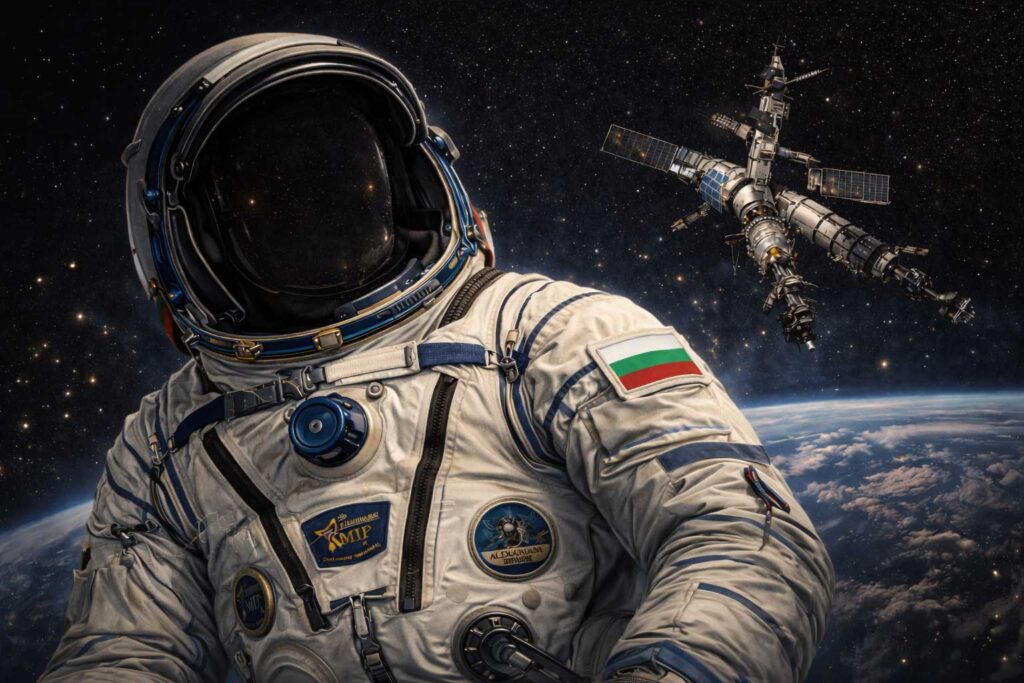
The story of Bulgarian Astronauts and Space Scientists begins with Georgi Ivanov, the first Bulgarian to travel into space.
In 1979, Ivanov was selected to participate in a mission under the Interkosmos program—a collaborative initiative that allowed countries outside the Soviet Union to contribute to space exploration.
Ivanov launched aboard the Soyuz 33 spacecraft on April 10, 1979. The mission aimed to dock with the Salyut 6 space station, where scientific experiments were planned.
However, a technical malfunction in the spacecraft’s engine prevented docking. Despite this challenge, the mission successfully returned to Earth and demonstrated Bulgaria’s capability to participate in human spaceflight.
Ivanov’s mission marked a historic milestone. He became a national hero and a symbol of Bulgaria’s entry into the space age. His journey also paved the way for future contributions by Bulgarian Astronauts and Space Scientists, proving that even smaller nations could take part in global scientific achievements.
The Second Bulgarian Cosmonaut
Nearly a decade after Ivanov’s mission, Bulgaria returned to space with its second astronaut, Aleksandar Aleksandrov.
In 1988, Aleksandrov flew aboard Soyuz TM-5 and successfully docked with the Mir space station. This mission represented a major success for Bulgarian Astronauts and Space Scientists, as it allowed for extensive scientific research to be conducted in orbit.
During his time in space, Aleksandrov carried out numerous experiments developed by Bulgarian researchers. These experiments focused on:
- Human physiology in microgravity
- Biological processes in space environments
- Materials science and chemical reactions
- Space medicine and adaptation
The results provided valuable insights into how living organisms and physical systems behave in space. This mission strengthened Bulgaria’s reputation as a meaningful contributor to international space science.
Bulgaria’s Role in the Interkosmos Program
A key reason for the success of Bulgarian Astronauts and Space Scientists was Bulgaria’s participation in the Interkosmos program.
The Interkosmos program was established by the Soviet Union to promote cooperation in space exploration among allied countries. Instead of focusing on launching rockets or building spacecraft, participating countries specialized in scientific research and technological development.
Bulgaria quickly became one of the most active contributors in the program. Bulgarian scientists and engineers developed experiments, instruments, and technologies that were used aboard space missions and stations.
Through Interkosmos, Bulgaria was able to:
- Send astronauts into space
- Conduct dozens of scientific experiments
- Develop advanced research equipment
- Collaborate with international scientists
This cooperation allowed Bulgarian Astronauts and Space Scientists to gain valuable experience and recognition on the global stage.
Key Contributions of Bulgarian Space Scientists

While astronauts often receive the most attention, the true strength of Bulgaria’s space program lies in the work of its scientists. Bulgarian Astronauts and Space Scientists made significant contributions across several important fields.
Space Biology
Bulgarian researchers conducted experiments to understand how living organisms behave in space. These studies included:
- Growth of plants in microgravity
- Behavior of microorganisms
- Cellular adaptation to space conditions
The findings helped scientists understand how life can survive beyond Earth—an essential step for long-term space missions.
Space Medicine
Space medicine became one of Bulgaria’s strongest areas of expertise. Scientists studied how the human body reacts to zero gravity and other space conditions.
Key research areas included:
- Cardiovascular changes in space
- Muscle and bone loss
- Effects of prolonged weightlessness
- Psychological adaptation
These studies contributed to modern astronaut training and health monitoring systems.
Materials Science
Microgravity offers a unique environment for studying materials. Bulgarian experiments focused on:
- Crystal formation without gravity
- Behavior of metals and alloys
- Chemical reactions in space
These insights have applications not only in space exploration but also in industrial and technological development on Earth.
Space Instrumentation
Bulgarian engineers developed specialized instruments used during space missions. These devices measured:
- Cosmic radiation
- Environmental conditions
- Solar activity
Such instruments were critical for both scientific research and astronaut safety.
Microgravity Research
One of the most valuable contributions of Bulgarian Astronauts and Space Scientists was the study of microgravity.
By removing the effects of gravity, scientists were able to observe fundamental processes in new ways. This research improved understanding in physics, biology, and chemistry.
👉 These contributions positioned Bulgarian Astronauts and Space Scientists as valuable partners in international research programs.
Bulgarian Space Food Technology and Global Impact

One of the most practical and widely recognized contributions of Bulgarian Astronauts and Space Scientists is in space food technology.
Bulgarian researchers developed innovative methods for creating food suitable for space missions. These meals were designed to be:
- Freeze-dried for long shelf life
- Lightweight and compact
- Nutritionally balanced
- Easy to consume in microgravity
These innovations solved critical challenges for long-duration missions.
The impact of Bulgarian space food research extends far beyond space exploration. Today, similar technologies are used in:
- Military rations
- Emergency food supplies
- Outdoor and survival products
- Commercial food production
This makes Bulgaria a pioneer in the development of modern food preservation techniques.
The Role of the Bulgarian Academy of Sciences
The Bulgarian Academy of Sciences played a central role in advancing the work of Bulgarian Astronauts and Space Scientists.
As the country’s leading scientific institution, it coordinated research efforts and collaborated with international partners.
Its responsibilities included:
- Designing space experiments
- Developing scientific equipment
- Managing research teams
- Supporting international cooperation
The Academy ensured that Bulgaria’s contributions to space exploration were both meaningful and scientifically valuable.
Modern Contributions of Bulgarian Astronauts and Space Scientists
Even today, Bulgarian Astronauts and Space Scientists continue to contribute to global space research.
Modern areas of involvement include:
- Satellite development and operations
- Data analysis from space missions
- Aerospace engineering
- Astrophysics research
Bulgaria also collaborates with organizations such as the European Space Agency, further strengthening its role in modern space science.
Satellite Technology and Innovation
Satellite technology is one of the key areas where Bulgarian Astronauts and Space Scientists continue to make an impact.
Their work supports:
- Earth observation and climate monitoring
- Telecommunications systems
- Navigation technologies
- Environmental data analysis
These technologies are essential for both scientific research and everyday life, demonstrating the ongoing importance of Bulgaria’s contributions.
The Future of Bulgarian Astronauts and Space Scientists

The future looks promising for Bulgarian Astronauts and Space Scientists.
As space exploration evolves, new opportunities are emerging in:
- Private space companies
- Small satellite (CubeSat) missions
- Artificial intelligence in space research
- International collaboration
Young Bulgarian scientists are entering the field with new skills and technologies, ensuring that the country remains part of the global space exploration effort.
Legacy and Global Impact
The legacy of Bulgarian Astronauts and Space Scientists is both impressive and inspiring.
Despite limited resources, Bulgaria has:
- Sent astronauts into space
- Conducted significant scientific research
- Developed technologies used worldwide
These achievements demonstrate that innovation is not limited by size or geography. Bulgaria’s contributions continue to influence modern science and inspire future generations.
Quick Facts About Bulgarian Astronauts and Space Scientists
- Modern involvement: Satellite research and ESA collaboration
- First astronaut: Georgi Ivanov (1979)
- Second astronaut: Aleksandar Aleksandrov (1988)
- Main program: Interkosmos program
- Key research areas: Biology, medicine, materials science
- Major innovation: Space food technology
International Recognition and Achievements
The contributions of Bulgarian Astronauts and Space Scientists have earned recognition within the global scientific community, particularly through their participation in international research programs and collaborative missions.
Through involvement in the Interkosmos program, Bulgarian researchers gained access to orbital laboratories and space stations, where their experiments were integrated into broader scientific missions.
Bulgarian-developed research modules and instruments were successfully deployed aboard stations such as Salyut 6 and Mir. These implementations demonstrated that Bulgarian Astronauts and Space Scientists were capable of producing reliable, high-quality scientific work at an international level.
In the scientific community, data from Bulgarian experiments has contributed to peer-reviewed research in areas such as:
- Microgravity adaptation in humans
- Cellular and biological responses in space
- Material behavior under zero-gravity conditions
These contributions have been referenced in broader studies on space medicine and long-duration missions, highlighting Bulgaria’s role in advancing space science knowledge.
Additionally, Bulgarian advancements in food preservation for space missions attracted global attention. The development of compact, nutrient-dense food systems influenced both aerospace programs and commercial industries on Earth.
Today, recognition continues through Bulgaria’s participation in international collaborations, including work with the European Space Agency and other research institutions.ency. Their ongoing involvement ensures that Bulgaria remains part of the global scientific effort to explore and understand space.
👉 This ongoing involvement confirms that Bulgarian Astronauts and Space Scientists remain part of the global effort to explore and understand space.
FAQs About Bulgarian Astronauts and Space Scientists
How many Bulgarian astronauts have gone to space?
Two Bulgarian astronauts have traveled to space:
- Georgi Ivanov (1979)
- Alexander Alexandrov (1988)
What was Bulgaria’s role in the space program?
Bulgaria participated in the Interkosmos program and contributed scientific experiments, space food technology, and research in biology and medicine.
Are Bulgarian scientists still involved in space research?
Yes. Bulgarian scientists continue to participate in international research related to satellites, astrophysics, and aerospace engineering.
What are Bulgarian Astronauts and Space Scientists known for?
They are known for contributions to human spaceflight, scientific experiments in space, and innovations such as space food technology.
When did Bulgaria first participate in space missions?
Bulgaria first participated in space missions in 1979 through the Interkosmos program.
What experiments did Bulgarian astronauts perform?
They conducted experiments in biology, medicine, materials science, and space technology.
Did Bulgaria invent space food?
Bulgaria did not invent space food entirely, but Bulgarian scientists made major improvements in freeze-dried and nutrient-optimized meals.
Is Bulgaria still active in space science today?
Yes, Bulgarian scientists continue to collaborate internationally and contribute to modern space research and satellite technology.
Why is Bulgaria important in space exploration history?
Because it is one of the few countries to send astronauts into space and contributed valuable scientific research despite limited resources.
What makes Bulgarian Astronauts and Space Scientists unique?
Their focus on scientific specialization allowed them to contribute significantly despite limited resources.
Did Bulgarian scientists work on space stations?
Yes, their experiments were conducted aboard stations like Salyut 6 and Mir.
What industries benefited from Bulgarian space research?
Food technology, medicine, materials science, and aerospace engineering.
Are there future Bulgarian astronauts planned?
While none are officially confirmed yet, Bulgaria continues to participate in international space programs.
Conclusion
Although Bulgaria is not widely known as a space superpower, the achievements of Bulgarian Astronauts and Space Scientists tell a different story.
Through collaboration, innovation, and scientific dedication, Bulgaria has made meaningful contributions to humanity’s exploration of space. From astronaut missions to groundbreaking research, its legacy continues to shape the future of science and technology.
As space exploration enters a new era, the work of Bulgarian Astronauts and Space Scientists remains an important part of the global journey beyond Earth.