


Bulgarian Technology Used in Space Missions represents one of the most fascinating yet often overlooked chapters in the history of space exploration. Although Bulgaria is not widely known as a major spacefaring nation, the country made meaningful contributions to space science during the late 20th century. Through international cooperation and scientific collaboration, Bulgarian researchers developed technologies and experiments that were carried aboard spacecraft and orbital stations.
During the Cold War era, Bulgarian scientists worked closely with international partners through the Interkosmos program, an initiative that allowed countries to participate in space research alongside Soviet missions. Through this collaboration, Bulgarian engineers and researchers designed innovative technologies for use in microgravity environments.
These contributions included space food systems, biological research equipment, medical monitoring technologies, and materials science experiments. Many of these developments helped scientists better understand how humans and living organisms adapt to space.
In this article, we explore the history of Bulgarian technology used in space missions, the scientists behind these innovations, and the lasting impact these contributions have had on modern space research.
What Bulgarian Technology Was Used in Space Missions?
The Interkosmos Collaboration
Bulgaria’s involvement in space technology began through participation in the Interkosmos initiative, a multinational program created to promote cooperation in space research.
The Interkosmos program allowed scientists from allied countries to contribute experiments, equipment, and technological systems to space missions. This collaboration opened the door for Bulgarian scientists to participate in real spaceflight research.
Through this program, Bulgarian researchers developed several technologies used aboard spacecraft and orbital stations. These missions provided valuable opportunities to test scientific equipment in the unique environment of space.
The collaboration also strengthened Bulgaria’s scientific capabilities and helped establish the country as an important contributor to international space research.
Bulgarian Space Food Technologies
One of the most remarkable examples of Bulgarian technology used in space missions was the development of advanced space food systems.
Astronaut nutrition is a critical component of long-term spaceflight. Food must be lightweight, durable, and nutritionally balanced while also remaining safe for consumption during extended missions.
Bulgarian researchers created specialized food products designed for astronauts, including:
- Freeze-dried meals
- Nutrient-rich food tubes
- Long-term preservation food systems
- Compact food packaging technologies
These foods were designed to meet several important requirements. They needed to:
- Remain stable in extreme conditions
- Retain nutritional value during long missions
- Require minimal storage space aboard spacecraft
- Be easy for astronauts to consume in microgravity
The research carried out by Bulgarian scientists helped improve food preservation techniques that are still used today in astronaut meals, survival food supplies, and emergency rations.
These innovations demonstrate how Bulgarian technology used in space missions contributed to the development of practical systems essential for human spaceflight.

Biological Research Equipment
Another important area of Bulgarian technology used in space missions involved the development of biological experiment systems.
Scientists were particularly interested in studying how living organisms behave in microgravity. The absence of gravity can significantly affect biological processes, making space an ideal laboratory for studying life sciences.
Bulgarian researchers designed specialized equipment to support biological experiments in orbit.
These experiments focused on:
- Plant growth in space environments
- Microbial activity in microgravity
- Cellular changes during spaceflight
- Adaptation of living organisms to space conditions
The results of these studies helped scientists better understand how biological systems function outside Earth’s gravitational environment.
This knowledge is essential for future missions that involve long-term human habitation in space, such as space stations, lunar bases, and potential missions to Mars
Space Medicine Technologies
Space medicine is another field where Bulgarian technology used in space missions made an important contribution.
Human spaceflight presents numerous physiological challenges. Microgravity can affect the human body in several ways, including changes in circulation, bone density, and muscle strength.
To monitor astronaut health, Bulgarian researchers developed technologies designed to track physiological changes during space missions.
These systems were capable of measuring:
- Heart rate
- Blood pressure
- Cardiovascular activity
- Physiological responses to microgravity
These medical monitoring systems helped scientists gather valuable data about how the human body responds to spaceflight.
Understanding these changes is critical for long-duration missions such as those planned for future journeys to the Moon, Mars, and deep space environments.
Materials Science Experiments
Another important area where Bulgarian technology used in space missions made a significant contribution was materials science research. Studying materials in space provides scientists with unique opportunities to observe physical processes that behave differently than they do on Earth.
In microgravity environments, gravity no longer interferes with the natural movement of atoms and molecules. This allows researchers to observe how materials form and solidify under conditions that cannot be easily reproduced on Earth.
Bulgarian scientists developed specialized experiments designed to investigate several important processes, including:
- Crystal formation in microgravity
- Material solidification processes
- Atomic-level structure development
- Advanced material behavior in space
By conducting these experiments in orbit, researchers were able to gain deeper insights into how crystals grow and how materials organize themselves at the microscopic level when gravity is removed from the equation.
The knowledge gained from these studies has important applications in several industries, including:
- Semiconductor manufacturing
- Advanced materials engineering
- Industrial crystallization processes
- Nanotechnology research
These findings demonstrate how Bulgarian technology used in space missions contributed to important scientific advancements. The research not only improved our understanding of material behavior in space but also helped develop technologies and manufacturing processes that continue to benefit industries on Earth.n technology used in space missions contributed to important scientific advancements that benefit industries on Earth.
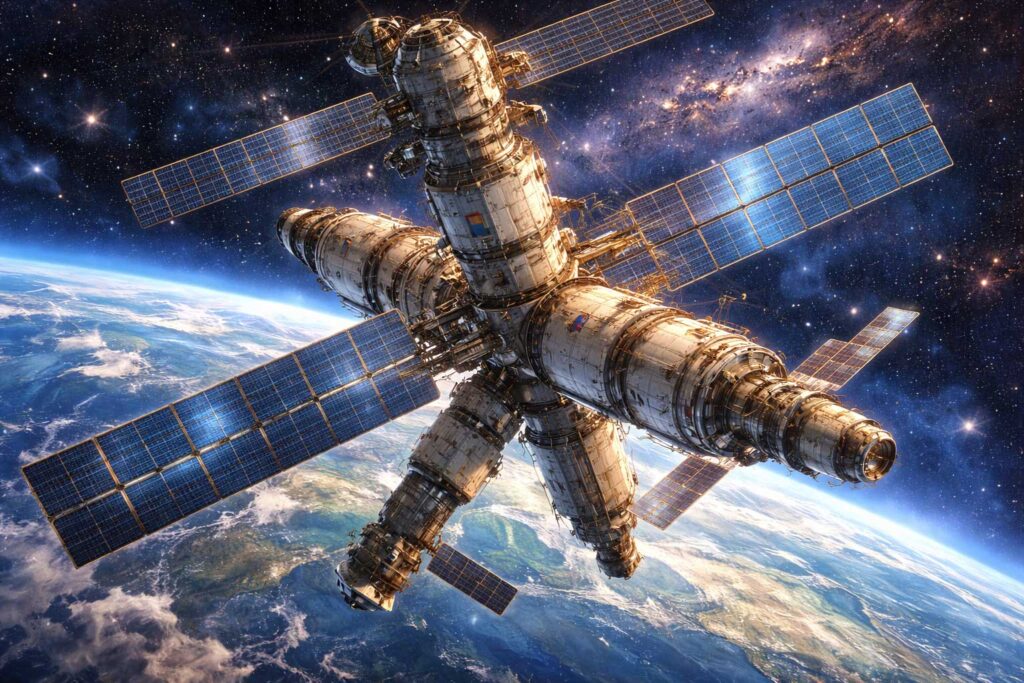
Bulgarian Experiments on the Mir Space Station
conducted aboard the Mir space station. This orbital laboratory served as an important center for international scientific cooperation and allowed researchers from multiple countries to conduct experiments in the unique environment of space.
In 1988, Bulgarian cosmonaut Alexander Alexandrov traveled to space aboard the Soyuz TM-5 mission as part of the Interkosmos collaboration. During this mission, Alexandrov carried Bulgarian-developed scientific equipment into orbit and conducted several experiments designed by Bulgarian researchers.
The experiments focused on a variety of scientific fields, including:
- Biological systems in microgravity, studying how living organisms adapt to space conditions
- Human physiology during spaceflight, examining how the human body responds to long periods in orbit
- Materials science and crystal formation, exploring how materials develop without the influence of gravity
- Microbial activity in space environments, analyzing how microorganisms behave in microgravity
These experiments generated valuable scientific data that contributed to international space research and improved understanding of biological and physical processes in space. The results helped scientists develop better technologies for long-duration missions and future space exploration.
The Soyuz TM-5 mission and the experiments conducted aboard Mir demonstrated Bulgaria’s ability to design and implement sophisticated scientific equipment for use in space. This achievement remains an important chapter in the story of Bulgarian technology used in space missions and highlights the country’s meaningful contribution to global space science.
Bulgarian Research Institutions Behind the Technology
The development of Bulgarian technology used in space missions was made possible through the work of several research institutions in Bulgaria.
One of the most important organizations involved in these efforts was the Bulgarian Academy of Sciences.
Scientists at the academy collaborated with international partners to design experiments suitable for use aboard spacecraft and space stations.
Other Bulgarian universities and research institutes also participated in the development of space-related technologies.
These institutions helped train generations of engineers and scientists who contributed to international scientific research.
Bulgaria’s Legacy in Space Technology
Although Bulgaria does not currently operate its own national human spaceflight program, the achievements made during the Interkosmos era remain an important part of the country’s scientific legacy. The research and innovations developed during this period demonstrated the significant impact of Bulgarian technology used in space missions.
Through collaboration with international partners, Bulgarian scientists were able to design and implement experiments that contributed valuable data to global space research. Their work in areas such as space food systems, biological experiments, medical monitoring technologies, and materials science helped expand knowledge about how humans and materials behave in microgravity environments.
These accomplishments showed that even smaller countries can make meaningful contributions to space exploration when they participate in international scientific cooperation. Bulgarian researchers proved that innovation and expertise are not limited to nations with large space programs.
Today, the legacy of Bulgarian technology used in space missions continues to inspire a new generation of scientists and engineers. Bulgarian researchers are now involved in fields such as aerospace engineering, astrophysics, satellite technologies, and remote sensing systems, contributing to modern international space research initiatives.
These achievements remain an important chapter in Bulgaria’s scientific heritage and highlight the country’s role in humanity’s ongoing exploration of space.

Modern Bulgarian Contributions to Space Research
Although Bulgaria’s most visible space achievements occurred during the Interkosmos era, Bulgarian technology used in space missions continues to influence modern scientific research. Today, Bulgarian scientists, engineers, and research institutions remain active in several areas connected to space exploration and aerospace technology.
Modern Bulgarian researchers contribute to international projects focused on understanding space, developing new technologies, and improving satellite systems used for communication and Earth observation. Through collaborations with universities, research centers, and international space organizations, Bulgarian specialists continue to play a role in expanding scientific knowledge beyond Earth.
Several important fields highlight modern Bulgarian contributions to space research, including:
- Satellite technology development, used for communication, navigation, and Earth monitoring
- Astrophysics research, studying cosmic phenomena such as stars, galaxies, and black holes
- Aerospace engineering, focusing on advanced spacecraft systems and technologies
- Remote sensing systems, which collect data about Earth’s atmosphere, climate, and environment
Bulgarian scientists also participate in international research programs and European scientific collaborations, contributing expertise in physics, engineering, and space science.
Universities and research institutions in Bulgaria continue to educate new generations of scientists who pursue careers in aerospace technology and related scientific disciplines. Many Bulgarian researchers now work in global laboratories and research organizations, helping develop technologies that support modern space missions.
These ongoing efforts demonstrate that the legacy of Bulgarian technology used in space missions continues today. By contributing knowledge, research, and innovation, Bulgarian scientists remain part of the international scientific community working to explore and understand the universe.
Why Bulgarian Space Technology Matters
The story of Bulgarian technology used in space missions highlights the importance of international scientific cooperation in advancing space exploration. Space research is one of humanity’s most complex and ambitious scientific endeavors, requiring knowledge and expertise from scientists, engineers, and researchers around the world.
Although Bulgaria is not traditionally viewed as a major spacefaring nation, Bulgarian scientists made meaningful contributions through international collaborations such as the Interkosmos program. Their work helped expand scientific understanding of how humans, biological systems, and materials behave in the unique environment of space.
Bulgarian researchers contributed valuable knowledge in several important areas, including:
- Space nutrition, through the development of specialized astronaut food systems
- Biological research, studying how plants and microorganisms behave in microgravity
- Medical monitoring technologies, designed to track astronaut health during space missions
- Materials science experiments, exploring how crystals and advanced materials form in the absence of gravity
These innovations helped scientists better understand the challenges of living and working in space. The knowledge gained from these experiments continues to influence modern research related to long-duration space missions, astronaut health, and advanced materials development.
The history of Bulgarian technology used in space missions demonstrates that even smaller countries can make meaningful contributions to global scientific progress. Through collaboration and innovation, Bulgarian researchers helped expand humanity’s understanding of life beyond Earth while supporting technological advancements that benefit industries here on our planet.rstanding of life in space and supported scientific progress that continues to benefit both space exploration and industries on Earth.
Frequently Asked Questions
Did Bulgaria develop technology used in space missions?
Yes. Bulgarian scientists created experiments, biological research equipment, space food technologies, and medical monitoring systems used during Interkosmos missions.
Which Bulgarian astronaut carried scientific equipment into space?
Bulgarian cosmonaut Alexander Alexandrov carried Bulgarian experiments aboard the Soyuz TM-5 mission to the Mir space station in 1988.
What was Bulgaria’s biggest space technology contribution?
One of the most notable contributions was the development of specialized space food systems and scientific experiments used aboard space missions.
Did Bulgaria participate in the Mir space station program?
Yes. Bulgarian scientists contributed experiments that were conducted aboard the Mir space station during the Interkosmos collaboration.
Conclusion
The story of Bulgarian technology used in space missions demonstrates how international scientific collaboration allows researchers from many countries to participate in humanity’s exploration of space.
Through the development of experiments, medical monitoring systems, biological research equipment, and advanced food technologies, Bulgarian scientists played a meaningful role in expanding scientific knowledge beyond Earth.
Although these contributions are not always widely recognized, they remain an important part of Bulgaria’s scientific heritage and highlight the country’s role in global technological progress.
As space exploration continues to evolve, the legacy of Bulgarian technology used in space missions serves as a reminder that innovation and discovery can come from nations of every size.