


Looking for the most surprising facts about Bulgaria? This guide highlights 25 lesser-known insights about the country—from ancient civilizations and cultural traditions to scientific achievements and natural wonders.
Bulgaria may not always be in the global spotlight, but it has played a surprisingly important role in shaping European and world history. Located in Southeastern Europe on the Balkan Peninsula, it is one of the oldest countries on the continent and has preserved its identity for more than 1,300 years.
👉 Want a complete overview? Explore our full guide: 50 Bulgarian Facts That Will Blow Your Mind
These surprising facts about Bulgaria reveal a nation where ancient heritage and modern influence exist side by side. Whether you’re planning a trip, researching, or just curious, this quick guide will help you discover something new in just minutes.
Bulgaria is one of the oldest countries in Europe and has never changed its name.
Here are most surprising facts about Bulgaria that most people don’t know.
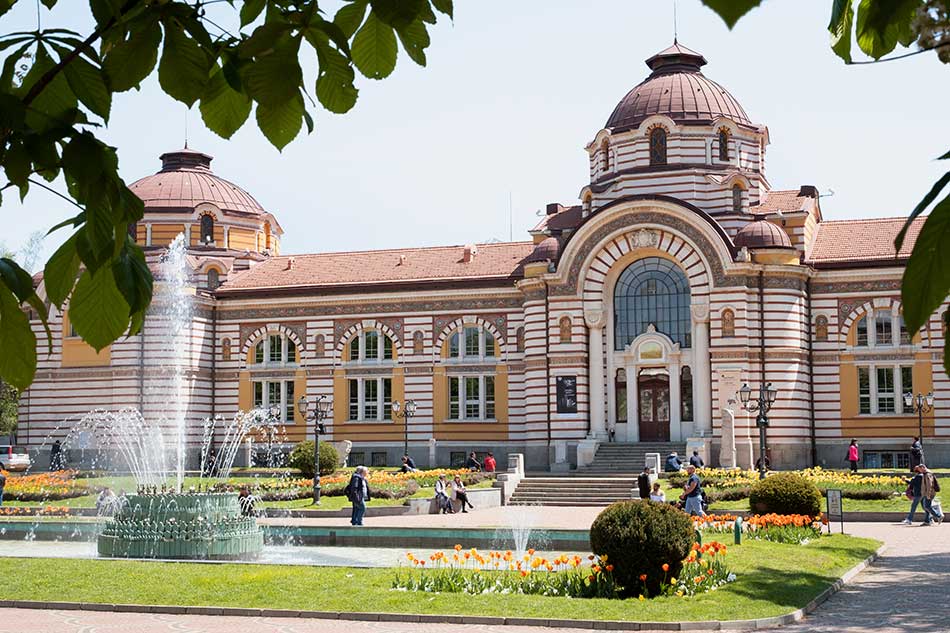
Quick Facts About Bulgaria
Capital: Sofia
Population: ~7 million
Currency: Euro
Language: Bulgarian
Region: Southeastern Europe
Famous for: yogurt, rose oil, history, mountains
What Are Some Surprising Facts About Bulgaria?
1. Bulgaria Was Founded in 681 AD
Bulgaria is one of the oldest countries in Europe, officially established in 681 AD. What makes it even more remarkable is that the country has kept its name unchanged since its founding. This continuity is rare in Europe, where borders and names have shifted frequently over centuries.
2. Bulgaria Never Changed Its Name
While many countries have undergone multiple name changes, Bulgaria has remained consistent for over 1,300 years. This reflects a strong cultural identity that has survived empires, wars, and political transformations.
3. The Cyrillic Alphabet Originated in Bulgaria
The Cyrillic alphabet, used today by over 250 million people, was developed during the First Bulgarian Empire. It played a major role in spreading literacy and culture across Eastern Europe and beyond.
👉Learn more about Bulgaria’s past → Historical Facts About Bulgaria.
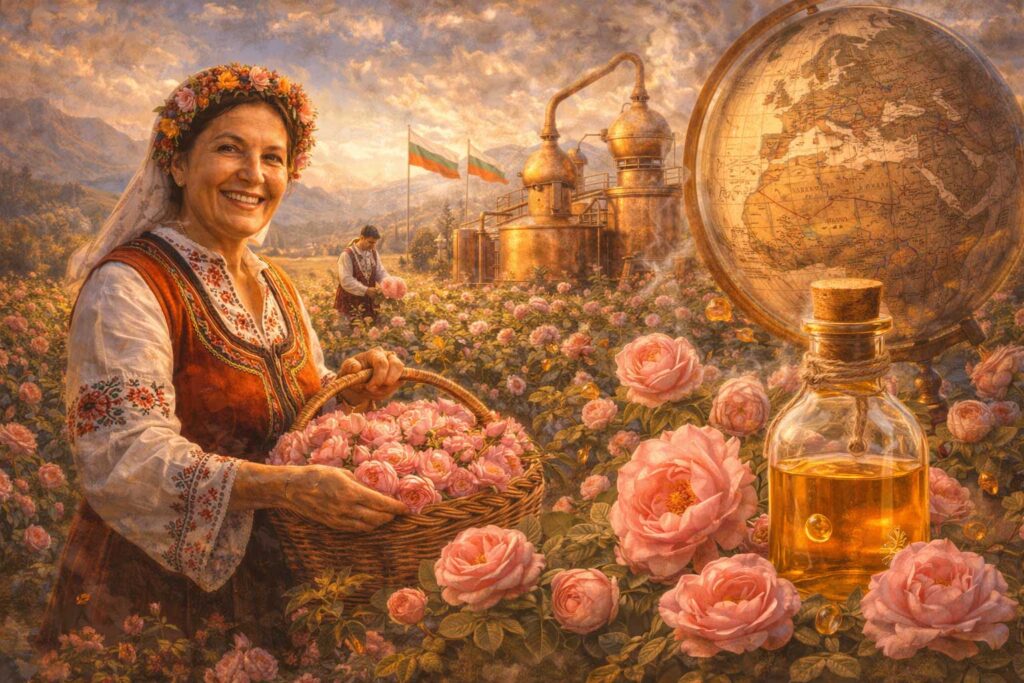
4. Bulgaria Produces Most of the World’s Rose Oil
The famous Rose Valley produces a large portion (about 70% ) of the world’s rose oil, a key ingredient in luxury perfumes. Bulgarian rose oil is considered among the highest quality globally.
👉 Explore this tradition → Bulgarian Rose Oil Guide.
5. The Oldest Gold Treasure Was Found in Bulgaria
The Varna Necropolis contains gold artifacts dating back over 6,000 years, making it one of the oldest processed gold treasures in the world. These discoveries prove that advanced craftsmanship existed much earlier than previously believed.
These surprising facts about Bulgaria show how ancient civilizations in the region contributed to global history.
6. Bulgaria Has Its Own Yogurt Bacteria
Lactobacillus bulgaricus is unique to Bulgarian yogurt and gives it its distinct taste and health benefits. This discovery placed Bulgaria on the global map of probiotic science.
👉 Discover the science behind it → Bulgarian Yogurt Explained.
7. Bulgarians Nod for “No” and Shake for “Yes”
One of the most surprising cultural differences is the reversed head gestures. Visitors often find this confusing at first, but it’s a long-standing tradition.
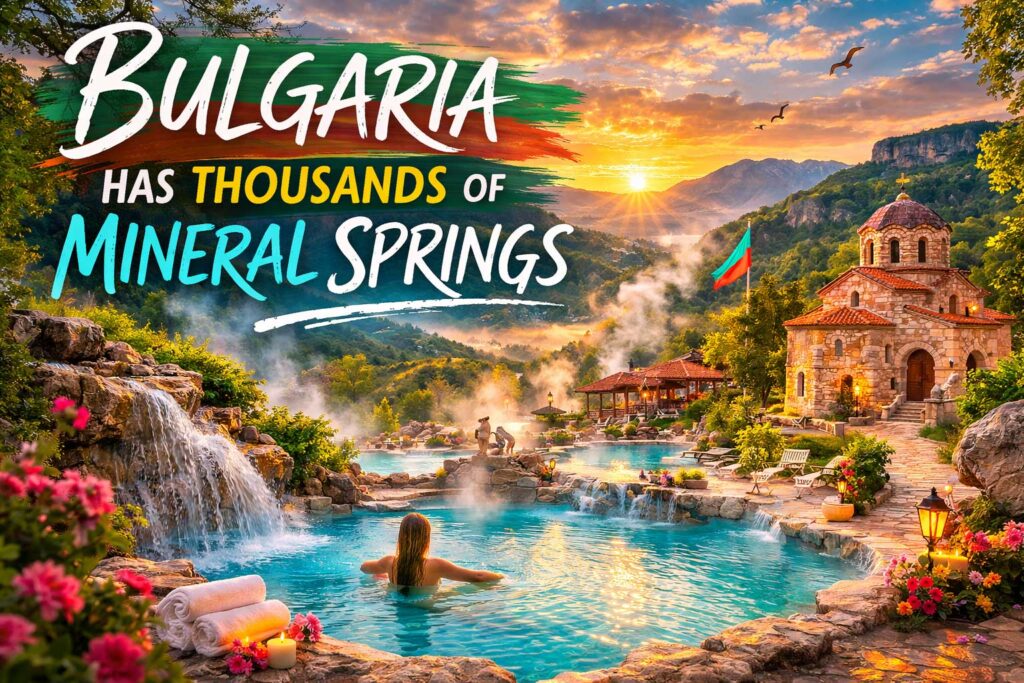
8. Bulgaria Has Over 7,000 Mineral Springs
The country is rich in natural mineral water sources, making it one of Europe’s top destinations for spa and wellness tourism.
These surprising facts about Bulgaria highlight the country’s deep historical roots and global influence.
9. Plovdiv Is One of Europe’s Oldest Cities
With over 8,000 years of continuous habitation, Plovdiv is older than Rome and Athens. Its Roman theater is still used for performances today.
10. Bulgaria Was Once a Powerful Empire
During its Golden Age under Tsar Simeon I, Bulgaria was one of the most influential states in Europe, competing with the Byzantine Empire.

11. Bulgaria Has Sent Astronauts to Space
Two Bulgarians participated in space missions during the 20th century, highlighting the country’s contributions to science and exploration.
12. Bulgaria Is a Biodiversity Hotspot
Due to its diverse landscapes, Bulgaria is home to thousands of plant and animal species, many of which are rare or endemic.
13. Bulgaria Has Three Major Mountain Ranges
The Rila, Pirin, and Rhodope mountains offer some of Europe’s most stunning landscapes, attracting hikers and nature lovers year-round.
14. Bulgarian Folk Music Went to Space
A traditional Bulgarian song was included on NASA’s Voyager Golden Record, representing Earth’s cultural heritage.
15. Thracian Treasures Are Among the Richest in the World
Ancient Thracians left behind remarkable gold artifacts that showcase advanced artistry and craftsmanship.

16. Cyrillic Is Used Across Eurasia
The alphabet developed in Bulgaria is now used across multiple continents and is one of the official scripts of the European Union.
17. Rila Monastery Is Over 1,000 Years Old
This UNESCO-listed site is one of Bulgaria’s most important cultural and spiritual landmarks.
18. Bulgaria Has Ancient Wine Traditions
Wine production dates back thousands of years, with roots in Thracian culture. Today, Bulgarian wines are gaining international recognition.
19. Bulgaria Has Thousands of Archaeological Sites
The country continues to uncover ancient ruins, proving that its history is still being discovered.
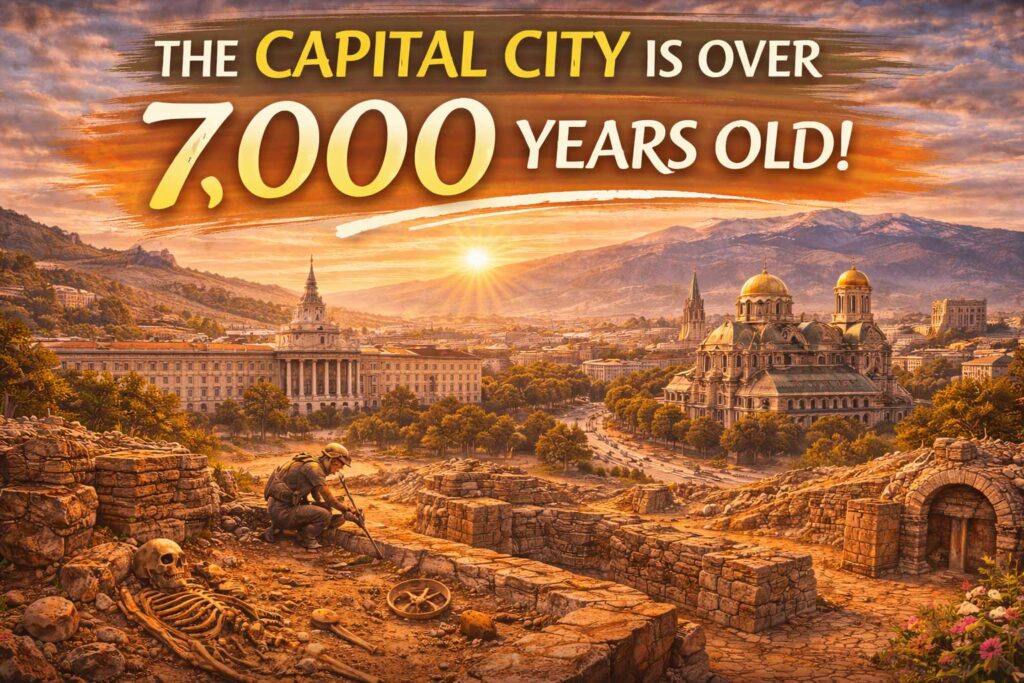
20. Sofia Is One of Europe’s Oldest Capitals
With over 7,000 years of history, Sofia blends ancient ruins with modern city life.
21. Bulgaria Has Beautiful Black Sea Beaches
The country’s eastern coast offers hundreds of kilometers of beaches along the Black Sea that attract tourists from across Europe.
👉 Planning a trip? See → Best Places to Visit in Bulgaria.
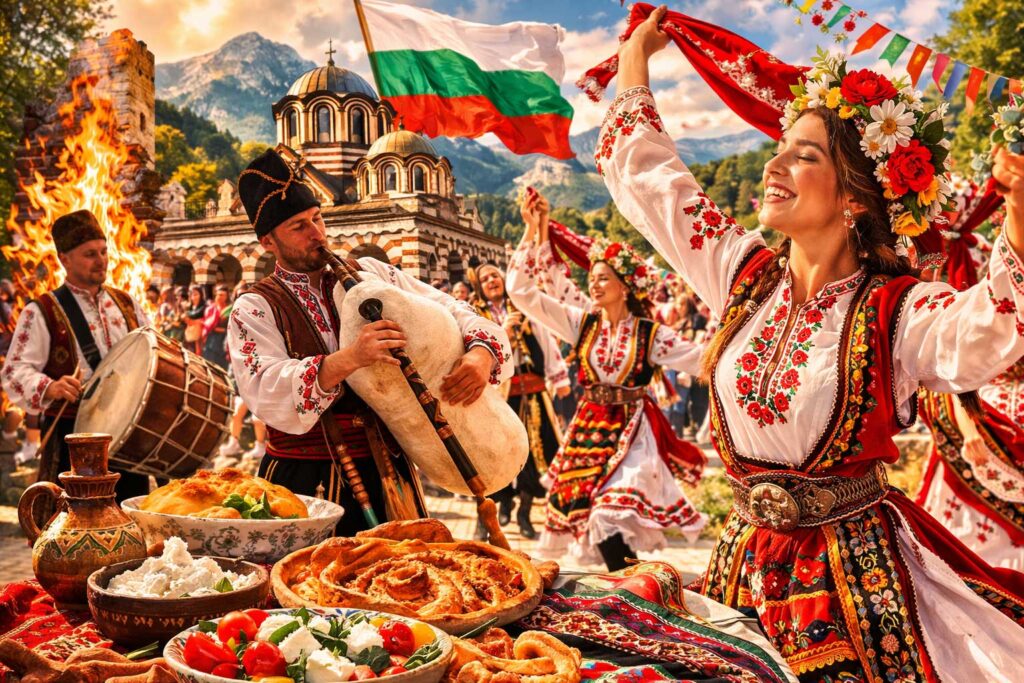
22. Traditional Festivals Are Still Celebrated
Events like Kukeri preserve ancient rituals and connect modern Bulgarians to their past.
👉 Learn more about traditions → Bulgarian Traditions and Customs.
23. Archaeology Is Still Active
New discoveries are made regularly, making Bulgaria a key location for historical research.
24. Bulgaria Produced One of the First Electronic Computers
Bulgarian-born scientist John Vincent Atanasoff helped develop one of the earliest electronic digital computers.
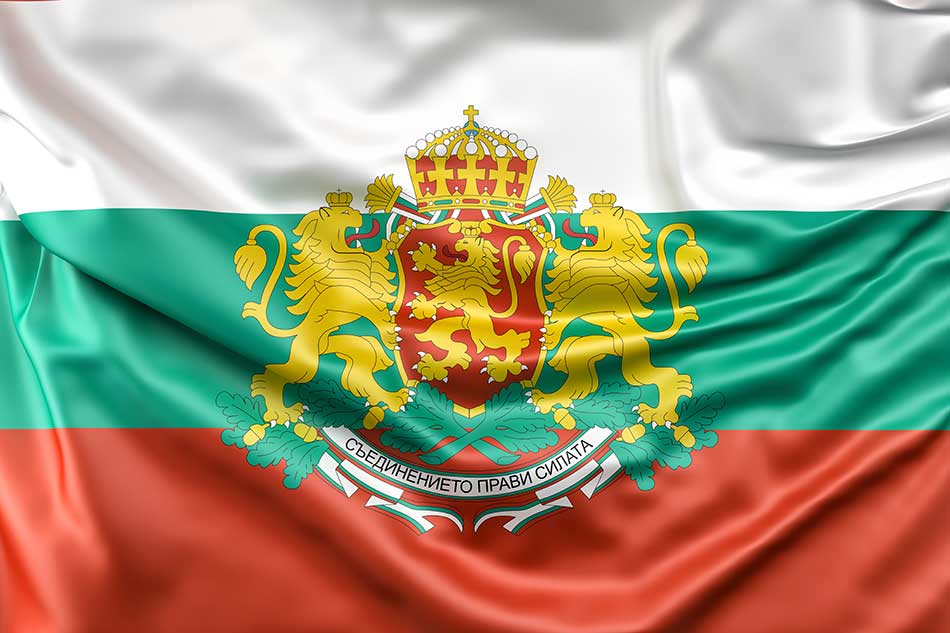
25. Bulgaria Has a Unique Blend of Cultures
Influences from Thracians, Slavs, Byzantines, and Ottomans created a rich and diverse cultural identity.
Bulgarian culture reflects a unique blend of influences from:
- The Thracians, known for their ancient mythology, gold treasures, and artistic craftsmanship
- The Slavs, who shaped the Bulgarian language, folklore, and many cultural traditions
- The Byzantine Empire, which influenced religion, architecture, and Orthodox Christian traditions
- The Ottoman Empire, which left traces in cuisine, music, and certain architectural styles
Because of this mixture of historical influences, Bulgaria developed a distinctive cultural identity that combines ancient traditions with modern European culture. Visitors can see these influences in everything from historic churches and monasteries to traditional music, festivals, and local cuisine.
This rich cultural heritage is one of the most surprising facts about Bulgaria most people don’t know, demonstrating how centuries of cultural interaction helped shape the country’s unique national character.
This diversity makes Bulgaria culturally rich and historically complex. It is one of the reasons the country offers such a unique experience for visitors.
These surprising facts about Bulgaria prove that the country has played a much larger role in global history than most people realize.
What These Facts Reveal About Bulgaria
These surprising facts about Bulgaria reveal much more than isolated pieces of information—they paint a bigger picture of a country with a deep and lasting global influence.
From the creation of the Cyrillic alphabet to contributions in science, music, and technology, Bulgaria has consistently played a role in shaping the world in ways many people don’t realize.
Its unique position between East and West allowed different cultures to blend over centuries, creating a rich and diverse identity that continues to evolve today.
🤯 Want Even More Unusual Facts?
Some of Bulgaria’s strangest and most mind-blowing facts go beyond this list.
How Bulgaria Influenced the World
Bulgaria’s influence extends far beyond its borders. Many of the surprising facts about Bulgaria highlight contributions that shaped entire regions and industries.
The Cyrillic alphabet alone transformed literacy across Eastern Europe, while discoveries in science and technology helped advance modern innovation.
Cultural traditions, music, and cuisine have also traveled globally, influencing how people experience food, art, and heritage today.
Why These Facts Surprise People
Many of these surprising facts about Bulgaria are not widely known because the country is often overlooked globally. However, its contributions to culture, science, and history are far more significant than most people expect.
From the development of alphabets to scientific discoveries, Bulgaria has influenced the world in ways that continue to shape modern society.
Another reason these surprising facts about Bulgaria stand out is the country’s ability to preserve its traditions while still contributing to modern innovation. This combination of deep history and forward-thinking development creates a unique national identity that continues to evolve today.
As more people begin to explore Bulgaria, these facts are becoming less hidden—but they still surprise those discovering the country for the first time.
👉 Discover more insights → Why Bulgaria Matters to the World.
How These Facts Reflect Bulgarian Identity
These surprising facts about Bulgaria are not just interesting—they reflect the country’s deep cultural identity and historical continuity. From ancient Thracian civilizations to modern European integration, Bulgaria has maintained a strong sense of tradition while adapting to change.
Many of these facts highlight how Bulgarians value heritage, family, and cultural preservation. Whether through traditional festivals, food, or language, these elements continue to shape everyday life and national identity.
This balance between past and present is one of the reasons Bulgaria remains culturally rich and historically significant today.
Fun Facts for Quick Learning
These surprising facts about Bulgaria are also perfect for quick learning, school projects, or general knowledge. Because they cover history, culture, science, and geography, they provide a well-rounded overview of the country in a simple and engaging way.
Whether you’re studying or just curious, Bulgaria offers countless interesting details that make it one of Europe’s most fascinating countries to explore.
Frequently Asked Questions About Bulgaria
What is Bulgaria known for?
Bulgaria is known for its rich history, the Cyrillic alphabet, yogurt, rose oil production, and ancient archaeological discoveries.
Is Bulgaria one of the oldest countries?
Yes, Bulgaria was founded in 681 AD and is one of the oldest countries in Europe that has kept its original name.
What makes Bulgaria unique?
Bulgaria is unique because of its blend of ancient civilizations, cultural traditions, and contributions to science and technology.
Why is Bulgarian yogurt special?
Bulgarian yogurt contains Lactobacillus bulgaricus, a unique bacterium known for its health benefits.
These surprising facts about Bulgaria demonstrate how the country has influenced global history, culture, and science far beyond its size.
Is Bulgaria a developed country?
Bulgaria is a developing European country and a member of the European Union. It has a growing economy and continues to modernize its infrastructure and industries.
What makes Bulgaria different from other countries?
Bulgaria stands out for its combination of ancient history, unique traditions, and cultural influences from multiple civilizations.
Is Bulgaria expensive to visit?
Bulgaria is considered one of the most affordable destinations in Europe, offering excellent value for travel, food, and accommodation.
What is Bulgaria best known for globally?
Bulgaria is globally known for yogurt, rose oil, the Cyrillic alphabet, and its rich historical heritage.
Why do tourists visit Bulgaria?
Tourists visit Bulgaria for its mountains, beaches, history, and cultural traditions, as well as its affordability compared to other European countries.
👉 Explore more → Bulgarian Culture Guide.
Why Bulgaria Is Worth Discovering
Beyond these surprising facts, Bulgaria is a country that offers a unique travel and cultural experience. From mountain landscapes and Black Sea beaches to historic cities and traditional villages, it provides a diverse range of attractions for visitors.
What makes Bulgaria especially appealing is its combination of affordability, authenticity, and variety. Travelers can explore ancient ruins, enjoy local cuisine, and experience centuries-old traditions—all within a relatively small geographic area.
For those seeking something different from typical European destinations, Bulgaria stands out as a place where history, culture, and nature come together in a truly unique way.
Final Thoughts
These surprising facts about Bulgaria reveal a country that is far more influential than most people realize. From ancient civilizations and global contributions to unique traditions and natural beauty, Bulgaria offers a fascinating mix of history and modern life.
👉 Want more? Explore → 50 Bulgarian Facts That Will Blow Your Mind.