


The Second Bulgarian Empire was one of the most important and dynamic states in medieval Southeastern Europe. Founded in 1185 after a successful uprising against Byzantine rule, it restored Bulgarian independence and reestablished Bulgaria as a major political, military, and cultural power in the Balkans. For more than two centuries, the empire played a decisive role in regional affairs, fighting Byzantines, Crusaders, Serbs, Hungarians, Mongols, and eventually the Ottomans. It produced strong rulers, brilliant military victories, impressive cultural achievements, and a lasting legacy that still shapes Bulgarian historical memory today.
At its peak, the Second Bulgarian Empire stretched from the Black Sea to the Adriatic, defeating Crusaders, rivaling Byzantium, and becoming the strongest power in the Balkans.
The story of the Second Bulgarian Empire is not simply the story of a state returning to life after a period of foreign domination. It is also the story of ambition, revival, expansion, internal rivalry, and decline. It begins with rebellion and determination, reaches its height under some of the most capable medieval Bulgarian rulers, and ends in fragmentation as new powers rise around it. The empire’s history is filled with dramatic turning points: the revolt of the Asen brothers, the victories of Tsar Kaloyan, the golden age of Ivan Asen II, the cultural flowering of Tarnovo, and the final struggle against the advancing Ottoman Turks.
To understand the Second Bulgarian Empire is to understand one of the defining chapters of Bulgarian history. This period restored medieval Bulgarian statehood, strengthened the Bulgarian Orthodox tradition, and created a political and cultural model that later generations would remember with pride. It also produced some of the most famous kings and battles in Bulgarian history.
In this article, we will explore the origins of the Second Bulgarian Empire, the rulers who shaped it, the most important battles that defined its destiny, the reasons for its rise and fall, and the legacy it left behind.
What Was the Second Bulgarian Empire?
The Second Bulgarian Empire was the medieval Bulgarian state that existed from 1185 to 1396. It emerged after the collapse of Byzantine control over Bulgarian lands north of the Balkan Mountains and later extended far beyond them. Its capital was Tarnovo, today known as Veliko Tarnovo, which became one of the most important political, religious, and cultural centers in the Balkans.
The empire is called the “Second” Bulgarian Empire because it followed the First Bulgarian Empire, which had existed from 681 until 1018, when it fell to Byzantium. After almost 170 years of Byzantine domination, the Bulgarian state was restored in the late twelfth century. This restoration was a major event not only for Bulgaria but for the whole Balkan world. It showed that Byzantine power was no longer absolute and that old political traditions could reemerge.
The Second Bulgarian Empire was at times vast and powerful. At its peak, especially during the reign of Ivan Asen II, it controlled territories stretching from the Black Sea to parts of Macedonia, Thrace, and even areas closer to the Adriatic through influence and alliances. It served as both a political force and a cultural beacon, especially through the work of the Tarnovo Literary School and the development of medieval Bulgarian art, architecture, and religious literature.
Yet the empire was never fully secure. From its earliest years, it had to defend itself against stronger or competing neighbors. Its rulers needed military skill and diplomatic flexibility. Even when Bulgaria was strong, it faced threats from the Byzantine Empire, the Latin Empire, Hungary, Serbia, nomadic invasions from the north and east, and later the Ottomans. The empire’s fortunes rose and fell depending on the strength of its rulers and the unity of its political elite.
Key Facts About the Second Bulgarian Empire
- Period: 1185–1396
- Capital: Tarnovo
- Greatest ruler: Ivan Asen II
- Major victories: Adrianople (1205), Klokotnitsa (1230)
- Fall: Ottoman conquest
Background: Bulgaria Under Byzantine Rule
To appreciate the significance of the Second Bulgarian Empire, it is important to understand the historical background. In 1018, after decades of warfare, the First Bulgarian Empire was conquered by the Byzantine Emperor Basil II. Bulgaria was incorporated into the Byzantine Empire, and for nearly two centuries its territories remained under Byzantine rule.
This period did not erase Bulgarian identity. The Bulgarian people retained their language, local traditions, Orthodox Christian faith, and memory of earlier statehood. Byzantine administration imposed control, but it did not fully destroy the sense that the Bulgarian lands had once belonged to an independent kingdom and could do so again.
Over time, dissatisfaction grew. Byzantine taxation, military demands, and the policies of distant imperial authorities created resentment among local populations and elites. While some Bulgarian nobles and church leaders cooperated with Byzantine power, others remained conscious of their distinct traditions. Uprisings occurred from time to time, showing that resistance never fully disappeared.
By the late twelfth century, the Byzantine Empire itself was weakening. Internal disputes, financial problems, and military setbacks reduced its ability to maintain firm control over the Balkans. This created an opportunity. In such moments of imperial weakness, local leaders could act decisively. That is exactly what happened in 1185, when the brothers Theodore-Peter and Ivan Asen led the uprising that restored the Bulgarian state.
This period of domination eventually led to the events that shaped the Bulgarian National Revival centuries later.
The Uprising of 1185 and the Rebirth of Bulgaria
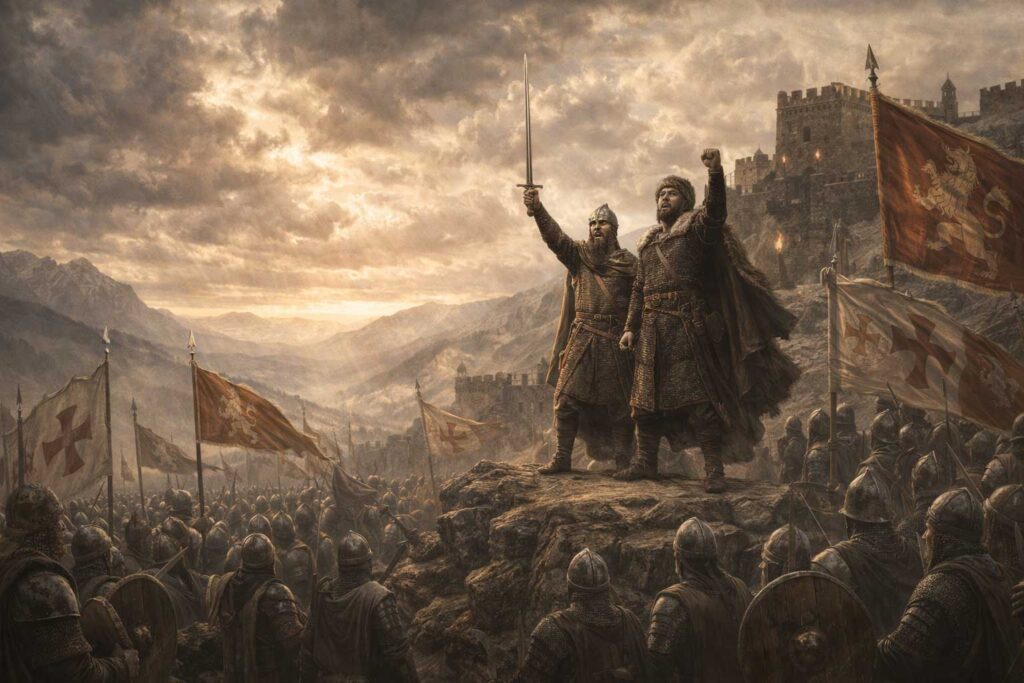
The beginning of the Second Bulgarian Empire is closely linked to the revolt of the Asen brothers. Their uprising in 1185 was a turning point in Balkan history.
According to medieval sources, the immediate cause of the revolt was a heavy tax imposed by the Byzantine Emperor Isaac II Angelos, who needed money for his wedding and military expenses. The tax burden angered the population in the Balkan regions, especially among the Vlach and Bulgarian groups living in the mountains north of Thrace. The brothers Theodore and Asen reportedly sought military lands or recognition from the Byzantine emperor and were insulted or dismissed. Whether every detail of this story is exact or partly symbolic, the general truth is clear: resentment against Byzantine rule reached a breaking point.
The brothers used both political skill and religious symbolism to launch their rebellion. They built and dedicated a church to Saint Demetrius, claiming that the saint had abandoned the Byzantines and now supported the Bulgarians. This was an important act. Medieval people often interpreted political events through religious meaning, and divine favor could strengthen rebellion.
The revolt spread rapidly. The mountainous terrain helped the rebels, and they also benefited from alliances with Cumans, steppe warriors north of the Danube who could provide cavalry support. By combining local resistance, favorable geography, and outside military aid, the uprising gained momentum. The Byzantine Empire tried to suppress it, but the conflict dragged on and the rebels endured.
Eventually, the brothers established an independent Bulgarian state with its center at Tarnovo. Theodore took the name Peter, connecting himself symbolically with earlier Bulgarian rulers and dynastic continuity. The restored state was more than a temporary rebellion. It was the beginning of a new empire.
The founding of the Second Bulgarian Empire mattered because it restored Bulgarian sovereignty after almost two centuries of foreign rule. It also signaled a broader shift in Balkan politics: Byzantium was no longer the uncontested master of the region.
Tarnovo – The Capital of the Empire
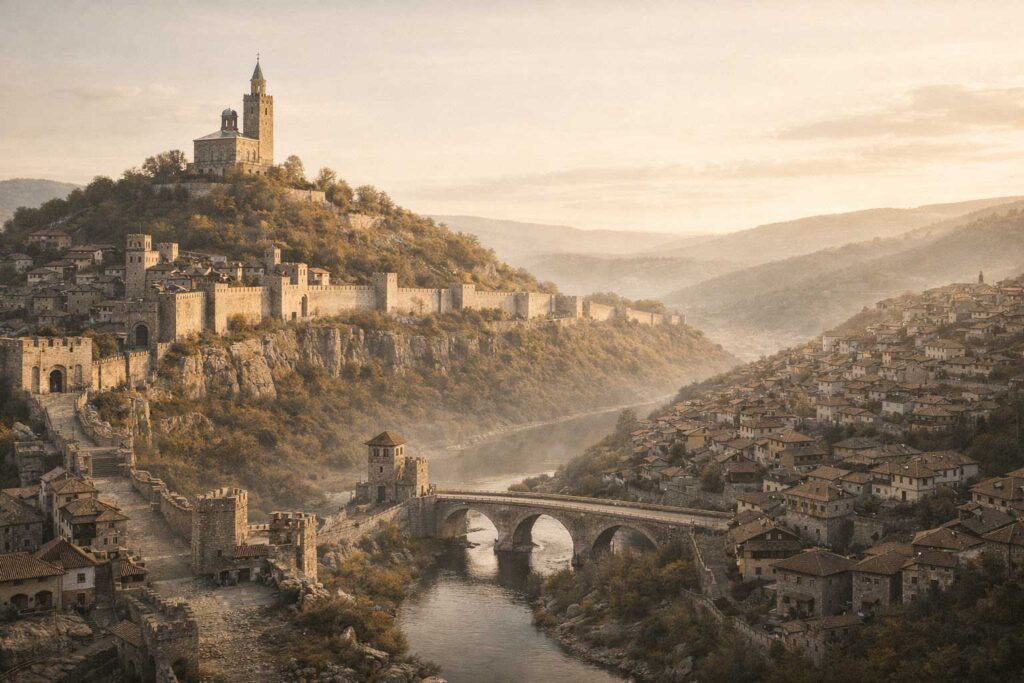
No discussion of the Second Bulgarian Empire is complete without Tarnovo. The city was more than a capital. It was the symbolic heart of Bulgarian medieval power.
Built across steep hills and fortified heights, Tarnovo was naturally defensible and visually impressive. The most famous parts of the city were the fortified hills of Tsarevets and Trapezitsa, which housed royal, noble, military, and religious structures. Its strategic position made it suitable for defense, while its political importance attracted craftsmen, clergy, scholars, merchants, and aristocrats.
Tarnovo became the residence of tsars and patriarchs. It was not only an administrative center but also a spiritual and cultural one. Churches, monasteries, palaces, and workshops filled the city. Under strong rulers, the capital projected the image of a confident and legitimate empire.
Medieval writers and later historians often compared Tarnovo to great capitals of the Orthodox world. It came to be seen as a prestigious center of Christianity and Slavic culture. During the cultural flowering of the fourteenth century, especially under Ivan Alexander, Tarnovo became the core of a rich literary and artistic tradition whose influence spread beyond Bulgaria.
The splendor of Tarnovo also had political meaning. A capital embodies the authority of a state. When Tarnovo was strong, the empire seemed stable and glorious. When Tarnovo fell in 1393, it symbolized not just a military defeat but the collapse of medieval Bulgarian sovereignty.
The city of Tarnovo became the political and spiritual center of the empire, as explained in detail in Veliko Tarnovo – the medieval capital of Bulgaria.
Early Rulers: Peter IV and Ivan Asen I
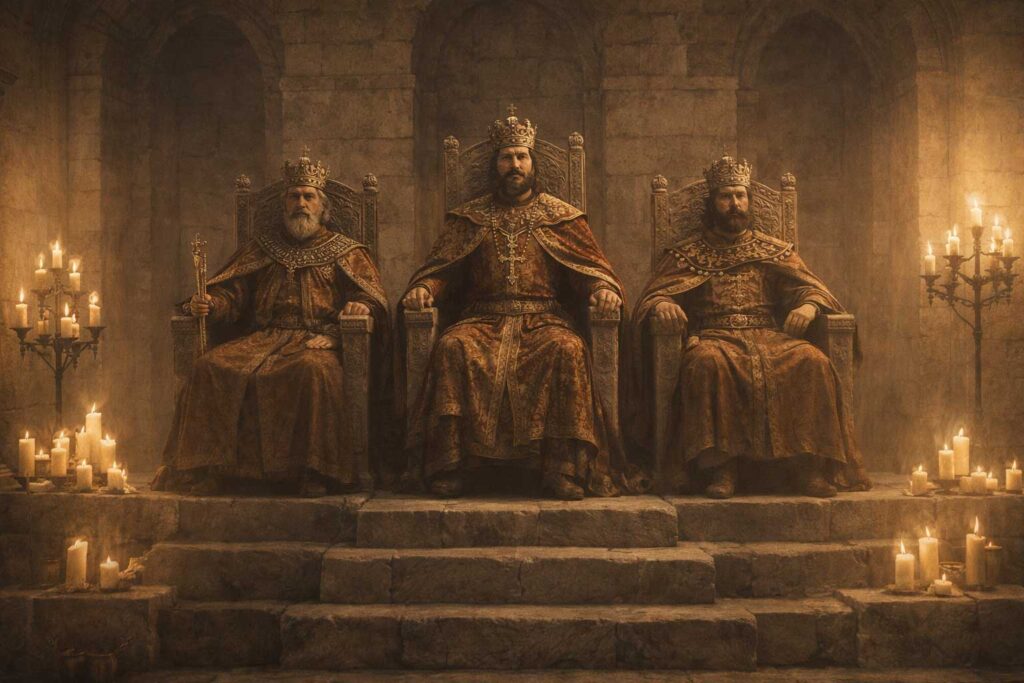
The first phase of the Second Bulgarian Empire was shaped by its founders, Peter IV and Ivan Asen I. Their main task was not luxury or expansion but survival. They had to defend the new state against Byzantine attempts to crush it and to establish institutions strong enough to last.
Peter IV emphasized continuity with earlier Bulgarian royal traditions. This was important because legitimacy mattered in medieval politics. By invoking the memory of the First Bulgarian Empire, the founders were not presenting themselves as mere rebels; they were presenting themselves as restorers of rightful statehood.
Ivan Asen I, meanwhile, appears as the more active military figure in many narratives. Under the brothers, Bulgaria gradually strengthened its position. Their use of terrain, mobility, and alliances enabled them to resist larger Byzantine forces. Warfare in this period was not always made up of giant decisive battles; often it involved raids, fortification struggles, quick maneuvers, and attrition.
The early rulers also had to deal with the delicate balance between local elites and central authority. A restored state could not survive on military success alone. It needed loyal nobles, taxation, justice, and church support. Rebuilding these structures took time.
Their reigns ended violently, as often happened in medieval politics. Internal conspiracies and aristocratic ambitions were constant dangers. Even so, the founders accomplished their greatest objective: they ensured that the restored Bulgarian state would endure.
Tsar Kaloyan – The Fearless Strategist
After the deaths of Peter IV and Ivan Asen I, their younger brother Kaloyan emerged as one of the most remarkable rulers of the Second Bulgarian Empire. Reigning from 1197 to 1207, Kaloyan combined military talent, diplomatic flexibility, and ruthless determination. He is one of the best-known kings of medieval Bulgaria.
Kaloyan inherited a state that had already secured independence but still needed international recognition and territorial consolidation. He understood that legitimacy was as important as force. One of his most notable diplomatic achievements was his correspondence with the Papacy. By negotiating with Pope Innocent III, Kaloyan sought recognition of his royal authority. This was a shrewd move. It gave him standing in European politics and strengthened his position against rivals.
At the same time, Kaloyan remained a fierce defender of Bulgarian interests. He waged war against Byzantium and later against the Latin Empire, which emerged after the Fourth Crusade captured Constantinople in 1204. The crusaders expected to dominate the Balkans, but Kaloyan proved they had badly underestimated Bulgaria.
Kaloyan’s rule is often remembered for his strength of will and his ability to exploit geopolitical change. The destruction of Byzantine unity after 1204 transformed the region. Instead of one major imperial enemy, there were now several competing states: the Latin Empire, Byzantine successor states such as Nicaea and Epirus, and regional powers like Bulgaria. Kaloyan maneuvered aggressively in this environment.
He also gained a fearsome reputation among his enemies. Some later traditions connect him to the title “Roman-slayer,” partly in response to Byzantine imperial brutality against Bulgarians in the past. Whether used as formal propaganda or retrospective symbolism, the image reflects how strongly Kaloyan was associated with vengeance and military power.
His reign ended in 1207 during the siege of Thessaloniki, but by then he had already placed Bulgaria firmly among the leading powers of the Balkans. Kaloyan is considered one of the most powerful medieval rulers, featured among the great Bulgarian rulers and kings.
The Battle of Adrianople (1205)
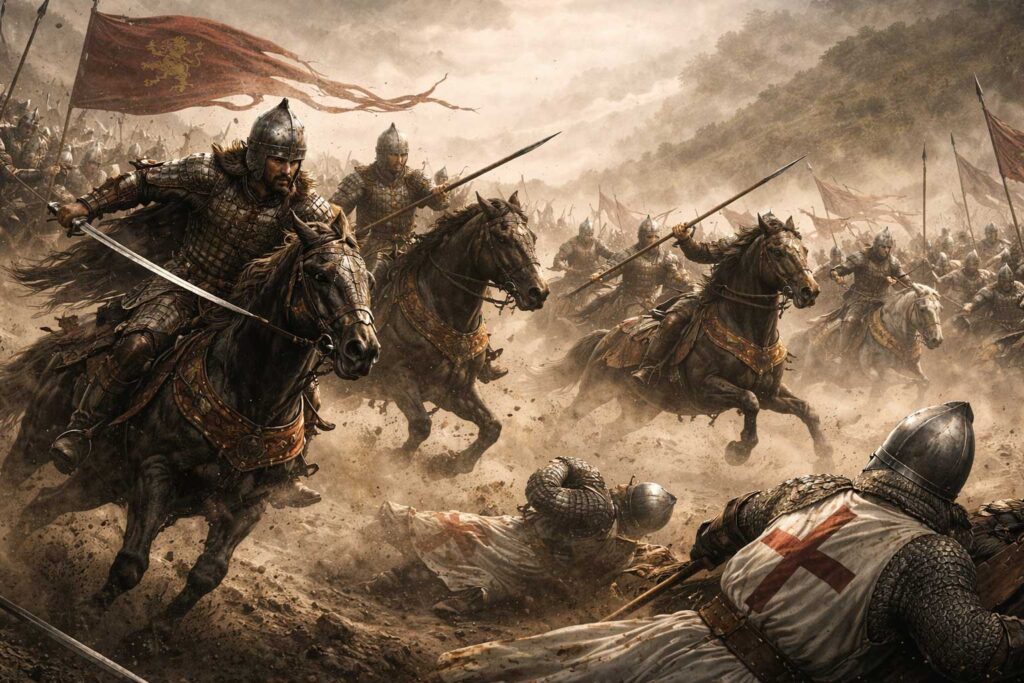
One of the greatest military triumphs in Bulgarian history came during Kaloyan’s reign: the Battle of Adrianople in 1205.
After the Fourth Crusade established the Latin Empire in Constantinople, the new crusader rulers sought to impose control over former Byzantine territories. Their expansionist plans brought them into direct conflict with Bulgaria. Tensions increased when local Greek populations rebelled against Latin rule and sought Kaloyan’s support.
The battle took place near Adrianople, a major city in Thrace. The Latin forces included heavy Western knights, who were among the most feared soldiers in medieval Europe. However, their confidence turned into vulnerability. Kaloyan and his allies used tactics that neutralized the advantages of the heavy cavalry.
The Bulgarians and Cumans lured the Latin knights into pursuit, stretched their formations, and attacked them under more favorable conditions. The Latin army was decisively defeated. Most dramatically, Emperor Baldwin I of the Latin Empire was captured and later imprisoned in Tarnovo, where he died.
The victory at Adrianople had huge consequences. It shattered the aura of invincibility surrounding the crusaders. It elevated Bulgaria’s standing in Europe. It also showed the effectiveness of Bulgarian leadership and tactics against one of the most formidable military elites of the age.
For Bulgaria, Adrianople was more than a battlefield success. It was a statement that the restored empire could defeat major Western forces and shape the destiny of the Balkans. This victory is often listed among the most famous battles in Bulgarian history.
Boril and a Difficult Transition
After Kaloyan’s death, the empire entered a more unstable phase under Boril (1207–1218). His reign shows how dependent medieval states often were on the strength of individual rulers.
Boril struggled with internal opposition, dynastic disputes, and external pressure. Several claimants challenged his authority, and parts of the aristocracy were unwilling to fully support him. At the same time, neighboring powers took advantage of Bulgarian weakness.
Although Boril’s reign is usually seen as less successful, it was not without significance. He tried to preserve the state and confronted both political enemies and religious challenges. He is known for presiding over a church council against the Bogomils, a dualist heretical movement that had long been active in Bulgarian lands. This shows that rulers were concerned not only with territory and armies but also with religious order and ideological unity.
Still, Boril could not match the achievements of Kaloyan. His political weakness paved the way for the return of a powerful dynastic figure: Ivan Asen II.
Ivan Asen II – The Greatest Tsar of the Second Bulgarian Empire
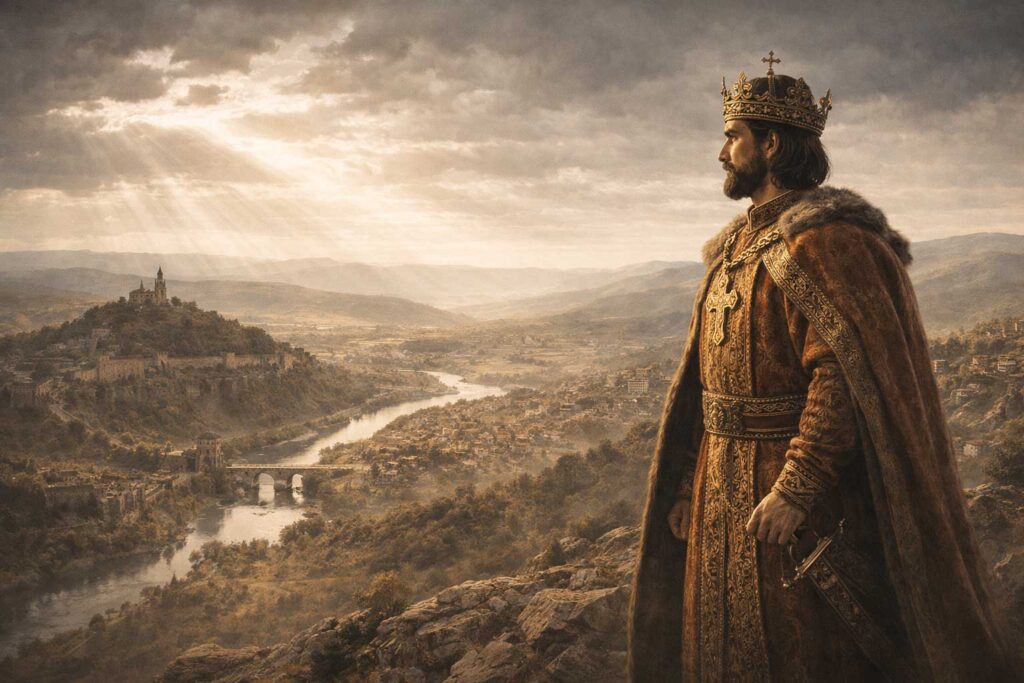
If Kaloyan made Bulgaria feared, Ivan Asen II made Bulgaria glorious. Reigning from 1218 to 1241, he is widely regarded as the greatest ruler of the Second Bulgarian Empire.
Ivan Asen II came to power after overthrowing Boril and quickly demonstrated a blend of ambition, moderation, and intelligence that set him apart. His reign is often considered the golden age of the empire because Bulgaria reached its largest territorial extent, strongest diplomatic position, and greatest economic prosperity during these years.
What made Ivan Asen II exceptional was that he understood power in broad terms. He was a successful military commander, but he also valued trade, diplomacy, stability, and prestige. Under him, Bulgaria was not merely winning wars; it was flourishing.
He pursued a foreign policy that balanced force and diplomacy. He formed alliances when useful and struck hard when needed. He cultivated relations with neighboring states and with the wider Christian world. Merchants benefited from safer trade routes and political order. The empire’s cities became more active, and its international status rose sharply.
His name is inseparable from one of the most celebrated Bulgarian victories of the Middle Ages: the Battle of Klokotnitsa.
The Battle of Klokotnitsa (1230)
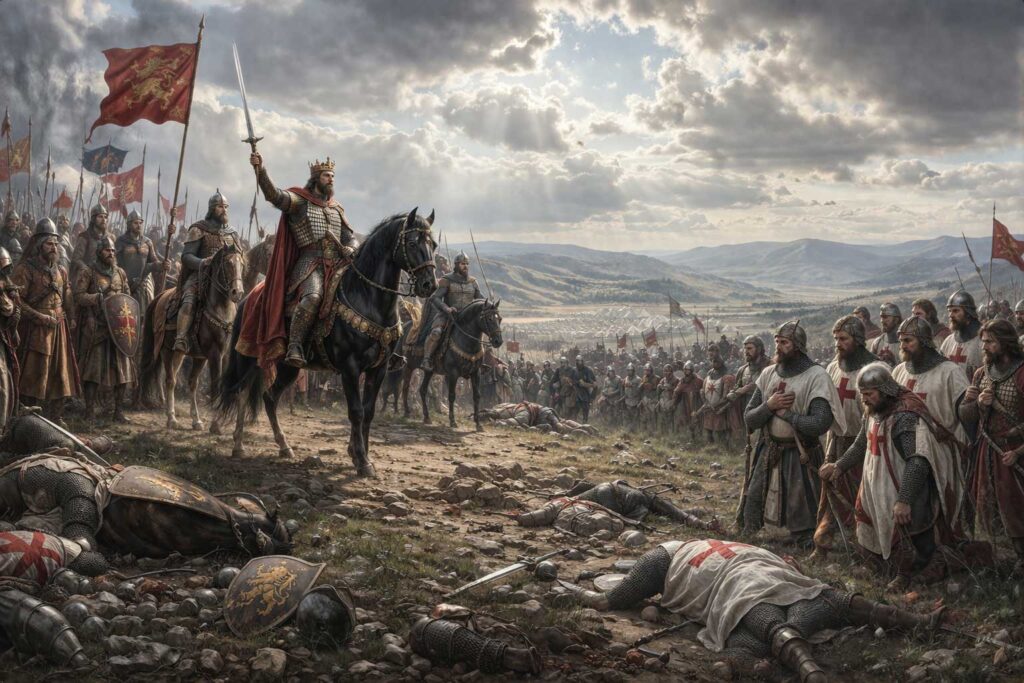
The Battle of Klokotnitsa, fought in 1230, was one of the most decisive battles in Balkan medieval history.
The conflict arose when Theodore Komnenos Doukas, ruler of Epirus and one of the strongest claimants to Byzantine imperial legacy, invaded Bulgarian territory despite an existing alliance. Ivan Asen II responded quickly. Though often described as outnumbered, he moved with speed and discipline, intercepting the invading army near the village of Klokotnitsa.
Bulgarian forces won a crushing victory. Theodore Komnenos was captured, and his army was destroyed as an effective fighting force. The triumph transformed the balance of power in the Balkans.
The consequences were enormous. Bulgaria emerged as the dominant regional power. Large territories in Macedonia, Thrace, and Albania either came under Bulgarian control or acknowledged Bulgarian supremacy. Ivan Asen II famously treated captured common soldiers with relative mercy while holding the rival ruler and elite prisoners. This helped him gain legitimacy among local populations and project an image of just kingship.
Klokotnitsa became a symbol of Bulgarian military excellence, but it also highlighted Ivan Asen II’s broader vision. He used victory not simply to destroy but to consolidate and expand influence.
A commemorative inscription from the period proudly records the achievement and stands as one of the key historical monuments of medieval Bulgaria. Few battles in Bulgarian history had such lasting significance.
Bulgaria at Its Peak Under Ivan Asen II
After Klokotnitsa, the Second Bulgarian Empire reached its height.
Territorially, Bulgaria was immense. Politically, it was respected and feared. Economically, it benefited from trade routes linking Europe and the Near East. Diplomatically, it interacted with Byzantine successor states, Latin rulers, Hungary, Serbia, and religious authorities.
One important aspect of Ivan Asen II’s reign was commerce. Trade was not a side detail but a pillar of state power. The empire’s position between East and West made it an important corridor for merchants. Stronger political control meant safer roads and better conditions for urban growth.
Religiously, Bulgaria also strengthened its position. The Bulgarian Church gained renewed prestige, and Tarnovo grew further as a spiritual center. The tsar’s authority rested not only on military force but also on the idea that Bulgaria was a legitimate Christian empire.
Culturally, the golden age under Ivan Asen II laid foundations later rulers would build upon. Even if the greatest literary flowering came somewhat later, the wealth and order of his reign created the conditions for it.
Yet like many medieval golden ages, this one was fragile. It depended heavily on the ruler’s personal capacity. After Ivan Asen II’s death in 1241, Bulgaria faced serious challenges. His reign represents one of the most important chapters in the history of Bulgarian kings.
Decline After Ivan Asen II
The death of a strong ruler often exposed underlying weaknesses, and this was true for Bulgaria after 1241.
Several problems emerged at once. First, there were succession difficulties. Child rulers, regencies, aristocratic rivalries, and court intrigues weakened central control. Second, external enemies became more aggressive. Third, the geopolitical environment changed as the Mongols expanded into Eastern Europe.
The Mongol threat was especially destabilizing. Their raids and demands for tribute affected many states in the region. Bulgaria, like others, had to adapt to a harsher political landscape. Pressure from Hungary, revived Byzantine forces, and Serbian ambitions added to the empire’s troubles.
Internally, the Bulgarian aristocracy gained greater power relative to the throne. This was dangerous. A medieval state required a balance between local elites and central monarchy. When powerful nobles acted independently, unity suffered.
The decades after Ivan Asen II were not a sudden collapse, but they marked the end of clear dominance. Bulgaria remained important, but it was increasingly on the defensive.
Konstantin Tih Asen and Internal Crisis
One of the rulers associated with this troubled period is Konstantin Tih Asen (1257–1277). His reign illustrates the structural weaknesses that had been building within the empire.
Konstantin Tih faced rebellions, noble factionalism, foreign attacks, and financial pressure. He was not operating from a position of strength. In such circumstances, kings often became dependent on marriage alliances, external support, or court factions. This reduced their real authority.
His reign also saw social unrest. The burdens of war, taxation, and insecurity affected ordinary people as well as elites. In the later part of his rule, the peasant leader Ivaylo would rise in rebellion, showing that discontent had spread widely.
Konstantin Tih’s inability to fully control the political landscape was not merely personal failure. It reflected a deeper issue: the empire lacked the stable institutional power needed to easily survive weak reigns. Strong tsars could still achieve much, but weak tsars found it difficult to command consistent loyalty or defend all frontiers.
Ivaylo and the Peasant Revolt
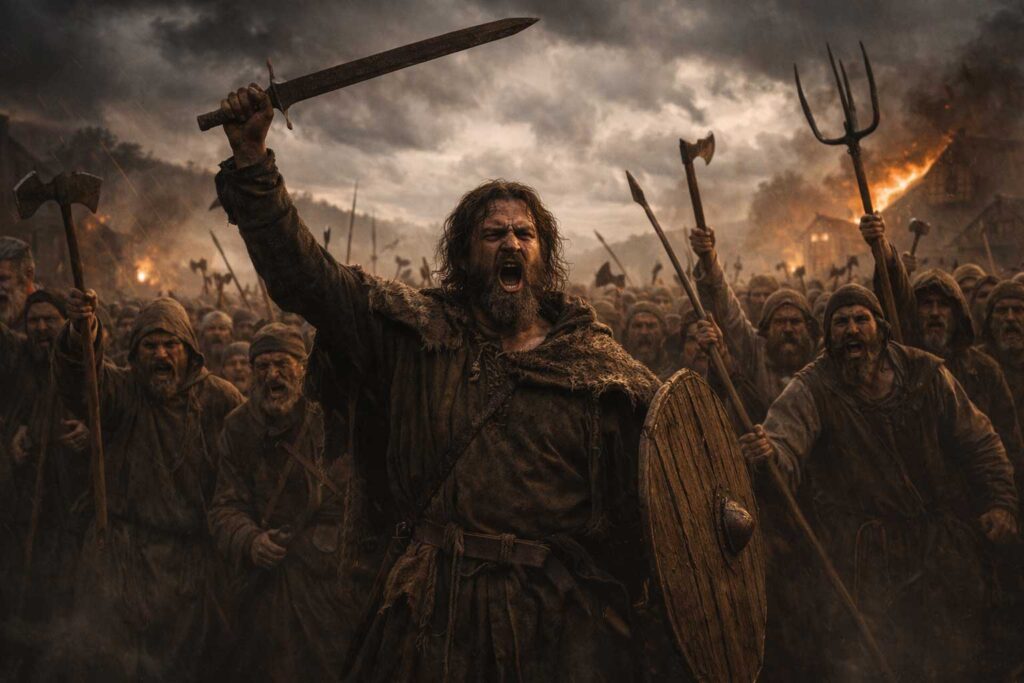
One of the most unusual episodes in medieval Bulgarian history is the rise of Ivaylo, a peasant or lower-born leader who led a major revolt in the late thirteenth century.
Ivaylo emerged in a time of crisis, when Bulgarian society was suffering from both Mongol raids and ineffective leadership. He gained popularity by defeating enemies and presenting himself as a defender of the people. His success was extraordinary because medieval states were usually dominated by aristocratic dynasties, not by men of humble origin.
For a time, Ivaylo achieved real power and even entered the struggle for the Bulgarian throne. His story reveals how deep the internal crisis had become. When people were willing to follow a non-noble war leader against both foreign invaders and domestic elites, it meant traditional structures had lost legitimacy.
Although Ivaylo ultimately could not secure lasting control, his revolt remains one of the most fascinating chapters in Bulgarian medieval history. It demonstrates the volatility of the Second Bulgarian Empire during its middle period and the difficulty of restoring unity once it had weakened.
The Fourteenth Century and the Revival Under Ivan Alexander
Despite earlier decline, the Second Bulgarian Empire experienced a partial recovery under Ivan Alexander (1331–1371). He was one of the longest-reigning Bulgarian tsars and one of the most important rulers of the late medieval Balkans.
Ivan Alexander managed to restore a measure of stability and prestige. He ruled at a time when Bulgaria still had significant resources and cultural vitality. While he could not recreate the exact political supremacy of Ivan Asen II, he did oversee an important cultural revival and a period of relative consolidation.
His reign is especially associated with the Tarnovo Literary School, manuscript production, religious life, and artistic achievement. Lavishly illustrated manuscripts, theological texts, and church literature flourished. Medieval Bulgarian culture reached one of its highest peaks during this period.
At the same time, Ivan Alexander dealt with constant political pressures. Serbia was rising under rulers like Stefan Dušan. Byzantium was weakened but still active. The Ottomans were beginning to move into Europe. Hungary remained a factor to the northwest. Managing such a complex environment required flexibility.
Ivan Alexander was a capable ruler in many respects, but one of the great criticisms of his reign is that he allowed or encouraged the division of power among his sons, contributing to future fragmentation. In the short term, this may have seemed politically convenient. In the long term, it was disastrous.
Culture, Religion, and the Tarnovo Literary School

The Second Bulgarian Empire was not only a military and political power. It was also a major center of Orthodox Christian and Slavic culture.
During the fourteenth century, especially under Ivan Alexander, Tarnovo became the center of a brilliant literary and religious tradition. Scholars, monks, scribes, and church leaders worked to copy, translate, and refine texts. This activity helped preserve Orthodox Christian learning at a time when many parts of the Balkans were under severe pressure.
The Tarnovo Literary School played a major role in shaping medieval Slavic literature. Its writers influenced not only Bulgaria but also Serbia, Wallachia, Moldavia, and Rus’. Corrected translations, theological works, sermons, saints’ lives, and liturgical books circulated widely.
Art and architecture also flourished. Churches and monasteries were decorated with frescoes, and manuscript illumination reached impressive levels. Bulgarian rulers used patronage of culture and religion to express legitimacy, piety, and imperial dignity.
This cultural life matters because it shows that the Second Bulgarian Empire was not defined only by war. It was also a civilization-producing state. Its intellectual and spiritual achievements outlasted its political independence.
Many of the ideas formed during this period later shaped Bulgarian identity, reflected in Bulgarian symbols and their meaning.
The Rise of Serbia and the Ottoman Danger
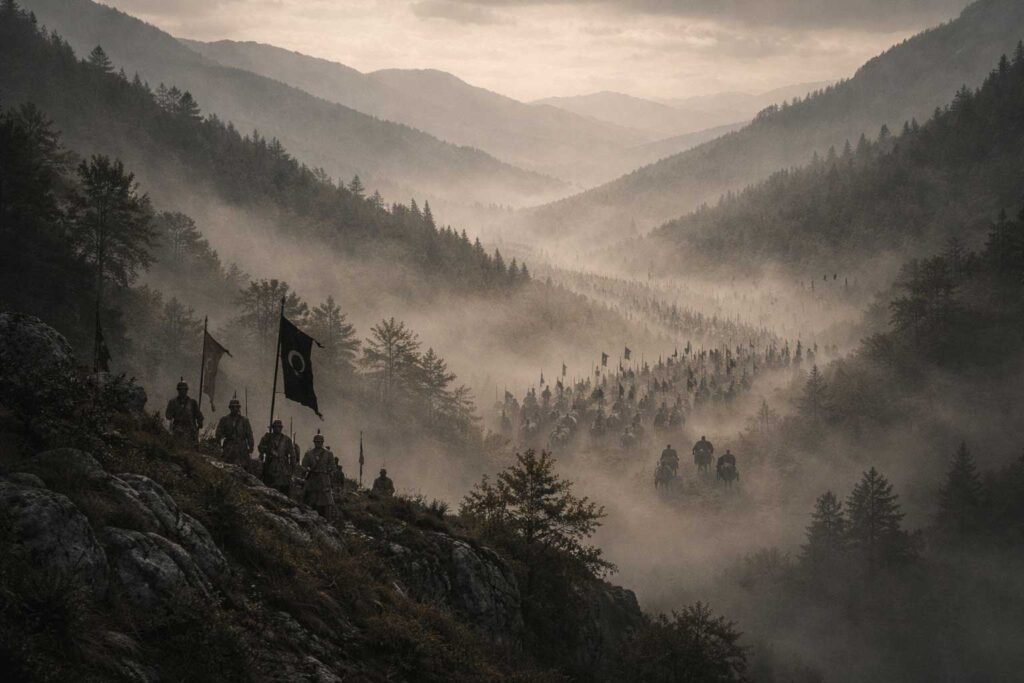
As the fourteenth century progressed, Bulgaria faced two major external developments: the rise of Serbia and the arrival of the Ottomans in the Balkans.
Serbia, especially under Stefan Dušan, became a powerful empire in its own right. This changed the balance among Balkan states. Bulgaria could no longer assume natural regional leadership.
More dangerous in the long term, however, was the Ottoman advance. The Ottomans were unlike previous raiders or neighboring rivals. They were building a disciplined, expanding state with military and administrative systems capable of absorbing territory permanently.
Once the Ottomans crossed into Europe in the mid-fourteenth century, the political landscape changed fundamentally. Balkan states often failed to unite against them. Dynastic rivalries, internal divisions, and short-term politics undermined coordinated resistance.
For Bulgaria, this was disastrous. Fragmented authority, regional divisions, and the weakening of central power made it hard to respond effectively. A united Bulgaria under a ruler like Ivan Asen II might have posed a stronger obstacle. A divided Bulgaria in the late fourteenth century was far more vulnerable.
Fragmentation of the Empire
One of the main reasons the Second Bulgarian Empire fell was fragmentation.
By the later fourteenth century, Bulgaria was effectively divided into separate political centers, most notably the Tsardom of Tarnovo under Ivan Shishman and the Tsardom of Vidin under Ivan Sratsimir. Dobruja also functioned with considerable autonomy under local rulers.
This division was fatal. A medieval state under external threat needed centralized command, coordinated defense, and shared purpose. Instead, Bulgaria faced the Ottoman advance in pieces.
Fragmentation did not mean Bulgarian rulers were passive or cowardly. They fought, negotiated, fortified cities, and sought alliances. But they did so from weakened positions. The Ottomans could deal with one principality at a time, exploit rivalries, and gradually tighten control.
The breakup of unity is one of the clearest lessons of the Second Bulgarian Empire’s history. Its greatest periods came under strong, central rulers. Its final collapse came when that unity disappeared.
The Fall of Tarnovo (1393)
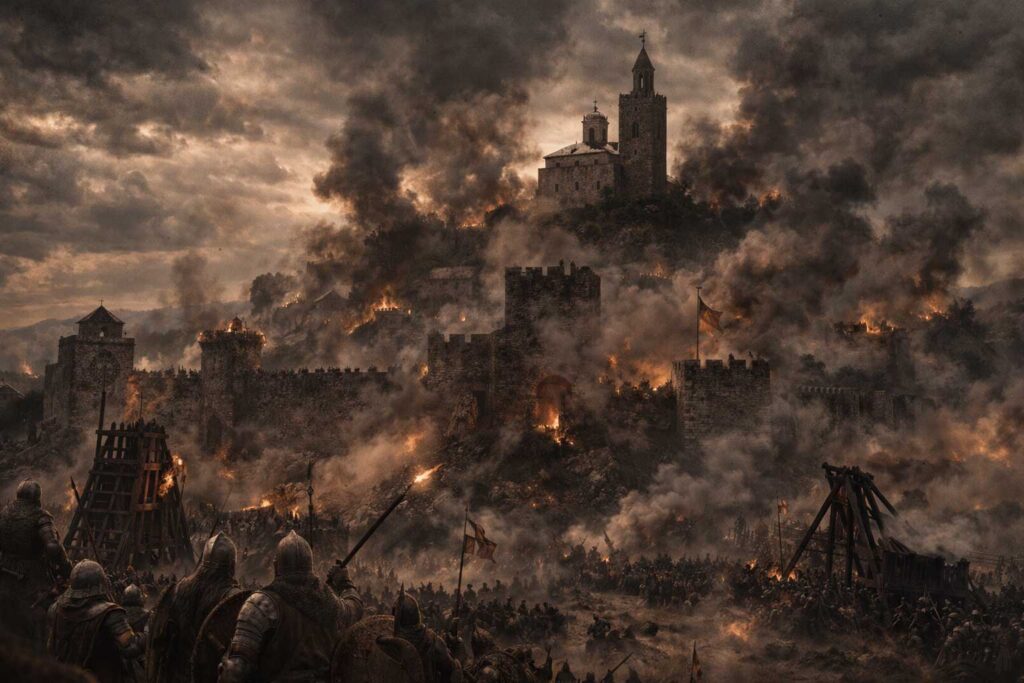
The fall of Tarnovo in 1393 was one of the most tragic moments in Bulgarian medieval history.
By this time, Ottoman expansion in the Balkans was far advanced. Bulgaria’s resources were strained, and its political fragmentation made resistance difficult. Tarnovo, the old imperial capital and spiritual center, remained a powerful symbol even as the state weakened.
The Ottoman siege of Tarnovo lasted several months. The city’s defenses were strong, but isolation and lack of coordinated support worked against it. Eventually the Ottomans captured the capital. The fall of Tarnovo was not only a military defeat. It was a symbolic collapse of medieval Bulgarian statehood.
Churches, palaces, and institutions associated with the Bulgarian tsars and patriarchs lost their political role. The fall deeply affected Bulgarian historical memory because Tarnovo represented the heart of the empire. Its loss felt like the end of an age.
Even after 1393, some Bulgarian territories continued to resist, but the center was gone.
The Final End of the Second Bulgarian Empire (1396)
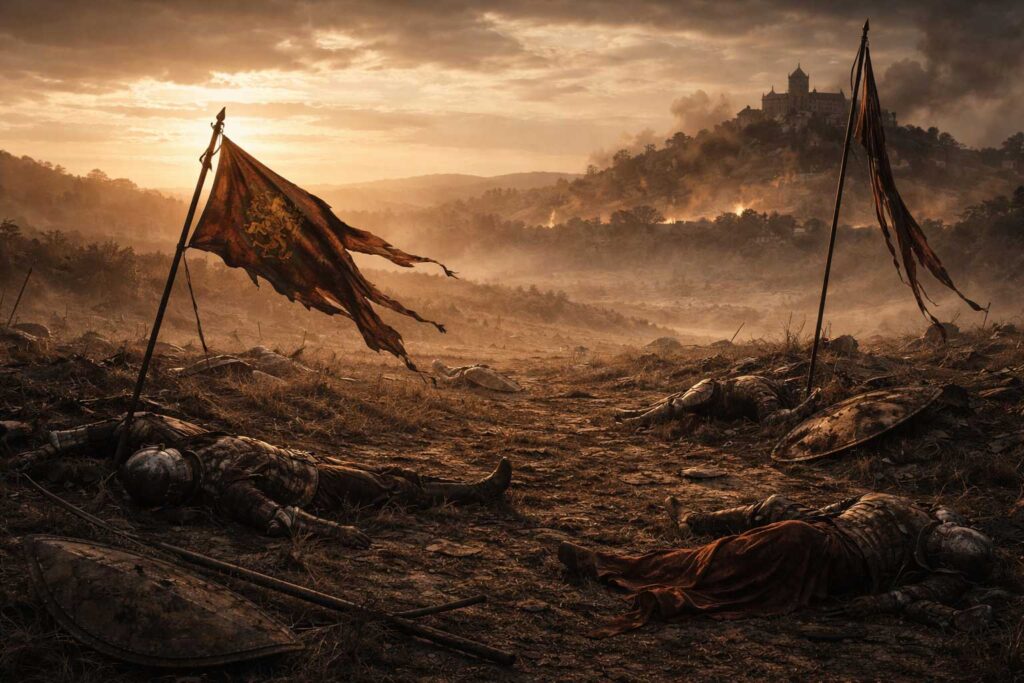
The final chapter came in 1396, when the remaining Bulgarian lands, especially the Tsardom of Vidin, were brought under Ottoman control. This date is usually given as the end of the Second Bulgarian Empire.
The defeat of the Christian coalition at the Battle of Nicopolis in 1396 further confirmed Ottoman dominance in the region. Whatever hopes remained for immediate liberation faded. Bulgaria entered a long period of Ottoman rule that would last for nearly five centuries.
The end of the Second Bulgarian Empire did not mean the end of the Bulgarian people, culture, or identity. But it did mark the end of medieval Bulgarian political independence. The memory of the empire, however, survived in chronicles, religious traditions, folklore, and later national revival thought.
These events eventually led to the period known as Ottoman Rule in Bulgaria – 500 years of history.
Why the Second Bulgarian Empire Rose
Several factors explain the rise of the Second Bulgarian Empire.
First, it emerged at a time when Byzantine power was weakening. Successful revolts often happen not only because rebels are brave but because empires are vulnerable.
Second, its founders and greatest rulers were talented. Peter IV, Ivan Asen I, Kaloyan, and Ivan Asen II all provided the kind of leadership needed in a dangerous age.
Third, Bulgaria’s geography helped. Mountains, fortresses, and strategic routes could be used effectively in both defense and expansion.
Fourth, diplomacy mattered. The empire’s rulers were not only warriors; they were negotiators. They used alliances, religious legitimacy, and international recognition to strengthen their position.
Finally, the Second Bulgarian Empire drew power from historical memory. It did not present itself as a new invention but as a restoration of an older Bulgarian state tradition. That gave it deeper legitimacy.
Why the Second Bulgarian Empire Fell
Its fall was also the result of multiple causes.
The most important internal cause was fragmentation. Weak succession, noble rivalries, and division among ruling branches undermined centralized power.
Another cause was geopolitical pressure. Bulgaria existed in a region where many powers competed, and it had to defend multiple frontiers.
The Mongol raids weakened the empire in the thirteenth century. Serbia’s rise complicated Balkan politics in the fourteenth century. The decline of Byzantium created instability rather than safety. Most decisive of all, the Ottomans brought a new, disciplined, expansionist force into the region.
The empire also suffered from the classic medieval problem of overdependence on individual rulers. Under great tsars, it thrived. Under weaker ones, its structural weaknesses became obvious.
In short, the Second Bulgarian Empire fell because external danger met internal division.
The fall marked the beginning of centuries of foreign domination, later explored in Ottoman Rule in Bulgaria.
Legacy of the Second Bulgarian Empire
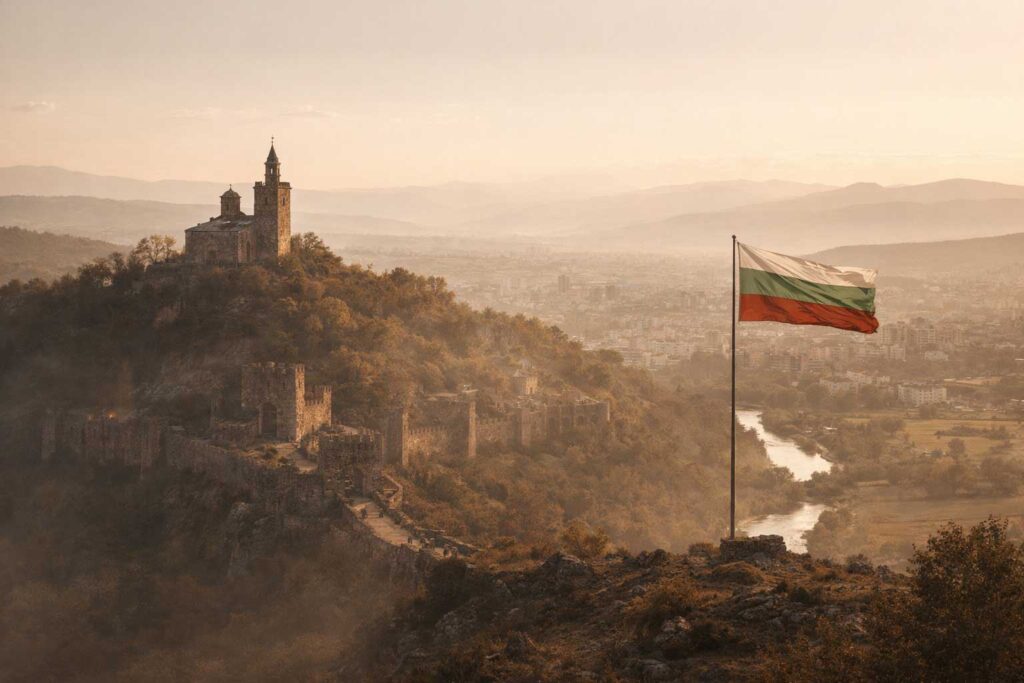
The legacy of the Second Bulgarian Empire is immense.
Politically, it restored Bulgarian statehood after Byzantine conquest and proved that Bulgaria could again be one of the major powers of the Balkans.
Militarily, it produced some of the greatest victories in Bulgarian history, especially Adrianople and Klokotnitsa.
Culturally, it turned Tarnovo into a center of Orthodox Christian literature, art, and scholarship. The works created during this period influenced the wider Slavic world.
Spiritually, it strengthened the Bulgarian Orthodox tradition and preserved a sense of religious and national distinctiveness.
Historically, it became a symbol of Bulgarian strength, resilience, and dignity. During the Bulgarian National Revival centuries later, medieval rulers such as Kaloyan and Ivan Asen II were remembered as examples of lost greatness and national potential.
Even today, the Second Bulgarian Empire remains central to how Bulgaria understands its medieval heritage.
Conclusion
The Second Bulgarian Empire was one of the most powerful and fascinating states in medieval Europe. Born from rebellion in 1185, it restored Bulgarian independence, challenged Byzantium, defeated crusaders, reached a golden age under Ivan Asen II, and created a brilliant cultural center in Tarnovo. Its history is filled with remarkable kings, decisive battles, and major turning points that shaped the Balkans for centuries.
Its rise was driven by strong leadership, strategic warfare, diplomatic intelligence, and the enduring memory of earlier Bulgarian statehood. Its fall came through internal fragmentation, external pressure, and the unstoppable momentum of Ottoman expansion. Yet even in defeat, the empire left behind something powerful: a legacy of statehood, faith, literature, and identity that survived long after its political institutions disappeared.
For anyone studying Bulgarian history, the Second Bulgarian Empire is not just an important chapter. It is one of the defining chapters. It tells the story of how a people regained freedom, built greatness, and left a cultural inheritance that still matters today.
The legacy of these rulers remains central to Bulgarian history and is explored further in Great Bulgarian rulers and kings.
For earlier context, revisit the foundations in the First Bulgarian Empire.
FAQ Section
What was the Second Bulgarian Empire?
The Second Bulgarian Empire was the medieval Bulgarian state that existed from 1185 to 1396 after the uprising of the Asen brothers against Byzantine rule.
Who founded the Second Bulgarian Empire?
It was founded by the brothers Theodore-Peter and Ivan Asen, later joined by Kaloyan.
What was the capital of the Second Bulgarian Empire?
The capital was Tarnovo, today known as Veliko Tarnovo.
Who was the greatest ruler of the Second Bulgarian Empire?
Many historians consider Ivan Asen II the greatest ruler because Bulgaria reached its largest extent and greatest prosperity during his reign.
What was the Battle of Adrianople?
The Battle of Adrianople in 1205 was a major Bulgarian victory under Tsar Kaloyan over the Latin crusaders, resulting in the capture of Emperor Baldwin I.
What was the Battle of Klokotnitsa?
The Battle of Klokotnitsa in 1230 was a decisive Bulgarian victory under Ivan Asen II over Epirus, establishing Bulgaria as the dominant Balkan power.
Why did the Second Bulgarian Empire fall?
It fell because of internal divisions, weak central power, noble rivalries, foreign invasions, and ultimately Ottoman conquest.
When did the Second Bulgarian Empire end?
It ended in 1396 when the last remaining Bulgarian state structures were conquered by the Ottomans.
Related Articles
- Great Bulgarian Rulers and Kings
- The First Bulgarian Empire Explained
- Ottoman Rule in Bulgaria – 500 Years of History
- Famous Battles in Bulgarian History
References
- Fine, John V. A. The Late Medieval Balkans: A Critical Survey from the Late Twelfth Century to the Ottoman Conquest. University of Michigan Press, 1994.
- Curta, Florin. Southeastern Europe in the Middle Ages, 500–1250. Cambridge University Press, 2006.
- Ostrogorsky, George. History of the Byzantine State. Rutgers University Press, 1969.
- Nicol, Donald M. The Despotate of Epirus, 1267–1479. Cambridge University Press, 1984.
- Stephenson, Paul. Byzantium’s Balkan Frontier: A Political Study of the Northern Balkans, 900–1204. Cambridge University Press, 2000.
- Vásáry, István. Cumans and Tatars: Oriental Military in the Pre-Ottoman Balkans, 1185–1365. Cambridge University Press, 2005.
- Божилов, Иван (Bozhilov, Ivan). Фамилията на Асеневци (1186–1460). София, 1985.
- Ангелов, Димитър (Angelov, Dimitar). История на България през Средновековието. София, 1999.
- Encyclopaedia Britannica. “Second Bulgarian Empire.” https://www.britannica.com/place/Bulgaria/The-Second-Bulgarian-Empire
- World History Encyclopedia. “Second Bulgarian Empire.” https://www.worldhistory.org/Second_Bulgarian_Empire/