


Bulgarian medical breakthroughs have played a critical role in shaping modern healthcare, particularly in fields such as microbiology, cardiology, pharmacology, and medical technology. While Bulgaria is rarely highlighted in mainstream scientific narratives, its contributions are deeply embedded in the foundations of contemporary medicine.
Bulgarian medical breakthroughs represent some of the most important medical breakthroughs in Bulgaria that continue to influence global healthcare.
Unlike general overviews of Bulgarian science, this guide focuses specifically on clinical discoveries, laboratory innovations, and medical advancements that have directly influenced healthcare systems worldwide.
From identifying key microorganisms to developing life-saving pharmaceuticals and advancing diagnostic science, Bulgarian researchers have helped transform how diseases are understood, diagnosed, and treated.
What Are the Most Important Bulgarian Medical Breakthroughs?
Bulgarian medical breakthroughs have significantly influenced modern healthcare, particularly in microbiology, cardiology, and pharmaceutical science. Key discoveries, including probiotic bacteria research and neurological treatments, continue to shape global medicine today.
Clinical Discoveries That Influenced Modern Medicine

The Microbiological Breakthrough of Stamen Grigorov
In 1905, Bulgarian microbiologist Stamen Grigorov made a landmark scientific discovery while conducting microscopic analysis of fermented milk cultures. Through careful observation and early bacteriological techniques, he identified Lactobacillus bulgaricus, one of the first documented beneficial bacterial strains.
At a time when microbiology was still emerging as a discipline, Grigorov’s work demonstrated that specific microorganisms could be isolated, studied, and linked to biological processes—an insight that would later become fundamental to modern medical science.
Clinical Significance
Rather than focusing on dietary or cultural aspects, the importance of this discovery lies in its scientific and clinical implications:
- Development of early microbial isolation and identification techniques
- Contribution to the foundation of bacteriology in clinical medicine
- Influence on the study of host–microbe interactions
- Early insights into what is now known as the human microbiome
Grigorov’s methodology helped establish the principle that microorganisms are not only causes of disease—but also essential components of human health.
Why This Matters in Modern Medicine
Modern healthcare relies heavily on microbiological science, much of which builds on early discoveries like Grigorov’s:
- Antibiotic development – understanding bacterial structure and behavior
- Disease diagnostics – identifying pathogens through lab testing
- Hospital infection control systems – preventing the spread of harmful microbes
- Microbiome research – exploring the role of beneficial bacteria in health and disease
Today, microbiology is a cornerstone of virtually every medical field, from internal medicine to surgery and public health.
This discovery remains one of the most important Bulgarian microbiology discoveries in medical history.
To explore the scientific background and biological role of this discovery in more detail, see our full guide on Lactobacillus Bulgaricus Explained.
Affiliate Disclosure: Some of the resources below are affiliate links, which means we may earn a small commission at no additional cost to you. This helps support Bulgaropedia and allows us to continue creating high-quality content.
Essential Lab Tools for Learning Medical Science
To better understand the scientific principles behind these breakthroughs, these lab tools and educational kits provide hands-on insight into microbiology, physiology, and medical research.
| Product | Best For | Why It’s Valuable | Rating | Check Price |
|---|---|---|---|---|
| Digital Microscope Kit | Microbiology learning | Observe bacteria & samples | ⭐⭐⭐⭐⭐ | Check Price |
| Anatomy Model (Human Body) | Medical education | Visualize organs & systems | ⭐⭐⭐⭐⭐ | Check Price |
| Lab Glassware Starter Kit | Experiments | Safe basic lab setup | ⭐⭐⭐⭐ | Check Price |
| pH Testing Kit | Biology & chemistry | Understand chemical balance | ⭐⭐⭐⭐ | Check Price |
| Medical Lab Coat + Safety Glasses | Lab safety | Realistic learning environment | ⭐⭐⭐⭐⭐ | Check Price |
These tools are commonly used by students and enthusiasts to explore the same scientific concepts that shaped modern medicine.
Cardiology Innovation: Ivan Mitev and the Sixth Heart Tone
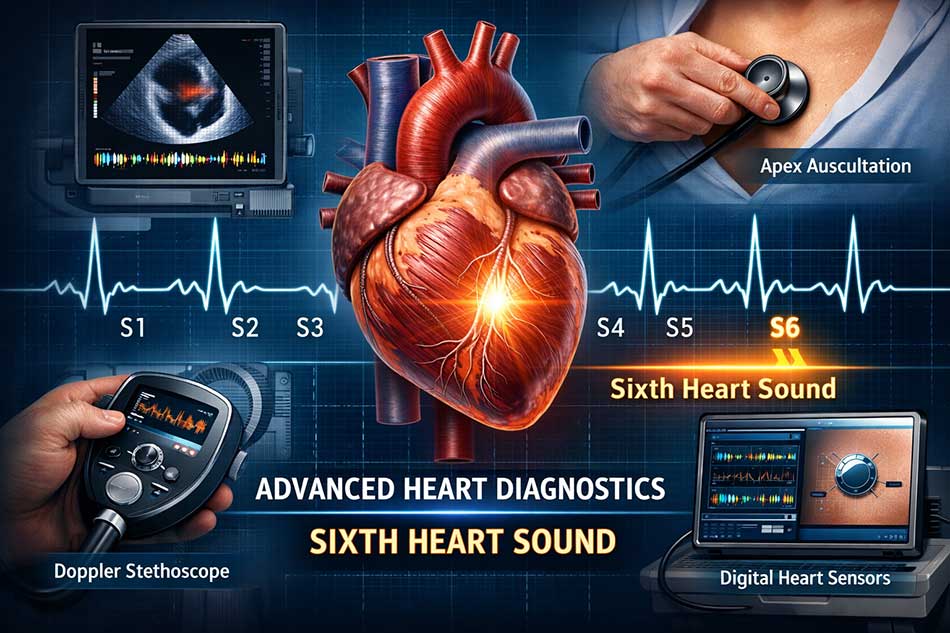
Bulgarian physician Ivan Mitev identified an additional heart sound—now known as the Mitev tone or sixth heart sound—expanding the clinical understanding of cardiac physiology beyond the traditionally recognized heart sounds.
At the time of his discovery, cardiac diagnostics relied heavily on careful listening techniques rather than imaging technologies. Mitev’s work demonstrated that subtle variations in heart sounds could reveal deeper insights into heart function, particularly in pediatric patients.
Medical Impact
- Enhanced auscultation techniques used in clinical examinations
- Improved early detection of cardiac abnormalities
- Contributed to more precise cardiology diagnostics training
- Expanded the framework for interpreting heart sound patterns
Clinical Relevance Today
Even in an era dominated by echocardiography and advanced imaging, physical examination remains a foundational skill in medicine. Auscultation is still one of the first diagnostic steps in evaluating cardiovascular health.
Mitev’s discovery continues to be referenced in medical education, reinforcing the importance of:
- Careful clinical observation
- Non-invasive diagnostic methods
- Integrating traditional skills with modern technology
This finding is among the most notable Bulgarian cardiology discoveries.
This discovery is part of a broader legacy highlighted in our article on Bulgarian Scientists Who Changed Medicine, where we explore other key medical pioneers.
Pharmaceutical Innovations From Bulgaria
The Development of Galantamine by Dimitar Paskov
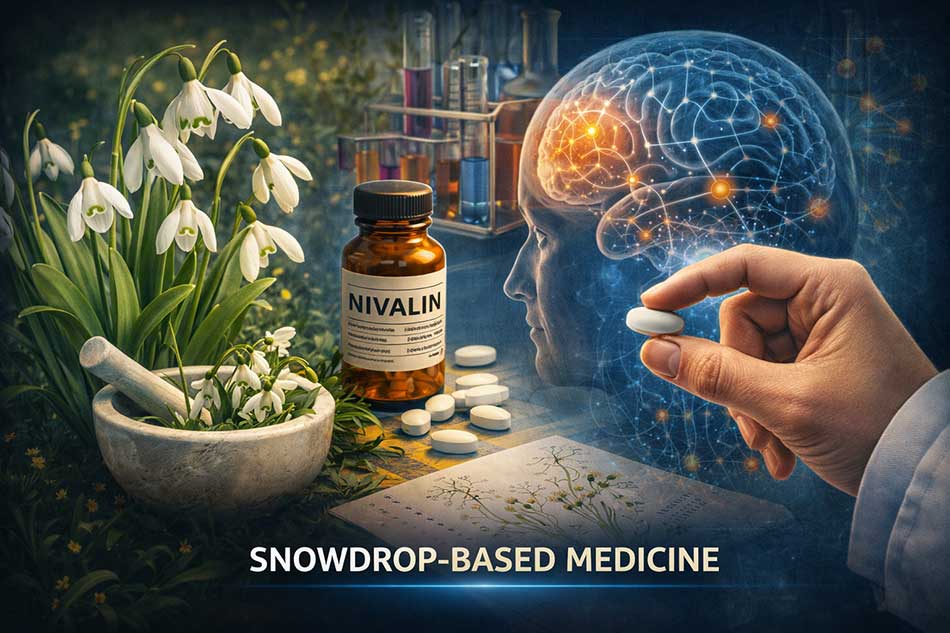
In the mid-20th century, Bulgarian pharmacologist Dimitar Paskov isolated and developed a bioactive compound from the snowdrop plant (Galanthus nivalis), later known internationally as galantamine. His work bridged traditional botanical knowledge with rigorous pharmacological research, transforming a naturally occurring alkaloid into a clinically useful medication.
Clinical & Pharmacological Importance
- Functions as an acetylcholinesterase inhibitor, helping preserve acetylcholine levels in the brain
- Supports neurotransmitter activity related to memory and cognition
- Applied in the management of neurodegenerative disorders, particularly those affecting cognitive decline
- Studied for its role in neuroprotection and synaptic function
Why This Is a Major Breakthrough
This discovery represents a turning point in modern medicine:
- Demonstrated how plant-derived compounds can be transformed into standardized pharmaceuticals
- Showcased the global relevance of Eastern European medical research during the 20th century
- Contributed to the broader field of neuropharmacology, influencing future drug development strategies
Today, galantamine remains an important example of how natural compounds can inform and shape modern therapeutic approaches.
Galantamine is considered one of the most significant Bulgarian pharmaceutical innovations.
This breakthrough is also featured in our overview of Bulgarian Inventions That Changed the World, showcasing innovations with global impact.
Medical Technology & Infrastructure Contributions

The Hidden Impact of Georgi Nadjakov
Bulgarian physicist Georgi Nadjakov discovered the photoelectret state, a phenomenon related to photoconductivity. This scientific breakthrough later became a foundational principle behind xerography (photocopying technology)—an innovation that would transform information handling across industries, including healthcare.
Why This Matters in Medicine
Although not a direct medical invention, Nadjakov’s discovery had a profound impact on the infrastructure of modern healthcare systems:
- Enabled reliable medical documentation and record duplication
- Made it possible to reproduce diagnostic images such as X-rays and scans
- Accelerated research sharing and academic collaboration
- Improved hospital workflow efficiency and data accessibility
Modern Healthcare Impact
Today, nearly every healthcare system relies on the principles enabled by this discovery:
- Accurate documentation for patient history and treatment continuity
- Reproducible imaging for diagnostics, consultations, and second opinions
- Secure data sharing across departments, institutions, and countries
Without these capabilities, modern medicine—especially large-scale hospital operations—would be significantly less efficient and far more prone to error.
👉 This remains one of the most underrated Bulgarian contributions to medical infrastructure, demonstrating how breakthroughs in physics can indirectly reshape global healthcare systems.
Human Physiology & Safety Science

Aviation Medicine Contributions by Assen Jordanoff
Bulgarian aviation pioneer Assen Jordanoff conducted early research into how the human body reacts under extreme flight conditions. His work combined engineering, physiology, and safety science, helping establish foundational knowledge in what would later become aviation and aerospace medicine.
At a time when high-altitude flight was still relatively new, Jordanoff’s observations provided critical insights into the limits of human performance and survival in environments far beyond normal physiological conditions.
Key Medical Insights
- Effects of oxygen deprivation (hypoxia) on brain and body function
- Impact of rapid pressure changes on circulation and respiration
- Understanding human tolerance to altitude and extreme environments
- Early recognition of physiological stress under flight conditions
Medical Relevance Today
Jordanoff’s research continues to influence several areas of modern medicine:
- Emergency medicine – understanding oxygen loss and shock
- Trauma response – managing rapid physiological changes
- Aerospace medicine – preparing humans for high-altitude and space environments
- Critical care – monitoring respiratory and cardiovascular stability
👉 His work highlights how aviation research contributed directly to broader medical knowledge, reinforcing the connection between extreme environment physiology and modern healthcare practices.
Preventive & Longevity Science (Clinical Perspective)
Bulgaria has contributed to early scientific observations in longevity and population health, particularly through studies of rural communities known for extended lifespans and relatively low rates of chronic disease. These observations attracted international attention in the 20th century and helped shape early thinking around preventive medicine.
Scientific Contributions
- Research on aging populations in rural Bulgaria, focusing on lifestyle, environment, and health outcomes
- Early exploration of the relationship between the gut microbiome and long-term health
- Observational studies linking dietary patterns and disease prevention
- Contributions to the emerging field of epidemiology and population health science
Modern Clinical Connection
Today, these early insights are reflected in multiple areas of modern healthcare:
- Preventive healthcare strategies aimed at reducing chronic disease risk
- Lifestyle medicine, focusing on diet, physical activity, and long-term wellness
- Epidemiology, analyzing population-level health trends and longevity patterns
- Growing emphasis on microbiome research in clinical and therapeutic settings
For a deeper look at the nutritional side of these findings, explore Bulgarian Superfoods and Their Health Benefits, where traditional foods are analyzed through a modern health lens.
Recommended Supplements for Brain & Microbiome Health
If you’re interested in the clinical applications of microbiology and neuropharmacology, these scientifically backed supplements can help support brain function, gut health, and overall wellness.
| Product | Best For | Key Benefit | Rating | Check Price |
|---|---|---|---|---|
| High Potency Probiotic (50B CFU) | Gut microbiome | Supports digestive & immune health | ⭐⭐⭐⭐⭐ | Check Price |
| Omega-3 Fish Oil Capsules | Brain health | Supports cognitive function & heart health | ⭐⭐⭐⭐⭐ | Check Price |
| Ginkgo Biloba Extract | Memory support | Improves circulation & cognitive clarity | ⭐⭐⭐⭐ | Check Price |
| Magnesium Glycinate | Nervous system | Reduces stress & supports sleep | ⭐⭐⭐⭐⭐ | Check Price |
| Vitamin B Complex | Energy & brain | Supports neurotransmitter function | ⭐⭐⭐⭐⭐ | Check Price |
These supplements are widely used to support cognitive and microbiome health, aligning with many of the principles behind modern preventive medicine.
Underrecognized Bulgarian Medical Contributions
While major breakthroughs often receive global recognition, several Bulgarian contributions to medicine remain underappreciated despite their long-term impact on healthcare systems and public health policy. These areas represent a crucial layer of influence that differentiates Bulgaria’s role in modern medicine.
Key Areas Often Overlooked
- Contributions to vaccine research and immunization programs during the 20th century, supporting disease prevention efforts across Eastern Europe
- Development and application of Eastern European clinical methodologies, emphasizing systematic observation, efficiency, and patient-centered diagnostics
- Implementation of public health system models focused on accessibility, prevention, and large-scale population management
Why This Matters
These contributions played a significant role in shaping broader healthcare systems:
- Influenced the evolution of European Union healthcare frameworks
- Strengthened disease control and prevention strategies at the population level
- Supported the development of efficient, scalable healthcare delivery models
- Contributed to modern approaches in public health planning and epidemiology
👉 This section reinforces the broader impact of Bulgarian medical science—not just through individual discoveries, but through system-level innovations that continue to influence global healthcare today.
Integration Into Global Medicine
Bulgarian medical breakthroughs have been progressively integrated into international healthcare systems, influencing standards, research, and clinical practice across multiple regions. Through collaboration, publication, and adoption, these contributions have become part of the global medical framework.
Global Integration Pathways
- Alignment with guidelines from the World Health Organization
- Adoption within European Union medical standards and regulatory systems
- Inclusion in global pharmaceutical research and drug development pipelines
- Contribution to international clinical education and training programs
Key Areas of Influence
- Microbiology → foundational science
Bulgarian research helped shape early bacteriology, supporting modern laboratory diagnostics and infectious disease control. - Pharmacology → drug development
Discoveries such as plant-derived compounds influenced how medications are researched, developed, and standardized globally. - Cardiology → diagnostics
Clinical observations improved non-invasive diagnostic methods still used in medical training today. - Technology → hospital systems
Advances in physics and engineering contributed to documentation, imaging, and healthcare infrastructure.
Why This Matters
The integration of Bulgarian medical contributions into global systems highlights how scientific knowledge transcends borders. These innovations continue to support:
- Evidence-based medicine
- International healthcare standards
- Cross-border medical collaboration
👉 This global integration underscores the lasting relevance of Bulgarian breakthroughs—not only as historical achievements, but as active components of modern healthcare worldwide.
These advancements are part of a wider scientific legacy covered in Bulgarian Scientific Achievements and Discoveries, which highlights Bulgaria’s global contributions across multiple fields.
Recommended Medical & Health Resources
Medical & Health Knowledge Tools
To better understand the clinical principles behind these Bulgarian medical breakthroughs, the following resources provide in-depth knowledge used by students, professionals, and health enthusiasts worldwide.
| Product | Best For | Why It’s Valuable | Rating | Check Price |
|---|---|---|---|---|
| Medical Microbiology Textbook | Students & professionals | Deep understanding of bacteria & disease | ⭐⭐⭐⭐⭐ | Check Price |
| Human Anatomy Atlas | Visual learners | 3D anatomy reference | ⭐⭐⭐⭐⭐ | Check Price |
| Clinical Cardiology Guide | Medical insight | Learn heart diagnostics | ⭐⭐⭐⭐⭐ | Check Price |
| Herbal Medicine Encyclopedia | Natural medicine | Connect traditional & modern science | ⭐⭐⭐⭐⭐ | Check Price |
FAQs About Bulgarian Medical Breakthroughs
What are the most important Bulgarian medical breakthroughs?
The most important Bulgarian medical breakthroughs include the microbiological research of Stamen Grigorov, the cardiology discovery of the sixth heart tone by Ivan Mitev, and the development of galantamine by Dimitar Paskov. These discoveries significantly influenced modern microbiology, clinical diagnostics, and pharmaceutical treatments worldwide.
Did Bulgaria contribute to modern pharmaceuticals?
Yes, Bulgaria has contributed to modern pharmaceuticals, particularly through the development of plant-derived medications such as galantamine. Research led by Dimitar Paskov demonstrated how natural compounds can be transformed into clinically effective drugs, influencing modern pharmacology and drug development practices.
Why are Bulgarian medical discoveries important today?
Bulgarian medical discoveries remain important because they form part of the scientific foundation of modern healthcare. Contributions in microbiology, cardiology, and pharmacology continue to support diagnostics, treatment methods, and preventive medicine strategies used globally today.
Which Bulgarian scientist discovered beneficial bacteria?
Stamen Grigorov discovered Lactobacillus bulgaricus in 1905 while studying bacterial cultures. His work laid the groundwork for modern microbiology and contributed to the development of clinical bacteriology and microbiome research.
What role did Bulgaria play in cardiology research?
Bulgaria contributed to cardiology through the work of Ivan Mitev, who identified the sixth heart sound. This discovery improved clinical auscultation techniques and expanded the understanding of heart function, especially in diagnostic cardiology.
Are Bulgarian medical discoveries still used in modern healthcare?
Yes, many Bulgarian medical discoveries are still used today. Microbiological methods, pharmaceutical compounds, and diagnostic techniques developed by Bulgarian scientists are integrated into modern healthcare systems, research institutions, and medical education worldwide.
How did Bulgarian research influence global medicine?
Bulgarian research influenced global medicine by contributing foundational discoveries in microbiology, pharmacology, and clinical diagnostics. These advancements were later adopted into international medical practices, pharmaceutical development, and healthcare systems across Europe and beyond.
Conclusion
Bulgarian medical breakthroughs demonstrate how focused scientific inquiry can produce lasting global impact. From the laboratory work of Stamen Grigorov in microbiology to the clinical insights of Ivan Mitev and the pharmaceutical advancements of Dimitar Paskov, these contributions have become part of the foundation of modern healthcare systems.
What distinguishes Bulgaria’s role in medicine is not scale, but precision—discoveries rooted in careful observation, interdisciplinary thinking, and the ability to connect natural science with clinical application. These innovations have influenced diagnostics, drug development, and medical education far beyond the country’s borders.
Today, as healthcare continues to evolve toward personalized medicine, preventive care, and advanced therapeutics, the influence of these breakthroughs remains visible. Bulgarian research has helped shape the tools, methods, and knowledge that clinicians and scientists rely on worldwide.
Understanding these contributions offers more than historical insight—it highlights how meaningful advances in medicine often emerge from persistence, curiosity, and a deep commitment to improving human health.
References
- WikiPedia Stamen Grigorov. “Stamen Grigorov.” https://en.wikipedia.org/wiki/Stamen_Grigorov
- National Center for Biotechnology Information. “Galantamine.” https://www.ncbi.nlm.nih.gov/books/NBK538289/
- PubChem. “Galantamine.” National Library of Medicine. https://pubchem.ncbi.nlm.nih.gov/compound/Galantamine
- World Health Organization. “Traditional, Complementary and Integrative Medicine.” https://www.who.int/health-topics/traditional-complementary-and-integrative-medicine
- World Health Organization. “Health Promotion and Disease Prevention.” https://www.who.int/teams/health-promotion
- Bulgarian Academy of Sciences. “Bulgarian Academy of Sciences.” https://www.bas.bg/
- European Medicines Agency. “Galantamine.” https://www.ema.europa.eu/en/medicines
- National Library of Medicine. “Probiotics.” MedlinePlus. https://www.nccih.nih.gov/health/probiotics-usefulness-and-safety