


Bulgarian yogurt is one of the most famous and healthiest fermented foods in the world. Known for its rich taste, thick texture, and powerful health benefits, it has been a staple of Bulgarian cuisine for centuries.
What makes it truly unique is the presence of specific bacteria—especially Lactobacillus bulgaricus—which give it its distinctive flavor, texture, and probiotic properties.
Unlike many modern dairy products, Bulgarian yogurt is made using natural fermentation techniques that have been preserved for generations. This combination of tradition and science makes it one of the most authentic and beneficial fermented foods available today.
What Is Bulgarian Yogurt?
Bulgarian yogurt is a fermented milk product created by introducing beneficial bacteria into milk under controlled temperature conditions.
In addition to its simple ingredients, Bulgarian yogurt is defined by the balance and activity of its live cultures. Unlike many commercial products that may contain multiple strains or modified bacteria, traditional Bulgarian yogurt relies on a precise interaction between naturally occurring microorganisms. This balance ensures consistent fermentation, resulting in a product that is both flavorful and nutritionally rich.
Another important aspect is that Bulgarian yogurt is typically consumed fresh and minimally processed, which helps preserve its live bacterial content. This makes it especially valuable for those seeking natural sources of probiotics and functional foods that support digestive health without unnecessary additives.
What sets it apart is its simple yet powerful composition:
- Milk
- Natural starter culture
- Time and temperature control
Unlike commercial yogurts that often include additives, stabilizers, or artificial flavors, traditional Bulgarian yogurt relies entirely on natural bacterial fermentation.
This results in:
- A tangy, slightly sour flavor
- A thick and creamy consistency
- A high concentration of beneficial bacteria
👉 The key to this transformation lies in the activity of specific bacterial strains, especially Lactobacillus bulgaricus.
History of Bulgarian Yogurt
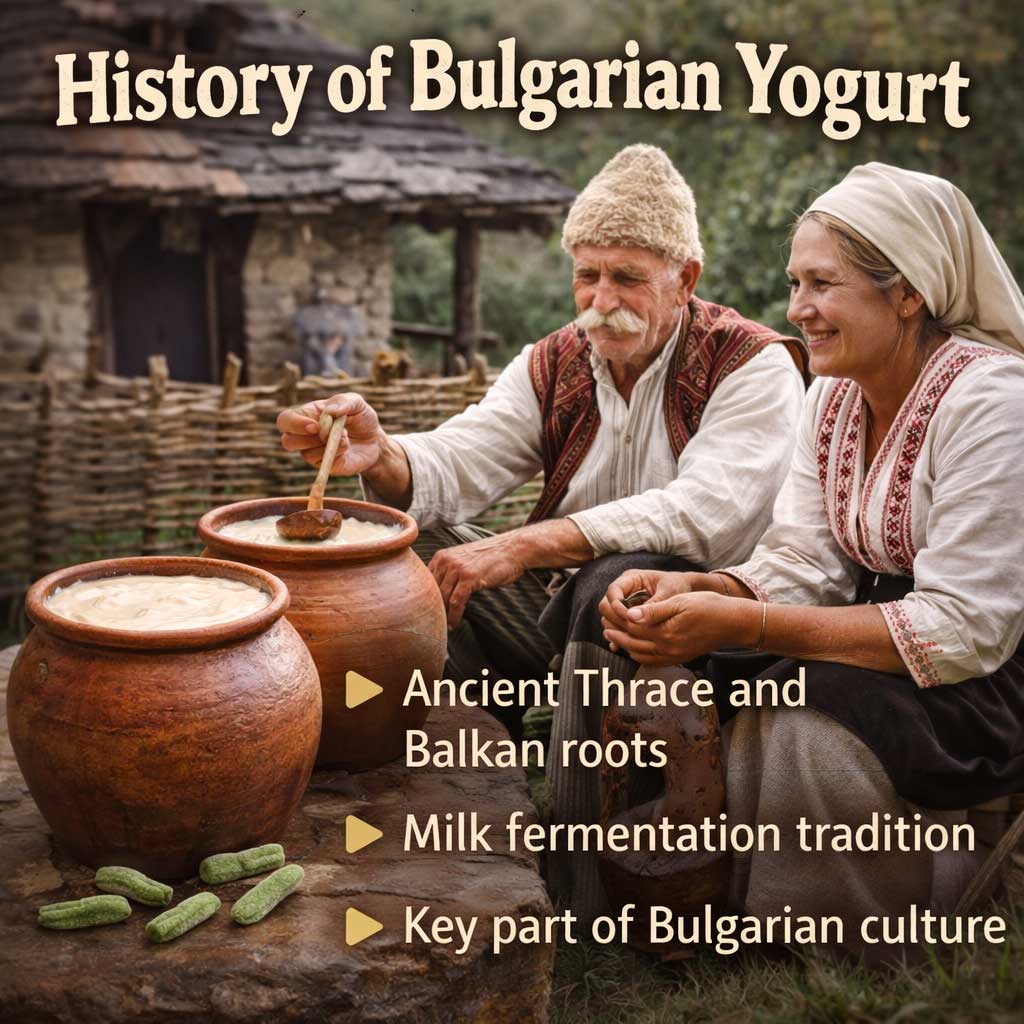
The origins of Bulgarian yogurt date back thousands of years to ancient Thracian tribes who inhabited the Balkan region. These early populations discovered that milk left in warm conditions would naturally ferment into a thicker, longer-lasting product.
Over time, this process became refined into a traditional method of yogurt production passed down through generations.
Over centuries, yogurt became deeply integrated into daily life in Bulgaria, especially in rural communities where dairy farming was common. Families developed their own techniques for maintaining starter cultures, often passing them down through generations. This created regional variations while still preserving the core characteristics of authentic yogurt.
During the 20th century, Bulgarian yogurt gained international recognition as scientists and travelers began to study its unique qualities. It became one of the first traditional foods to be examined through the lens of modern microbiology, helping bridge the gap between ancient food practices and contemporary science.
In the early 20th century, the scientific importance of Bulgarian yogurt gained global attention thanks to Ilya Metchnikoff.
Metchnikoff studied rural Bulgarian populations and observed:
- High consumption of fermented milk
- Strong digestive health
- Longer life expectancy
His research helped introduce yogurt to Western Europe and popularize the idea that fermented foods contribute to health and longevity.
👉 This marked the beginning of yogurt as a global superfood.
What Makes Bulgarian Yogurt Unique?
Bulgarian yogurt stands out from all other types of yogurt due to its specific bacterial composition and traditional preparation methods.
Only Two Essential Bacteria:
These bacteria work together in perfect balance to create authentic yogurt.
Another factor that contributes to its uniqueness is the absence of industrial interference in traditional preparation. The fermentation process is allowed to develop naturally over time, which enhances both flavor complexity and bacterial activity. This slow process contrasts sharply with industrial methods that prioritize speed over quality.
Additionally, the specific strains used in Bulgarian yogurt create a stronger and more distinctive taste profile compared to other yogurts. This bold flavor is often described as more authentic and satisfying, especially for those accustomed to traditional fermented foods.
Key Differences:
- No artificial thickeners
- No added preservatives
- Stronger fermentation process
- More pronounced flavor
👉 This simplicity is what gives Bulgarian yogurt its authenticity and purity.
Health Benefits of Bulgarian Yogurt

Beyond its digestive benefits, Bulgarian yogurt is also valued for its potential role in supporting overall metabolic health. The combination of probiotics, proteins, and essential nutrients makes it a well-balanced food that can be included in a wide variety of diets.
Emerging research also suggests that regular consumption of fermented foods like yogurt may contribute to better nutrient absorption and improved gut-brain connection, highlighting its broader impact on both physical and mental well-being.
Bulgarian yogurt is widely considered one of the healthiest dairy products available.
Key Benefits:
✔ Supports Gut Health
The probiotics in yogurt help maintain a healthy balance of gut bacteria.
✔ Improves Digestion
Fermentation breaks down lactose, making it easier to digest.
✔ Boosts Immune System
A healthy gut is closely linked to stronger immunity.
✔ May Support Longevity: Linked to traditional diets studied for long life.
✔ Rich in Nutrients
- Calcium
- Protein
- Vitamins B2 and B12
👉 Regular consumption can contribute to overall well-being.
Bulgarian Yogurt vs Regular Yogurt

Another key difference lies in how each product is processed after fermentation. Many commercial yogurts undergo additional steps such as flavoring, sweetening, and stabilization, which can alter both their nutritional profile and bacterial content.
In contrast, Bulgarian yogurt is often consumed in its purest form, allowing the natural fermentation process to remain the primary source of flavor and texture. This simplicity is one of the reasons it is highly valued among traditional food enthusiasts.
| Feature | Bulgarian Yogurt | Regular Yogurt |
|---|---|---|
| Bacteria | Specific strains | Mixed cultures |
| Taste | Tangy, strong | Mild |
| Texture | Thick | Often thinner |
| Additives | None | Often present |
| Fermentation | Natural | Industrial |
👉 This comparison highlights why Bulgarian yogurt is considered more authentic.
How Bulgarian Yogurt Is Made (Traditional Method)
Temperature control plays a critical role in the success of yogurt fermentation. Maintaining a stable warm environment allows the bacteria to multiply efficiently and produce the desired level of acidity. Even small variations in temperature can affect the final texture and taste.
Another important factor is the quality of the starter culture. Traditional methods often use a small amount of previously made yogurt, ensuring continuity of the bacterial strains and preserving the authentic characteristics of the final product.
The traditional process of making Bulgarian yogurt is simple but requires precision.
Step-by-Step:
- Heat milk to near boiling
- Cool to ~43°C
- Add starter culture
- Keep warm for 6–8 hours
- Refrigerate to stop fermentation
Traditionally, yogurt was made in:
- Clay pots
- Warm environments
- Using previous batch as starter
👉 This method preserves the natural bacterial culture.
Why It’s Considered One of the Healthiest Yogurts
One of the reasons Bulgarian yogurt is considered so healthy is its minimal processing and natural composition. Without artificial additives or excessive sugar, it remains a clean and nutrient-dense food option.
Additionally, its long history of consumption in traditional diets supports its reputation as a reliable and beneficial food, making it a staple in both cultural practices and modern health-conscious lifestyles.
Bulgarian yogurt stands out because it combines:
- Natural fermentation
- High probiotic activity
- No artificial ingredients
- Long history of consumption
Unlike heavily processed foods, it remains close to its natural form, making it highly valued in both traditional diets and modern nutrition science.
Traditional vs Modern Production
Modern production methods have made yogurt more accessible, but they often sacrifice some of the qualities found in traditional versions. Faster fermentation processes can reduce the depth of flavor and alter the balance of beneficial bacteria.
However, advancements in food technology have also improved safety and consistency, allowing more people around the world to enjoy yogurt. The key difference remains the level of authenticity and richness found in traditionally made products.
Modern yogurt production differs significantly from traditional methods.
Traditional:
- Slow fermentation
- Natural cultures
- No additives
Industrial:
- Faster production
- Standardized bacteria
- Added stabilizers
👉 While both are safe, traditional yogurt often has richer flavor and higher authenticity.
How to Make Bulgarian Yogurt at Home

Making yogurt at home also allows for greater control over ingredients and fermentation conditions. This means you can adjust the thickness, taste, and bacterial strength according to personal preference.
It is also a cost-effective and sustainable practice, as a small amount of starter culture can be reused multiple times. This makes homemade yogurt both practical and rewarding.
Making yogurt at home is surprisingly easy.
You only need:
- Milk
- Starter culture
- Warm environment
Cultural Importance in Bulgaria
Yogurt is deeply embedded in Bulgarian identity and is often associated with hospitality, tradition, and health. It is commonly served with meals, used in recipes, or enjoyed on its own.
Beyond its culinary role, it also symbolizes the connection between people and nature, reflecting centuries of agricultural practices and knowledge passed down through generations.
In Bulgaria, yogurt is more than food—it is part of daily life.
- Eaten at breakfast
- Used in cooking
- Passed through generations
- Considered a symbol of health
👉 It represents the connection between tradition, culture, and nutrition.
Recommended Reads
- Lactobacillus bulgaricus
- Bulgarian Cuisine: Traditional Food
- Traditional Bulgarian Dairy Products
- Bulgarian Breakfast Foods
FAQs About Bulgarian Yogurt
What is Bulgarian yogurt?
Bulgarian yogurt is a traditional fermented dairy product made by adding specific live bacterial cultures to milk. These bacteria ferment lactose into lactic acid, giving the yogurt its characteristic sour taste, thick texture, and natural preservation qualities. It is known for being minimally processed and rich in beneficial probiotics.
Why is Bulgarian yogurt different?
Bulgarian yogurt is different because it uses a specific combination of bacteria that are not always present in other yogurts. This creates a stronger flavor, thicker consistency, and more active fermentation process. Unlike many commercial yogurts, it is often made without additives, stabilizers, or artificial ingredients.
Is Bulgarian yogurt healthy?
Yes, Bulgarian yogurt is widely considered very healthy. It supports digestion, promotes a balanced gut microbiome, and provides essential nutrients such as protein, calcium, and vitamins. Because of its natural fermentation, it may also be easier to digest than regular milk.
Can I make Bulgarian yogurt at home?
Yes, Bulgarian yogurt can be easily made at home using milk and a starter culture. By maintaining the right temperature during fermentation, you can create yogurt that closely resembles traditional Bulgarian varieties. Homemade yogurt also allows you to control ingredients and avoid additives.
What bacteria are used in Bulgarian yogurt?
The main bacteria used are Lactobacillus bulgaricus and Streptococcus thermophilus. These two microorganisms work together in a symbiotic relationship to ferment milk and create the unique taste and texture of Bulgarian yogurt.
Is Bulgarian yogurt better than regular yogurt?
Bulgarian yogurt is often considered better due to its natural fermentation, lack of additives, and stronger probiotic activity. However, the choice depends on personal taste and dietary preferences.
Why is Bulgarian yogurt so thick?
Its thickness comes from the natural coagulation of milk proteins during fermentation, rather than added thickeners. This gives it a dense, creamy texture.
Does Bulgarian yogurt contain probiotics?
Yes, it contains live beneficial bacteria that can support gut health and digestion when consumed regularly.
Is Bulgarian yogurt lactose-free?
It is not completely lactose-free, but the fermentation process reduces lactose levels, making it easier to digest for many people with mild lactose intolerance.
How often should you eat Bulgarian yogurt?
It can be consumed daily as part of a balanced diet. Many traditional diets include yogurt regularly due to its nutritional and digestive benefits.
What does Bulgarian yogurt taste like?
It has a slightly sour, tangy flavor that is stronger and more authentic compared to most commercial yogurts.
Final Insight
Bulgarian yogurt is more than just a food—it is a perfect example of how traditional knowledge and modern science come together.
From ancient fermentation methods to modern probiotic research, it continues to play an important role in nutrition and health.
👉 Its unique combination of taste, texture, and benefits makes it one of the most valuable fermented foods in the world.
As global interest in natural and functional foods continues to grow, Bulgarian yogurt stands out as a timeless example of how simple ingredients can deliver powerful benefits. Its enduring popularity reflects both its nutritional value and cultural significance.
👉 This combination of tradition, science, and health makes Bulgarian yogurt not just a food, but a lasting symbol of balance between nature and human innovation.