


The Bulgarian bean salad recipe, known locally as Bobena Salata, is one of the most traditional and nourishing dishes in Bulgarian cuisine. Simple, hearty, and packed with flavor, this salad transforms humble ingredients into a satisfying meal that has been enjoyed for generations.
Unlike lighter vegetable-based salads, Bulgarian bean salad is rich in protein and fiber, making it especially popular during colder months and fasting periods. It combines tender white beans with onions, parsley, oil, and vinegar to create a dish that is both comforting and refreshing.
What makes this dish truly special is its balance—earthy beans, sharp vinegar, fresh herbs, and silky oil come together in perfect harmony. It’s a staple you’ll find on family tables, in village kitchens, and even in traditional restaurants across Bulgaria.
In this complete guide, you’ll learn:
- Variations and expert cooking tips for perfect results
- The authentic Bulgarian bean salad recipe (step-by-step)
- Traditional ingredients and preparation methods
- The cultural importance of Bobena Salata in Bulgarian cuisine
- Health benefits and nutritional value
👉 To understand how this fits into the bigger picture, explore → Bulgarian Cuisine: Complete Food Guide.
👉 For another classic pairing, see → Shopska Salad Recipe Guide.
Quick Summary
- Traditional Bulgarian bean salad
- High in protein and fiber
- Perfect for fasting periods
- Simple ingredients, rich flavor
What Is Bulgarian Bean Salad (Bobena Salata)?
Bobena Salata is a classic Bulgarian salad made with tender boiled white beans and simple, natural seasonings. Known for its rustic flavor and nourishing qualities, it has remained a staple in Bulgarian cuisine for generations.
It is typically:
- Served cold or at room temperature
- Enjoyed as both a side dish or a light main meal
- Especially popular during Orthodox fasting periods
What makes this dish truly stand out is its simplicity. It reflects a core principle of Bulgarian cooking:
👉 Simple ingredients + maximum flavor
History of Bobena Salata
Beans have been cultivated and consumed in the Balkan region for centuries, making them one of the oldest staple foods in Bulgarian cuisine. Over time, simple bean-based dishes evolved into various forms, including soups, stews, and salads like Bobena Salata.
Historically, this salad became especially important during periods when meat was scarce or restricted due to religious fasting. Its ability to provide protein and energy made it a reliable and sustaining dish. Even today, it carries that legacy, connecting modern Bulgarian cuisine to its agricultural and cultural roots.
Cultural Significance of Bean Salad in Bulgaria
Beans have been a staple in Bulgarian cuisine for centuries, deeply connected to both everyday survival and cultural traditions. Long before modern agriculture and global trade, beans were valued for their ability to grow easily, store well, and provide essential nutrition throughout the year. This made them a cornerstone of Bulgarian home cooking, especially in rural areas where self-sufficiency was key.
Over time, simple bean dishes like Bobena Salata became more than just food—they became part of Bulgaria’s culinary identity. Passed down through generations, these recipes reflect a way of life centered on resourcefulness, seasonality, and respect for natural ingredients.
Everyday Food
Bean dishes are a daily presence in many Bulgarian households, especially in traditional and rural settings. They are affordable, filling, and easy to prepare, making them ideal for families who rely on simple, home-cooked meals.
You’ll commonly find bean-based dishes in:
- Rural households where traditional cooking methods are preserved
- Home kitchens focused on hearty, nourishing meals
- Seasonal cooking routines that rely on stored, long-lasting ingredients
Because beans can be dried and stored for long periods, they have historically provided a reliable food source during winter months. This practicality is one of the main reasons why dishes like Bobena Salata remain so widely loved today.
Fasting Tradition
One of the most important cultural roles of the Bulgarian bean salad recipe is during Orthodox fasting periods. In the Bulgarian Orthodox tradition, fasting involves avoiding meat, dairy, and other animal products for extended periods throughout the year.
During these times:
- Meat and dairy are excluded from the diet
- Plant-based foods become the foundation of daily meals
This is where Bobena Salata becomes essential. Rich in plant-based protein and nutrients, it provides both energy and satisfaction without breaking fasting rules.
As a result, this simple salad plays a key role in:
- Religious and spiritual practices
- Vegetarian and vegan lifestyles
- Traditional fasting meals passed down through generations
Even today, it remains one of the most trusted and commonly prepared dishes during fasting periods, connecting modern Bulgarian life with centuries-old traditions.
Authentic Bulgarian Bean Salad Ingredients
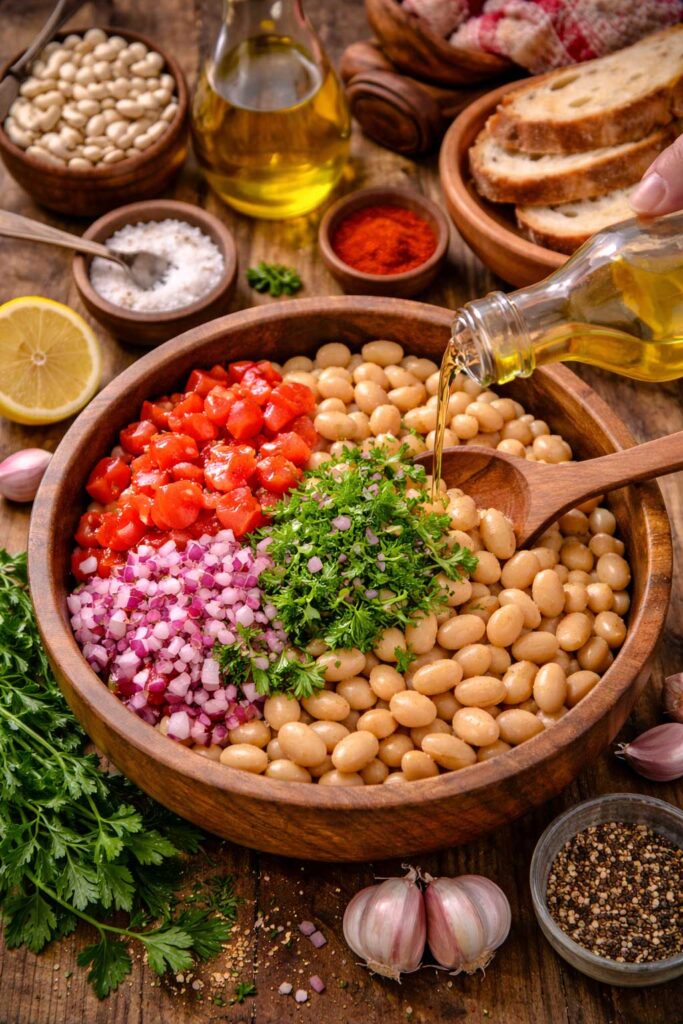
The beauty of the Bulgarian bean salad recipe lies in its simplicity. With just a handful of ingredients, Bobena Salata delivers a deep, satisfying flavor that reflects the essence of traditional Bulgarian cooking.
Each ingredient plays a specific role—there are no unnecessary additions. This is a dish where quality matters more than quantity, and even small improvements in ingredients can elevate the final result significantly.
Core Ingredients
- 2 cups white beans (cooked)
- 1 medium onion (finely chopped)
- Fresh parsley (chopped)
White beans are the foundation of this dish. Traditionally, dried beans are soaked overnight and then slowly cooked until tender. This method produces a creamier texture and richer flavor compared to canned beans.
👉 For a deeper dive into how beans are used across traditional dishes, explore → Bulgarian Cuisine: Complete Food Guide.
The onion adds a sharp, slightly sweet contrast that cuts through the richness of the beans. Finely chopping it ensures that the flavor is evenly distributed without overpowering each bite.
Parsley brings freshness and brightness, balancing the heaviness of the beans and adding a vibrant, herbal finish to the dish.
Affiliate Disclosure: This article may contain affiliate links. If you purchase through these links, we may earn a small commission at no extra cost to you. This helps support our work in sharing authentic Balkan recipes and cultural guides.
Best Ingredient Choices (Flavor Upgrade)
Choosing better ingredients can take your Bulgarian bean salad recipe from good to exceptional.
Best Beans for Authentic Flavor
👉 This is the #1 ingredient that impacts taste, so choosing the right beans matters most.
| Product | Best For | Why It’s Great | Check Price |
|---|---|---|---|
| Dried White Beans | Authentic recipe | Best texture and traditional flavor | 👉 Check on Amazon |
| Cannellini Beans | Quick cooking | Soft, creamy, convenient | 👉 Check on Amazon |
| Great Northern Beans | Balanced option | Mild and versatile | 👉 Check on Amazon |
👉 Choosing high-quality beans is the most important factor for authentic flavor.
The onion adds sharpness and contrast, while parsley brings freshness and color—both essential for balancing the richness of the beans.
👉 For more traditional combinations, explore → Bulgarian Salads – Famous Recipes and Ingredients.
👉 Tip: If using canned beans, rinse thoroughly to remove excess sodium and improve flavor.
Dressing
- 3 tbsp sunflower oil (or olive oil)
- 1–2 tbsp vinegar
- Salt to taste
The dressing is where the magic happens. In traditional Bulgarian cooking, sunflower oil is the preferred choice, giving the salad its authentic taste. However, olive oil can be used as a modern alternative for a richer and slightly fruitier flavor.
The vinegar provides acidity, which lifts the dish and balances the earthy beans. Adjusting the amount allows you to control how sharp or mild the final flavor will be.
Salt enhances all the ingredients, bringing everything together into a cohesive and satisfying dish.
Best Oils for Perfect Flavor
👉 Oil is the second biggest flavor driver, so upgrading here noticeably improves the dish.
| Product | Best For | Why It’s Great | Check Price |
|---|---|---|---|
| Sunflower Oil | Traditional taste | Authentic Bulgarian flavor | 👉 Check on Amazon |
| Extra Virgin Olive Oil | Health-focused | Rich and smooth texture | 👉 Check on Amazon |
| Cold-Pressed Oil | Premium option | Strong aroma and depth | 👉 Check on Amazon |
👉 The oil you use will noticeably impact the final taste of the salad.
Salt enhances all ingredients and ties the dish together into a cohesive flavor profile.
Ingredient Tips for Best Results
- Always use fresh parsley for maximum flavor
- Let onions sit for a few minutes after chopping to soften sharpness
- Use high-quality vinegar for better balance
- Avoid overdressing—the beans should absorb, not drown
👉 For more traditional ingredient combinations, see → Bulgarian Salads – Famous Recipes and Ingredients.
Optional Upgrade: Tools That Improve Results
👉 Not required—but these tools make prep easier and results more consistent.
| Tool | Why It Helps | Check Price |
|---|---|---|
| Large Cooking Pot | Even bean cooking | 👉 Check on Amazon |
| Fine Chef’s Knife | Precise onion chopping | 👉 Check on Amazon |
| Mixing Bowl | Proper ingredient blending | 👉 Check on Amazon |
👉 These tools are optional but help achieve more consistent results.
How to Make Bulgarian Bean Salad (Step-by-Step)
Making an authentic Bulgarian bean salad recipe (Bobena Salata) is simple, but the technique and small details make all the difference. Follow these steps carefully to achieve the perfect balance of texture and flavor.
👉 For a full printable recipe and exact measurements, see → Traditional Bulgarian Bean Salad recipe at BalkanRecipes version.
Step-by-Step Instructions
- Soak the beans overnight (8–12 hours)
Place dried beans in a large bowl and cover with water. This softens them and reduces cooking time while improving texture and digestibility. - Boil until tender (60–90 minutes)
Transfer soaked beans to a pot, cover with fresh water, and cook on medium heat until soft but not mushy. - Drain and cool completely
Once cooked, drain the beans and allow them to cool fully. This prevents the salad from becoming soggy and helps flavors absorb better. - Finely chop the onion
Cut the onion into very small pieces to evenly distribute its sharp flavor without overpowering the dish. - Combine beans and onion in a bowl
Add both ingredients into a large mixing bowl and gently toss. - Add chopped parsley
Sprinkle fresh parsley over the mixture to bring brightness and color. - Add oil, vinegar, and salt
Pour the dressing evenly over the salad. Start light—you can always add more. - Mix gently and let rest before serving
Stir carefully to avoid breaking the beans. Let the salad sit for 10–15 minutes so the flavors fully develop.
👉 For another traditional preparation style, explore → Bulgarian Salads – Famous Recipes and Ingredients.
Pro Tips for Perfect Results
- Don’t overcook beans—they should hold their shape
- Always cool before mixing (critical step)
- Let the salad rest—flavor improves significantly
- Taste and adjust vinegar gradually
What Makes Bobena Salata Unique?
What makes this Bobena Salata recipe stand out is its remarkable balance of flavors and textures, achieved with only a few simple ingredients. Unlike more complex salads that rely on heavy dressings or numerous additions, this dish lets each component shine while working in harmony.
At its core, the salad brings together:
- Creamy beans that provide a soft, rich base
- Sharp onions that add contrast and depth
- Fresh herbs that introduce brightness and aroma
- Bright acidity from vinegar that lifts the entire dish
This combination creates a flavor profile that is both clean and satisfying, without ever feeling heavy or overwhelming.
A Perfect Balance of Opposites
What truly sets the Bulgarian bean salad recipe apart is how it balances opposing qualities so effortlessly. The richness of the beans is cut by the acidity of the vinegar, while the intensity of the onion is softened by the freshness of parsley.
This interplay ensures that every bite feels complete. No single ingredient dominates—instead, they complement each other in a way that feels natural and refined, despite the simplicity of the recipe.
A Dish That Defies Categories
Bobena Salata or white bean salad occupies a unique place between a salad and a main dish. It is:
- Filling like a main dish, thanks to its protein and fiber content
- Refreshing like a salad, due to its light dressing and fresh ingredients
Few dishes achieve this dual role so naturally. This versatility is one of the reasons it has remained a staple in Bulgarian households for generations—it can adapt to any meal, any season, and any occasion.
👉 Want to see how this compares to other traditional dishes? Explore → Bulgarian Cuisine: Complete Food Guide.
The Role of Beans in Bulgarian Cuisine
Beans are one of the most important ingredients in Bulgarian food culture, valued for their versatility, affordability, and nutritional richness. For centuries, they have been a foundation of everyday cooking, especially in regions where simple, hearty meals were essential for sustaining families through long seasons.
Their importance goes beyond taste—they represent a practical and reliable food source that has shaped traditional Bulgarian diets. Easy to store and prepare, beans have allowed generations to create nourishing meals with minimal resources, making them a symbol of resilience and sustainability in Bulgarian cuisine.
Nutritional Powerhouse
Beans are naturally rich in essential nutrients, which is why they have remained a staple for so long. They provide:
- Protein – a key component for muscle maintenance and overall energy
- Fiber – supports digestion and long-term health
- Long-lasting energy – thanks to their complex carbohydrates
This combination makes them especially valuable in diets that rely less on meat, such as during fasting periods or in traditional rural cooking.
👉 See how beans fit into the broader diet → Bulgarian Cuisine: Complete Food Guide.
A Staple for Every Season
Beans are especially important in:
- Winter meals – providing warmth, comfort, and sustenance during colder months
- Rural cooking – where simple, accessible ingredients are essential
- Fasting traditions – offering a plant-based alternative that is both filling and nutritious
Because they can be dried and stored for long periods, beans have historically ensured food security, making them one of the most dependable ingredients in Bulgarian households.
More Than Just an Ingredient
In Bulgarian culture, beans are more than just food—they are part of tradition. From soups and stews to salads like Bobena Salata, they appear in countless recipes that have been passed down through generations.
Their continued presence in modern kitchens shows how timeless and adaptable they are. Even today, beans remain a bridge between past and present, connecting traditional Bulgarian cooking with contemporary healthy eating habits.
Onion – The Flavor Backbone
Onion is one of the most essential components of the Bulgarian bean salad recipe, acting as the key element that brings depth and character to the dish. While the beans provide a mild and creamy base, it’s the onion that introduces contrast and complexity.
Onions add:
- Sharpness that cuts through the richness of the beans
- Depth that enhances the overall flavor profile
- Contrast that keeps each bite balanced and interesting
Without onion, the salad would feel flat and incomplete. Finely chopping it is crucial—it ensures the flavor is evenly distributed throughout the dish without overwhelming any single bite.
👉 Pro tip: Let chopped onion sit for a few minutes before mixing. This slightly mellows its intensity while preserving its flavor.
Parsley – The Freshness Element
Parsley plays a vital role in balancing the richness of Bobena Salata. Its fresh, herbal flavor brings lightness to the dish, preventing it from feeling too heavy despite the hearty beans.
Parsley adds:
- Brightness that lifts the entire flavor profile
- Balance against the oil and vinegar dressing
- Color that makes the dish visually appealing
Beyond flavor, parsley enhances presentation, giving the salad a vibrant, fresh look that reflects its clean and natural ingredients.
Health Benefits of Bulgarian Bean Salad
The Bulgarian bean salad recipe is not only delicious but also highly nutritious. Built entirely from whole, plant-based ingredients, it offers a balanced combination of protein, fiber, and essential nutrients.
High Protein
Beans are an excellent source of plant-based protein, making this dish especially valuable for maintaining energy levels and supporting muscle health. This makes Bobena Salata a great alternative to meat-based meals, particularly during fasting periods.
Heart Health
Rich in dietary fiber, beans contribute to overall cardiovascular health. Regular consumption may help:
- Lower cholesterol levels
- Improve digestion and gut health
The simple, natural ingredients also mean the dish is low in processed additives, making it a heart-friendly choice.
Plant-Based Nutrition
This salad is naturally aligned with modern dietary preferences. It is perfect for:
- Vegetarians
- Vegans
- Clean eating diets
Its combination of nutrients, simplicity, and satisfying texture makes it an ideal meal for anyone looking to eat healthier without sacrificing flavor.
👉 Want to explore more traditional healthy dishes? See → Bulgarian Cuisine: Complete Food Guide.
Why This Salad Is Perfect for Modern Diets
The Bulgarian bean salad recipe fits seamlessly into modern nutrition trends, offering a rare combination of simplicity, affordability, and real nutritional value. In a time when many diets focus on whole foods and balanced eating, Bobena Salata stands out as a naturally aligned option without needing any modifications.
One of its biggest advantages is that it relies entirely on minimally processed ingredients. There are no artificial additives, no complicated techniques, and no unnecessary extras—just clean, honest food that delivers both flavor and nourishment.
It fits effortlessly into lifestyles focused on plant-based eating, meal prepping, and clean nutrition. Because it stores well and tastes even better after resting, it’s also ideal for preparing in advance—making it both practical and time-efficient.
Aligned with Healthy Eating Trends
This salad supports several popular dietary approaches:
- High-fiber diets – beans are rich in fiber, promoting digestion and satiety
- Plant-based eating – naturally vegan and nutrient-dense
- Clean eating – made from whole, simple ingredients
Because of this, it works well for anyone trying to eat healthier without sacrificing taste or satisfaction.
Perfect for Meal Prep
Bobena Salata is ideal for meal prep because it stores exceptionally well. In fact, the flavor often improves after a few hours as the beans absorb the dressing.
- Keeps well in the fridge for several days
- Easy to portion for lunches or quick meals
- Requires no reheating—ready to eat anytime
This makes it a practical choice for busy schedules and structured eating plans.
Budget-Friendly and Accessible
Another key reason the Bulgarian bean salad recipe remains so relevant today is its affordability. Beans, onions, and herbs are inexpensive and widely available, making this dish accessible to almost anyone.
It proves that healthy, satisfying food doesn’t need to be expensive or complicated. With just a few basic ingredients, you can create a meal that is both nourishing and deeply enjoyable.
Simple, Clean, and Satisfying
At its core, this dish represents everything modern diets strive for:
- Simple – minimal ingredients and easy preparation
- Clean – whole, natural foods
- Satisfying – filling without being heavy
This balance is what makes Bobena Salata not just a traditional recipe, but a timeless one that fits perfectly into today’s way of eating.
Traditional Preparation Secrets
The Bulgarian bean salad recipe may be simple, but mastering a few traditional techniques is what separates an average result from an authentic, deeply flavorful Bobena Salata. These small details have been passed down through generations and are key to achieving the perfect texture and balance.
Always Soak the Beans
Soaking dried beans overnight (8–12 hours) is one of the most important steps in traditional preparation. It softens the beans, reduces cooking time, and helps them cook more evenly.
More importantly, soaking improves texture—resulting in beans that are tender and creamy rather than tough or unevenly cooked. It also enhances digestibility, making the dish lighter and more enjoyable.
Cook Slowly for Best Flavor
Patience is essential when cooking beans. A slow, gentle simmer allows the beans to cook evenly while preserving their structure.
Cooking too quickly or at high heat can cause the skins to break and the inside to become mushy. Properly cooked beans should be soft but still hold their shape—this is crucial for achieving the ideal texture in Bobena Salata.
Let the Salad Rest Before Serving
👉 This step is often overlooked—but it makes a huge difference.
After mixing the beans with onion, parsley, oil, and vinegar, let the salad sit for at least 10–15 minutes before serving. During this time, the beans absorb the dressing, allowing the flavors to fully develop and blend together.
In fact, many would argue that Bobena Salata tastes even better after a few hours or the next day. This resting period transforms the dish from simple to truly exceptional.
Final Tip
These traditional preparation secrets highlight a key philosophy of Bulgarian cooking:
👉 Take your time, respect the ingredients, and let natural flavors develop.
That’s the difference between just making the dish—and making it right.
Variations of Bulgarian Bean Salad
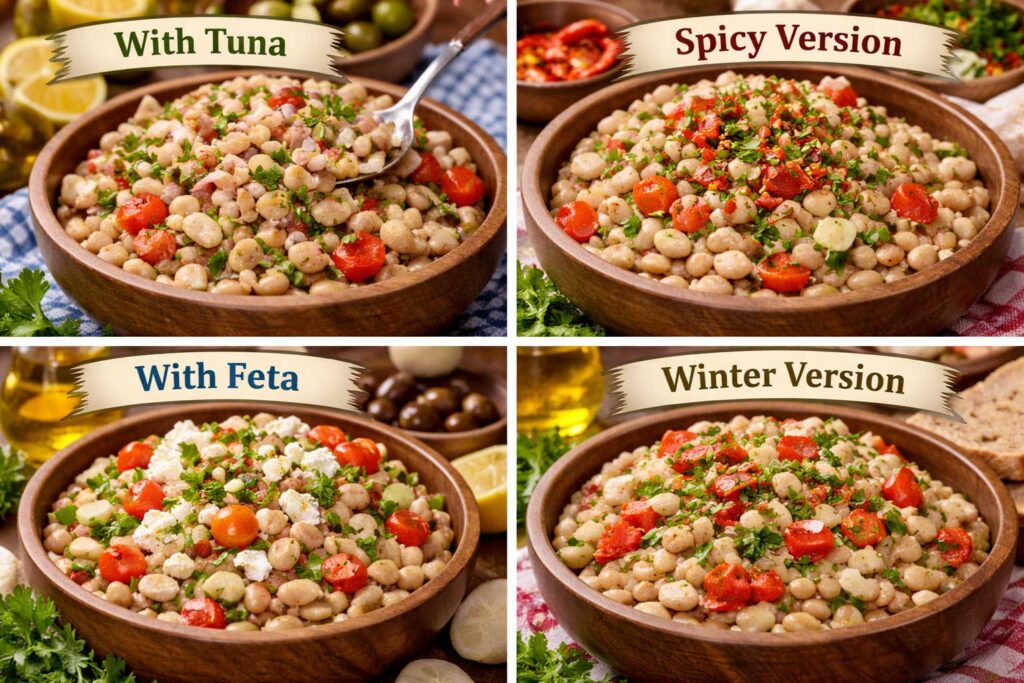
While the classic Bulgarian bean salad recipe is beautifully simple, many home cooks and regions add subtle variations to enhance flavor or adapt the dish to seasonal ingredients. These variations stay true to the original spirit of Bobena Salata while introducing small but impactful differences.
Some of the most popular variations include:
- Adding roasted red peppers – brings sweetness and a slightly smoky depth
- Using red onions instead of white – offers a milder, slightly sweeter flavor
- Including garlic – adds intensity and a richer, more robust taste
These additions don’t overpower the dish—they simply build on the existing flavor profile, making it more complex while preserving its traditional character.
How Variations Change the Flavor
Each variation shifts the balance slightly:
- Roasted peppers → sweeter and softer profile
- Red onions → less sharp, more balanced bite
- Garlic → deeper, more savory notes
This flexibility is one of the reasons Bobena Salata has remained so popular—it can be easily adjusted while still feeling authentic.
Regional Differences
Across Bulgaria, different regions have their own subtle takes on bean salad, influenced by local ingredients and culinary traditions.
Depending on the region, you may find:
- Different types of beans – some areas prefer larger, creamier varieties, while others use smaller, firmer beans
- Added spices – such as paprika or black pepper for extra warmth
- Pickled vegetables – introduced for acidity and complexity
In some rural areas, pickled peppers or fermented vegetables are added, giving the salad a tangy, slightly sour edge that pairs perfectly with the richness of the beans.
Tradition Meets Adaptation
These regional differences highlight an important aspect of Bulgarian cuisine: recipes are not rigid—they evolve. Families adapt dishes based on what they have available, passing down their own versions through generations.
This means there is no single “correct” version of Bobena Salata—only a traditional foundation that allows for personal and regional expression while maintaining its authentic identity.
👉 For a classic combination, pair it with → Shopska Salad Recipe Guide.
Serving Tip
For an authentic experience, serve Bobena Salata as part of a shared table alongside other simple dishes. This reflects the Bulgarian tradition of communal eating—where food is meant to be enjoyed slowly, together, and without unnecessary complexity.
Bean Salad and Bulgarian Culture
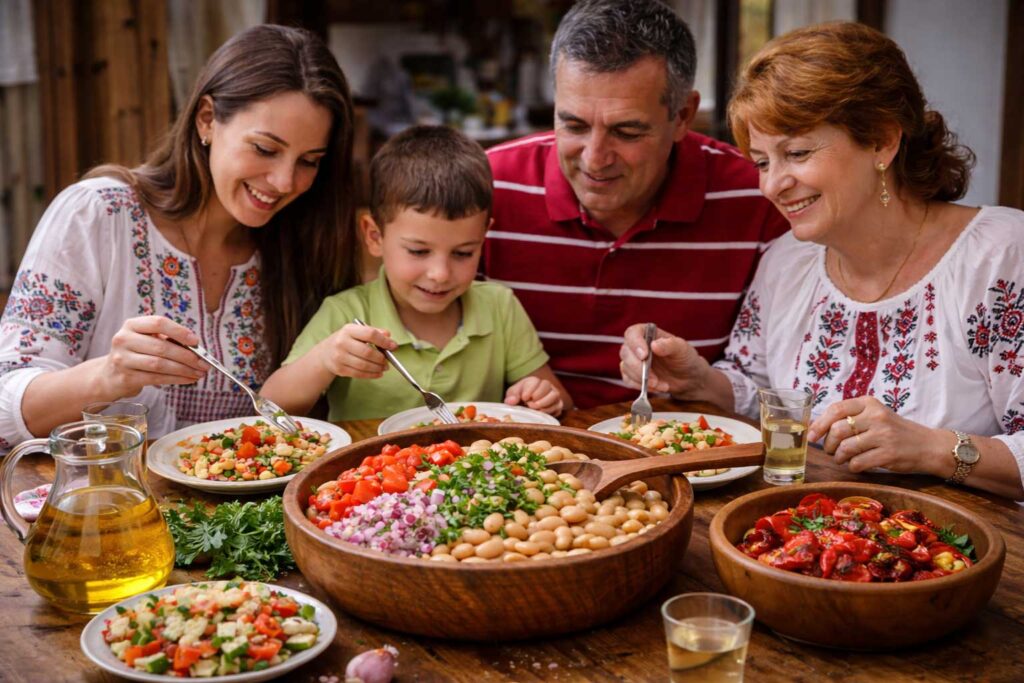
Bobena Salata is not just a traditional dish—it’s part of the Bulgarian dining experience. It is commonly served as part of a shared table, where multiple small dishes are enjoyed together in a relaxed, social setting.
Often paired with:
- Rakia (traditional fruit brandy)
- Fresh bread
- Other small dishes (meze-style dining)
In this context, the salad plays a specific role—it is light, refreshing, and balances heavier foods on the table.
More importantly, it represents key values of Bulgarian culture:
- Simplicity – using minimal, natural ingredients
- Tradition – recipes passed down through generations
- Sustainability – relying on accessible, long-lasting foods
Unlike the historical importance discussed earlier, this section reflects how Bobena Salata continues to live in everyday Bulgarian life—not just as heritage, but as a shared experience around the table.
Common Mistakes
Even though the Bulgarian bean salad recipe is simple, a few common mistakes can affect the final result. Paying attention to these details ensures your Bobena Salata turns out perfectly every time.
- Undercooking beans
Beans should be soft and creamy but still hold their shape. Undercooked beans will feel firm and unpleasant, ruining the texture of the salad. - Using too much vinegar
Vinegar should enhance the dish, not overpower it. Adding too much can make the salad overly sharp and unbalanced. Always start small and adjust gradually. - Skipping the soaking step
Soaking dried beans is essential for even cooking and proper texture. Skipping this step can lead to tough, unevenly cooked beans and longer cooking times.
👉 Pro tip: Taste as you go—balance is everything in this dish.
What to Serve With Bulgarian Bean Salad
Bobena Salata is incredibly versatile and fits naturally into both simple meals and larger traditional spreads. Its balanced flavor—rich yet refreshing—makes it an ideal companion to a wide variety of dishes.
In Bulgaria, it is most often enjoyed as part of a shared table, where multiple small dishes are served together in a relaxed, social setting known as meze-style dining.
It pairs especially well with:
- Fresh rustic bread – absorbs the flavorful oil and vinegar dressing, making the dish more filling
- Roasted vegetables – add warmth and complement the salad’s freshness
- Other traditional salads – help create a complete and balanced Balkan-style spread
In more traditional settings, Bobena Salata is often served alongside pickled vegetables, seasonal dishes, and even a glass of rakia, turning a simple salad into a full cultural experience.
👉 For a classic combination, serve it alongside → Shopska Salad Recipe Guide.
Serving Tip
For the most authentic experience, serve the salad at room temperature with rustic bread and, if desired, a small glass of rakia. This simple combination reflects the heart of Bulgarian hospitality—uncomplicated, generous, and full of flavor.
When Bulgarians Eat Bean Salad
Bobena Salata is not tied to a single occasion—it is eaten throughout the year depending on needs and traditions. During winter, it provides a hearty and warming meal when fresh vegetables are less available. In contrast, during warmer months, it is served chilled as a refreshing and satisfying dish.
It is also commonly found during fasting periods, holidays, and family gatherings. Its simplicity allows it to complement a wide variety of other dishes, making it a reliable addition to almost any Bulgarian table.
Texture and Flavor Profile Explained
The beauty of this dish lies in its contrast of textures and flavors. The beans are soft and creamy, providing a neutral base that absorbs the dressing. The onions add sharpness and crunch, while parsley introduces freshness and a subtle herbal note.
The dressing ties everything together with acidity and richness. The vinegar brings brightness, while the oil smooths out the flavors, creating a balanced and satisfying bite. This harmony is what makes the dish feel both simple and complete.
Why Bobena Salata Stands Out Globally
While many cultures have their own versions of bean salads, the Bulgarian approach is unique in its minimalism. Instead of adding multiple spices, sauces, or heavy ingredients, Bobena Salata relies on just a few components to achieve depth of flavor.
This simplicity allows the natural taste of each ingredient to shine. It also makes the dish more adaptable and accessible, which is why it continues to gain popularity beyond Bulgaria among those seeking authentic and healthy traditional foods.
Pro Tips for the Best Results
To elevate your Bulgarian bean salad recipe, a few small details can make a big difference. Using high-quality oil and properly cooked beans ensures a smoother texture and richer taste. Finely chopping the onion helps distribute its flavor evenly without overpowering the dish.
Another important tip is to let the salad rest before serving. This allows the beans to absorb the dressing fully, enhancing the overall flavor. Like many traditional dishes, Bobena Salata often tastes even better after sitting for a while.
Why This Recipe Never Goes Out of Style
The lasting appeal of Bobena Salata comes from its simplicity, affordability, and nutritional value. It continues to be a staple in Bulgarian homes because it delivers satisfying flavor with minimal ingredients.
Bean Salad Around the World
Bean salads are enjoyed across the world, appearing in many cuisines with different flavors, ingredients, and cultural influences. From Mediterranean variations with tomatoes and olives to Latin American versions with corn, lime, and spices, beans are a universal ingredient valued for their nutrition and versatility.
In many of these recipes, additional elements like garlic, spices, citrus, or complex dressings are used to create bold and layered flavors. These salads are often vibrant, colorful, and heavily seasoned, reflecting the regional ingredients and culinary traditions behind them.
What Makes Bulgarian Bobena Salata Different
What sets the Bulgarian bean salad recipe apart is its minimalism. Bobena Salata relies on just a few carefully balanced ingredients—beans, onion, parsley, oil, and vinegar—without unnecessary additions.
This simplicity allows:
- The natural flavor of the beans to shine
- Each ingredient to play a clear role
- A clean, balanced taste without overwhelming seasoning
Instead of complexity, Bulgarian cuisine focuses on harmony. The result is a dish that feels light yet satisfying, traditional yet timeless.
A Philosophy of Simplicity
While many global bean salads aim for boldness, Bobena Salata represents a different philosophy:
👉 Less ingredients, better balance
This approach reflects the broader values of Bulgarian cooking—respect for ingredients, seasonal awareness, and the belief that great food doesn’t need to be complicated.
A Timeless Classic
Because of its simplicity and adaptability, Bobena Salata fits effortlessly into both traditional and modern diets. It can stand alongside more elaborate dishes or be enjoyed on its own as a complete, nourishing meal.
That’s what makes it unique—not just as a Bulgarian dish, but as a global example of how simple food, done right, can be truly exceptional.
FAQs About Bulgarian Bean Salad (Bobena Salata)
What is Bobena Salata?
Bobena Salata is a traditional Bulgarian bean salad made with boiled white beans, finely chopped onion, fresh parsley, and a simple oil and vinegar dressing. It is known for its clean flavors, hearty texture, and deep roots in Bulgarian home cooking.
Is it healthy?
Yes, the Bulgarian bean salad recipe is highly nutritious. It is rich in:
- Protein – supports energy and muscle health
- Fiber – promotes digestion and fullness
- Plant-based nutrients – ideal for balanced, clean eating
Because it uses whole, natural ingredients, it fits well into healthy diets including vegetarian, vegan, and high-fiber meal plans.
Can I use canned beans?
Yes, canned beans can be used as a convenient alternative, especially if you’re short on time. However, for the most authentic flavor and texture, dried beans are preferred.
👉 Tip: If using canned beans, rinse them thoroughly under cold water to remove excess salt and improve taste.
How long does bean salad last?
Stored in an airtight container in the refrigerator, Bobena Salata can last 3–4 days. In fact, the flavor often improves after a few hours as the beans absorb the dressing.
Can I add other ingredients?
Yes, while the traditional recipe is simple, common additions include:
- Roasted red peppers
- Garlic
- Red onions
These variations enhance the flavor while keeping the dish authentic.
Is it served cold or warm?
Bobena Salata is typically served cold or at room temperature, which helps highlight its refreshing and balanced flavor profile.
Final Thoughts
The Bulgarian bean salad recipe is a perfect example of how simple, affordable ingredients can come together to create something truly satisfying. With just a handful of components, Bobena Salata delivers a balance of flavor, nutrition, and tradition that has stood the test of time.
More than just a salad, it represents a way of cooking rooted in practicality and respect for ingredients. It reflects the Bulgarian approach to food—where nothing is wasted, flavors are natural, and meals are made to nourish both body and soul.
Whether you’re preparing it as part of a traditional spread or incorporating it into a modern, healthy lifestyle, this dish remains as relevant today as it was generations ago. Its simplicity, versatility, and nutritional value ensure that it will continue to be enjoyed in homes around the world.
👉 Ready to explore more authentic dishes? Check out → Bulgarian Cuisine: Complete Food Guide.
References
- Encyclopaedia Britannica – Beans and Legumes https://www.britannica.com/plant/bean
- Bulgarian Academy of Sciences (BAS) – Ethnographic and Culinary Research https://www.bas.bg/?lang=en
- UNESCO – Intangible Cultural Heritage and Traditional Food Practices https://ich.unesco.org
- Ivanova, M. – Traditional Bulgarian Cuisine and Food Culture
- Albala, Ken – Food Cultures of the World: Balkan Region