


Bulgarian drinks are not just beverages—they are a living expression of the country’s history, identity, and way of life. Shaped by ancient civilizations, fertile landscapes, and centuries of Balkan tradition, Bulgaria has developed a drinking culture that is both deeply authentic and remarkably diverse. Every glass reflects the land it comes from, the people who make it, and the traditions that have preserved it for generations.
From the bold, fiery intensity of Rakia to the refreshing simplicity of Ayran, Bulgarian drinks capture the full spectrum of flavor, craftsmanship, and cultural meaning. Whether it’s small-batch spirits distilled in village homes, wines rooted in ancient Thracians traditions, fermented specialties passed down through time, or herbal teas gathered from mountain slopes, these beverages offer an experience far beyond the ordinary.
If you want to truly understand Bulgaria—not just see it, but taste it—these Bulgarian drinks you must try will give you an unforgettable connection to the country’s culture, heritage, and soul.
To explore the full culinary experience, visit Bulgarian Cuisine: Complete Food Guide.
These Bulgarian drinks you must try are an essential part of that full culinary experience.
Why Bulgarian Drinks Are Unique
Bulgarian drinks stand out not only for their flavor—but for the environment, history, and traditions behind them. Unlike mass-produced beverages found across much of Europe, many Bulgarian drinks are still crafted using time-tested methods that have remained unchanged for generations. This combination of nature and tradition creates drinks that feel authentic, local, and deeply connected to the land.
Several key factors make Bulgarian drinks truly unique:
- Natural ingredients grown in fertile, low-pollution regions, often sourced locally or from family farms
- Mountain climate that enhances the quality of herbs, fruits, and grapes, especially in regions like the Rhodope Mountains and Thracian Valley
- Unique microorganisms, including Lactobacillus bulgaricus, which play a key role in fermentation and health benefits
- Homemade production culture, especially for Rakia and traditional wines, where recipes are passed down through generations
This powerful combination results in beverages that are:
- More flavorful and aromatic
- Less processed and more natural
- Deeply tied to regional identity and cultural heritage
In many cases, no two homemade drinks taste exactly the same—each reflects the local ingredients, climate conditions, and personal techniques of the producer. This diversity is what makes Bulgarian drinks so special and difficult to replicate elsewhere.
This is exactly why these Bulgarian drinks you must try are gaining attention worldwide.
👉 This is why Bulgaria is gaining global recognition for its natural products and traditional beverages.
When and How Bulgarians Drink
Understanding Bulgarian drinks means understanding when and how they are consumed—because in Bulgaria, drinking is not just about the beverage, but the entire social experience around it.
Unlike fast-paced drinking cultures, Bulgaria emphasizes slow, intentional, and social consumption. Drinks are rarely enjoyed in isolation; instead, they are closely tied to food, conversation, and hospitality. Sitting down for a meal often turns into a long, relaxed gathering where drinks play a central role.
Typical Drinking Culture
Each type of drink has its own place and purpose in Bulgarian daily life:
- Rakia → served before meals as an aperitif, usually paired with salads like Shopska
- Wine → enjoyed during meals, especially with traditional dishes and meats
- Beer → common in casual and social settings, particularly in summer
- Herbal tea → consumed in the evening or for health and relaxation
- Coffee → part of a slow, social ritual, often lasting much longer than the drink itself
Meals in Bulgaria are often extended experiences, where eating and drinking go hand in hand. It is not uncommon for a simple lunch or dinner to turn into hours of conversation, storytelling, and shared moments.
Cultural Etiquette and Traditions
Hospitality is a core part of Bulgarian culture, and offering a drink is one of the most important ways hosts welcome guests. Accepting a drink—especially rakia—is seen as a sign of respect and openness.
👉 In more traditional settings, refusing a drink (particularly rakia) may be interpreted as impolite, unless there is a clear reason. Even a small sip is often enough to honor the gesture.
At the heart of Bulgarian drinking culture is a simple idea:
Drinks are meant to bring people together, not just to be consumed.
Understanding this culture helps you better appreciate the Bulgarian drinks you must try.
Rakia – Bulgaria’s National Drink
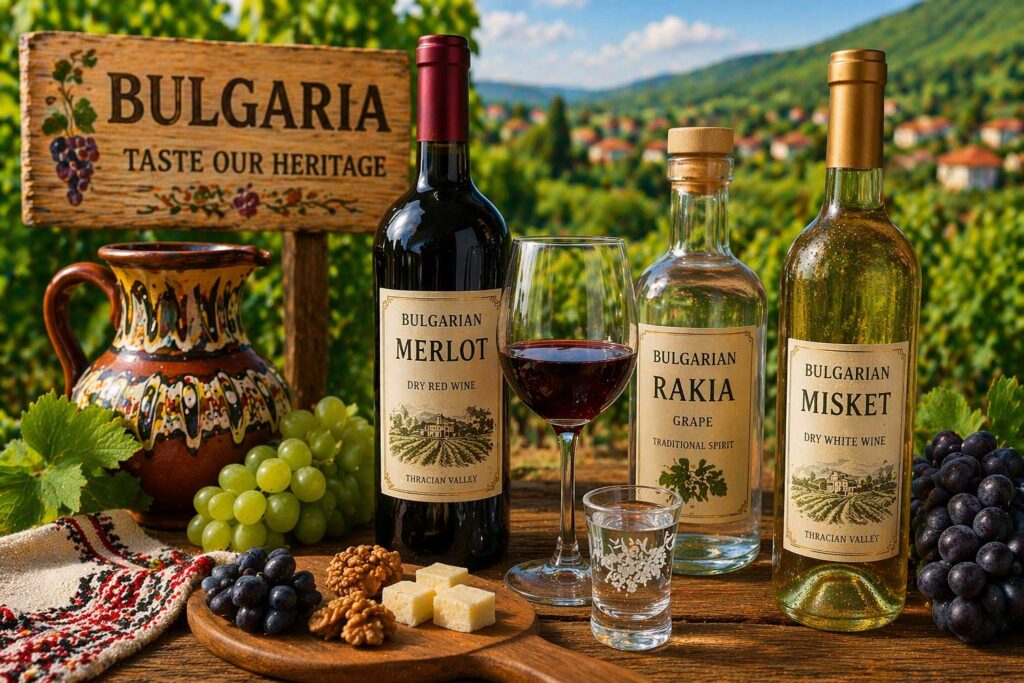
No list of Bulgarian drinks is complete without Rakia, the country’s most iconic and widely consumed alcoholic beverage. Deeply rooted in tradition, rakia is more than just a drink—it is a symbol of Bulgarian hospitality, heritage, and craftsmanship.
Learn more in our full guide: Bulgarian Drinks: Rakia Complete Guide
Rakia is a strong fruit brandy traditionally made by fermenting and distilling a variety of fruits, most commonly:
- Grapes (the most popular and widely produced)
- Plums (known as slivova, richer and more traditional)
- Apricots (fragrant and slightly sweet)
- Pears (light and floral)
- Figs (less common but distinctive in flavor)
In many parts of Bulgaria, rakia is still homemade using family recipes passed down through generations. It is typically served as an aperitif before meals, setting the tone for long, social dining experiences.
What Makes Rakia Special
- High alcohol content, usually between 40% and 60%
- Rich, natural fruit aroma and depth of flavor
- Strong cultural significance as a symbol of hospitality and tradition
👉 Pro tip: Bulgarians rarely rush rakia. It is meant to be sipped slowly and enjoyed alongside fresh salads—most famously Shopska salad—enhancing both the drink and the food.
Rakia Culture Deep Dive
Rakia is not just a drink—it is a ritual deeply embedded in Bulgarian life, identity, and tradition.
Across the country, especially in rural areas, rakia production is a communal and cultural event. Families gather during harvest season to prepare fruit, operate copper stills, and distill their own batches. This process is not rushed—it is respected, refined, and treated almost as an art form.
The knowledge of making rakia is often passed down through generations, with each family developing its own techniques, timing, and flavor preferences. No two homemade rakias are exactly the same, which makes each batch a personal expression of craftsmanship.
Cultural Importance
Rakia plays a central role in Bulgarian social life:
- Shared during celebrations, holidays, and family gatherings
- Used to welcome guests as a sign of respect and hospitality
- Enjoyed slowly, often alongside food and conversation
- Passed down as part of family tradition and identity
👉 In many households, offering rakia is not optional—it is a cultural expectation.
For many Bulgarians, homemade rakia is considered far superior to commercial versions—not just for its quality, but for the pride, effort, and tradition behind it.
This is why rakia is always at the top of any list of Bulgarian drinks you must try.
Rakia vs Vodka – What’s the Difference?
Rakia and vodka are both strong spirits, but they are very different in flavor, production, and cultural significance.
Key Differences
| Feature | Rakia | Vodka |
|---|---|---|
| Base Ingredient | Fruits (grapes, plums, apricots) | Grains or potatoes |
| Flavor | Fruity, aromatic, complex | Neutral, clean |
| Alcohol Content | 40–60% (sometimes higher) | ~40% |
| Production | Often homemade, small-batch | Industrial, large-scale |
| Cultural Role | Deeply traditional, social ritual | More global, less tied to tradition |
Taste & Experience
Rakia has a distinct fruit-forward character, meaning you can actually taste the fruit it’s made from. Each batch can vary depending on the ingredients and method used.
Vodka, on the other hand, is designed to be neutral and smooth, often used as a base for cocktails rather than enjoyed for its flavor alone.
Cultural Significance
In Bulgaria, rakia is more than a drink—it’s a symbol of:
- Hospitality
- Tradition
- Family heritage
Vodka, while popular globally, does not carry the same level of cultural meaning in Bulgaria.
👉 Bottom line:
If vodka is about simplicity, rakia is about character and tradition.
Affiliate Disclosure: Some links below are Amazon affiliate links. We may earn a commission at no extra cost to you.
Best Rakia Brands & Essentials
👉 Want to experience authentic Rakia at home? These top-rated options and tools will help you recreate the real Bulgarian experience.
Best Rakia Brands (Imported Options)
(Availability may vary depending on location)
| Product | Best For | Why It’s Great | Rating | Price | Check Price |
|---|---|---|---|---|---|
| Bulgarian Grape Rakia (Premium Brand) | Beginners | Smooth, classic flavor | ⭐⭐⭐⭐⭐ | $$ | Check Amazon |
| Plum Rakia (Slivovitz Style) | Traditional taste | Rich, authentic Balkan profile | ⭐⭐⭐⭐☆ | $$ | Check Amazon |
| Apricot Rakia | Unique flavor | Fruity and slightly sweet | ⭐⭐⭐⭐⭐ | $$ | Check Amazon |
👉 These are great entry points if you can’t access homemade rakia.
Best Rakia Sets & Glassware
👉 Want to recreate the authentic Bulgarian rakia experience at home? Start with the right glassware and tools.
| Product | Best For | Why It’s Useful | Rating | Price | Check Price |
|---|---|---|---|---|---|
| Traditional Rakia Glass Set | Authentic experience | Small glasses perfect for serving rakia | ⭐⭐⭐⭐⭐ | $$ | Check Amazon |
| Crystal Shot Glass Set | Premium look | Elegant presentation for guests | ⭐⭐⭐⭐☆ | $$ | Check Amazon |
| Home Distillation Kit | DIY rakia | Make your own fruit brandy | ⭐⭐⭐⭐⭐ | $$$ | Check Amazon |
👉 Perfect for recreating the authentic Bulgarian rakia experience at home.
Ayran – The Ultimate Summer Drink

Ayran is a refreshing yogurt-based drink that is widely enjoyed across Bulgaria, especially during the hot summer months. Known for its simplicity and natural benefits, ayran is a staple in everyday Bulgarian life.
It is made from just three ingredients:
- Bulgarian yogurt
- Water
- Salt
Despite its simplicity, ayran delivers a uniquely balanced flavor—lightly tangy, slightly salty, and incredibly refreshing. It pairs perfectly with grilled meats, pastries, and traditional dishes, making it a common choice alongside meals.
Why Ayran Stands Out
- Naturally rich in probiotics that support digestion
- Hydrating and cooling, ideal for warm weather
- Simple, clean ingredients with no unnecessary additives
Thanks to its connection with Lactobacillus bulgaricus, ayran is not only refreshing but also contributes to gut health and overall well-being.
To understand its unique benefits, see: Why Bulgarian Yogurt Is Famous Worldwide.
👉 Pro tip: For the most authentic experience, enjoy ayran ice-cold with grilled foods or traditional Bulgarian pastries like banitsa.
Ayran vs Kefir vs Yogurt Drinks – What’s the Difference?
When exploring Bulgarian drinks, many people compare Ayran with other popular fermented beverages like kefir and drinkable yogurt. While they may seem similar, they differ significantly in taste, texture, and health benefits.
Key Differences
| Drink | Origin | Taste | Texture | Probiotics | Best For |
|---|---|---|---|---|---|
| Ayran | Balkans / Turkey | Salty, tangy | Light, smooth | Moderate | Hydration, meals |
| Kefir | Caucasus region | Tangy, slightly sour | Creamy, slightly fizzy | Very high | Gut health |
| Yogurt Drink | Global | Mild, slightly tangy | Smooth | Moderate | Everyday use |
What Makes Ayran Unique?
Ayran stands out because of its simplicity and refreshing taste. Made from yogurt, water, and salt, it is designed to cool the body and complement food, especially during hot weather.
Unlike kefir, ayran is:
- Not fermented for long periods
- Not fizzy
- More hydrating and lighter
👉 It’s the perfect drink to pair with grilled meats and traditional Bulgarian dishes.
Kefir – The Probiotic Powerhouse
Kefir is a fermented milk drink known for its extremely high probiotic content. It contains a wide variety of beneficial bacteria and yeast, making it one of the most powerful drinks for gut health.
Compared to ayran:
- More complex fermentation
- Stronger sour taste
- Slight natural carbonation
👉 Best for those focused on digestion and microbiome health.
Yogurt Drinks – The Middle Ground
Drinkable yogurt sits somewhere between ayran and kefir. It is:
- Mild in flavor
- Smooth in texture
- Often slightly sweet or neutral
It’s widely available globally but lacks the traditional authenticity of Bulgarian ayran.
Which One Should You Choose?
- Choose Ayran → for refreshing hydration and authentic Balkan experience
- Choose Kefir → for maximum probiotics and health benefits
- Choose Yogurt drinks → for convenience and mild taste
👉 Bottom line: Ayran is about simplicity and refreshment, kefir is about health and fermentation, and yogurt drinks are about everyday convenience.
Bulgarian Wine – Ancient Winemaking Tradition
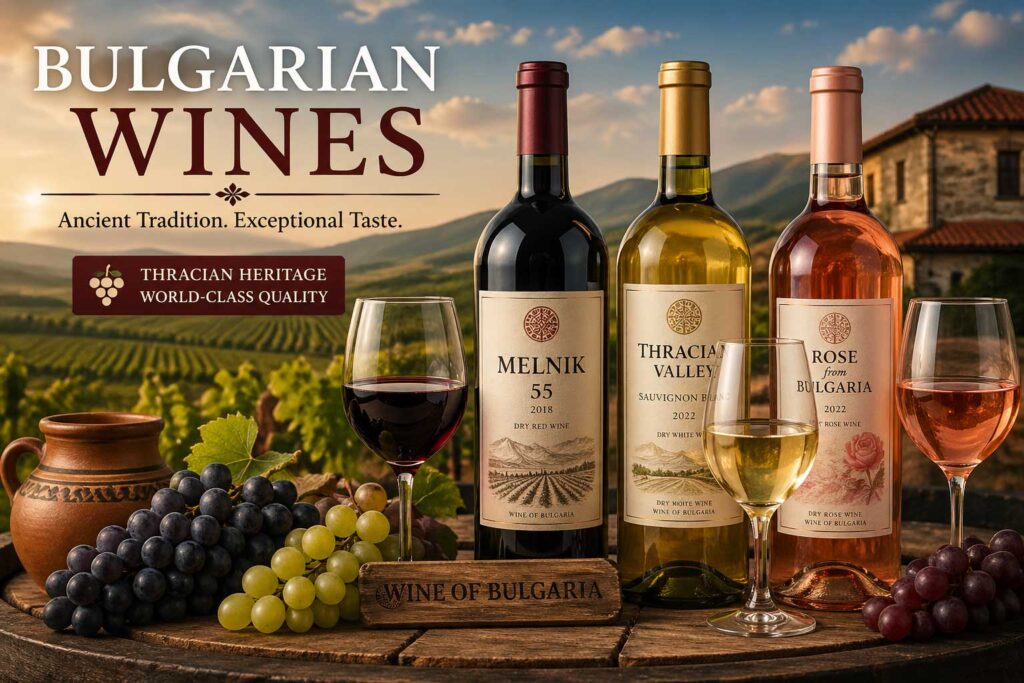
Bulgaria is one of the oldest wine-producing regions in the world, with a winemaking history that dates back thousands of years to the ancient Thracians. Wine was not only a daily staple but also an important part of rituals and culture, laying the foundation for Bulgaria’s modern wine industry.
Today, Bulgaria continues this tradition with a strong focus on quality, regional identity, and unique local grape varieties that set it apart from more commercial wine regions.
Popular Bulgarian Grape Varieties
- Mavrud — bold, full-bodied red with deep color and aging potential
- Melnik — distinctive, spicy character native to southern Bulgaria
- Rubin — a hybrid variety combining richness and smoothness
Discover more local specialties: Bulgarian Products You Should Know.
These wines are increasingly recognized internationally for their depth and uniqueness.
What Makes Bulgarian Wine Unique
- Indigenous grape varieties rarely found outside Bulgaria
- Rich, bold flavors shaped by diverse climates and terroirs
- Excellent value compared to Western European wines
- A balance between ancient tradition and modern winemaking techniques
For wine lovers, these are some of the most underrated Bulgarian drinks you must try.
👉 Pro tip: If you want an authentic experience, try Bulgarian wines from the Thracian Valley—one of the country’s most renowned wine regions.
Bulgarian Wine vs French & Italian Wine – What’s the Difference?
When comparing Bulgarian wine to famous regions like France and Italy, the differences come down to tradition, grape varieties, pricing, and global recognition.
Key Differences
| Feature | Bulgarian Wine | French Wine | Italian Wine |
|---|---|---|---|
| History | Ancient (Thracians roots) | World-famous, centuries-old | Long-standing, globally recognized |
| Grape Varieties | Unique local grapes (Mavrud, Melnik, Rubin) | International + regional classics | Diverse native grapes |
| Flavor Profile | Bold, rich, often fruit-forward | Complex, structured | Balanced, food-friendly |
| Price | Excellent value | Often premium/high-priced | Mid to premium |
| Recognition | Emerging globally | Highly prestigious | Globally popular |
Flavor & Style
Bulgarian wines are known for their deep color, bold body, and expressive fruit flavors. Because many grapes are indigenous, they offer profiles that are difficult to find elsewhere.
French wines tend to emphasize:
- Structure
- Terroir
- Aging potential
Italian wines often focus on:
- Balance
- Acidity
- Pairing with food
👉 Bulgarian wine stands out by offering premium quality at a fraction of the price, making it one of Europe’s best-kept secrets.
Value for Money
- Bulgarian wine → High quality, lower cost
- French wine → Premium pricing, brand reputation
- Italian wine → Wide range, mid-to-high pricing
👉 For beginners and enthusiasts alike, Bulgarian wine is one of the best ways to explore high-quality European wine without overspending.
Bottom Line
- Choose Bulgarian wine → for unique flavors and value
- Choose French wine → for prestige and structure
- Choose Italian wine → for balance and food pairing
Top Bulgarian Wine Brands + Essentials
👉 Want to experience authentic Bulgarian wine at home? Start with these trusted styles and tools.
Popular Bulgarian Wine Styles (What to Look For)
(Exact availability varies by region and import options)
| Wine Type | Best For | Flavor Profile | Why It’s Great |
|---|---|---|---|
| Mavrud Red Wine | Bold wine lovers | Full-bodied, rich | Deep color, strong aging potential |
| Melnik Wine | Unique taste | Spicy, earthy | Rare and regional |
| Rubin Wine | Balanced drinking | Smooth, fruity | Easy entry into Bulgarian wines |
👉 Look for these names when browsing wine shops or online retailers.
Best Wine Accessories (Bulgarian Wine Lovers)
👉 Exploring Bulgarian wine? These tools will instantly enhance flavor, aroma, and overall experience.
| Product | Best For | Why It’s Useful | Rating | Price | Check Price |
|---|---|---|---|---|---|
| Electric Wine Opener | Easy opening | Quick and effortless | ⭐⭐⭐⭐⭐ | $$ | Check Amazon |
| Wine Aerator | Flavor enhancement | Improves aroma instantly | ⭐⭐⭐⭐☆ | $$ | Check Amazon |
| Wine Decanter | Traditional serving | Enhances taste and presentation | ⭐⭐⭐⭐⭐ | $$$ | Check Amazon |
👉 Great if you’re exploring Bulgarian wines like Mavrud or Melnik.
Bulgarian Coffee – Strong and Traditional
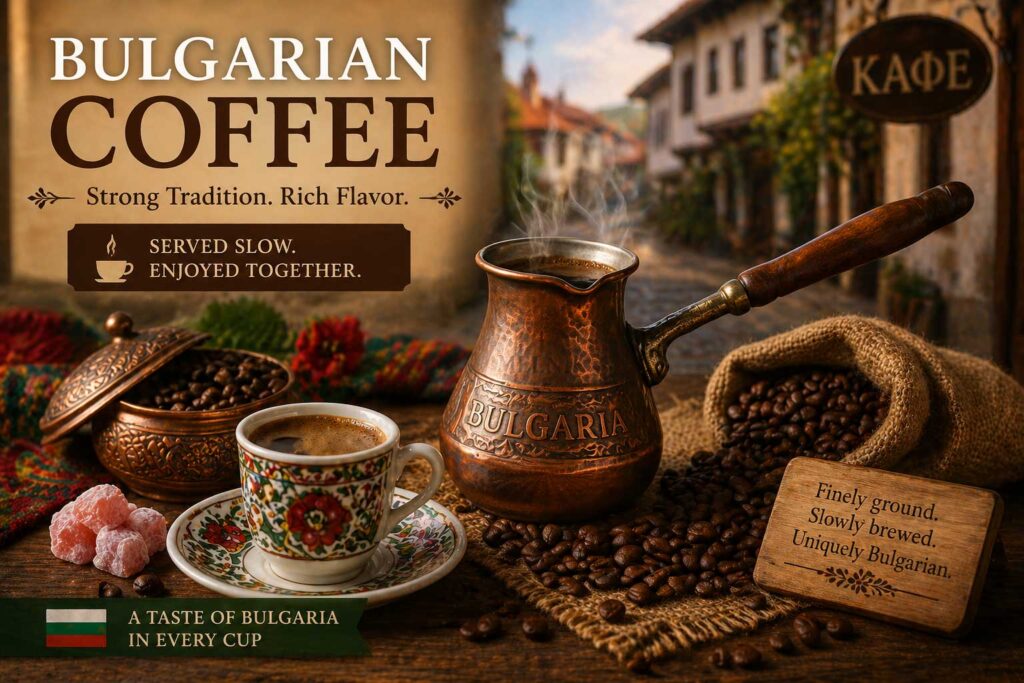
Bulgarian coffee is deeply rooted in everyday life and closely resembles traditional Turkish-style coffee. It is brewed slowly in a small pot called a cezve, allowing the flavors to develop into a rich, intense experience.
Unlike modern coffee styles focused on speed and convenience, Bulgarian coffee is about taking time, slowing down, and enjoying the moment. It is often part of long conversations, social gatherings, or quiet daily rituals.
Characteristics of Bulgarian Coffee
- Strong and thick with a bold, concentrated flavor
- Served unfiltered, with fine grounds settling at the bottom
- Prepared in a cezve for a traditional brewing method
- Meant to be sipped slowly rather than rushed
Cultural Experience
Coffee culture in Bulgaria is less about caffeine and more about connection. Sitting down for coffee can last far longer than the drink itself, turning into extended conversations with friends, family, or colleagues.
👉 Pro tip: Don’t stir once served—let the grounds settle, sip slowly, and enjoy the ritual.
Coffee culture adds another layer to the experience of Bulgarian drinks you must try.
Bulgarian Coffee vs Turkish Coffee vs Espresso – What’s the Difference?
Bulgarian coffee shares roots with Turkish coffee but differs significantly from espresso in preparation, taste, and cultural meaning.
Key Differences
| Feature | Bulgarian Coffee | Turkish Coffee | Espresso |
|---|---|---|---|
| Brewing Method | Cezve (stovetop) | Cezve (traditional) | Espresso machine |
| Grind Size | Very fine | Very fine | Fine |
| Texture | Thick, unfiltered | Thick, unfiltered | Smooth, filtered |
| Flavor | Strong, slightly bitter | Strong, richer foam | Intense, concentrated |
| Serving Style | Slow, social | Ritualistic | Quick, on-the-go |
| Grounds | Settle at bottom | Settle at bottom | Filtered out |
Flavor & Experience
Bulgarian coffee is bold and straightforward—less about ritual than Turkish coffee, but still deeply tied to social life. It is typically served without sugar unless requested and is meant to be enjoyed slowly.
Turkish coffee often has:
- Thicker foam
- More ceremonial preparation
- Cultural rituals like fortune reading
Espresso, in contrast, is:
- Fast
- Highly concentrated
- Designed for quick consumption
👉 Bulgarian coffee sits between tradition and everyday practicality—strong like Turkish coffee, but more relaxed and casual in experience.
Cultural Perspective
- Bulgarian coffee → conversation, daily routine
- Turkish coffee → ritual, ceremony
- Espresso → efficiency, modern lifestyle
👉 In Bulgaria, coffee is not rushed—it’s a reason to sit down and connect.
Bottom Line
- Choose Bulgarian coffee → for slow, social experience
- Choose Turkish coffee → for tradition and ritual
- Choose Espresso → for speed and intensity
Bulgarian Coffee Essentials
👉 Want to recreate authentic Bulgarian coffee at home? These tools make all the difference.
Must-Have Coffee Tools
| Product | Best For | Why It’s Useful | Rating | Price | Check Price |
|---|---|---|---|---|---|
| Traditional Cezve Pot | Authentic brewing | Essential for Bulgarian coffee | ⭐⭐⭐⭐⭐ | $$ | Check Amazon |
| Manual Coffee Grinder | Fresh grounds | Better flavor control | ⭐⭐⭐⭐☆ | $$ | Check Amazon |
| Turkish Coffee Cups Set | Presentation | Small cups for serving | ⭐⭐⭐⭐⭐ | $$ | Check Amazon |
Coffee Kits (Beginner Friendly)
👉 If you’re new, start with a complete set:
- Coffee starter kit (cezve + cups)
- Pre-ground fine coffee for Turkish/Bulgarian style
- Electric grinder (optional upgrade)
Pro Tip
👉 To get the most authentic Bulgarian coffee experience:
- Use very finely ground coffee
- Brew slowly on low heat
- Do not stir after pouring
- Let grounds settle before drinking
Boza – A Unique Fermented Drink
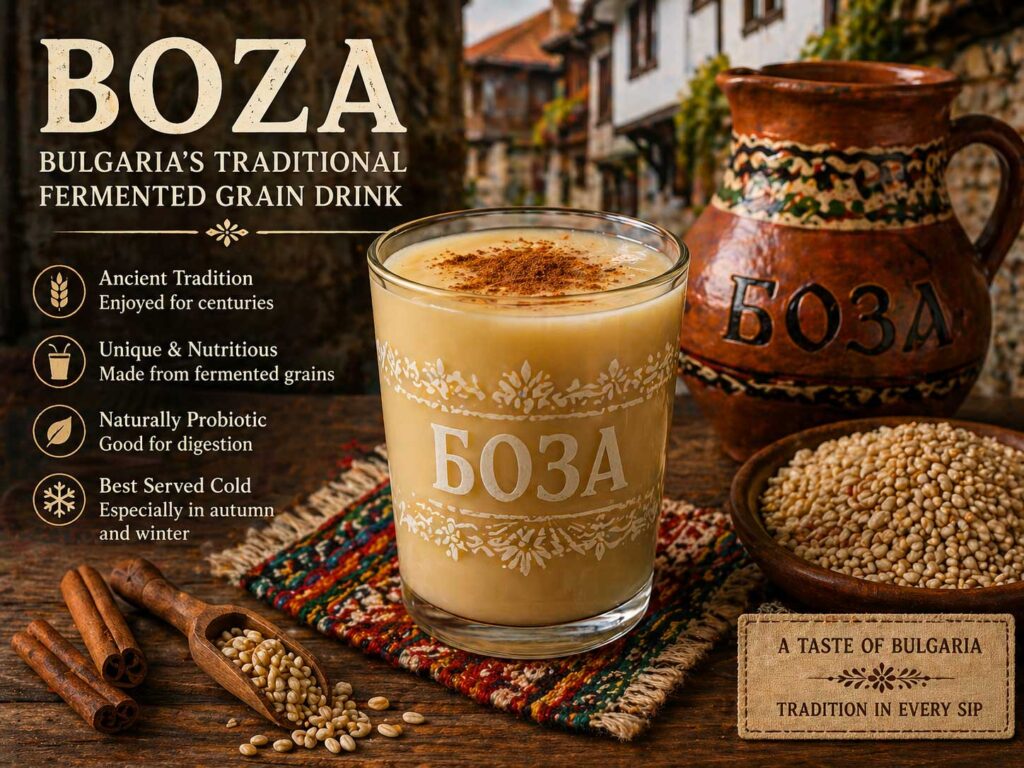
Boza is one of the most unusual and traditional Bulgarian drinks you must try. Unlike most beverages, boza stands out for its thick texture, distinctive flavor, and deep historical roots.
Made from fermented grains such as wheat or millet, boza has a unique profile that combines both sweetness and tanginess, making it unlike anything found in typical Western drinks.
What Makes Boza Unique
- Thick, almost smoothie-like consistency
- Sweet-tangy flavor with mild fermentation notes
- Very low alcohol content (usually under 1%)
Boza is often enjoyed as a comforting, nostalgic drink, especially during colder months or as a quick energy boost.
Cultural Significance
Boza has been part of Balkan life for centuries, dating back to the Ottoman period. It remains especially popular among older generations and is often associated with tradition, childhood memories, and local street vendors.
👉 Fun fact: In many Bulgarian cities, boza is still sold in bakeries and small shops, often paired with pastries
Its uniqueness makes it one of the most interesting Bulgarian drinks you must try.
Herbal Teas – Nature in a Cup
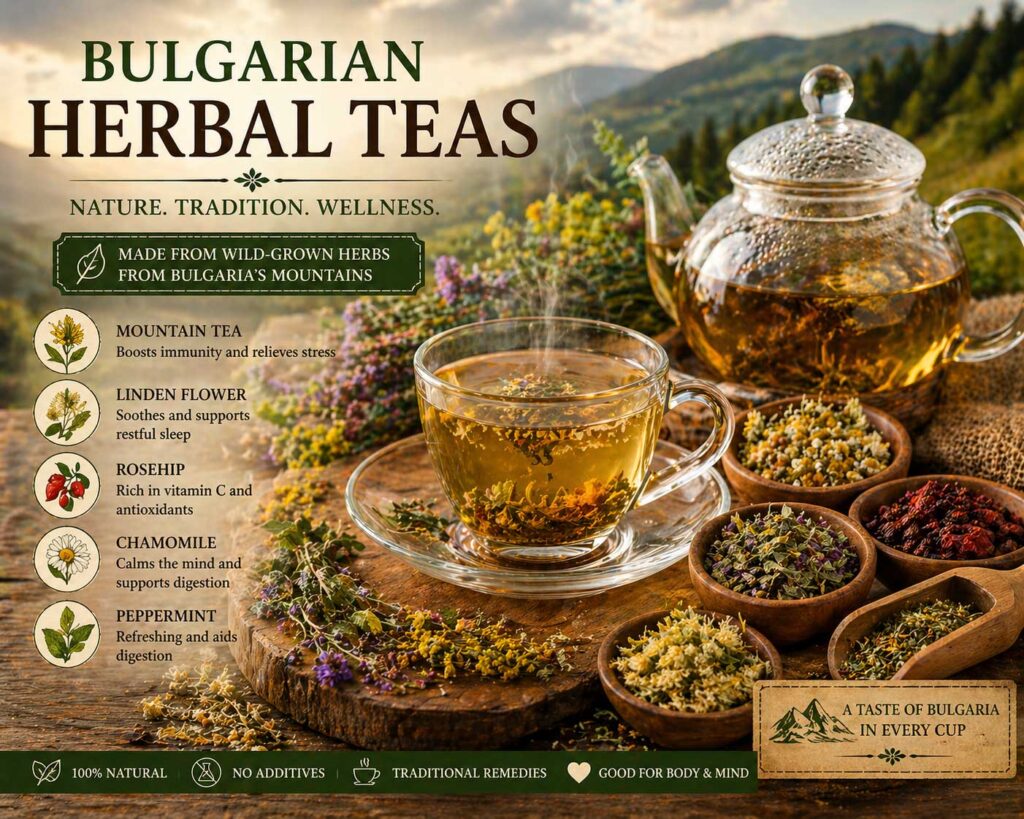
Bulgarian herbal teas are more than just a daily drink—they are a reflection of the country’s rich natural environment and long-standing traditions of healing and wellness. Thanks to its diverse landscapes and clean mountain regions, Bulgaria is one of the best places in Europe for growing wild medicinal herbs.
From the slopes of the Rhodope Mountains to remote rural areas, herbs are often hand-picked and dried using traditional methods, preserving their natural aroma and beneficial properties.
Popular Bulgarian Herbs
- Thyme — known for its strong aroma and immune-supporting properties
- Mint — refreshing and soothing for digestion
- Chamomile — calming and widely used for relaxation
- St. John’s Wort — traditionally used for mood and wellness support
Explore more in: Bulgarian Herbs and Natural Remedies.
Why Bulgarian Herbal Teas Stand Out
- 100% natural and caffeine-free
- Rich in antioxidants and health-supporting compounds
- Sourced from clean, often wild-grown environments
- Deeply connected to Bulgarian traditions and daily rituals
Herbal tea in Bulgaria is not just about hydration—it’s part of a lifestyle focused on balance, health, and connection to nature.
👉 Pro tip: Many Bulgarians drink herbal tea in the evening as a natural way to relax and unwind after a long day.
Herbal Tea Kits (Bulgarian Style)
👉 Want to experience Bulgarian herbal traditions at home? Start with these essential tea tools.
| Product | Best For | Why It’s Useful | Rating | Price | Check Price |
|---|---|---|---|---|---|
| Organic Herbal Tea Sampler | Beginners | Try multiple herbs | ⭐⭐⭐⭐⭐ | $$ | Check Amazon |
| Glass Tea Infuser Set | Loose tea brewing | Easy and reusable | ⭐⭐⭐⭐☆ | $$ | Check Amazon |
| Mountain Tea Bundle | Authentic experience | Traditional Balkan herbs | ⭐⭐⭐⭐⭐ | $$ | Check Amazon |
👉 Ideal for recreating Bulgarian herbal tea rituals at home.
Bulgarian Yogurt Drink – Liquid Gold
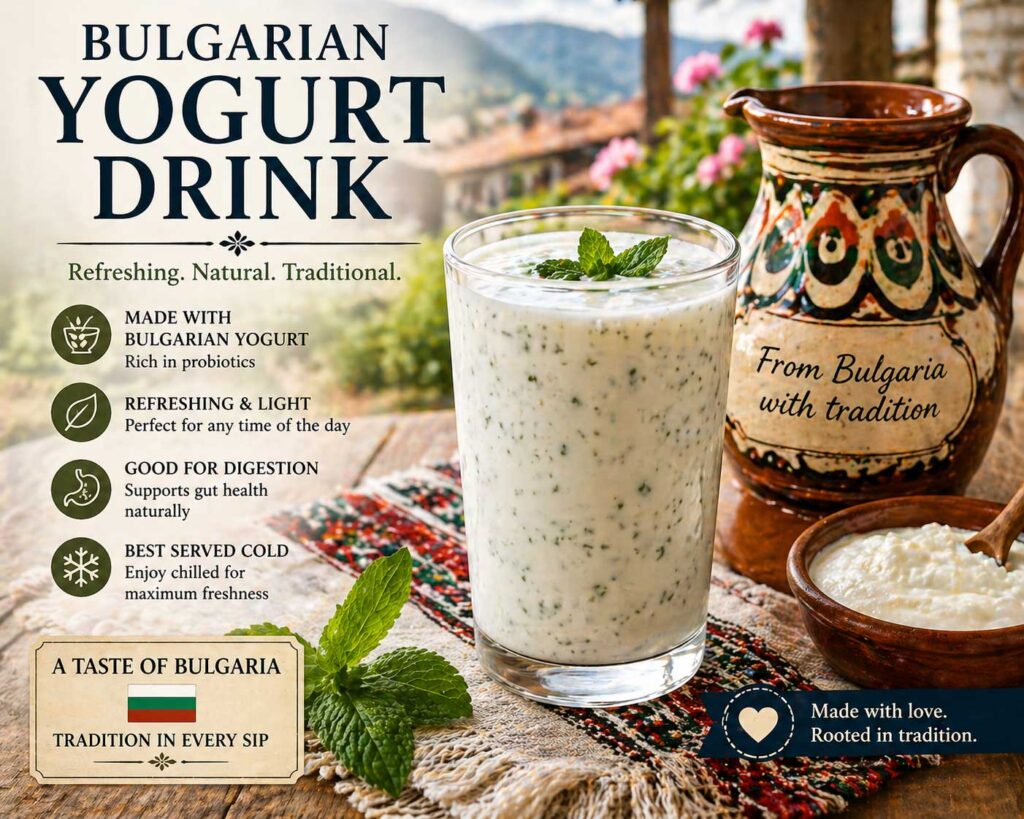
Bulgarian yogurt is world-famous for its unique bacterial culture, especially Lactobacillus bulgaricus, which plays a key role in its health benefits and distinct taste.
Unlike Ayran, which is diluted and salted for refreshment, Bulgarian yogurt drinks in their pure form are thicker, richer, and focused on nutrition rather than hydration.
These drinkable yogurts are made by lightly thinning traditional yogurt, preserving its natural probiotic profile while making it easier to consume as a beverage.
What Makes Bulgarian Yogurt Drinks Special
- Rich in live probiotics that support gut health
- Smooth, creamy texture with natural thickness
- Slight tanginess from active fermentation
- Minimal processing, often closer to traditional yogurt
Health Benefits
- Supports digestion and gut microbiome balance
- Helps strengthen the immune system
- Associated with longevity and overall well-being in Bulgaria
👉 Key difference:
- Ayran → light, salty, refreshing, meal companion
- Yogurt drink → rich, probiotic, health-focused
This distinction helps both readers and Google clearly understand that they are two different types of drinks, not duplicates.
Explore the science behind it: Lactobacillus Bulgaricus Explained.
Bulgarian Beer – Light and Refreshing

Beer is one of the most widely consumed drinks in Bulgaria, especially during the warm summer months when outdoor dining and social gatherings are common. While Bulgaria is famous for its rakia and wine, beer plays a major role in everyday, casual drinking culture.
Bulgarian beers are typically light lagers, designed to be refreshing, smooth, and easy to drink—perfect for pairing with traditional foods and hot weather.
Popular Bulgarian Beer Brands
- Zagorka — one of the most well-known brands, crisp and balanced
- Shumensko — traditional lager with a slightly richer taste
- Kamenitza — widely available and easy-drinking
These brands are staples across the country and can be found in restaurants, bars, and local shops.
What to Expect from Bulgarian Beer
- Light, refreshing lager styles
- Smooth, easy-to-drink flavor profiles
- Best served ice-cold, especially in summer
- Perfect pairing with grilled meats, kebabs, and casual meals
Beer in Bulgaria is less about complexity and more about enjoyment and social connection—whether at a beach bar, a mountain restaurant, or a backyard gathering.
Learn more about local traditions: Bulgarian Food and Drink Culture.
👉 Pro tip: Try Bulgarian beer on tap when possible—it’s often fresher and even more refreshing.
Medovina – Bulgarian Honey Wine
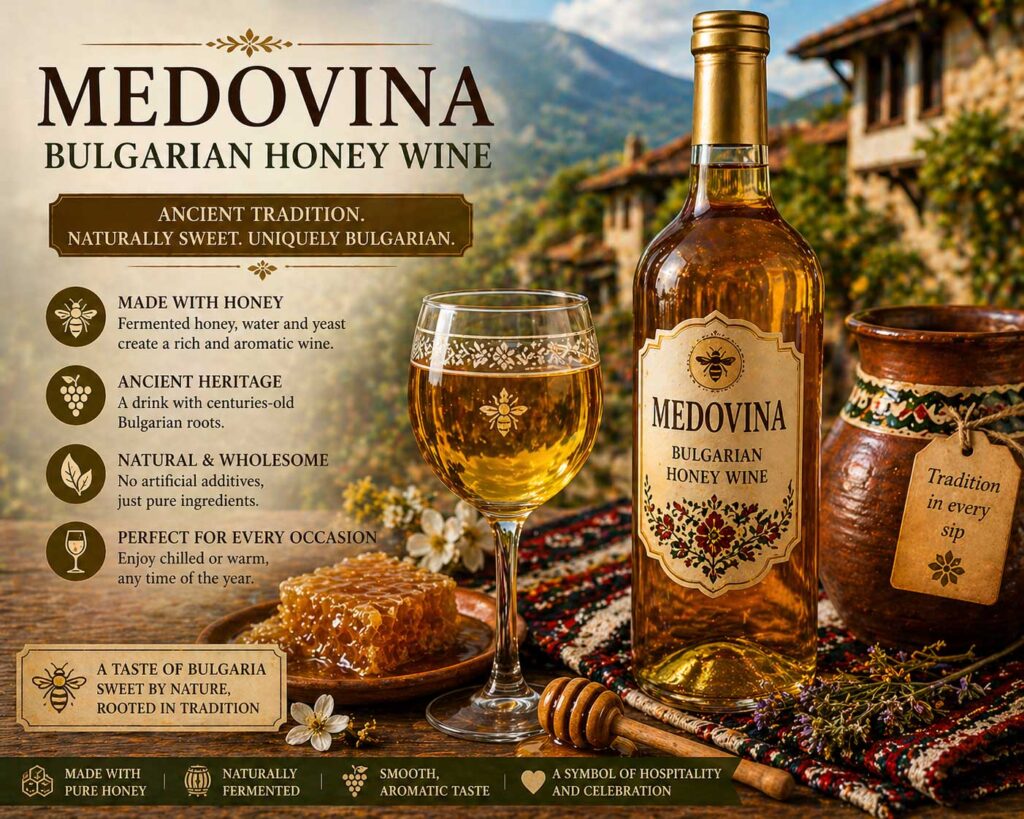
Medovina is a traditional Bulgarian honey-based alcoholic drink with deep historical roots. Often compared to mead, medovina has been enjoyed for centuries and reflects an older layer of Bulgaria’s drinking culture.
Although it is less common today than rakia or wine, medovina remains an important part of the country’s heritage and is still produced in small batches, often using traditional methods.
Characteristics of Medovina
- Naturally sweet and aromatic, with a smooth honey flavor
- Made through fermentation of honey, water, and sometimes herbs
- Ancient origins, dating back to early European and Balkan traditions
- Often homemade or crafted in small quantities
Cultural Significance
Medovina is closely tied to historical and rural traditions, where honey was widely available and valued not only as food but also as a base for fermentation. Today, it is often associated with traditional festivals, historical reenactments, and artisanal producers.
See more traditional options: Traditional Bulgarian Drinks Guide.
👉 Pro tip: If you find authentic medovina, try it slightly chilled to balance its sweetness and enhance its ароматic profile.
Fruit Juices and Compotes (Kompot)
Kompot is a traditional homemade fruit drink that has been a staple in Bulgarian households for generations. Made by boiling fresh fruits with water and sugar, then preserving them in jars, kompot offers a natural and flavorful alternative to commercial juices.
Unlike store-bought drinks, kompot is typically prepared at home using seasonal fruits, allowing families to enjoy the taste of summer all year round.
Common Fruits Used in Kompot
- Cherries — rich and slightly tart
- Peaches — sweet and aromatic
- Plums — deep flavor, very traditional
- Apples — light and refreshing
Each fruit gives kompot a unique taste, and many households create multiple variations depending on the harvest.
Why Kompot Is Special
- Made with simple, natural ingredients and no artificial additives
- Preserves seasonal fruits for year-round enjoyment
- Deeply rooted in Bulgarian домашна (homemade) tradition
- Widely found in almost every Bulgarian household
Kompot is more than just a drink—it represents a way of life centered around seasonality, preservation, and family traditions.
Discover more unique items: Bulgarian Foods You Can’t Find Anywhere Else.
👉 Pro tip: Kompot can be served chilled in summer or slightly warm in winter, making it a versatile drink for any season.
What are the most popular Bulgarian drinks?
The most popular Bulgarian drinks include:
- Rakia (fruit brandy)
- Bulgarian wine
- Ayran (yogurt drink)
- Boza (fermented grain drink)
- Herbal teas
- Bulgarian beer
These drinks reflect Bulgaria’s rich traditions, natural ingredients, and centuries-old cultural heritage, combining both alcoholic and non-alcoholic options that are deeply rooted in everyday life.
FAQs About Bulgarian Drinks You Must Try
What is the national drink of Bulgaria?
The national drink of Bulgaria is Rakia, a strong fruit brandy traditionally made from grapes, plums, or other fruits. It is deeply rooted in Bulgarian culture and is often homemade, served to guests as a sign of hospitality, and enjoyed during celebrations and family gatherings.
Is Bulgarian rakia stronger than vodka?
Yes, rakia is often stronger than vodka. While most vodka is around 40% alcohol, rakia typically ranges between 40% and 60%, with some homemade versions reaching even higher alcohol content.
What is ayran made of?
Ayran is made from three simple ingredients: yogurt, water, and salt. It is a refreshing, probiotic-rich drink that is especially popular during summer and commonly served with grilled dishes.
Is Bulgarian wine good?
Yes, Bulgarian wine is highly regarded for its quality and value. The country has a long winemaking tradition dating back to the Thracians, and local varieties like Mavrud and Melnik are known for their rich flavors and unique character.
What is boza?
Boza is a traditional fermented beverage made from grains such as wheat or millet. It has a thick texture and a sweet-tangy flavor, making it one of the most unique drinks in Bulgarian cuisine.
Do Bulgarians drink a lot of alcohol?
Alcohol is an important part of Bulgarian social culture, but it is usually consumed in moderation and almost always accompanied by food. Drinking is more about socializing and tradition than excessive consumption.
What is the healthiest Bulgarian drink?
The healthiest Bulgarian drinks include herbal teas and yogurt-based beverages. Drinks made with Lactobacillus bulgaricus, such as yogurt drinks, support digestion and gut health, while herbal teas provide natural wellness benefits.
Can tourists try homemade rakia?
Yes, tourists can often try homemade rakia, especially when visiting rural areas or staying with local hosts. Offering rakia to guests is a common Bulgarian tradition and a sign of hospitality.
What beer is popular in Bulgaria?
Popular Bulgarian beer brands include Zagorka, Shumensko, and Kamenitza. These are typically light lagers that are refreshing and easy to drink, especially during the summer months.
What is Bulgarian coffee like?
Bulgarian coffee is similar to Turkish coffee. It is strong, unfiltered, and brewed in a small pot called a cezve. It is served in small cups and meant to be enjoyed slowly, often during social conversations.
Are Bulgarian drinks expensive?
No, Bulgarian drinks are generally very affordable compared to Western Europe. Both alcoholic and non-alcoholic beverages offer excellent value for their quality.
Is boza alcoholic?
Boza contains very low alcohol, usually less than 1%, due to natural fermentation. It is generally considered a non-alcoholic drink and is consumed by people of all ages.
What is medovina?
Medovina is a traditional honey-based alcoholic drink similar to mead. It has a sweet taste and ancient origins, though it is less commonly consumed today than rakia or wine.
What is kompot?
Kompot is a homemade fruit drink made by boiling fruits like cherries, peaches, or apples with sugar and storing them in jars. It is a traditional and natural alternative to commercial juices.
When is rakia usually consumed?
Rakia is typically consumed before meals as an aperitif. It is often served with salads or appetizers and enjoyed slowly as part of a social dining experience.
Final Conclusion: A Taste of Bulgaria in Every Sip
Bulgarian drinks are not just something you consume—they are something you experience. Each sip reflects centuries of tradition, the richness of the land, and the cultural identity of a nation that has preserved its flavors through generations.
From the bold intensity of Rakia to the calming purity of mountain herbal teas, these beverages capture the full spectrum of Bulgarian life—celebration, hospitality, health, and heritage. Whether crafted in small villages, grown in fertile valleys, or passed down through family traditions, every drink carries a story worth discovering.
If you truly want to understand Bulgaria beyond its landscapes and landmarks, start with what’s in the glass. These Bulgarian drinks you must try are more than authentic—they are unforgettable, offering a genuine taste of one of Europe’s most underrated cultures.
One sip, and you’ll understand why Bulgaria leaves a lasting impression.
To go deeper, explore Bulgarian Cuisine: Complete Food Guide, discover Traditional Bulgarian Breakfast Foods, and learn more about Bulgarian Culture and Traditions.
Experience Bulgarian Drinks at Home
You don’t have to travel to Bulgaria to experience its rich flavors and traditions.
Start with:
- 🥃 Authentic rakia glass sets
- 🌿 Herbal tea kits
- 🍷 Wine accessories
These small additions can bring Bulgarian tradition directly into your home.
References
- Ivanova, T. “Traditional Bulgarian Beverages and Their Cultural Significance.” https://www.researchgate.net/publication/Traditional_Bulgarian_Beverages
- Bulgarian Ministry of Agriculture. “Wine Production and Viticulture in Bulgaria.”
- Bulgarian Academy of Sciences. “Studies on Lactobacillus bulgaricus and Fermented Foods.” https://www.bas.bg/?lang=en
- UNESCO. “Intangible Cultural Heritage and Traditional Food Practices.” https://ich.unesco.org/
- Petrova, S. “Rakia Production and Distillation Traditions in Bulgaria.”
- Georgiev, K. “Bulgarian Herbal Medicine and Plant Use.”
- Food and Agriculture Organization. “Fermented Foods and Traditional Diets.” https://www.fao.org/home/en/
- National Statistical Institute of Bulgaria. “Alcohol Consumption and Beverage Trends.” https://www.nsi.bg/en