


Looking for the most interesting facts about Bulgaria? Bulgaria is one of Europe’s most fascinating yet underrated countries. Located in the Balkans between East and West, it has a rich history stretching back thousands of years.
From ancient civilizations and medieval empires to scientific discoveries and unique traditions, these interesting facts about Bulgaria reveal a country full of surprising stories and global influence.
Many people know very little about Bulgaria, but the truth is that it has shaped world culture, science, and history in remarkable ways.
These interesting facts about Bulgaria highlight the country’s unique history, culture, and global influence.
👉 Want more depth? Explore → Historical Facts About Bulgaria.
Here are 50 interesting facts about Bulgaria that will blow your mind.
What Are the Bulgarian Facts that Will Blow Your Mind
Ancient Bulgaria Facts and Origins
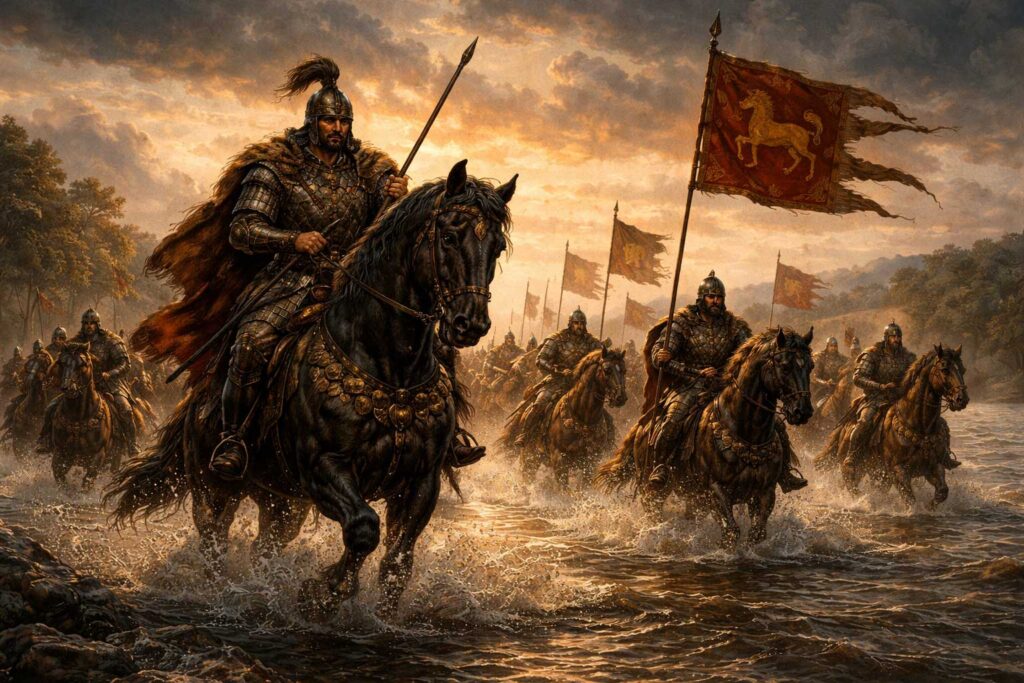
1. Bulgaria was founded in 681 AD
Bulgaria was founded in 681 AD, making it one of the oldest countries in Europe. Unlike many other nations, Bulgaria has preserved its name and identity for over 1,300 years, which is extremely rare in European history. This continuity highlights the country’s strong cultural foundation and resilience through centuries of change.
2. Bulgaria has never changed its name
The country has never changed its name since it was established. While many European nations have undergone multiple name changes due to political shifts and wars, Bulgaria has maintained its identity throughout its long history, reinforcing its unique historical continuity.
3. The oldest gold treasure in the world was found in Bulgaria
The oldest processed gold treasure in the world was discovered near Varna and dates back over 6,000 years. This discovery proves that advanced craftsmanship and metallurgy existed much earlier than previously believed, making Bulgaria one of the most important archaeological regions in Europe.
👉 Explore more ancient discoveries → Facts About Bulgaria (Quick Guide).
4. The ancient Thracians were master gold craftsmen
Ancient Thracians who lived in the region were famous for their gold craftsmanship. Their intricate jewelry, ceremonial objects, and burial treasures demonstrate a highly developed culture with advanced artistic and technical skills.
5. Plovdiv is one of the oldest cities in the world
The city of Plovdiv is one of the oldest continuously inhabited cities in the world, with a history spanning over 8,000 years. It is older than both Rome and Athens, and its layered history can still be seen in its architecture and archaeological sites.
6. Bulgaria once controlled vast territories
At the height of its power, Bulgaria once controlled territory stretching from the Black Sea to the Adriatic Sea. This expansion made it one of the dominant forces in Southeastern Europe during the medieval period.
7. Bulgaria became a major European power under Tsar Simeon I
During the reign of Tsar Simeon I, Bulgaria became one of the most powerful states in Europe. This period, often referred to as the Golden Age, was marked by political strength, military success, and cultural development.
👉 Learn more about this period → Historical Facts About Bulgaria.
8. The Bulgarian Empire rivaled Byzantium
The medieval Bulgarian Empire rivaled the Byzantine Empire for influence in Eastern Europe. It played a key role in shaping the region’s political and cultural landscape, especially through its contributions to language, religion, and education.
Bulgarian Culture and Traditions Facts
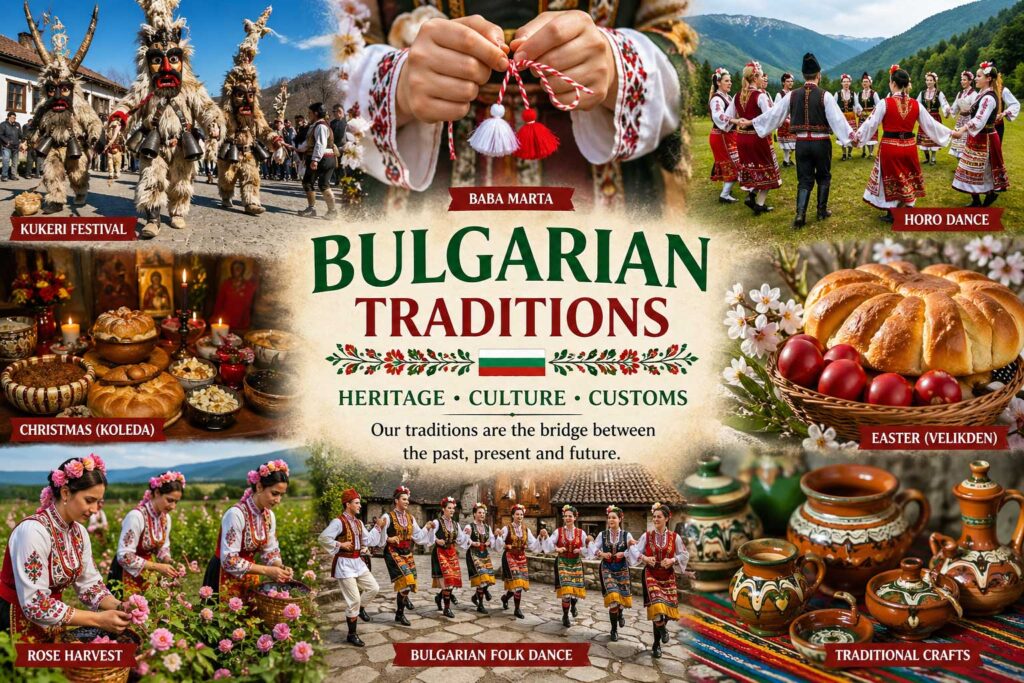
9. Bulgarians nod for “no” and shake for “yes”
Bulgarians traditionally nod their heads for “no” and shake them for “yes,” which is the opposite of most countries. This cultural difference often surprises visitors and can lead to confusion at first, but it is a long-standing tradition deeply rooted in local customs.
10. Bulgarian folk music uses unusual rhythms
Bulgarian folk music often uses complex and unusual rhythms such as 7/8 or 11/16 time. These irregular patterns make the music unique and recognizable worldwide, and they are an important part of Bulgaria’s rich cultural heritage.
11. The Kukeri festival drives away evil spirits
The traditional Kukeri festival features dancers wearing elaborate masks and costumes to scare away evil spirits. This ritual dates back to ancient times and is still performed today, especially in rural areas, as a way to bring health, fertility, and prosperity.
👉 Learn more → Bulgarian Traditions and Customs.
12. Bulgarian embroidery has symbolic meanings
Bulgarian embroidery patterns often symbolize protection, health, and prosperity. Each region has its own designs and colors, and these traditional textiles reflect centuries of cultural identity and artistic expression.
13. The gaida is a traditional Bulgarian instrument
Traditional Bulgarian bagpipes are called the gaida and are widely used in folk music. The sound of the gaida is strongly associated with Bulgarian traditions, especially in mountain regions where music plays an important role in community life.
14. Bulgarian weddings can last for days
Bulgarian weddings can last several days and include many rituals, dances, and traditions. These celebrations bring families and communities together, reflecting the importance of social bonds and cultural heritage.
15. Many traditions date back to Thracian times
Some Bulgarian traditions date back to ancient Thracian rituals, showing how deeply rooted the culture is. These customs have been passed down through generations and continue to influence modern Bulgarian life.
Bulgaria’s Nature and Geography Facts
16. Bulgaria has over 7,000 mineral springs
Bulgaria has over 7,000 mineral springs, making it one of the richest spa regions in Europe. These natural resources have been used since ancient times for healing and wellness, and today they support a growing spa and tourism industry.
17. Bulgaria has three major mountain ranges
The country contains three major mountain ranges: the Rila, Pirin, and Rhodope Mountains. Each region offers unique landscapes, from alpine peaks to forested hills, making Bulgaria a popular destination for hiking, skiing, and nature tourism.
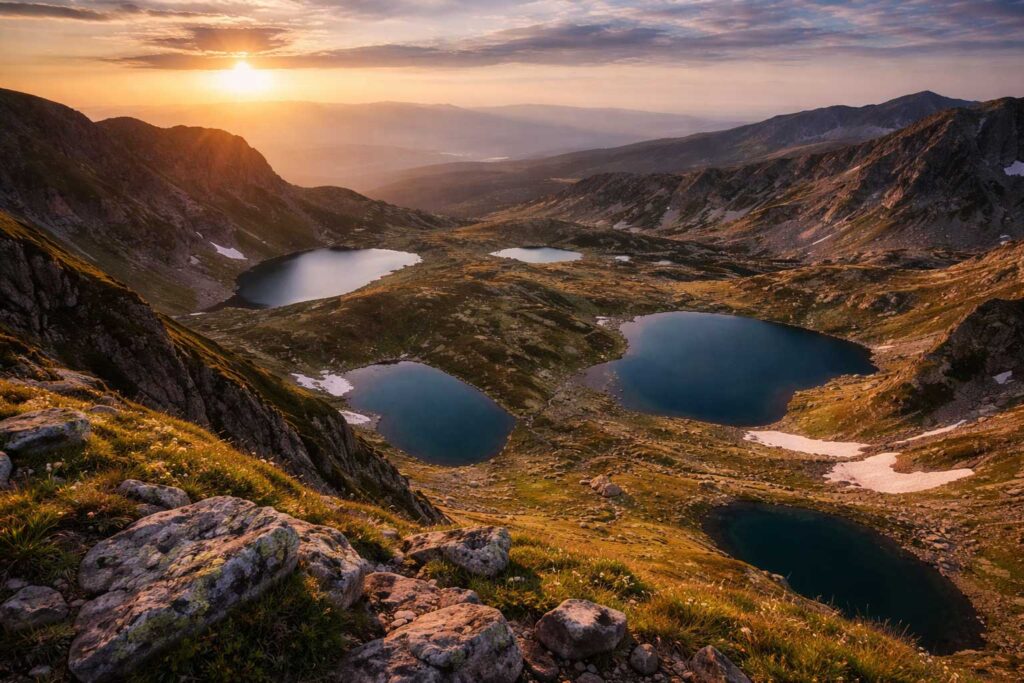
18. The Seven Rila Lakes are iconic natural landmarks
The Seven Rila Lakes are among the most famous natural landmarks in Bulgaria. Located high in the Rila Mountains, these glacial lakes attract visitors from around the world and are considered one of the most beautiful natural wonders in Southeastern Europe.
19. Bulgaria’s Black Sea coast stretches nearly 400 kilometers
Bulgaria’s Black Sea coast stretches nearly 400 kilometers and features a mix of sandy beaches, cliffs, and resort towns. It is a popular destination for both local and international tourists, especially during the summer months.
👉 Planning a trip? See → Best Places to Visit in Bulgaria.
20. Bulgaria has one of Europe’s most diverse ecosystems
The country contains some of Europe’s most diverse ecosystems, including mountains, forests, rivers, and coastal areas. This biodiversity supports a wide range of plant and animal species, many of which are rare or protected.
Bulgarian Discoveries and Science
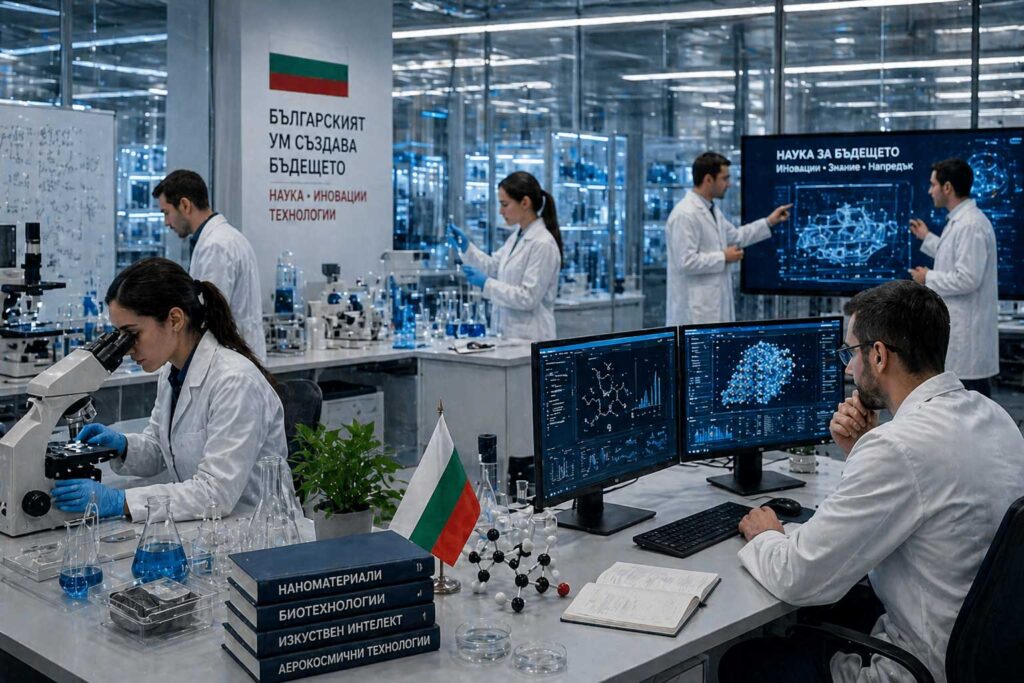
21. The Cyrillic alphabet was developed in Bulgaria
The Cyrillic alphabet, used by over 250 million people today, was developed in the First Bulgarian Empire during the 9th century. It played a crucial role in spreading literacy and culture across Eastern Europe and remains one of Bulgaria’s most important contributions to global civilization.
22. A Bulgarian scientist discovered the yogurt bacterium
Bulgarian scientist Stamen Grigorov discovered the bacterium responsible for yogurt fermentation in the early 20th century. This discovery helped establish Bulgaria’s global reputation for yogurt and contributed to modern research on probiotics and gut health.
23. A Bulgarian helped create the first electronic computer
Bulgarian-born physicist John Vincent Atanasoff played a key role in developing the first electronic digital computer. His work laid the foundation for modern computing technology and is recognized as one of the most important breakthroughs in computer science.
👉 Discover more → Bulgarian Inventions and Discoveries.
24. Bulgaria contributed to international space research
Bulgarian scientists contributed experiments to international space missions, particularly through collaborations during the Cold War era. These contributions included research in biology, physics, and space food technology.
25. Bulgaria was a leader in microelectronics
During the late 20th century, Bulgaria had one of the largest microelectronics industries in Eastern Europe. The country produced computers, chips, and electronic components that were exported across the region, making it a key player in technological development at the time.
Space and Technology

26. Bulgaria is one of the few countries to send people to space
Bulgaria is one of the few countries in the world whose citizens have traveled to space. This achievement places the country among a small group of nations that have contributed directly to human space exploration.
👉 Explore more → Bulgarian Discoveries and Science.
27. Georgi Ivanov was the first Bulgarian astronaut
The first Bulgarian astronaut was Georgi Ivanov, who flew to space in 1979 aboard a Soviet mission. His journey marked a historic milestone for Bulgaria and demonstrated the country’s involvement in international space programs.
28. Alexander Alexandrov became the second Bulgarian in space
The second Bulgarian astronaut was Alexander Alexandrov, who traveled to space in 1988. His mission included scientific experiments and further strengthened Bulgaria’s role in space research.
29. Bulgaria developed specialized space food
Bulgarian scientists developed specialized space food technologies designed for astronauts. These innovations focused on nutrition, preservation, and practicality, and were used in international space missions.
30. Bulgaria participated in the Interkosmos program
The country participated in the Interkosmos initiative, which allowed allied nations to contribute to space exploration. Through this program, Bulgaria conducted experiments and sent astronauts into orbit.
Food and Agriculture
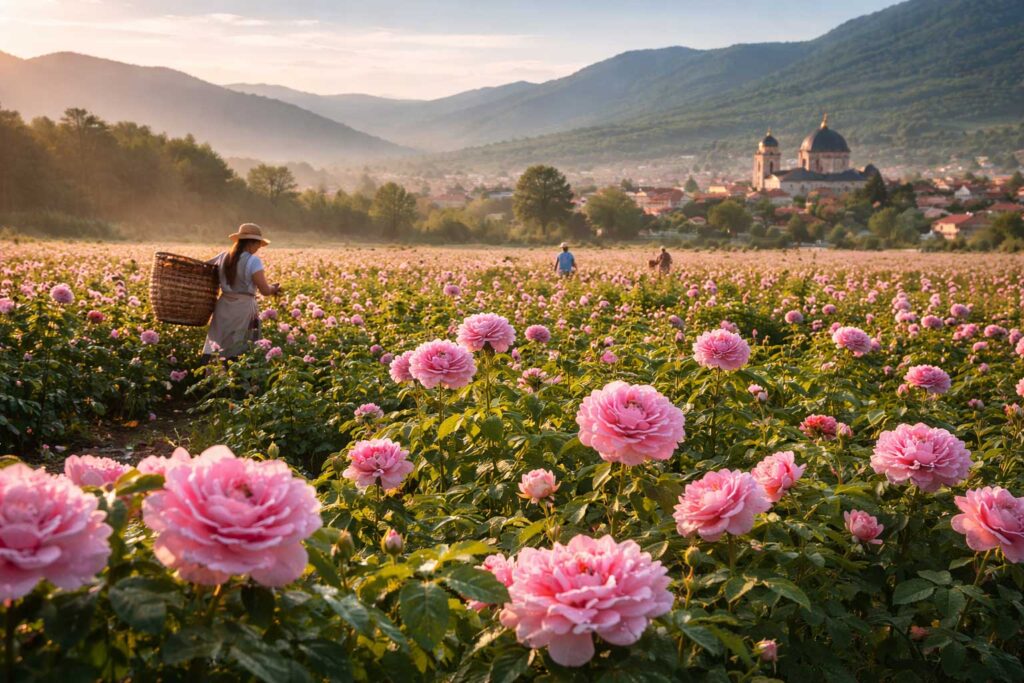
31. Bulgaria produces most of the world’s rose oil
Bulgaria produces around 70% of the world’s rose oil, a key ingredient used in luxury perfumes. The country’s climate and soil conditions make it ideal for growing oil-bearing roses, giving Bulgarian rose oil a global reputation for quality.
👉 Explore more → Bulgarian Rose Oil Guide.
32. The Rose Valley is world-famous
The Rose Valley near Kazanlak is famous worldwide for its rose cultivation. Every year, it hosts the Rose Festival, attracting visitors who come to experience traditional harvesting and cultural celebrations.
33. Bulgarian yogurt is known for its health benefits
Bulgarian yogurt is considered one of the healthiest fermented foods in the world. It contains the unique bacterium Lactobacillus bulgaricus, which contributes to its distinct taste and probiotic properties.
👉 Discover the science → Lactobacillus Bulgaricus Explained.
34. Bulgarian cuisine is rich and traditional
Traditional Bulgarian cuisine includes dishes like banitsa, shopska salad, and kavarma. These meals are made from simple, natural ingredients and reflect the country’s agricultural roots and regional diversity.
35. Bulgaria has ancient wine traditions
Wine production in Bulgaria dates back thousands of years to the time of the Thracians. Today, Bulgarian wines are gaining international recognition, combining traditional methods with modern techniques.
Architecture and Landmarks
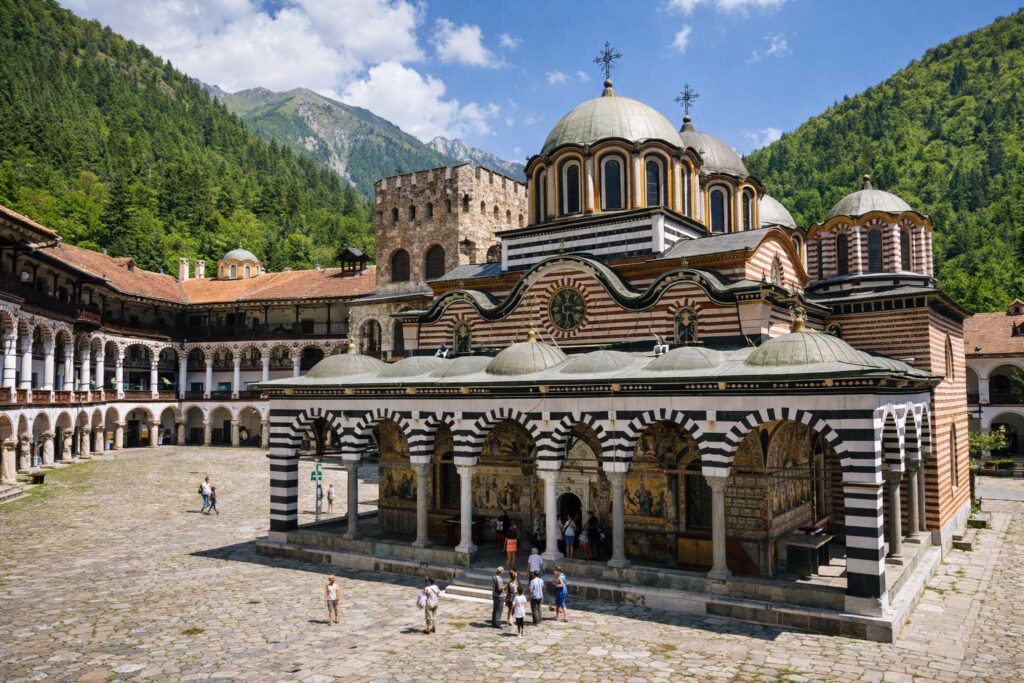
36. Rila Monastery is a cultural symbol of Bulgaria
The Rila Monastery is one of the most important cultural and spiritual sites in the Balkans. Founded in the 10th century, it has preserved Bulgarian identity, art, and religion through centuries of change and is now a UNESCO World Heritage Site.
37. Alexander Nevsky Cathedral is among the largest Orthodox churches
The Alexander Nevsky Cathedral is one of the largest Eastern Orthodox cathedrals in the world. Built in the early 20th century, it is one of Sofia’s most iconic landmarks and a symbol of Bulgaria’s religious heritage.
38. Bulgaria is rich in fortresses and archaeological sites
Bulgaria contains thousands of ancient fortresses and archaeological sites dating back to Thracian, Roman, and medieval times. These landmarks provide insight into the country’s long and complex history.
39. Roman ruins are preserved across the country
Many Roman ruins are preserved throughout Bulgaria, especially in cities like Plovdiv and Sofia. Ancient theaters, roads, and baths still exist today, showing the strong influence of the Roman Empire in the region.
40. Bulgaria has multiple UNESCO World Heritage Sites
Several Bulgarian landmarks are recognized as UNESCO World Heritage Sites, including the Thracian Tomb of Kazanlak and the Boyana Church. These sites highlight Bulgaria’s cultural and historical significance on a global level.
Modern Bulgaria
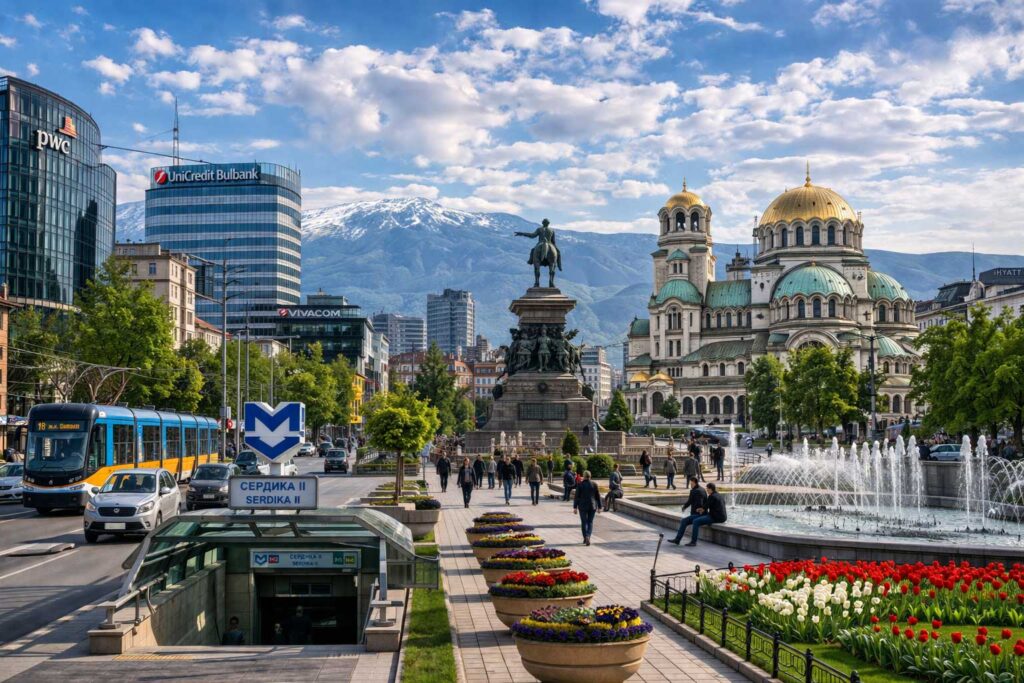
41. Sofia has over 7,000 years of history
The capital city of Sofia has a history of more than 7,000 years, making it one of the oldest cities in Europe. Ancient Thracian, Roman, and medieval remains can still be seen throughout the city today.
42. Sofia is a growing technology hub
Sofia is one of Europe’s fastest-growing technology hubs, attracting startups, investors, and global companies. Its combination of skilled talent and relatively low costs has made it a key destination for tech development in the region.
👉 Learn more → Top Bulgarian Tech Companies.
43. Bulgaria produces highly skilled software developers
Bulgaria produces a large number of skilled software developers each year. The country is known for its strong education in mathematics and engineering, which contributes to its growing reputation in the tech industry.
44. Bulgarian engineers work for global tech companies
Bulgarian engineers work for major global technology companies, both locally and internationally. Many professionals from Bulgaria contribute to projects in software, artificial intelligence, and cybersecurity.
45. Bulgaria has a fast-growing startup ecosystem
The country has a rapidly growing startup ecosystem, especially in Sofia and other major cities. New companies in fintech, software, and digital services are emerging, helping position Bulgaria as an innovation-driven economy.
Fun and Surprising Facts
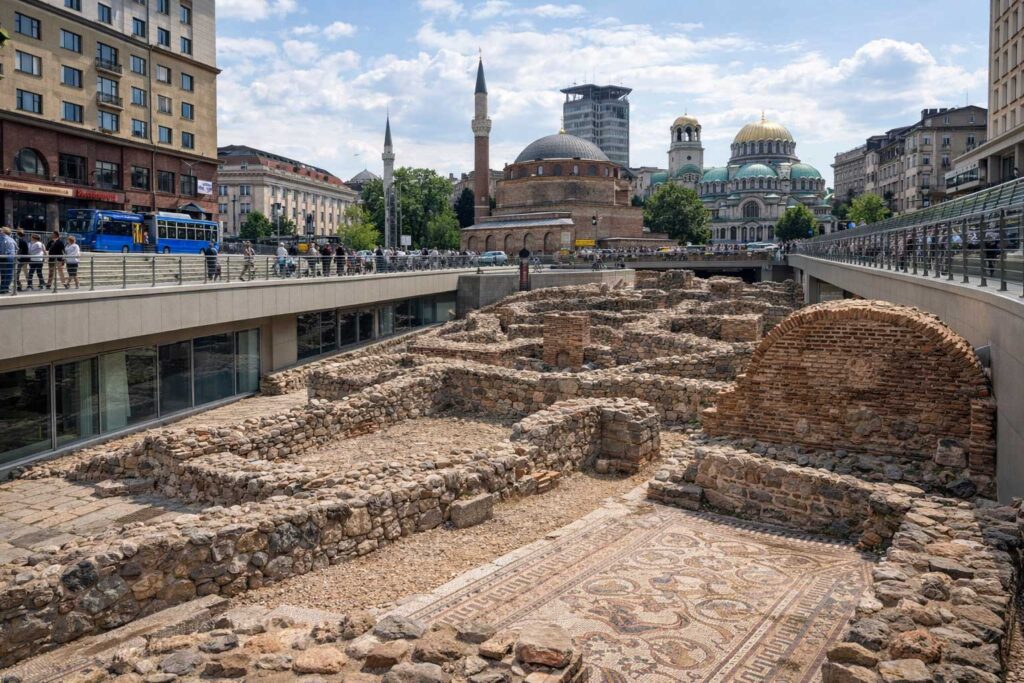
46. Bulgaria makes frequent archaeological discoveries
Bulgaria has more archaeological discoveries per year than many European countries. Ongoing excavations continue to uncover ancient cities, artifacts, and treasures, showing that much of the country’s history is still being revealed today.
👉 Want even more unusual insights? Explore → Strange but True Facts About Bulgaria.
47. Some villages preserve centuries-old traditions
Some Bulgarian villages still preserve traditions that are hundreds of years old. In these communities, customs are not just for festivals—they are part of everyday life, passed down through generations.
48. Bulgarian folklore is among the richest in Europe
Bulgarian folklore is considered one of the richest in Europe, featuring music, dances, costumes, and storytelling traditions. These elements reflect the country’s long cultural history and diverse influences.
49. Many festivals celebrate ancient rituals
Many Bulgarian festivals celebrate ancient seasonal rituals connected to nature, harvest, and renewal. Events like Kukeri and other folk celebrations have roots that go back thousands of years.
50. Bulgaria’s culture is a blend of civilizations
Bulgaria’s cultural heritage combines Thracian, Slavic, Byzantine, and Ottoman influences. This unique blend is what makes Bulgarian traditions, food, and identity so distinct compared to other European countries.
Why These Bulgarian Facts Are So Surprising
These interesting facts about Bulgaria may seem surprising because the country is often overlooked globally. However, its contributions to history, culture, and science are far more significant than most people expect.
From ancient civilizations and powerful empires to modern technological achievements, Bulgaria has played a key role in shaping both Europe and the wider world.
Bulgaria’s Global Impact
Many Bulgarian facts highlight the country’s global influence. The Cyrillic alphabet alone is used by millions of people, while discoveries in science and technology continue to impact modern life.
Cultural traditions, food, and music have also spread beyond Bulgaria, influencing global culture in subtle but meaningful ways.
👉 Continue exploring → Surprising Facts About Bulgaria Most People Don’t Know.
Conclusion
Bulgaria may be a relatively small country, but its history, culture, and achievements are incredibly rich. From ancient gold treasures and medieval empires to scientific discoveries and space exploration, the country has contributed far more to the world than most people realize.
These 50 facts only scratch the surface of Bulgaria’s fascinating story and demonstrate why the country deserves greater global recognition.
👉 Explore the full Bulgaropedia collection → Bulgarian Culture Guide.
🇧🇬 Support Bulgaropedia
If you enjoyed these interesting facts about Bulgaria and want to support independent content, consider helping us keep Bulgaropedia growing.
Your support helps us create more high-quality guides about Bulgarian history, culture, and discoveries.
❤️ Support BulgaropediaReferences
Note: These interesting facts about Bulgaria are based on historical records, scientific research, and verified cultural sources.
Sources and references used to verify interesting facts about Bulgaria.
- Encyclopaedia Britannica. “Bulgaria.” https://www.britannica.com/place/Bulgaria
- Encyclopaedia Britannica. “History of Bulgaria.” https://www.britannica.com/place/Bulgaria/History
- UNESCO World Heritage Centre. “World Heritage Sites in Bulgaria.” https://whc.unesco.org/en/statesparties/bg
- European Union. “Bulgaria Country Profile.” https://european-union.europa.eu/principles-countries-history/country-profiles/bulgaria_en
- National Statistical Institute of Bulgaria. https://www.nsi.bg/en
- Bulgarian Academy of Sciences.
- National Archaeological Institute with Museum, Bulgarian Academy of Sciences. https://naim.bg/en/
- Bulgarian National Tourist Portal. “Travel and Culture.” https://bulgariatravel.org/
- United States Holocaust Memorial Museum. “Bulgaria.” https://encyclopedia.ushmm.org/content/en/article/bulgaria