


Bulgarian traditions and customs are among the richest and most deeply preserved cultural systems in Europe. Rooted in ancient Thracian rituals, Slavic beliefs, and centuries of Eastern Orthodox Christianity, these traditions continue to shape everyday life, seasonal celebrations, and national identity.
From symbolic rituals like martenitsa bracelets to communal dances like the horo, Bulgarian customs are not just historical artifacts—they are living practices passed down through generations. They influence how people celebrate, gather, cook, and even think about health, luck, and the natural world.
👉 Few European cultures have preserved their traditions with such depth and continuity as Bulgaria.
Bulgarian traditions are deeply connected to the country’s identity—explore this further in Bulgarian Culture and Traditions.
Understanding these traditions offers more than cultural knowledge—it provides a powerful glimpse into the soul of Bulgaria, where the past and present exist side by side.
To understand the bigger picture of Bulgaria’s global importance, see Why Bulgaria Matters to the World.
What are Bulgarian traditions?
Bulgarian traditions are cultural practices rooted in ancient Thracian, Slavic, and Orthodox influences that continue to shape everyday life, celebrations, and identity in Bulgaria.
What Makes Bulgarian Traditions Unique?
Bulgarian traditions stand out for one key reason: cultural continuity.
Unlike many countries where traditions became symbolic or ceremonial, Bulgaria has preserved living traditions—customs that are still practiced in homes, villages, and cities.
Key Characteristics:
- Ancient Origins → Influences from Thracians (2000+ years ago)
- Seasonal Rituals → Deep connection to agriculture and nature
- Symbolism → Every object (bread, fire, thread) has meaning
- Community Focus → Celebrations are shared, not individual
👉 Studies in cultural anthropology often highlight Bulgaria as one of the strongest examples of living European folk traditions.
What truly sets Bulgaria apart is not just preservation—but integration into daily life. Traditions are not “events”—they are routines. From how bread is broken at the table to how blessings are given, culture is embedded in behavior.
Even younger generations continue these practices—not always consciously, but through family habits and social norms. This creates a rare cultural phenomenon where traditions evolve naturally without disappearing.
Food traditions play a major role in cultural life—learn more in Bulgarian Cuisine: Complete Food Guide.
👉 One of the clearest examples of these living traditions is seen in seasonal rituals like Baba Marta.
Baba Marta and the Martenitsa Tradition
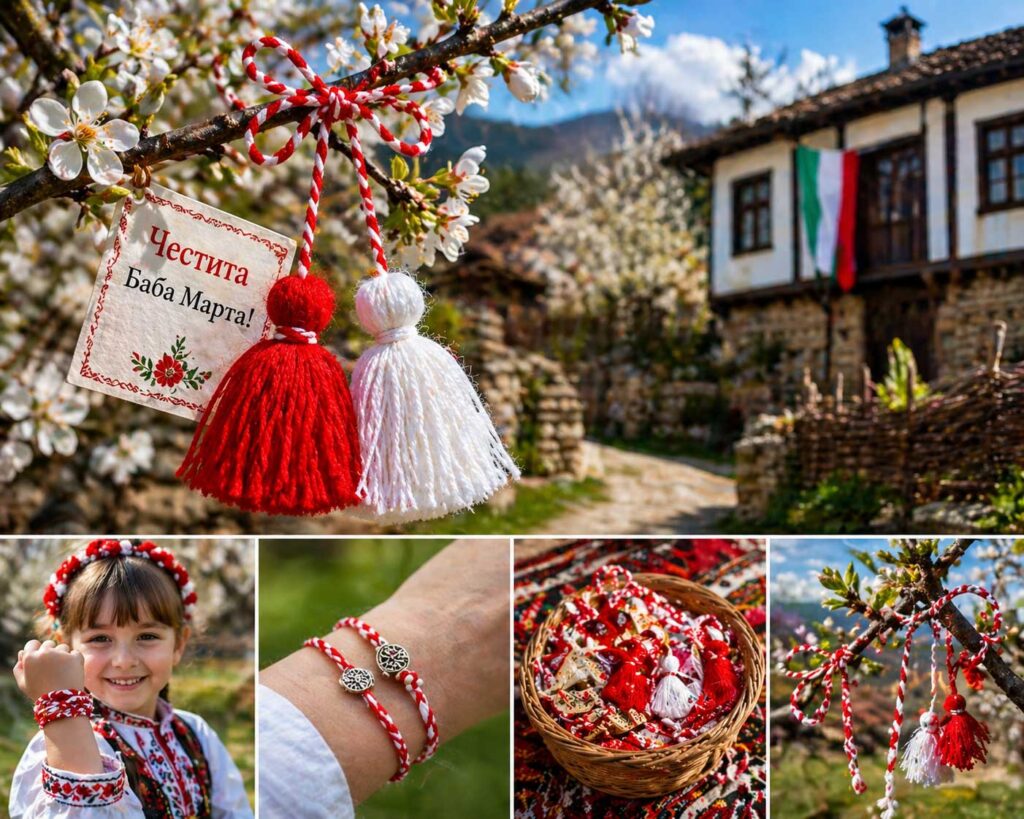
One of the most beloved Bulgarian customs is Baba Marta (Grandma March), celebrated on March 1.
People exchange martenitsa—red and white thread bracelets—symbolizing:
- 🔴 Red → Life, health, strength
- ⚪ White → Purity, luck, renewal
They are worn until the first sign of spring (a blooming tree or stork), then tied to a branch.
These meanings connect to deeper cultural symbols explained in Bulgarian Symbols and Their Meanings.
Cultural Meaning:
This tradition reflects ancient pagan beliefs about renewal and protection from evil spirits.
Beyond symbolism, the martenitsa reflects a deeper belief in balance between forces—life and purity, strength and renewal. This duality is a recurring theme across Bulgarian traditions.
In modern Bulgaria, this tradition continues everywhere—from schools to offices—making it one of the strongest examples of cultural continuity in Europe.
This tradition is part of a wider system of celebrations—see Bulgarian Traditions and Holidays.
Nestinarstvo – The Fire Dancing Ritual
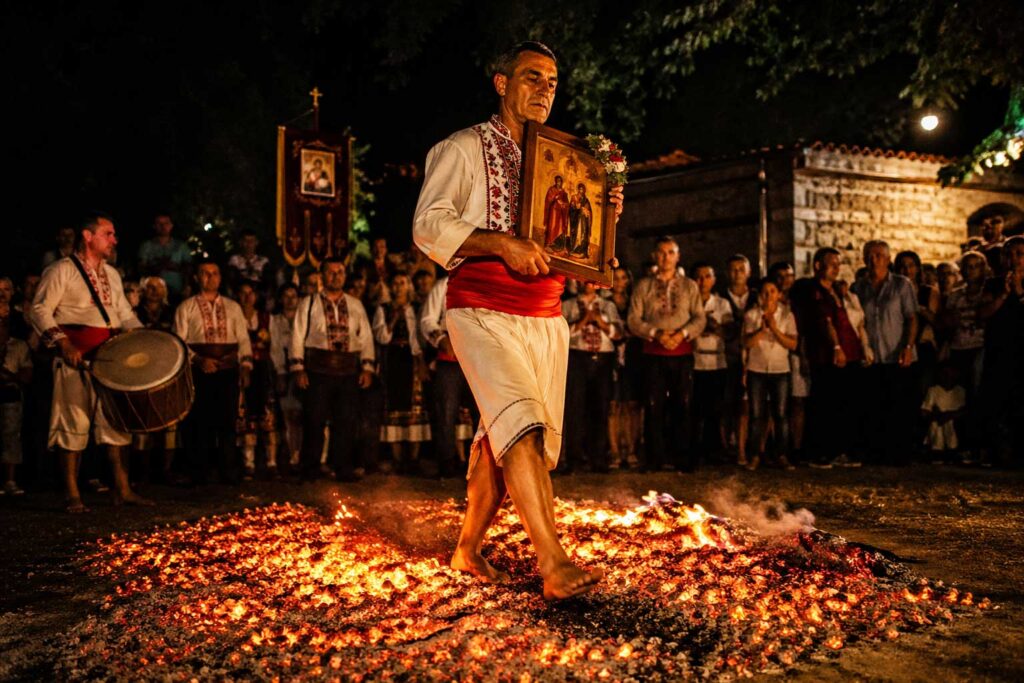
Nestinarstvo is one of the most mysterious Bulgarian rituals, recognized by UNESCO as Intangible Cultural Heritage.
Practiced mainly in the Strandzha region, participants dance barefoot on hot coals while holding religious icons of Saints Constantine and Helena.
Why It Matters:
- Combines pagan fire rituals with Christianity
- Believed to bring healing and protection
- Represents a trance-like spiritual state
This ritual is one of many unique celebrations—explore more in Bulgarian Festivals and Traditions.
What makes Nestinarstvo unique is not just the act—but the psychological and spiritual preparation behind it. Participants often enter altered states of consciousness, guided by music, rhythm, and belief.
This connects Bulgarian traditions to a broader anthropological pattern—where ritual, rhythm, and community create powerful shared experiences that reinforce identity.
It reflects the broader identity explored across Bulgarian cultural heritage.
Gergyovden – St. George’s Day Traditions
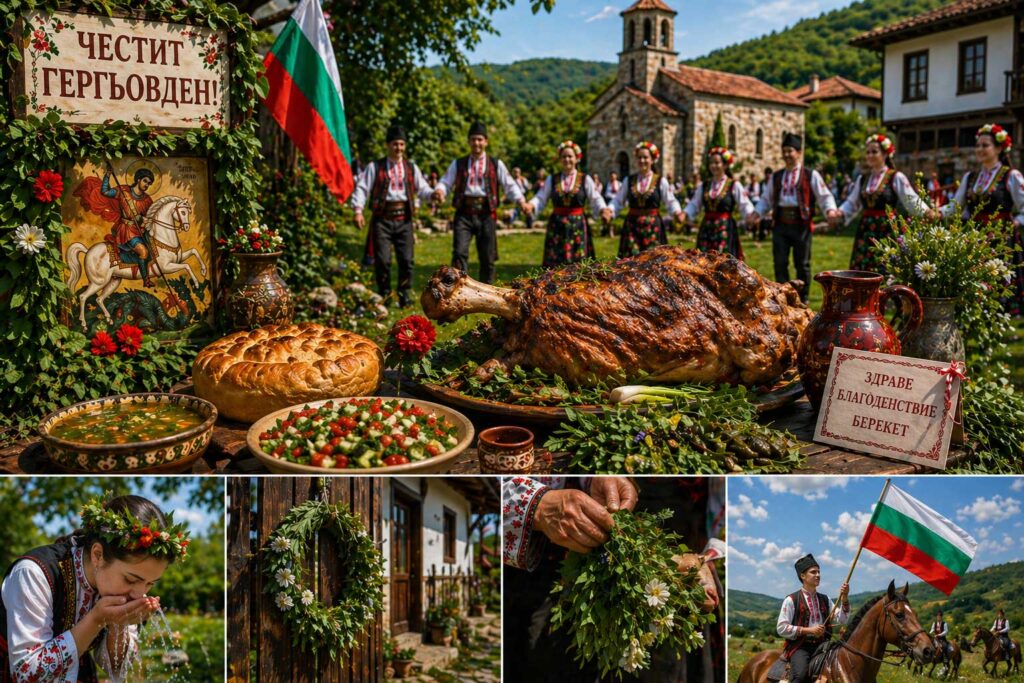
Celebrated on May 6, Gergyovden is one of Bulgaria’s most important holidays.
Core Traditions:
- Roasting a whole lamb (symbol of abundance)
- Decorating homes with greenery
- Early morning rituals with dew for health
Food plays a central role in this holiday—see Traditional Bulgarian Food and Drinks.
This holiday blends:
- Ancient agricultural rituals
- Christian symbolism (Saint George as protector)
Gergyovden represents the transition from winter to active life—a symbolic “reset” of the year. It reflects Bulgaria’s deep agricultural roots, where survival depended on seasonal cycles.
Even today, many families maintain these rituals not just for tradition—but as a way to reconnect with nature and slower living.
This celebration fits into the wider calendar in Bulgarian Holidays and Festivals Guide.
The Horo Dance – Bulgaria’s Living Rhythm
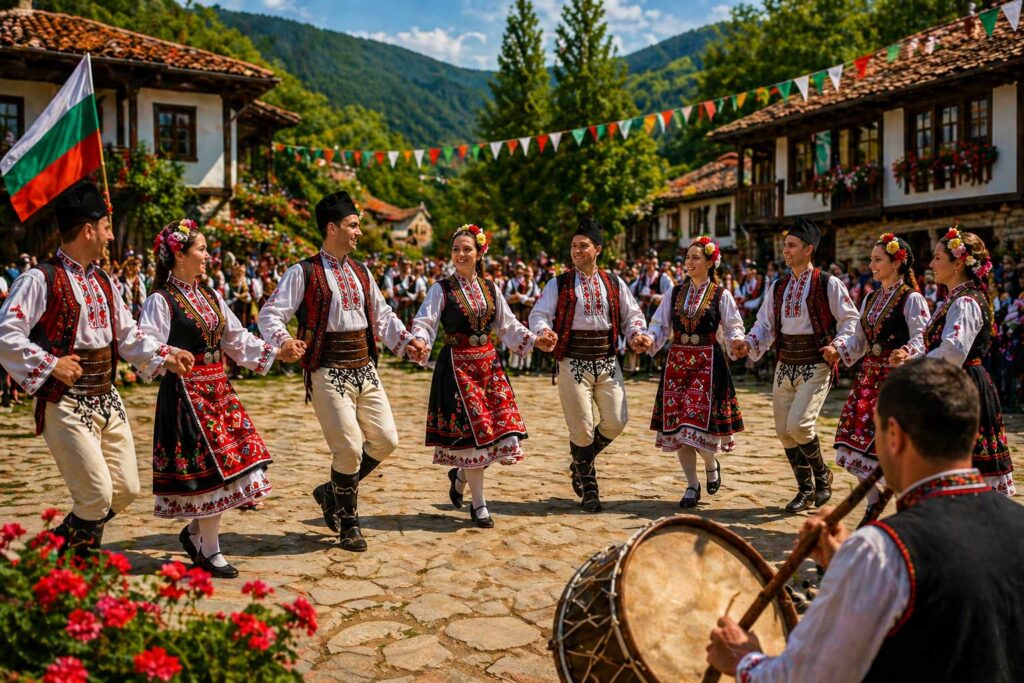
The horo is a traditional Bulgarian group dance performed at weddings, festivals, and celebrations.
Key Features:
- Dancers hold hands in a circle or line
- Complex step patterns vary by region
- Symbolizes unity and continuity
Unlike staged folklore, horo is still danced by everyday people across Bulgaria.
The horo is more than dance—it is a social structure.
It removes hierarchy:
- Everyone is equal in the circle
- Movement depends on group coordination
- Rhythm creates unity
In modern terms, horo acts as a cultural glue, reinforcing belonging and shared identity—even among strangers.
👉 Still danced today at weddings, festivals, and even city squares.
This tradition reflects the cultural spirit explored in Bulgarian Culture and Traditions.
Bread and Hospitality Customs
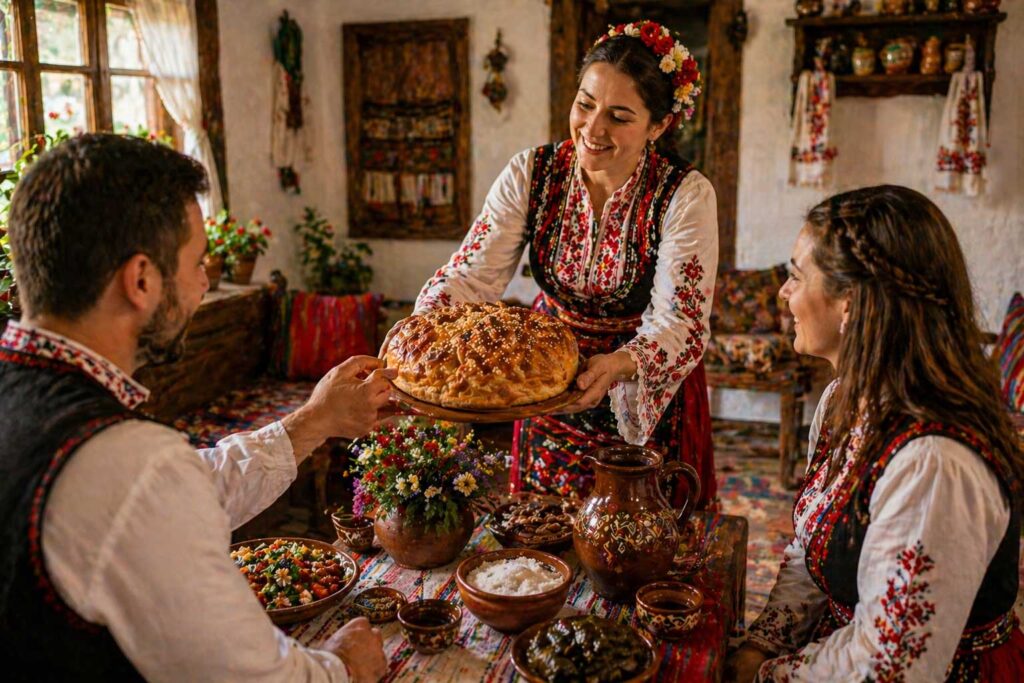
Bread in Bulgaria is sacred—not just food, but a symbol of life.
Traditional Customs:
- Guests welcomed with bread and salt
- Special bread (pogacha) baked for celebrations
- Breaking bread symbolizes unity and blessing
Bread traditions reflect a deeper philosophy: respect for sustenance and community.
These customs are deeply rooted in food culture—explained in Bulgarian Cuisine: Complete Food Guide.
Unlike modern fast consumption culture, Bulgarian customs emphasize:
- Gratitude
- Sharing
- Ritual preparation
This mindset is increasingly relevant today, as people seek more meaningful and intentional lifestyles.
Dairy traditions also play a role—see Bulgarian Yogurt: History and Health Benefits.
Bulgarian Birth and Family Traditions
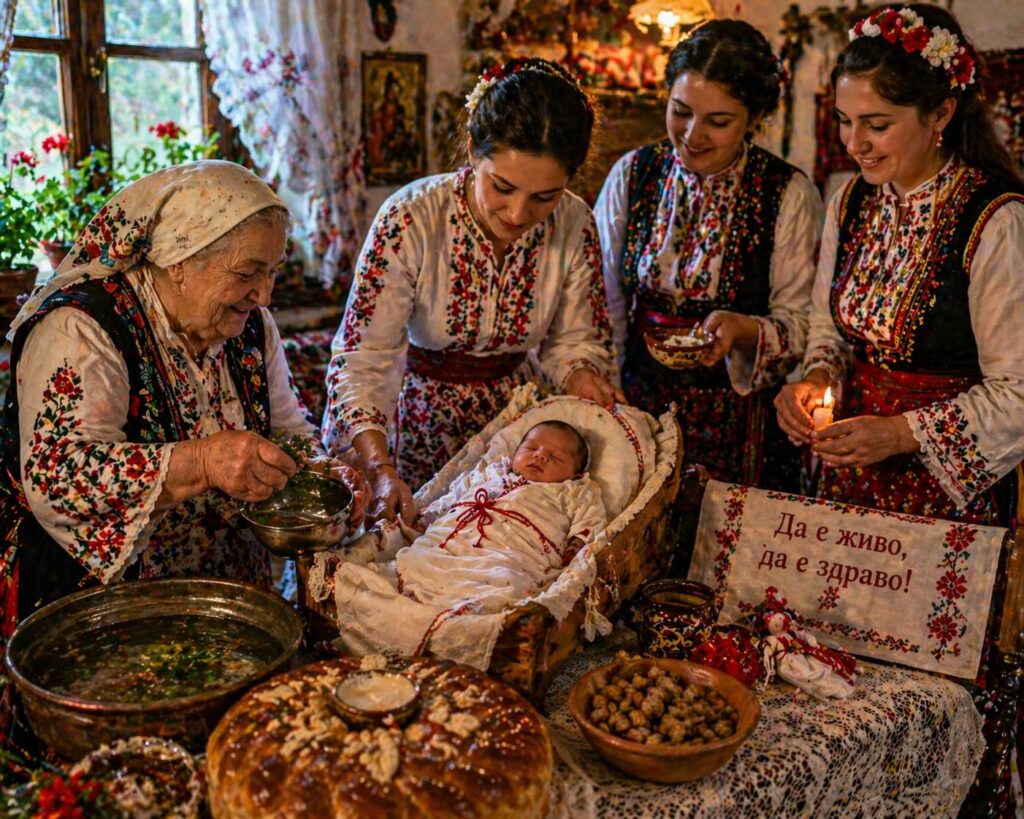
Bulgarian customs surrounding birth and family emphasize protection and community.
Examples:
- Red thread tied to babies for protection
- Ritual bathing and blessings
- Celebrations marking milestones
These reflect ancient beliefs in warding off evil spirits.
These traditions reveal a strong belief in invisible forces—good and bad—and the need to protect new life.
They also highlight the importance of extended family, where raising a child is seen as a collective responsibility, not just individual parenting.
Many of these practices connect to older beliefs—explore them in Bulgarian Superstitions and Beliefs.
Bulgarian Wedding Traditions
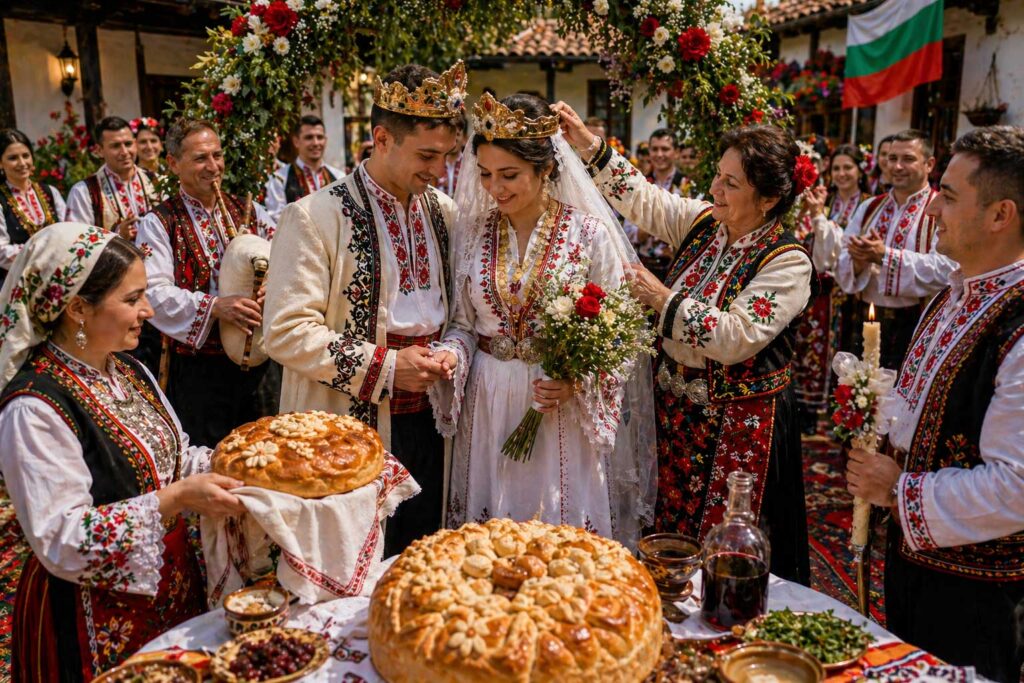
Bulgarian weddings are rich in symbolism and ritual.
Key Elements:
- Breaking bread over the couple
- Crown rituals in Orthodox ceremonies
- Traditional music and horo dancing
Weddings combine:
- Christian rituals
- Ancient fertility customs
Weddings are not just celebrations—they are rites of passage that symbolize transformation.
Many rituals are designed to:
- Ensure prosperity
- Protect the couple
- Strengthen family bonds
These elements connect modern weddings to ancient fertility and unity rituals.
These customs reflect family values—learn more in Bulgarian Family Traditions and Culture.
Seasonal and Agricultural Traditions
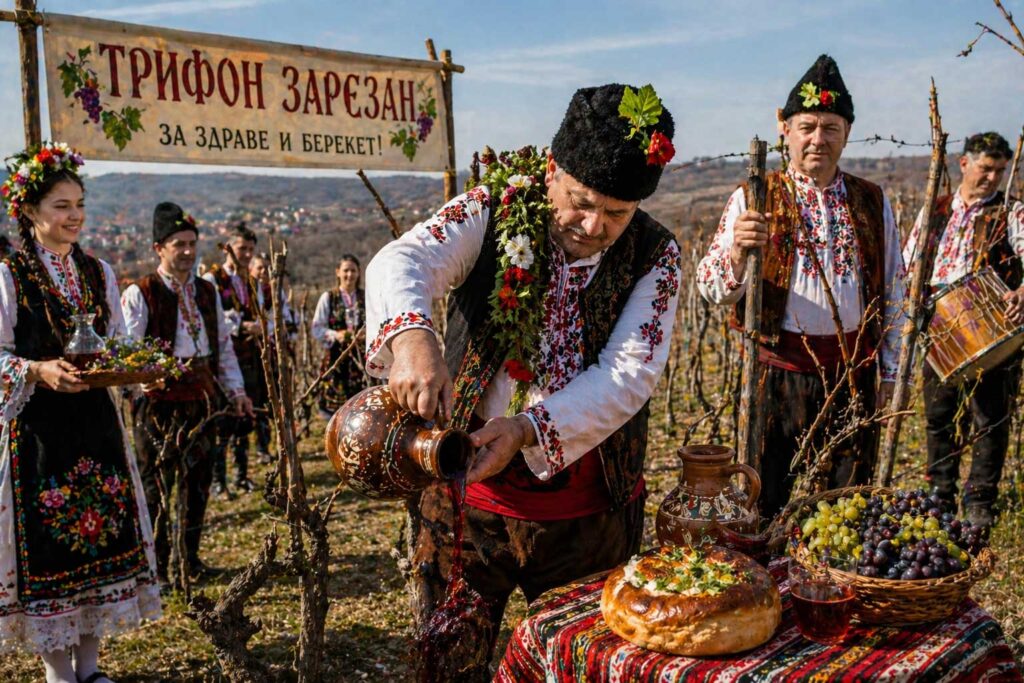
Bulgarian customs follow the rhythm of nature.
Important Seasonal Traditions:
- Winter → Rituals for protection and survival
- Spring → Renewal (Baba Marta, Gergyovden)
- Summer → Harvest and fertility rituals
- Autumn → Preparation and preservation
This cyclical worldview reflects a nature-based philosophy of time, unlike the linear time perception common in modern societies.
It teaches:
- Patience
- Adaptation
- Respect for natural rhythms
Food preservation is part of this cycle—see Balkan Pickled Foods.
Pagan Roots and Christian Influence
Bulgarian traditions are unique because they blend:
- Pagan beliefs (nature, spirits, fertility)
- Eastern Orthodox Christianity
This duality explains:
- Fire rituals alongside church icons
- Seasonal rites tied to saints’ days
Rather than replacing pagan traditions, Christianity in Bulgaria absorbed and reinterpreted them.
This created:
- Unique hybrid rituals
- Layered meanings
- Cultural depth
👉 This fusion is considered one of the most distinctive characteristics of Bulgarian cultural development in Southeast Europe.
This blend of influences is explained further in Bulgarian History and Culture Explained.
Symbolism in Bulgarian Traditions
One of the most overlooked aspects is symbolism.
Common Symbols:
- Fire → Purification
- Water → Renewal
- Bread → Life
- Thread → Protection
Why This Matters:
These symbols act as a cultural language, allowing traditions to transmit meaning without words.
👉 This symbolic system allowed traditions to survive even when historical circumstances changed.
You can explore these meanings deeper in Bulgarian Symbols and Their Meanings.
Urban vs Rural Traditions
There is a difference between how traditions are practiced:
Rural Areas:
- Stronger preservation
- More ritual authenticity
- Community participation
Urban Areas:
- Simplified versions
- Symbolic practice
- Adapted to modern life
To see where traditions are best preserved, visit Bulgarian Villages You Must Visit.
Bulgarian Traditions in the Modern World
Bulgarian traditions are now spreading globally through:
- Diaspora communities
- Cultural festivals abroad
- Tourism and media
Insight:
Instead of disappearing, traditions are expanding beyond borders, adapting to new environments while maintaining their core meaning.
👉 This global spread is helping preserve Bulgarian identity beyond its geographic borders.
Why Bulgarian Traditions Matter Today
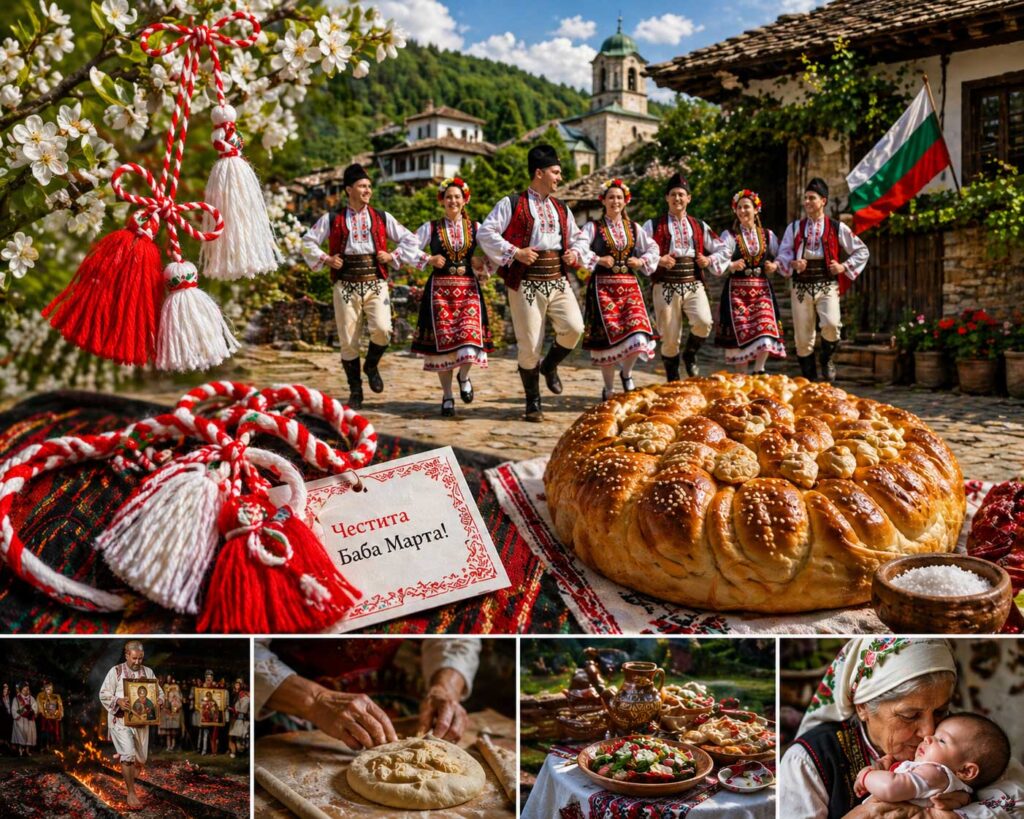
Bulgarian traditions are not just folklore preserved in museums—they are actively lived and experienced in everyday life. They continue to shape identity, community, and cultural continuity in a rapidly changing world.
This importance is part of Bulgaria’s global story—see Why Bulgaria Matters to the World.
Why They Still Matter:
- A Living Identity System
Traditions define what it means to be Bulgarian. From wearing martenitsa to dancing horo, these customs create a shared cultural language across generations. - A Bridge Between Past and Present
Bulgarian customs connect modern life with ancient roots—linking today’s society with Thracian, Slavic, and Orthodox heritage. - A Source of National Pride
Traditions reinforce cultural confidence and uniqueness, especially as globalization blends cultures worldwide. - Cultural Resilience in a Globalized World
While many countries have seen traditions fade, Bulgaria stands out for preserving practices that are still authentic, communal, and meaningful.
👉 These traditions are not performed for tourists—they are lived by the people.
In a time when cultural identity can easily be diluted, Bulgaria remains a powerful example of how traditions can evolve without losing their essence.
FAQs About Bulgarian Traditions
What is the most famous Bulgarian tradition?
The most widely recognized Bulgarian tradition is the martenitsa, celebrated on March 1 during Baba Marta. People exchange red-and-white bracelets as symbols of health, luck, and the arrival of spring.
Why are Bulgarian traditions so well preserved?
Bulgarian traditions remain strong due to close family structures, rural communities, and a deep cultural respect for heritage passed through generations.
Are Bulgarian traditions still practiced today?
Yes—Bulgarian traditions are still actively practiced. While they are strongest in rural villages, many customs continue in cities as well, especially during major holidays and cultural festivals.
What religion influences Bulgarian customs?
Bulgarian traditions are primarily influenced by Eastern Orthodox Christianity, but they also include much older pagan elements related to nature, fertility, and seasonal cycles. This blend is what makes Bulgarian culture so unique.
What is the horo dance?
The horo is a traditional Bulgarian group dance where people hold hands in a circle or line and perform synchronized steps. It symbolizes unity, community, and continuity, and is commonly danced at weddings, festivals, and celebrations.
Conclusion
Bulgarian traditions and customs are not just remnants of the past—they are living systems of meaning, identity, and connection.
They continue to evolve while preserving their essence, offering something rare in today’s world:
a culture where history is not only remembered—but actively lived every day.
References
- Bulgaria Traditions Overview – Wikipedia https://en.wikipedia.org/wiki/Culture_of_Bulgaria
- Nestinarstvo (UNESCO) https://ich.unesco.org/en/RL/nestinarstvo-messages-from-the-past-panagyr-of-saints-constantine-and-helena-in-the-village-of-bulgari-00191
- Bulgarian Folk Traditions – Bulgarian Academy of Sciences https://www.bas.bg
- Gergyovden Traditions – Bulgarian Orthodox Church https://bg-patriarshia.bg
Support Bulgaropedia 🇧🇬
If you enjoy learning about Bulgarian traditions, culture, history, and heritage, consider supporting Bulgaropedia. Your support helps keep these educational guides free and helps preserve Bulgaria’s story for future readers.