


Bulgarian salads are among the freshest and most flavorful dishes in Europe. From the iconic Shopska salad to refreshing yogurt-based recipes like Tarator, Bulgarian salads are known for their simple ingredients, vibrant taste, and incredible health benefits.
From the iconic Shopska salad to creamy yogurt-based dishes like Snezhanka and refreshing summer classics like Tarator, Bulgarian salads reflect the country’s deep connection to nature, agriculture, and tradition.
What makes Bulgarian salads truly special is their focus on fresh, seasonal produce, combined with minimal processing. Tomatoes are juicy and sweet, cucumbers are crisp, and herbs like dill and parsley add a distinctive Balkan aroma.
Rooted in tradition and made with seasonal vegetables, these dishes are a key part of Bulgarian cuisine and daily life. Whether served as a starter or a main dish, Bulgarian salads offer a perfect balance of freshness, nutrition, and authentic Balkan flavor.
In this complete guide, you’ll discover:
- Easy recipes you can make at home
- The most famous Bulgarian salads
- Traditional ingredients and preparation methods
- Cultural significance
Why Bulgarian Salads Are So Popular
Bulgarian salads stand out globally for several reasons:
1. Farm-to-Table Tradition
Bulgaria has a long agricultural history. Many families still grow their own vegetables, which means salads are often made with homegrown produce.
This results in:
- Authentic taste
- Better flavor
- Higher nutritional value
2. Simplicity Over Complexity
Unlike many modern cuisines, Bulgarian salads rely on just a few ingredients. There are no heavy sauces—only oil, vinegar, and natural flavors.
3. Health Benefits
Bulgarian salads are considered some of the healthiest in Europe:
- Rich in antioxidants
- High in fiber
- Low in calories
- Packed with probiotics (from yogurt)
4. Cultural Ritual
Salads are always served first in Bulgaria, often alongside bread and a glass of rakia. This tradition makes salads a core part of the dining experience, not just a side dish.
The Role of Salads in Bulgarian Cuisine
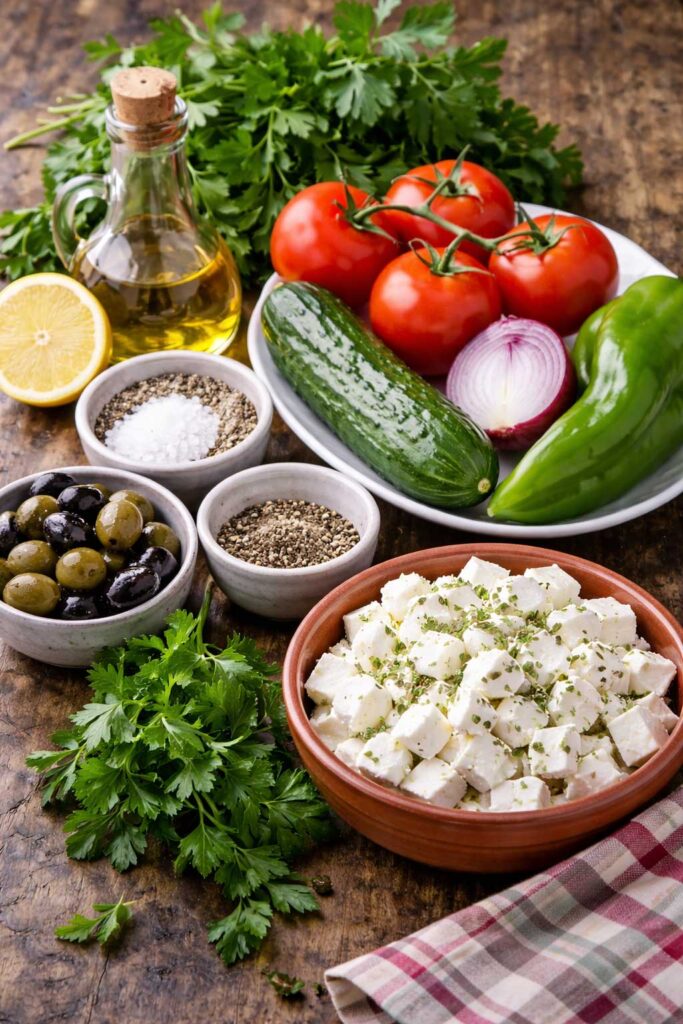
A Daily Tradition
In Bulgarian households, it is almost unthinkable to sit down for a meal without a salad. Whether it’s a quick weekday dinner or a festive gathering, a fresh salad is always present on the table. Traditional Bulgarian salads are often served before the main course.
Salads serve as:
- A starter
- A side dish
- Sometimes even a main meal
Seasonal Eating Culture
Bulgarian cuisine is heavily influenced by the seasons. This means:
- Summer → tomato and cucumber salads
- Winter → cabbage, beans, and preserved vegetables
This seasonal rotation keeps meals both nutritious and diverse.
The Rakia Connection
One of the most iconic Bulgarian traditions is pairing salads with rakia, a strong fruit brandy. The freshness of the salad perfectly balances the intensity of the drink.
1. Shopska Salad – Bulgaria’s National Dish
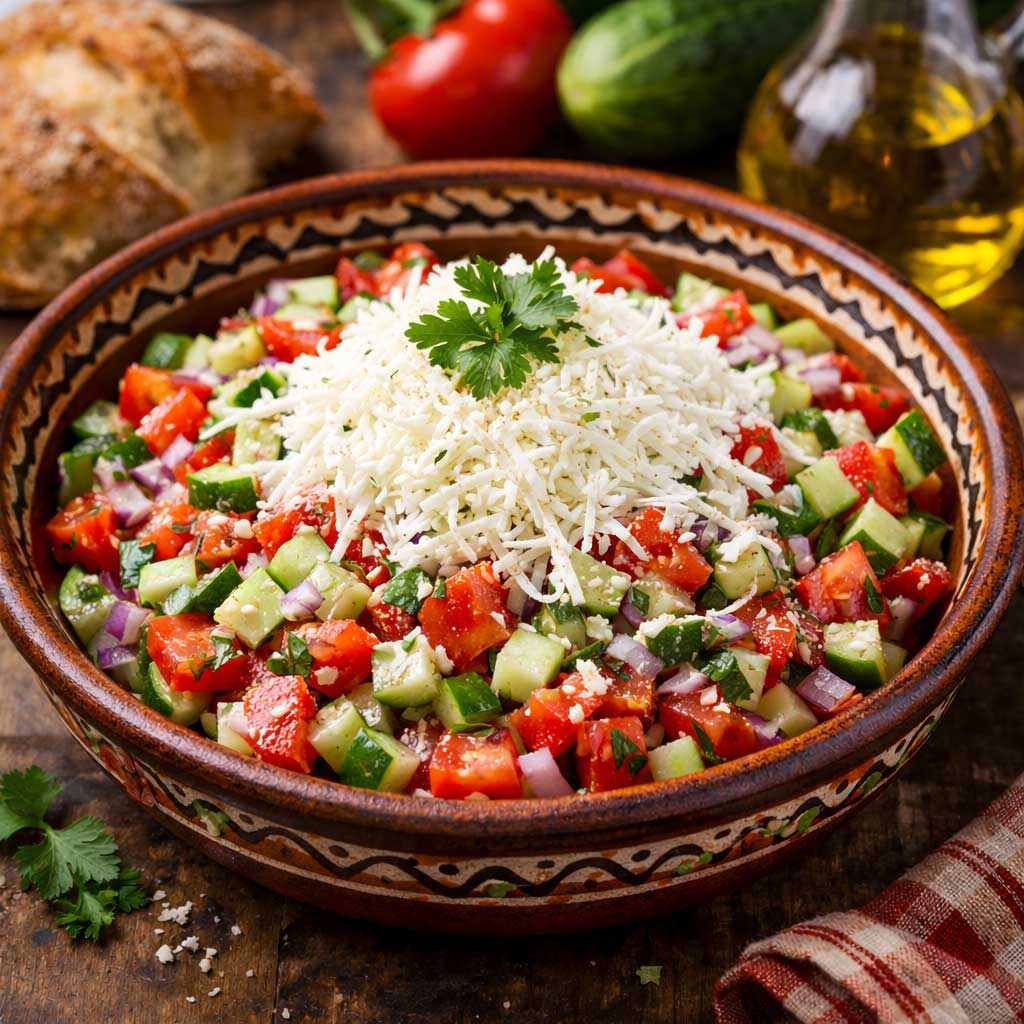
The Shopska salad is the most famous Bulgarian salad and a true national symbol.
Shopska salad is more than just a combination of vegetables—it represents the essence of Bulgarian cuisine. What makes it truly special is the quality of the ingredients. In Bulgaria, tomatoes are grown in rich soil and ripened under strong sun, giving them a sweetness and aroma that is hard to replicate elsewhere. When combined with crunchy cucumbers and slightly smoky peppers, the flavor becomes perfectly balanced.
Another important detail is the cheese. Bulgarian white brined cheese adds a salty, creamy contrast that elevates the entire dish. Unlike feta, it often has a softer texture and milder taste. Locals usually avoid over-mixing the salad, allowing each bite to retain its individual textures. This simplicity is exactly what makes Shopska salad one of the most loved dishes in the Balkans.
Ingredients:
- Tomatoes
- Cucumbers
- Roasted or fresh peppers
- Onion
- White brined cheese
- Parsley
- Sunflower oil
- Vinegar
Want to make authentic Shopska salad at home? Follow our full step-by-step guide here:
👉 Shopska Salad Recipe – Traditional Bulgarian Salad Explained
Why It’s So Popular:
The colors of the salad—red, green, and white—match the Bulgarian flag, making it not only delicious but also symbolic.
- Simple yet incredibly flavorful
- Found in nearly every restaurant in Bulgaria
- Perfect balance of freshness and richness
Global Recognition:
Shopska salad is widely known across the Balkans and has become a staple in many international restaurants.
Shopska salad is often the first dish tourists try when visiting Bulgaria.
2. Ovcharska Salad – The Shepherd’s Salad
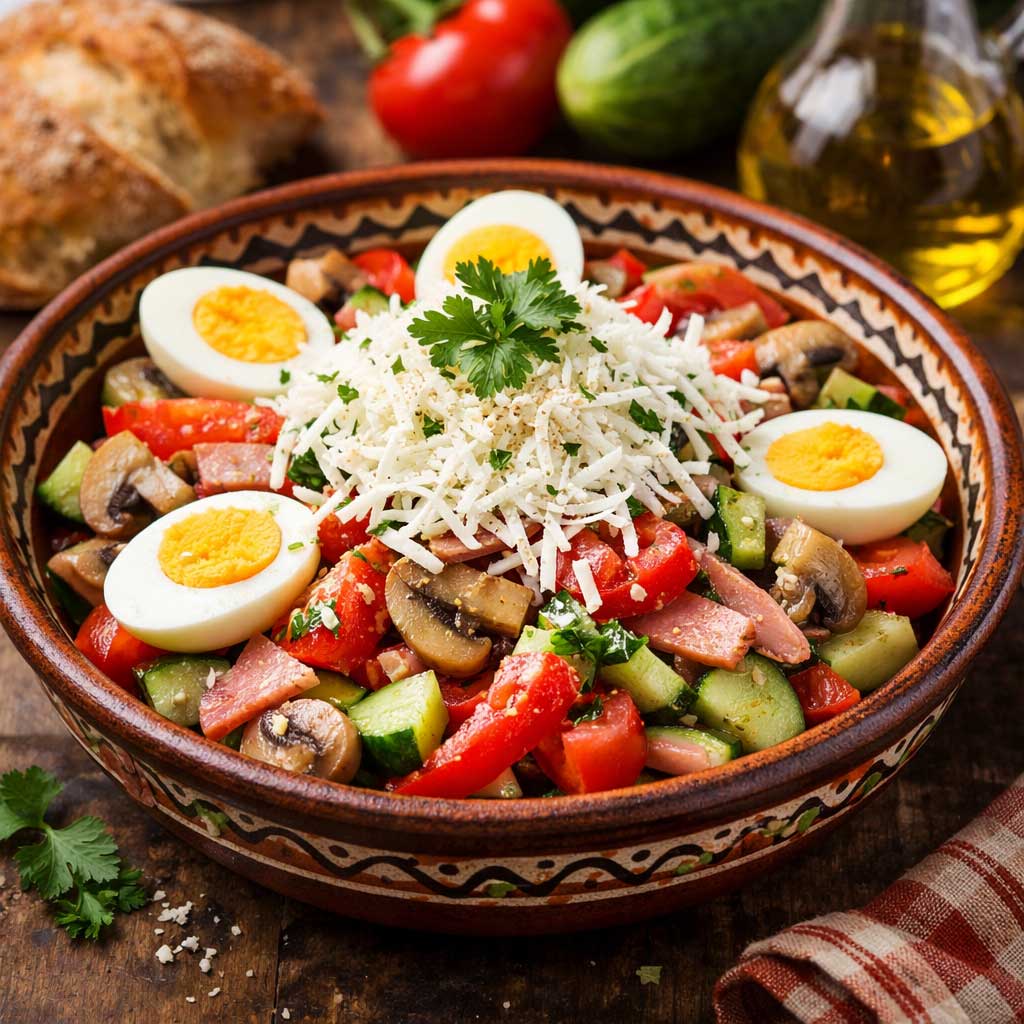
The Ovcharska salad (Shepherd’s Salad) is a richer version of Shopska. “Ovcharska” means “shepherd’s,” reflecting its rustic, protein-rich ingredients—meant to be satisfying and nourishing.
Ovcharska salad reflects the hearty lifestyle of Bulgarian shepherds who needed filling, nutritious meals while working long hours outdoors. By adding ingredients like eggs, meat, and mushrooms, this salad transforms from a light appetizer into a complete, protein-rich dish. It is a perfect example of how Bulgarian cuisine adapts simple recipes to meet practical needs.
What makes Ovcharska particularly interesting is its versatility. Different regions in Bulgaria may include slightly different ingredients—some versions use local cured meats, while others emphasize mushrooms or olives. This flexibility allows the salad to evolve while still maintaining its traditional roots. Today, it remains a favorite in restaurants where guests are looking for something both fresh and satisfying.
Typical ingredients include:
- Tomatoes (juicy, ripe)
- Cucumbers (fresh, crunchy)
- Roasted or raw peppers (often green or red)
- Onions (usually red)
- Mushrooms (often sautéed or pickled)
- Ham or cured meat (sometimes)
- Hard-boiled eggs
- Sirene cheese (Bulgarian white brined cheese, similar to feta)
- Parsley
Dressing
- Sunflower oil or olive oil
- Vinegar (or sometimes lemon juice)
- Salt
Learn how to prepare a hearty Ovcharska salad with eggs, meat, and vegetables in our complete guide:
👉 Ovcharska Salad Recipe – Traditional Bulgarian Shepherd’s Salad Explained
What Makes It Different:
Compared to Shopska salad:
- Often served as a main dish or large starter
- More filling (eggs, ham, mushrooms)
- Layered or topped rather than just mixed
When It’s Served:
Often enjoyed as a full meal rather than a side.
Cultural Insight:
This salad reflects the rural lifestyle of shepherds who needed energy-dense meals during long days in the mountains.
3. Tarator – The Ultimate Summer Salad
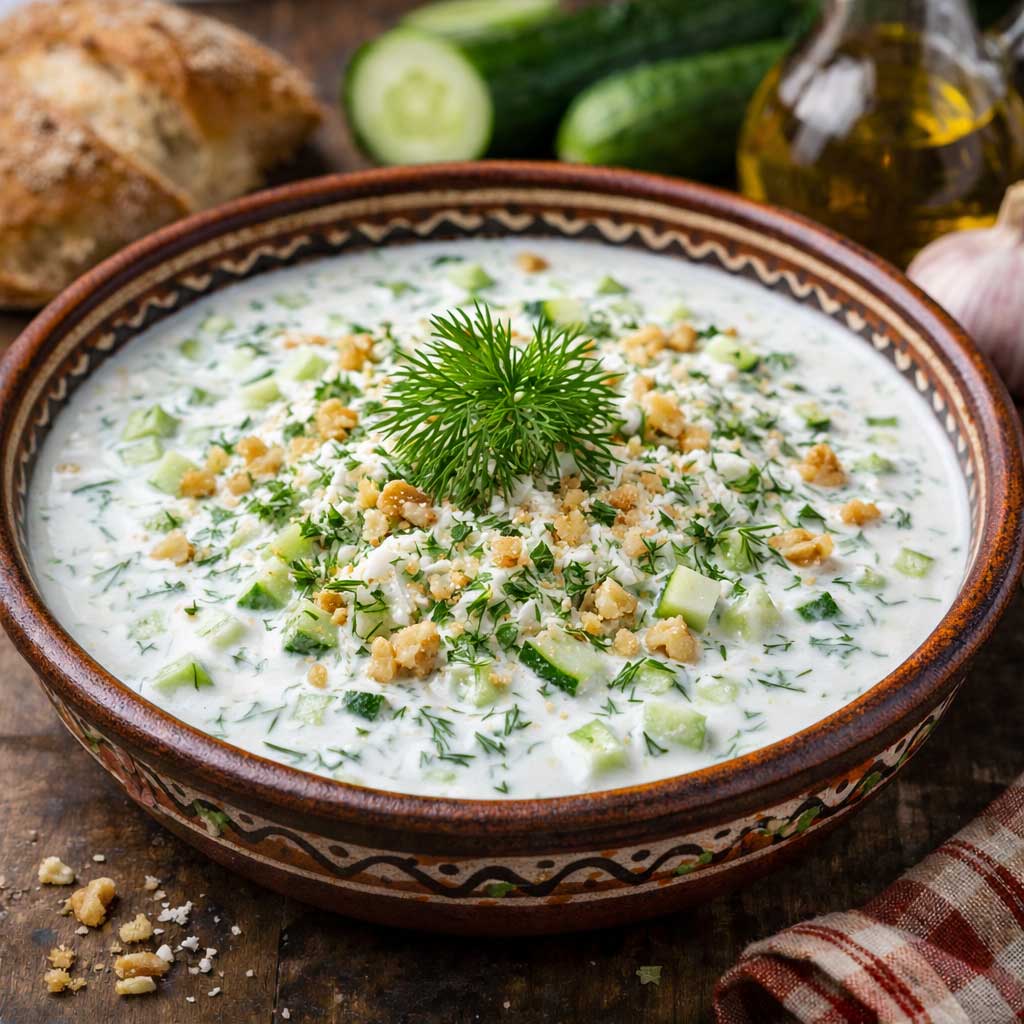
Tarator is one of the most unique dishes in Bulgarian cuisine. It is a cold yogurt-based soup that is often considered a salad. Many Bulgarian salads use yogurt, cheese, and seasonal vegetables.
Tarator is one of the most refreshing dishes you can try, especially during Bulgaria’s hot summer months. Its cooling effect comes from the combination of chilled yogurt and fresh cucumbers, making it both hydrating and nourishing. In many Bulgarian households, Tarator is a daily staple during summer, often replacing heavier meals.
Beyond its taste, Tarator is highly valued for its health benefits. Bulgarian yogurt contains beneficial bacteria that support digestion and gut health. The addition of garlic and walnuts enhances both flavor and nutrition, providing antioxidants and healthy fats. This makes Tarator not just delicious, but also a functional food that aligns with modern healthy eating trends.
Ingredients
- 2 cups Bulgarian yogurt (or plain full-fat yogurt)
- 1–1½ cups cold water (adjust for desired thickness)
- 1 large cucumber (finely diced or grated)
- 2–3 cloves garlic (crushed)
- 2 tbsp fresh dill (finely chopped)
- 2 tbsp walnuts (crushed, optional but traditional)
- 2–3 tbsp sunflower oil or olive oil
- Salt to taste
See the full traditional method for making refreshing Tarator at home:
👉 Tarator Recipe – Traditional Bulgarian Cold Yogurt Soup Explained
Serving tip: Serve very cold, sometimes even with ice cubes. It can be enjoyed as a soup or a drink.
Why It’s Unique:
- Served chilled
- Hydrating
- Light yet satisfying
Health Benefits:
Tarator is rich in probiotics and helps:
- Support gut health
- Improve digestion
- Hydrate the body
4. Snezhanka Salad – Snow White Delight
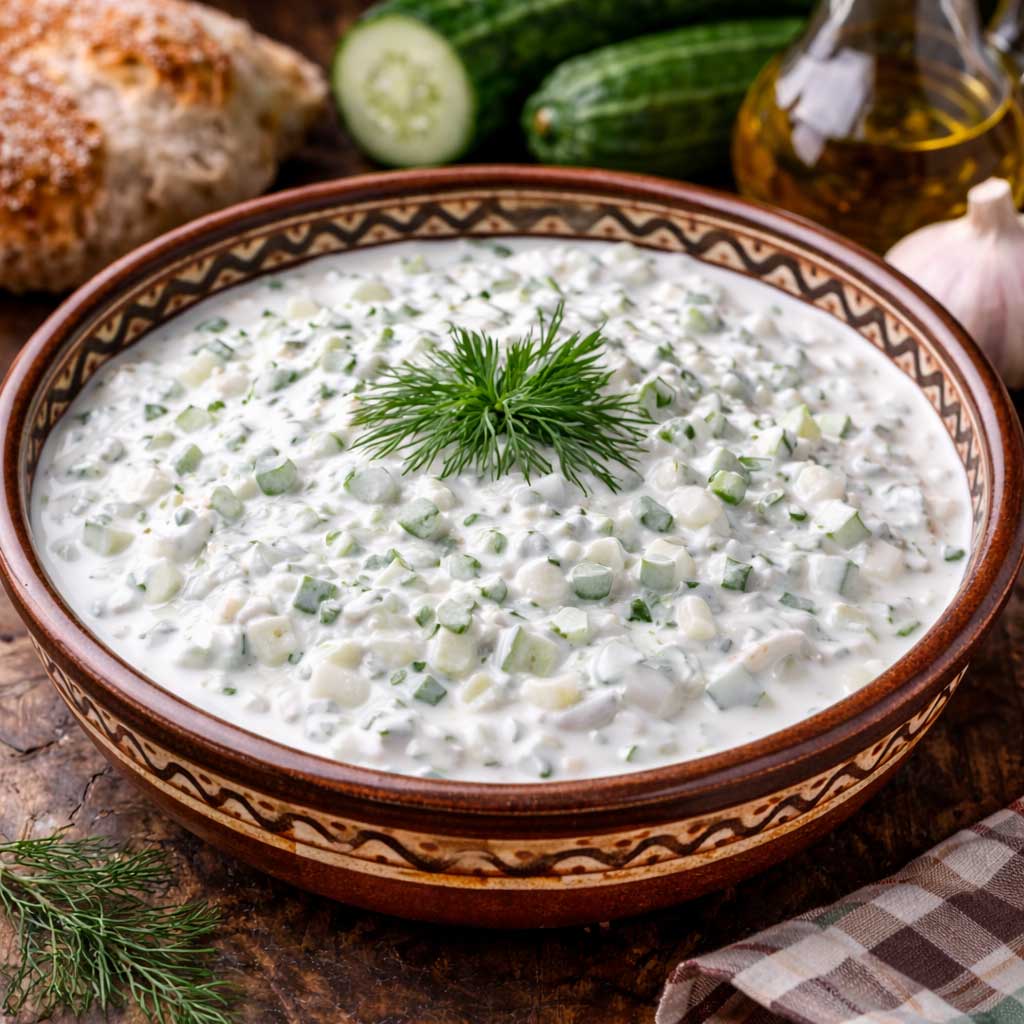
The name Snezhanka means “Snow White,” referring to its bright white appearance.
Snezhanka salad is often served as part of a traditional appetizer spread, known in Bulgaria as “meze.” Its thick and creamy consistency makes it perfect for spreading on bread or serving alongside grilled dishes. The balance between garlic, dill, and yogurt creates a rich yet refreshing flavor that pairs well with many meals.
Unlike lighter yogurt dishes, Snezhanka feels more indulgent due to its dense texture and the addition of walnuts. These nuts add a subtle crunch and a slightly earthy flavor that complements the creaminess of the yogurt. Because of its simplicity and versatility, Snezhanka has become popular beyond Bulgaria and is often compared to other Mediterranean yogurt-based dips.
Ingredients:
- Thick yogurt
- Cucumbers
- Garlic
- Walnuts
- Dill
Discover how to make thick and creamy Snezhanka salad step by step:
👉 Snezhanka Salad Recipe – Traditional Bulgarian Yogurt Salad Explained
Texture & Taste:
Unlike Tarator, this salad is thick and creamy, similar to a dip.
Comparison:
Similar to Greek tzatziki but:
- More intense flavor
- Less watery
5. Lyutenitsa – The Legendary Bulgarian Spread
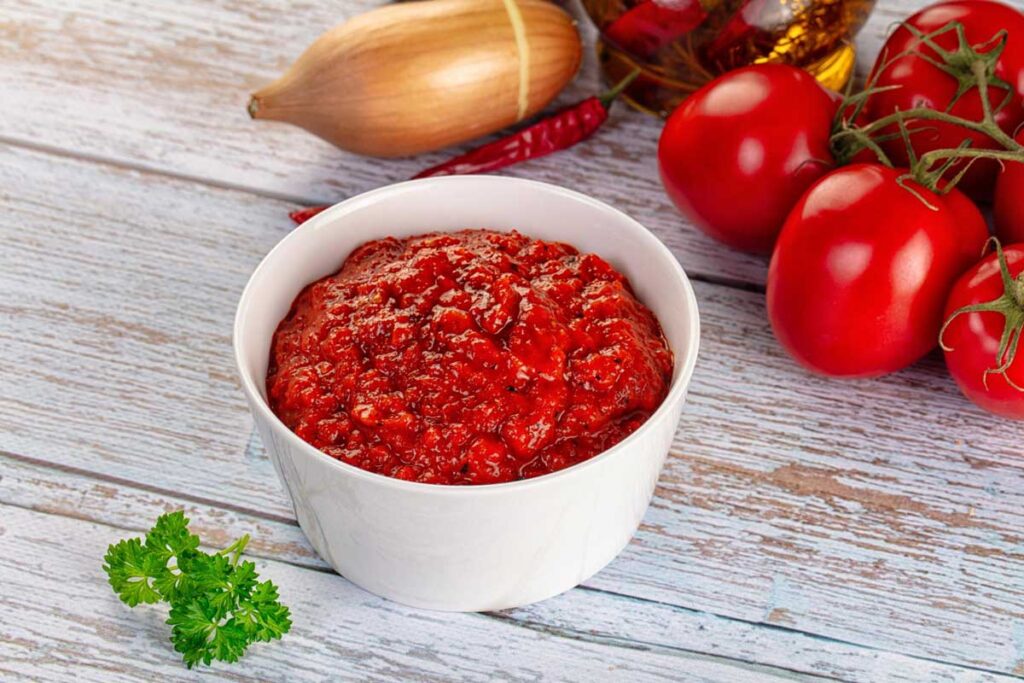
Lyutenitsa is a vegetable spread often served as a salad. Lyutenitsa holds a special place in Bulgarian culture, often associated with family traditions and seasonal preparation. Every autumn, families gather to prepare large batches using freshly harvested tomatoes and peppers. This process is not just about cooking—it’s a social event that brings generations together.
The slow roasting and blending of vegetables give lyutenitsa its deep, rich flavor. Depending on the recipe, it can be smooth or slightly chunky, sweet or mildly spicy. It is commonly spread on bread, served with cheese, or used as a side dish. Its versatility and long shelf life make it one of the most essential staples in Bulgarian cuisine.
Ingredients:
- Tomatoes
- Red peppers
- Eggplant
- Garlic
- Oil
Want to prepare authentic homemade lyutenitsa? Follow our detailed guide here:
👉 Lyutenitsa Recipe – Traditional Bulgarian Pepper and Tomato Spread Explained
Tradition:
Every Bulgarian household has its own recipe, often prepared in large batches for winter.
Why It’s Loved:
- Deep roasted flavor
- Homemade tradition
- Staple in every Bulgarian household
6. Bulgarian Bean Salad (Bobena Salata)
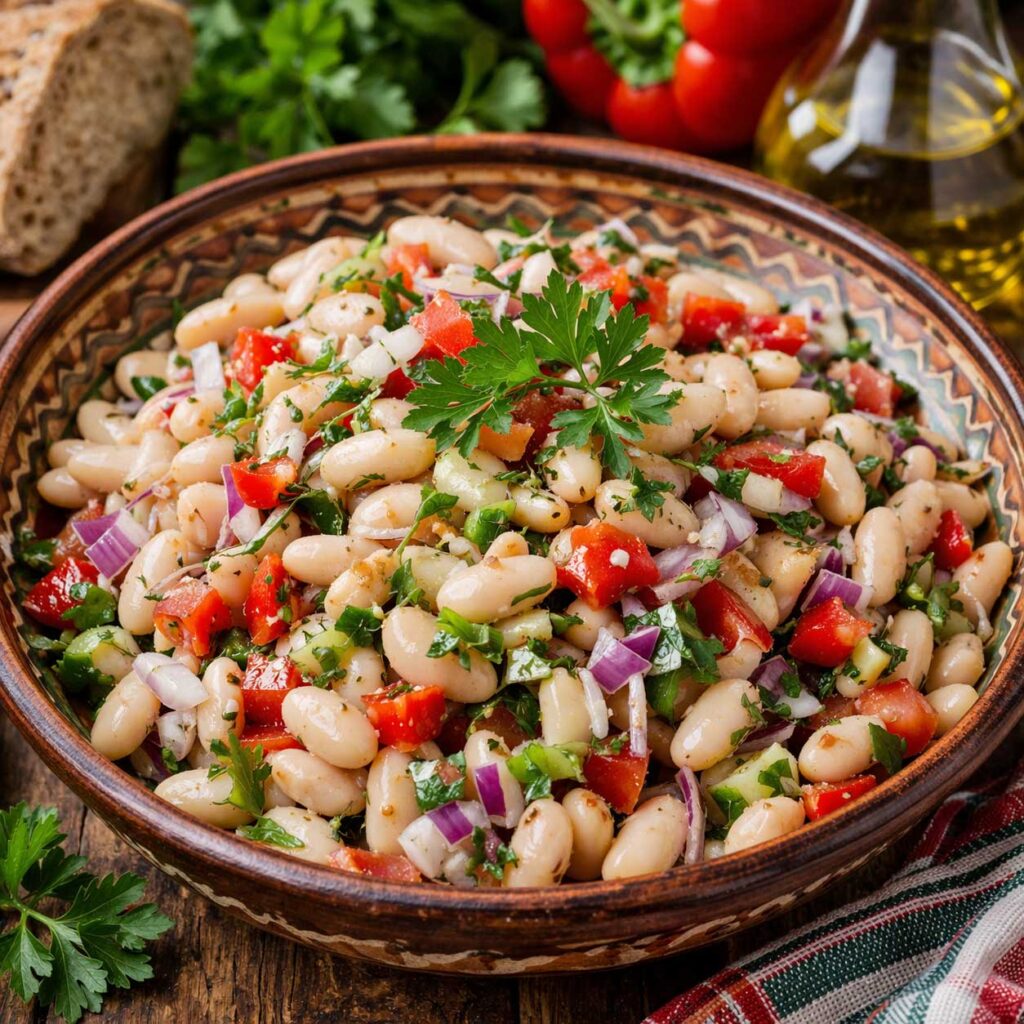
Bean salad, or Bobena Salata, is a perfect example of how Bulgarian cuisine transforms simple ingredients into something satisfying and nutritious. White beans are widely used in Bulgarian cooking, especially during colder months when fresh vegetables are less available. This salad provides warmth and energy while still maintaining a fresh, tangy flavor.
What makes this dish particularly appealing is its balance between protein and acidity. The beans offer a hearty base, while vinegar and onions add brightness and sharpness. It is often served as part of traditional meals or during fasting periods, making it both practical and culturally significant.
Ingredients
- 2 cups cooked white beans (or canned, drained & rinsed)
- ½ red onion (finely chopped)
- 1 roasted red pepper (or fresh, diced)
- 1–2 tbsp fresh parsley (chopped)
- 2–3 tbsp sunflower oil or olive oil
- 1 tbsp vinegar (red wine vinegar preferred)
- Salt to taste
- Optional: pinch of paprika or black pepper
Learn how to make traditional Bulgarian bean salad with simple ingredients:
👉 Bulgarian Bean Salad Recipe – Traditional Bobena Salata Explained
Why It’s Loved:
- High protein
- Filling
- Great for colder seasons
7. Bulgarian Cabbage & Carrot Salad (Zeleva Salata s Morkovi)
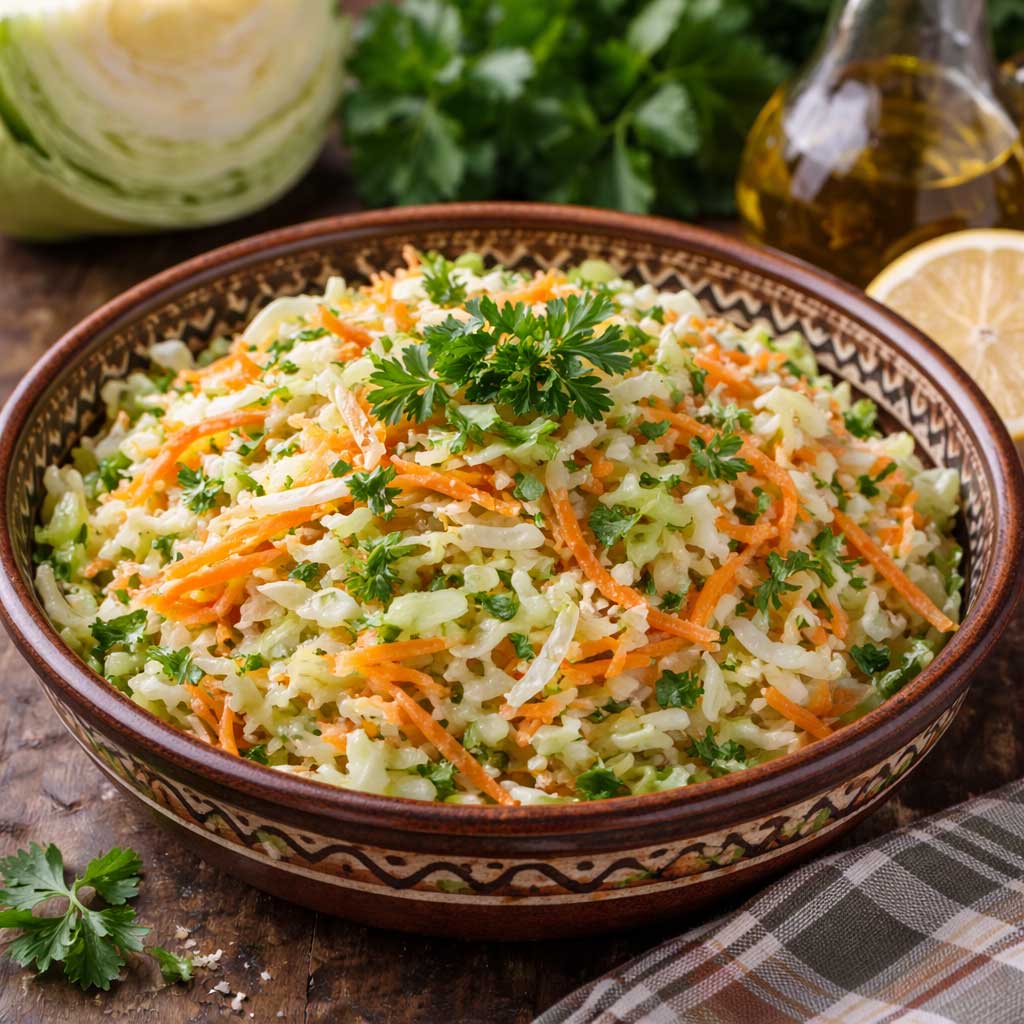
This salad is one of the simplest yet most commonly served dishes in Bulgaria. Its popularity comes from the fact that cabbage and carrots are available year-round, making it a reliable option regardless of the season. Despite its simplicity, it delivers a refreshing crunch and a clean, natural taste.
The key to a great cabbage salad lies in how it is prepared. The cabbage is usually finely shredded and lightly salted to soften its texture, allowing it to absorb the dressing more effectively. Combined with grated carrots and a touch of vinegar, the result is a perfectly balanced dish that pairs well with almost any meal.
Ingredients
- 3 cups white cabbage (finely shredded)
- 1–2 carrots (grated)
- 2–3 tbsp sunflower oil or olive oil
- 1 tbsp vinegar (or lemon juice)
- Salt to taste
- Optional: fresh parsley (chopped)
See the full method for making fresh Bulgarian cabbage salad at home:
👉 Bulgarian Cabbage Salad Recipe – Traditional Fresh Cabbage and Carrot Salad Explained
Serving tip: Serve slightly chilled or at room temperature. It pairs perfectly with grilled meats and bread.
Why It’s Loved:
- Crunchy and refreshing
- Budget-friendly
- Served year-round
8. Potato Salad (Kartofena Salata)
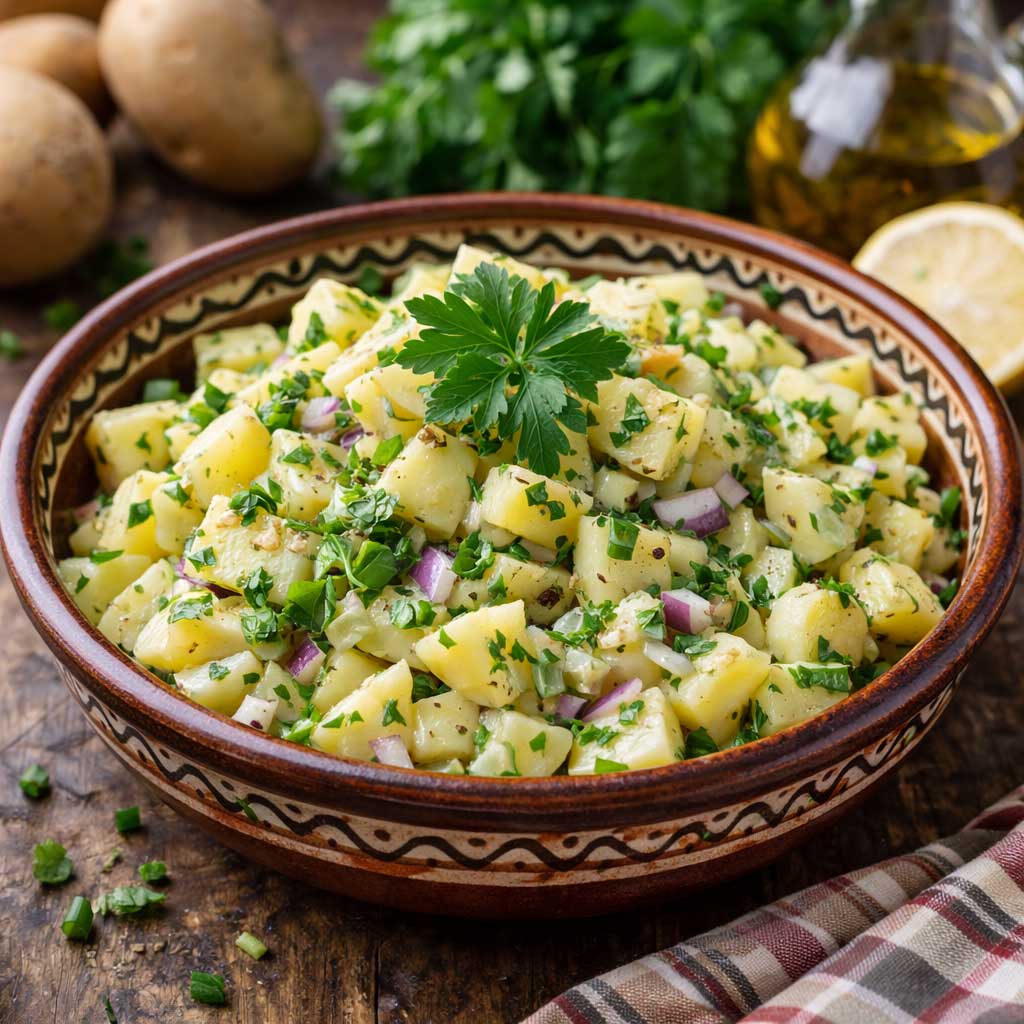
Kartofena salata is a comforting dish that highlights the versatility of potatoes in Bulgarian cuisine. Unlike mayonnaise-based potato salads found in other countries, the Bulgarian version is much lighter, relying on oil, vinegar, and herbs for flavor. This gives it a cleaner taste and makes it suitable for a wider range of diets.
This salad is especially popular during fasting periods, when meat and dairy are avoided. Its simplicity allows the natural flavor of the potatoes to stand out, while onions and parsley add freshness and aroma. It is often served slightly warm or at room temperature, making it both practical and satisfying.
Ingredients:
- Boiled potatoes
- Onion
- Parsley
- Oil
- Vinegar
Follow the complete recipe for authentic Bulgarian potato salad here:
👉 Bulgarian Potato Salad Recipe – Traditional Kartofena Salata Explained
Why It’s Loved:
- Comfort food
- Often eaten during fasting
9. Green Salad (Zelena Salata)
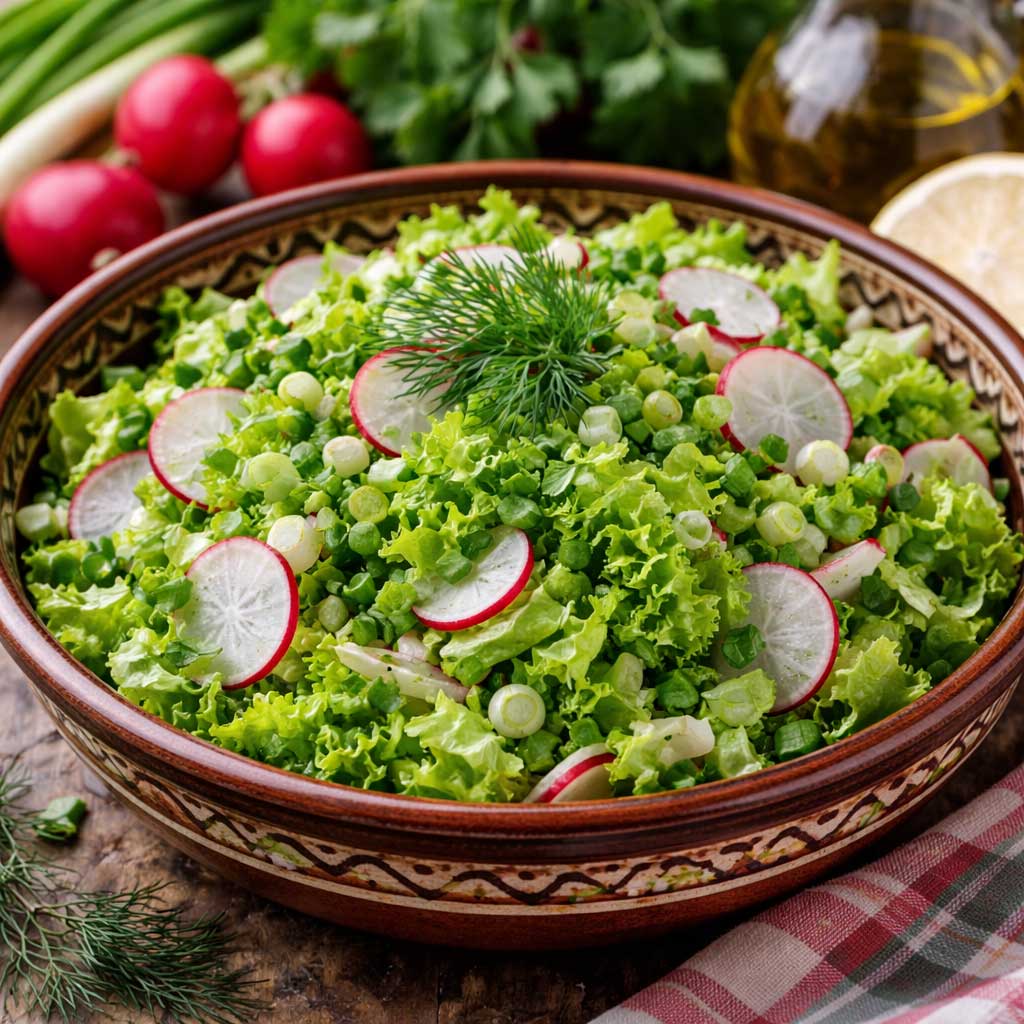
Zelena salata is a celebration of spring and fresh produce. As the weather warms up, this salad becomes a staple on Bulgarian tables, offering a light and refreshing option after the heavier dishes of winter. The combination of lettuce, radishes, and green onions creates a crisp and vibrant flavor profile.
One of the defining features of this salad is its use of fresh herbs like dill, which adds a distinctive Balkan touch. The dressing is kept minimal to preserve the natural taste of the vegetables. Because of its simplicity, Zelena salata is often served as a side dish that complements grilled meats and other traditional meals.
Ingredients:
- Lettuce
- Radishes
- Green onions
- Dill
Learn how to prepare fresh Zelena salata step by step:
👉 Bulgarian Green Salad Recipe – Traditional Zelena Salata Explained
Why It’s Loved:
- Fresh and light
- Popular in spring
10. Roasted Pepper Salad
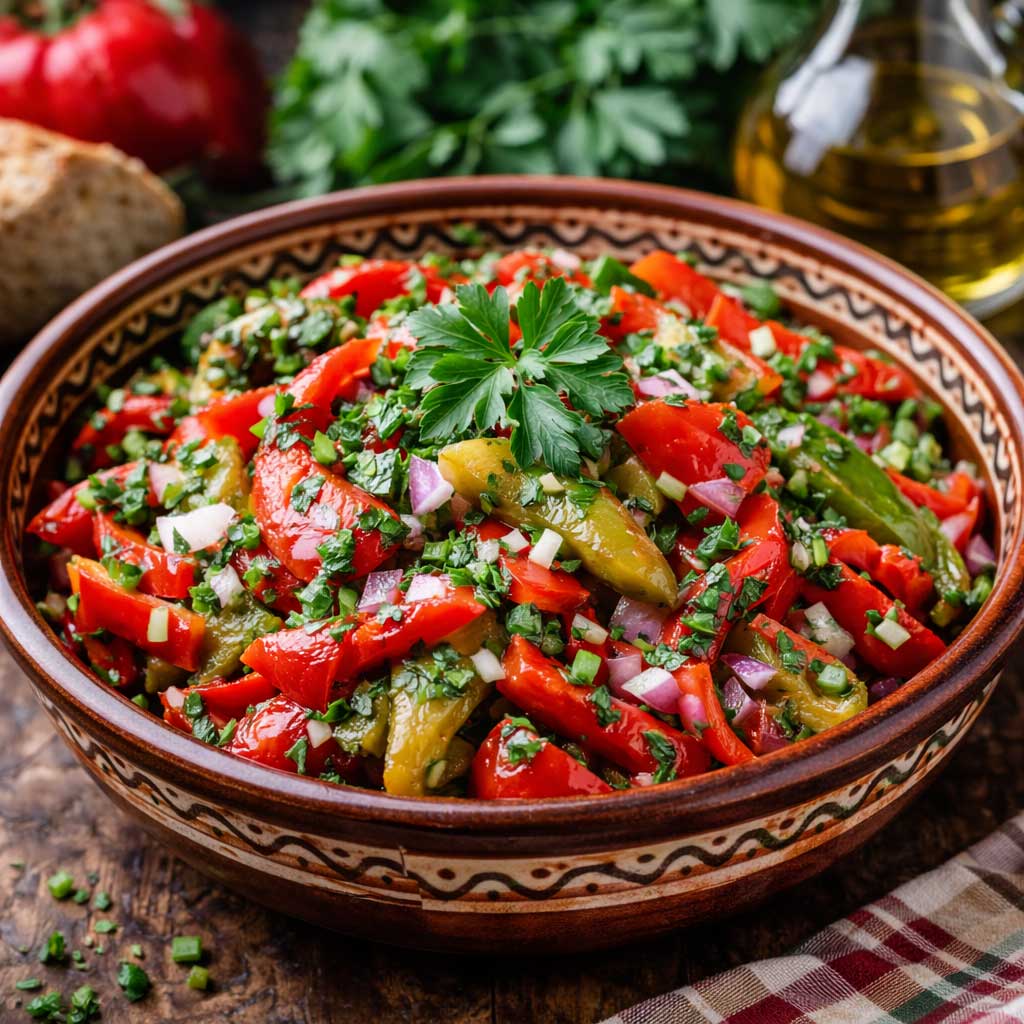
Roasted pepper salad is a true showcase of Bulgarian flavors, especially the use of fire-roasted vegetables. The peppers are typically roasted until their skins are charred, then peeled to reveal a soft, smoky interior. This process enhances their natural sweetness and creates a deep, complex flavor.
Garlic and parsley are added to bring freshness and aroma, while vinegar provides a slight tang that balances the sweetness of the peppers. This salad is often served as part of a larger spread and pairs exceptionally well with bread and cheese. Its bold flavor makes it a standout dish despite its simple ingredient list.
Ingredients:
- Roasted peppers
- Garlic
- Parsley
- Vinegar
See how to make smoky roasted pepper salad the traditional way:
👉 Bulgarian Roasted Pepper Salad Recipe – Traditional Chushki Salad Explained
Why It’s Loved:
- Very aromatic
- Smoky flavor
Key Ingredients in Bulgarian Salads
1. Bulgarian Yogurt
Known for its unique bacteria Lactobacillus bulgaricus, it gives salads a tangy, creamy taste.
2. White Brined Cheese
Similar to feta but often creamier and less salty.
3. Fresh Vegetables
- Tomatoes
- Cucumbers
- Peppers
- Cabbage
4. Herbs and Seasonings
- Dill
- Parsley
- Garlic
5. Oils and Vinegars
- Wine vinegar
- Sunflower oil (traditional)
How to Make Bulgarian Salads Taste Authentic
- Always use ripe vegetables
- Use sunflower oil instead of olive oil for authenticity
- Add cheese last
- Keep ingredients chunky (not over-chopped)
Bulgarian Salads and the Mediterranean Diet
Bulgarian salads share many similarities with Mediterranean cuisine:
- Fresh vegetables
- Healthy fats
- Minimal processing
This makes them ideal for:
- Weight loss
- Heart health
- Clean eating
Bulgarian Salads Around the World
Bulgarian salads have influenced cuisines across the Balkans and beyond. Dishes like Shopska and yogurt-based salads are now popular in:
- Greece
- Serbia
- Turkey
- Western Europe
They are often associated with healthy Mediterranean-style diets. Bulgarian salads are popular for their fresh ingredients and simple preparation.
Why Bulgarian Salads Are Perfect for Modern Diets
Bulgarian salads align perfectly with modern nutrition trends such as clean eating, plant-based diets, and low-calorie meals. Because they rely heavily on vegetables, yogurt, and natural oils, they provide essential nutrients without unnecessary additives.
They are also ideal for people looking to lose weight or improve their overall health. The balance between fiber, protein, and healthy fats helps maintain energy levels while supporting digestion. This makes Bulgarian salads not just traditional dishes, but highly relevant in today’s health-conscious world.
Final Thoughts
Bulgarian salads are a perfect example of how simple ingredients can create extraordinary flavors. Whether you try the classic Shopska, the refreshing Tarator, or the hearty Ovcharska, each dish offers a taste of Bulgaria’s rich culinary heritage. If you’re looking for healthy meals, Bulgarian salads are a perfect choice.
FAQs
What is the most popular Bulgarian salad?
The most famous is Shopska salad, known for its fresh vegetables and white cheese topping.
Are Bulgarian salads healthy?
Yes, they are rich in vitamins, low in calories, and often include probiotic yogurt.
What is Bulgarian yogurt salad?
Snezhanka is a creamy yogurt-based salad with cucumbers and garlic.
Is Tarator a soup or salad?
It is both—it can be served as either.
What cheese is used in Bulgarian salads?
White brined cheese, similar to feta, is commonly used.
What is Tarator?
Tarator is a cold yogurt-based salad/soup made with cucumbers, garlic, and dill.
Are Bulgarian salads vegetarian?
Most are vegetarian, though some like Ovcharska include meat.
What oil is used in Bulgarian salads?
Traditionally, sunflower oil is used instead of olive oil.
Can I make Bulgarian salads at home?
Absolutely. Most recipes are simple and require only fresh ingredients.