


Famous Bulgarians Who Changed History include influential rulers, revolutionary leaders, scientists, writers, and artists whose achievements shaped Bulgaria and influenced the wider world. For more than thirteen centuries, Bulgaria has produced remarkable individuals whose ideas, leadership, and innovations helped transform politics, culture, science, and technology.
From Khan Asparuh, who founded the Bulgarian state in 681 AD, to national heroes like Vasil Levski and Hristo Botev, and modern innovators such as John Vincent Atanasoff, the father of the digital computer, these famous Bulgarians left a lasting global impact. Their contributions helped spread literacy through the Cyrillic alphabet, inspired movements for freedom and democracy, and advanced modern art and scientific discovery. Understanding the stories of these famous Bulgarians who changed history reveals how a nation with a rich cultural heritage produced individuals whose influence continues to shape Europe and the world today.
From medieval rulers who expanded Bulgarian influence across Eastern Europe to revolutionary leaders who fought for independence, and from pioneering scientists to globally recognized artists, many famous Bulgarians who changed history have contributed to global civilization.
These individuals represent the resilience, creativity, and determination that characterize Bulgarian history. Their achievements influenced political systems, inspired cultural movements, advanced technology, and transformed literature and art.
The stories of these famous Bulgarians who changed history demonstrate how leadership, creativity, and innovation can influence the world.
In this comprehensive guide, we explore famous Bulgarians who changed history, examining how their ideas, leadership, and innovations shaped Bulgaria and contributed to global civilization.
10 Famous Bulgarians Who Changed History
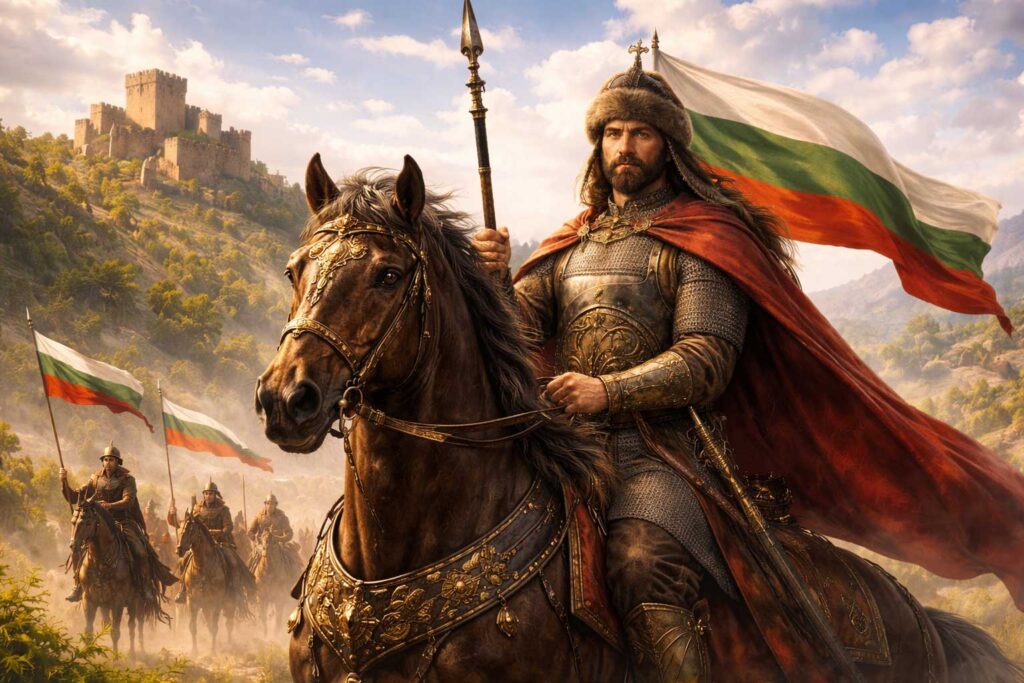
1. Khan Asparuh – Founder of the Bulgarian State
The Creation of the First Bulgarian Empire
One of the most significant figures in Bulgarian history is Khan Asparuh, the founder of the First Bulgarian Empire in 681 AD. His leadership laid the foundation for the Bulgarian state and secured its place among the recognized powers of medieval Europe.
Asparuh was the son of Khan Kubrat, the ruler of Old Great Bulgaria. After Kubrat’s death, the empire fragmented due to pressure from the Khazars. Asparuh led a group of Bulgars westward across the steppes, eventually settling in the region north of the Danube River.
Recognizing the strategic importance of the Balkan region, Asparuh crossed the Danube and established a stronghold in the area between the Danube River and the Balkan Mountains.
Victory Against the Byzantine Empire
At the time, the Byzantine Empire controlled much of the Balkans and represented one of the most powerful states in Europe. However, Asparuh successfully defended his territory against Byzantine forces.
In 681 AD, after suffering military defeat, the Byzantine Empire signed a peace treaty recognizing the Bulgarian state. This agreement marked the official founding of Bulgaria, making it one of the oldest continuously existing states in Europe.
Legacy of Khan Asparuh
Asparuh’s achievements include:
- Establishing the Bulgarian state in 681 AD
- Creating a strong military and administrative structure
- Founding the capital city of Pliska
- Securing international recognition from the Byzantine Empire
Today, Khan Asparuh is remembered as the founder of Bulgaria and a central figure in Bulgarian national identity.
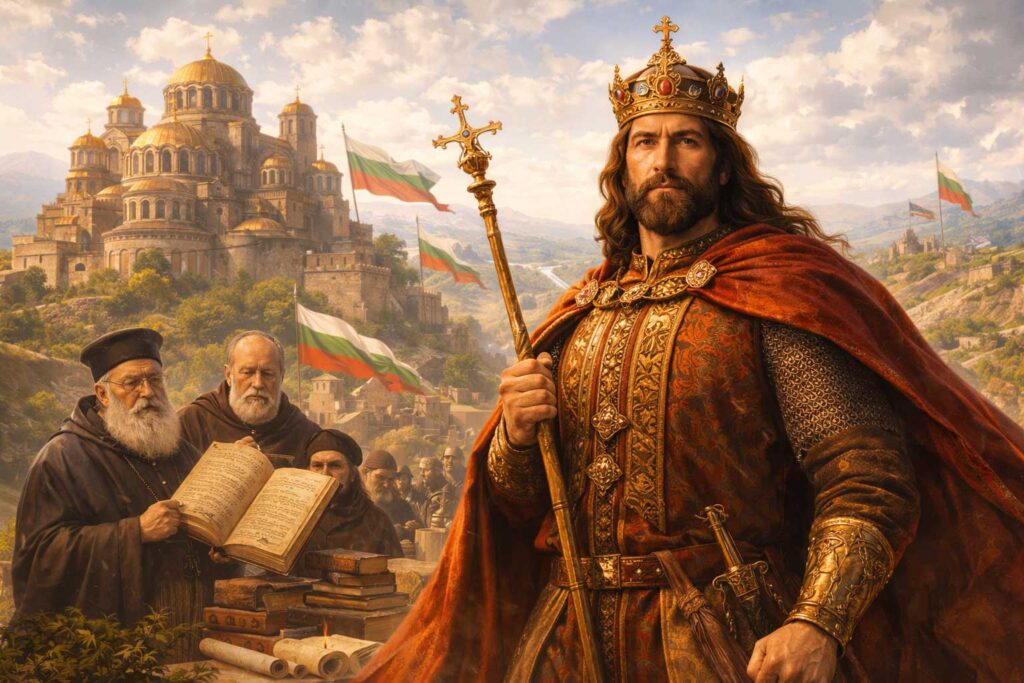
2. Simeon I the Great – Architect of Bulgaria’s Golden Age
A Scholar Turned Emperor
Tsar Simeon I, often called Simeon the Great, ruled Bulgaria from 893 to 927. His reign is widely considered the Golden Age of Bulgarian culture, a period marked by political power, literary flourishing, and intellectual development.
Simeon was educated in Constantinople, where he studied theology, philosophy, and rhetoric. This education deeply influenced his leadership and vision for Bulgaria.
When Simeon became ruler, he transformed Bulgaria into one of the most powerful states in medieval Europe.
Expansion of Bulgarian Influence
Under Simeon’s rule, Bulgaria expanded territorially and politically. His armies achieved numerous victories against the Byzantine Empire, strengthening Bulgaria’s position in southeastern Europe.
During his reign:
- Bulgarian territory expanded significantly
- The Bulgarian Empire became the dominant power in the Balkans
- Trade and economic development increased
These achievements elevated Bulgaria to a major regional power.
Cultural and Literary Achievements
Perhaps Simeon’s most important contribution was the flourishing of Bulgarian culture.
During his reign:
- Bulgarian literature reached new heights
- Scholars translated important religious and philosophical works
- The Cyrillic script spread widely throughout Eastern Europe
The literary centers of Preslav and Ohrid became major intellectual hubs, influencing Slavic culture for centuries.
Because of these achievements, Simeon the Great remains one of the most respected rulers in Bulgarian history.
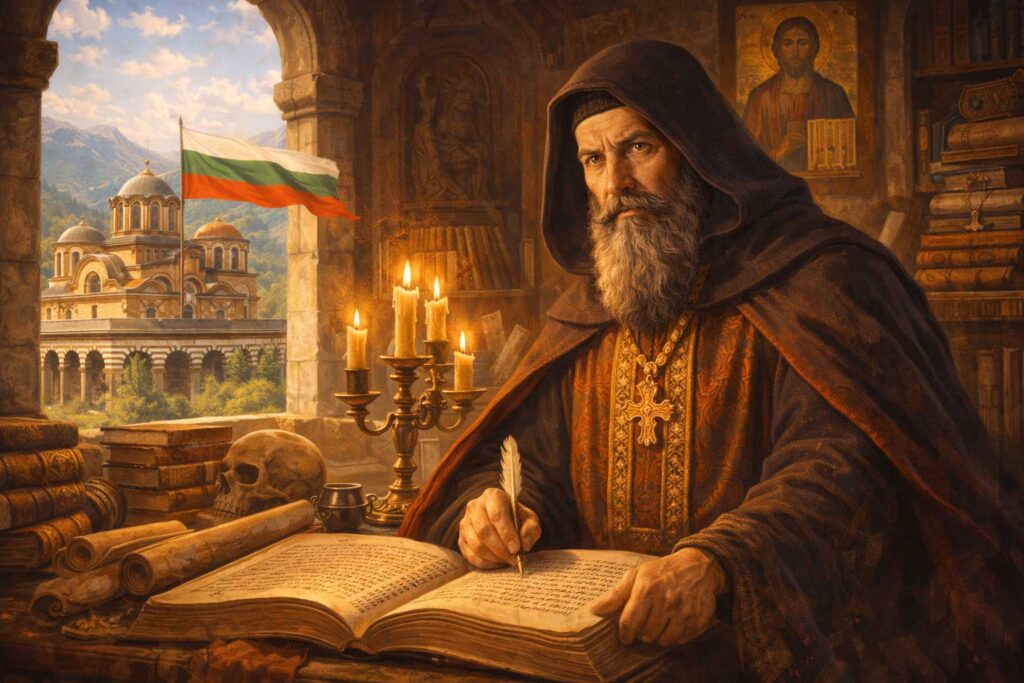
3. Paisius of Hilendar – The Awakener of Bulgarian National Identity
A Monk Who Changed a Nation
In the 18th century, Bulgaria was under Ottoman rule, and many Bulgarians were losing their connection to their cultural and historical roots. During this difficult period, a monk named Paisius of Hilendar sparked a national awakening.
In 1762, Paisius wrote Istoriya Slavyanobolgarskaya (Slavo-Bulgarian History), a historical work that would become one of the most influential texts in Bulgarian history.
The Message of National Pride
Paisius traveled extensively across monasteries and communities, collecting historical information about Bulgaria’s past rulers, saints, and achievements.
His book carried a powerful message: Bulgarians should not forget their heritage.
In passionate language, Paisius encouraged Bulgarians to:
- Remember their national history
- Take pride in their culture
- Preserve their language and traditions
At a time when many Bulgarians were adopting Greek culture and language, his work reminded them of their own identity.
Beginning of the Bulgarian National Revival
Paisius’s book became a key inspiration for the Bulgarian National Revival, a cultural movement that eventually led to the struggle for independence.
Although he was not a political leader or military figure, his influence on Bulgarian consciousness was profound.
Today, Paisius of Hilendar is recognized as the spiritual father of Bulgarian national identity.
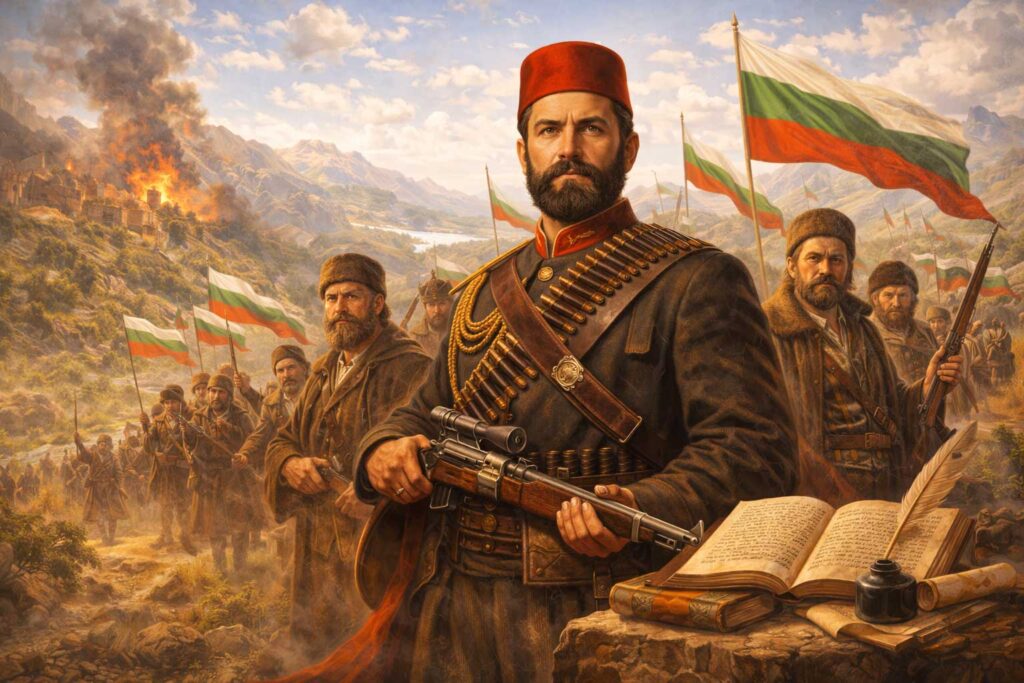
4. Hristo Botev – Revolutionary and Poet of Freedom
A Life Dedicated to Liberation
Hristo Botev is one of Bulgaria’s most beloved national heroes. Known both as a revolutionary and a poet, Botev dedicated his life to the struggle for independence from the Ottoman Empire.
Born in 1848, Botev was deeply influenced by revolutionary ideas and the desire for freedom.
He believed that literature and journalism could inspire people to fight against oppression.
A Powerful Literary Voice
Botev’s poetry is widely considered some of the most powerful in Bulgarian literature.
His poems often focused on themes such as:
- Freedom and resistance
- Sacrifice for the homeland
- Social justice
- National identity
His literary work inspired many Bulgarians to support the independence movement.
Hero of the April Uprising
In 1876, Botev joined the revolutionary effort known as the April Uprising, an attempt to overthrow Ottoman rule.
He led a group of revolutionaries who crossed the Danube River and fought in the Balkan Mountains.
Although the uprising ultimately failed, Botev’s bravery and sacrifice made him a symbol of Bulgarian patriotism.
He died during the uprising, but his legacy lives on as one of Bulgaria’s greatest heroes.

5. Vasil Levski – The Apostle of Freedom
Visionary Revolutionary Leader
Among the most revered figures in Bulgarian history is Vasil Levski, often called the Apostle of Freedom.
Levski believed that Bulgaria should achieve independence through organized revolutionary action within the country rather than relying on foreign assistance.
This vision made him one of the most strategic and forward-thinking leaders of the independence movement.
Creating a Revolutionary Network
Levski traveled throughout Bulgaria establishing secret revolutionary committees. These groups formed a nationwide network dedicated to preparing for a future uprising.
His strategy included:
- Building internal revolutionary organizations
- Creating secret communication systems
- Preparing citizens for political self-governance
Levski’s leadership brought structure and unity to the independence movement.
Vision for a Democratic Republic
Levski’s vision went beyond national liberation.
He dreamed of a Bulgaria that would become a democratic republic where all citizens were equal, regardless of religion or ethnicity.
This progressive idea was far ahead of its time and remains one of the reasons he is deeply respected.
Although he was captured and executed in 1873, his ideals continue to inspire Bulgarians today.

6. John Vincent Atanasoff – Father of Digital Computing
A Revolutionary Scientific Mind
One of the most influential Bulgarian-born scientists in world history is John Vincent Atanasoff.
Born in the United States to a Bulgarian father, Atanasoff became a physicist and inventor whose work helped shape the modern digital computer.
The Atanasoff–Berry Computer
In the late 1930s, Atanasoff developed the Atanasoff–Berry Computer (ABC) with his colleague Clifford Berry.
The machine introduced several groundbreaking concepts that are fundamental to modern computing.
These innovations included:
- Binary number systems for calculations
- Electronic switching components
- Digital memory storage
- Separation of computing and memory functions
These ideas laid the foundation for modern computer architecture.
Recognition as a Computer Pioneer
Although his work was initially overlooked, Atanasoff later received recognition as a father of the digital computer.
His contributions influenced the development of modern computers used worldwide in science, business, and everyday life..

7. Christo – A Visionary of Environmental Art
A Bulgarian Artist with Global Influence
Christo Vladimirov Javacheff, known simply as Christo, became one of the most famous contemporary artists in the world.
Born in Bulgaria in 1935, Christo eventually moved to Western Europe and later to the United States, where he began creating monumental environmental art installations.
Art That Transformed Public Spaces
Christo and his artistic partner Jeanne-Claude created large-scale temporary installations that transformed landscapes and public spaces.
Their works often involved wrapping buildings or covering large areas with fabric.
These installations challenged traditional ideas of art by making the environment itself part of the artwork.
Famous Projects
Some of Christo’s most famous installations include:
- Wrapped Reichstag in Berlin
- The Gates in Central Park, New York
- Floating Piers on Lake Iseo in Italy
Millions of people visited these installations, making Christo one of the most widely recognized artists in modern history.

8. Georgi Ivanov – Bulgaria’s First Astronaut
Entering the Space Age
In 1979, Bulgaria made history when Georgi Ivanov became the first Bulgarian astronaut.
He participated in the Interkosmos space program, an international initiative led by the Soviet Union that allowed allied countries to send astronauts into space.
Soyuz 33 Mission
Ivanov flew aboard Soyuz 33, marking Bulgaria’s first human spaceflight mission.
Although technical issues prevented the spacecraft from docking with the space station as planned, the mission was still considered a major milestone for Bulgaria.
Symbol of Scientific Progress
Ivanov’s journey into space demonstrated Bulgaria’s contributions to science and technology.
His mission inspired generations of Bulgarian scientists, engineers, and students interested in space exploration.
Today, he remains a symbol of Bulgaria’s participation in the global scientific community.
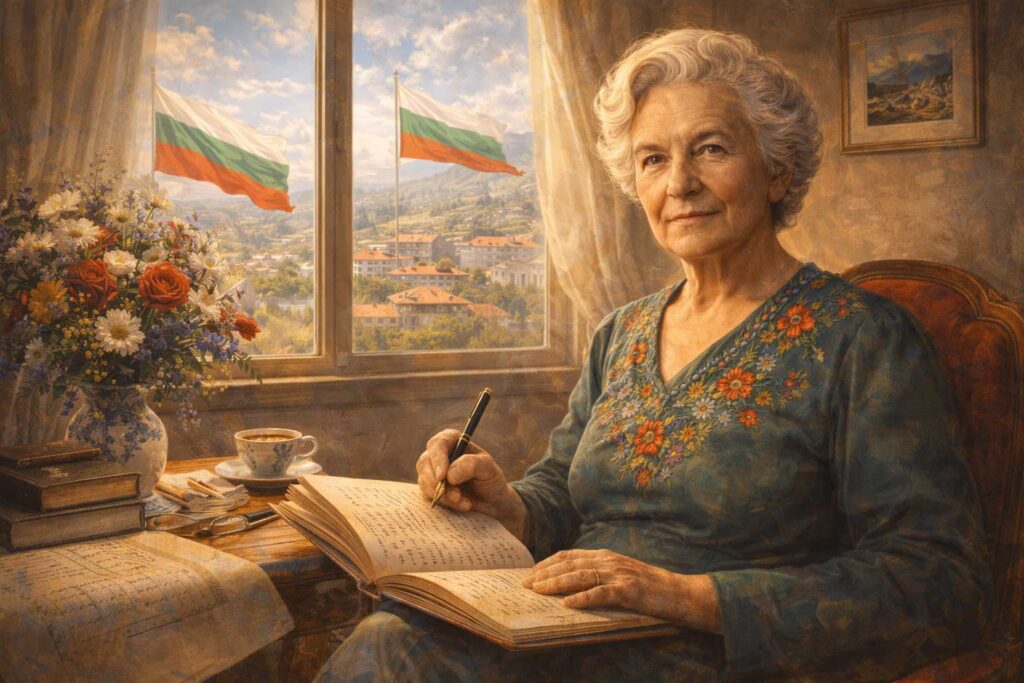
9. Elisaveta Bagryana – Pioneer of Modern Bulgarian Poetry
A Voice of Freedom and Emotion
Elisaveta Bagryana is one of the most influential poets in Bulgarian literary history.
Born in 1893, she became a leading voice in modern Bulgarian poetry during the early 20th century.
Revolutionizing Bulgarian Literature
Bagryana’s poetry introduced new themes and emotional depth into Bulgarian literature.
Her work often explored:
- Personal freedom
- Identity and individuality
- The role of women in society
- Human emotions and inner struggles
Her bold and expressive style broke traditional literary conventions.
International Recognition
Bagryana’s poetry gained recognition beyond Bulgaria, and she was nominated multiple times for the Nobel Prize in Literature.
Her influence helped modernize Bulgarian literature and expand its global reputation.

10. Stoyanka Mutafova – Legendary Bulgarian Actress
A Career Spanning Seven Decades
Stoyanka Mutafova was one of the most beloved actresses in Bulgarian theater and comedy.
Her career lasted more than 70 years, making her one of the longest-performing stage actresses in the world.
A Cultural Icon
Mutafova became famous for her exceptional comedic timing and unforgettable stage performances.
She performed in countless theater productions, films, and television programs, earning admiration from audiences across multiple generations.
Impact on Bulgarian Performing Arts
Her influence on Bulgarian culture includes:
- Popularizing modern theater comedy
- Inspiring generations of actors
- Strengthening Bulgaria’s theatrical traditions
Mutafova remains a cherished cultural icon.
Why These Famous Bulgarians Who Changed History Matter
The individuals highlighted in this article demonstrate the extraordinary impact Bulgarians have had across many fields.
Their achievements influenced:
- The creation and preservation of the Bulgarian state
- The spread of literacy and culture across Eastern Europe
- The struggle for independence and democratic ideals
- The development of modern computing technology
- The evolution of art, literature, and performing arts
Together, they show how Bulgaria’s contributions extend far beyond its geographic size.
Throughout centuries, famous Bulgarians who changed history have shaped the political, cultural, and intellectual development of Europe. From medieval rulers to modern scientists, their influence continues to inspire future generations.
15 Additional Famous Bulgarians Who Changed History
Bulgaria’s influence on global culture, science, literature, and politics extends far beyond a handful of famous individuals. Across different centuries, many Bulgarians made contributions that reshaped society and influenced developments across Europe and the world.
These additional figures are also famous Bulgarians who changed history, contributing to science, culture, politics, and global innovation.
Below are 15 more famous Bulgarians who changed history, whose achievements expanded Bulgaria’s cultural and intellectual legacy.
1. Boris I of Bulgaria – The Christianizer of the Bulgarian State
Boris I ruled Bulgaria from 852 to 889 and played a crucial role in shaping the country’s spiritual and cultural future.
His most important decision was the adoption of Christianity in 864, which unified the Bulgarian population and strengthened ties with other European states.
This conversion also helped promote literacy and education, as Christian texts were translated into Slavic languages.
Boris I’s policies laid the foundation for Bulgaria’s medieval cultural development.
2. Clement of Ohrid – Creator of the First Slavic Literary School
Saint Clement of Ohrid was one of the most important scholars of the early Slavic world.
He founded the Ohrid Literary School, where thousands of students were educated in Slavic language and literature.
Clement played a major role in developing and spreading the Cyrillic alphabet, which is still used by millions of people today across Eastern Europe and Central Asia.
3. Naum of Ohrid – Educator of the Slavic World
Another key figure in early Bulgarian culture was Saint Naum of Ohrid.
He worked alongside Clement to expand Slavic education and religious literature.
Naum helped translate Christian texts and trained clergy who spread literacy throughout the region.
His work strengthened Bulgaria’s cultural influence throughout the Slavic world.
4. Ivan Vazov – The Patriarch of Bulgarian Literature
Ivan Vazov is often called the patriarch of Bulgarian literature.
His novel Under the Yoke is one of the most famous works in Bulgarian literary history.
The book depicts the Bulgarian struggle for independence and became a powerful symbol of national identity.
Vazov’s writings helped define Bulgarian literature and cultural memory.
5. Aleko Konstantinov – Creator of the Iconic Character Bai Ganyo
Writer Aleko Konstantinov was a satirist who used humor to explore Bulgarian society.
His character Bai Ganyo became one of the most recognizable figures in Bulgarian literature.
Through satire, Konstantinov criticized corruption, hypocrisy, and social problems while encouraging national reflection and reform.
6. Pancho Vladigerov – A Pioneer of Bulgarian Classical Music
Composer Pancho Vladigerov played a key role in shaping modern Bulgarian classical music.
His compositions blended traditional Bulgarian folk melodies with European classical styles.
Vladigerov’s music helped introduce Bulgarian cultural traditions to international audiences.
7. Georgi Nadjakov – Discoverer of the Photoelectret Effect
Physicist Georgi Nadjakov made an important scientific discovery known as the photoelectret effect.
This phenomenon later contributed to the development of modern technologies such as photocopiers and laser printers.
His work influenced advancements in physics and electronics.
8. Dimitar Paskov – Discoverer of a Key Medical Treatment
Bulgarian pharmacologist Dimitar Paskov developed Nivalin, a medication used to treat neurological conditions.
The drug was derived from a natural plant compound and became an important treatment for diseases affecting the nervous system.
His discovery demonstrated Bulgaria’s contributions to global medical science.
9. Ivan Stranski – Influential Physical Chemist
Ivan Stranski was one of the leading physical chemists of the 20th century.
His research on crystal growth and surface chemistry had a major influence on modern materials science.
Stranski worked at leading scientific institutions in Europe and mentored many future scientists.
10. Assen Jordanoff – Aviation Pioneer
Assen Jordanoff was a Bulgarian-American engineer who became a pioneer in aviation technology.
He worked on aircraft design and helped develop innovations that improved aviation safety and training.
Jordanoff also wrote influential manuals used by pilots worldwide.
11. Todor Zhivkov – Leader of Communist Bulgaria
Todor Zhivkov led Bulgaria from 1954 to 1989, making him the longest-serving leader in the country’s modern history.
During his rule, Bulgaria experienced major industrialization and economic transformation.
Although his leadership remains controversial, Zhivkov played a central role in shaping Bulgaria during the Cold War.
12. Julia Kristeva – Influential Philosopher and Literary Theorist
Born in Bulgaria, Julia Kristeva became one of the most influential intellectuals in modern philosophy.
Her work in linguistics, psychoanalysis, and literary theory influenced academic thought across Europe and North America.
Kristeva’s ideas helped shape contemporary debates in philosophy and cultural studies.
13. Peter Deunov – Spiritual Teacher and Philosopher
Peter Deunov, also known as Beinsa Douno, founded a spiritual movement known as the Universal White Brotherhood.
His teachings focused on harmony with nature, spiritual development, and ethical living.
Deunov influenced spiritual thinkers throughout Europe.
14. Rayna Knyaginya – Heroine of the April Uprising
Rayna Knyaginya became a national heroine during the April Uprising of 1876.
She famously sewed and carried the revolutionary flag used by Bulgarian rebels.
Her bravery made her one of the most recognized female figures in Bulgarian history.
15. Stefka Kostadinova – World Record Olympic Champion
Bulgarian high jumper Stefka Kostadinova set a world record in 1987 that remained unbroken for decades.
She won the Olympic gold medal in 1996 and became one of the greatest athletes in track and field history.
Her achievements placed Bulgaria firmly on the global sports map.
Timeline of Events Connected to Famous Bulgarians Who Changed History
Understanding the achievements of famous Bulgarians who changed history becomes easier when viewed within the broader timeline of Bulgaria’s past.
Below is a simplified historical overview.
681 AD – Foundation of Bulgaria
Khan Asparuh establishes the First Bulgarian Empire after defeating Byzantine forces.
864 AD – Christianization of Bulgaria
Tsar Boris I adopts Christianity, shaping Bulgaria’s cultural identity.
893–927 – Golden Age of Bulgarian Culture
Simeon the Great oversees a flourishing of literature, education, and political power.
1018 – Byzantine Conquest
The Byzantine Empire conquers Bulgaria after centuries of rivalry.
1185 – Second Bulgarian Empire
The Asen brothers lead a successful uprising and restore Bulgarian independence.
1396 – Ottoman Conquest
Bulgaria falls under Ottoman rule for nearly five centuries.
18th–19th Century – Bulgarian National Revival
Cultural leaders and revolutionaries work to restore national identity.
1878 – Liberation of Bulgaria
Following the Russo-Turkish War, Bulgaria gains autonomy.
1908 – Full Independence
Bulgaria officially declares independence from the Ottoman Empire.
1946 – Communist Era Begins
Bulgaria becomes a socialist republic aligned with the Soviet Union.
1989 – Democratic Transition
The communist government collapses, and Bulgaria begins democratic reforms.
2007 – Bulgaria Joins the European Union
Bulgaria becomes a member of the European Union, strengthening its international role.
Understanding the lives of these famous Bulgarians who changed history helps explain Bulgaria’s remarkable cultural legacy.
Influence of Bulgaria on Europe and the Slavic World
Although relatively small in geographic size, Bulgaria has played an important role in shaping European culture and the development of Slavic civilization.
The Spread of the Cyrillic Alphabet
One of Bulgaria’s greatest cultural contributions is the spread of the Cyrillic alphabet.
Developed by scholars connected with the Bulgarian literary schools, the script became widely used across Eastern Europe.
Today, it is used by more than 250 million people worldwide.
Countries that use Cyrillic include:
- Russia
- Ukraine
- Serbia
- Bulgaria
- North Macedonia
- Kazakhstan
This linguistic legacy represents one of Bulgaria’s most significant global contributions.
Literary and Cultural Influence
Medieval Bulgarian literary schools produced important translations of religious and philosophical texts.
These writings influenced Slavic cultures for centuries.
The cultural centers of Preslav and Ohrid became hubs for education and scholarship across Eastern Europe.
Political and Military Influence
At its peak, medieval Bulgaria was one of the most powerful states in Europe.
Bulgarian rulers competed with the Byzantine Empire for dominance in the Balkans.
This geopolitical influence shaped the political landscape of southeastern Europe for centuries.
Many historians consider these individuals among the most famous Bulgarians who changed history, shaping the destiny of both Bulgaria and Europe.
Frequently Asked Questions About Famous Bulgarians Who Changed History
Who is the most famous Bulgarian in history?
Many historians consider Vasil Levski the most important Bulgarian figure because of his leadership in the revolutionary movement that ultimately led to Bulgaria’s independence.
Who are famous Bulgarian scientists?
Notable Bulgarian scientists include:
- John Vincent Atanasoff – Pioneer of digital computing
- Georgi Nadjakov – Discoverer of the photoelectret effect
- Dimitar Paskov – Developer of the medicine Nivalin
- Ivan Stranski – Influential physical chemist
Did Bulgarians influence world culture?
Yes. Bulgarian contributions to world culture include:
- Internationally recognized contemporary art
- The spread of the Cyrillic alphabet
- Revolutionary literature and poetry
- Influential political movements
- Advances in science and computing
What is Bulgaria famous for historically?
Bulgaria is famous for:
- The creation and spread of the Cyrillic alphabet
- Powerful medieval empires
- Revolutionary movements for independence
- Influential literature and culture
- Scientific and technological innovations
Which Bulgarian scientist changed the world?
One of the most influential Bulgarian scientists was John Vincent Atanasoff, who helped invent the first electronic digital computer.
How did Bulgaria influence Slavic culture?
Bulgaria played a major role in spreading Slavic literacy and education through the development of the Cyrillic script and medieval literary schools.
What are Bulgaria’s biggest cultural contributions?
Major Bulgarian contributions include:
- The Cyrillic alphabet
- Medieval Slavic literature
- Revolutionary poetry
- Modern art and architecture
- Scientific innovations
Final Thoughts
The legacy of famous Bulgarians who changed history stretches across more than thirteen centuries of cultural, political, and scientific achievements.
From founders of empires and revolutionary leaders to scientists, artists, and cultural innovators, Bulgarians have played an important role in shaping world history.
Their achievements demonstrate how a nation with deep cultural roots can influence global civilization in lasting ways.
By understanding these figures and their contributions, we gain insight into Bulgaria’s rich cultural heritage and its enduring impact on world history.