


The Shopska salad recipe is one of the most iconic dishes in Bulgarian cuisine. Known for its simplicity, freshness, and vibrant colors, this traditional Bulgarian salad has become a symbol of the country’s culinary identity.
Made with fresh tomatoes, cucumbers, peppers, onions, and topped with white brined cheese, Shopska salad perfectly represents what makes Bulgarian salads so special—natural ingredients, bold flavors, and minimal processing.
In this guide, you’ll learn:
- The authentic Shopska salad recipe
- Traditional ingredients and variations
- Cultural history and meaning
- Expert tips for perfect taste
Beyond its delicious taste, this traditional Bulgarian salad also reflects the philosophy of Bulgarian cooking—using seasonal, locally sourced ingredients to create dishes that are both healthy and satisfying. It is a perfect introduction to Balkan cuisine for beginners and a timeless favorite for those already familiar with it.
Shopska salad is just one of many traditional dishes featured in our guide to Bulgarian Salads – Famous Recipes and Ingredients, where you can explore even more authentic recipes.
What Is Shopska Salad?

Shopska salad is a traditional Bulgarian dish that originated in the Shopska region, which includes areas around Sofia.
It is considered:
- Bulgaria’s national salad
- A staple in every restaurant
- A must-try for tourists
What makes it unique is the combination of:
- Fresh vegetables
- Salty white cheese
- Light dressing
The balance between juicy vegetables and the rich, slightly tangy cheese creates a refreshing contrast that defines the dish. Unlike heavier salads, the famous Bulgarian salad feels light yet flavorful, making it suitable for both hot summer days and year-round meals.
It is often compared to other classic dishes found in traditional Bulgarian cuisine, especially those highlighted in Traditional Bulgarian Food – 30 Famous Dishes You Must Try.
History of Shopska Salad
Shopska salad was popularized in the mid-20th century by the Bulgarian tourism industry as part of a national effort to promote local cuisine to international visitors. It was designed to showcase fresh ingredients and reflect the colors of the Bulgarian flag, making it both visually appealing and culturally symbolic. Over time, it became one of the most recognized dishes in Bulgaria and is now considered a staple of the national cuisine.
Ingredients for Authentic Shopska Salad:
- 3–4 ripe tomatoes
- 1 large cucumber
- 1 roasted or raw green pepper
- 1 small onion
- 100g Bulgarian white cheese
- Fresh parsley
One of the defining elements of the authentic Bulgarian salad recipe is the use of Bulgarian white brined cheese, known as “sirene.” Unlike Greek feta, sirene has a creamier texture and a slightly milder, less salty taste. This cheese is essential for achieving the traditional flavor profile that Bulgarians expect. Additionally, the vegetables used are typically locally grown and sun-ripened, especially tomatoes, which are known in Bulgaria for their rich and sweet flavor.
Many of these fresh ingredients are also used in other iconic dishes like Tarator, a refreshing Bulgarian yogurt soup perfect for summer.
Dressing:
- 2 tbsp sunflower oil
- 1 tbsp vinegar
- Salt to taste
The quality of ingredients is crucial for an authentic Shopska salad recipe. Bulgarian tomatoes are known for their intense flavor, and traditional white cheese (similar to feta but creamier) adds the signature taste. Using fresh, high-quality produce will make a noticeable difference in the final result.
How to Make Shopska Salad (Step-by-Step)
- Chop tomatoes into chunks
- Slice cucumbers evenly
- Dice peppers and onion
- Mix gently in a bowl
- Add oil, vinegar, and salt
- Top with grated cheese
- Garnish with parsley
This step-by-step method keeps the preparation simple and quick, usually taking no more than 10–15 minutes. The key is to maintain the texture of each ingredient while allowing the flavors to blend naturally without overpowering one another.
If you enjoy simple recipes like this, you may also like the creamy and flavorful Snezhanka Salad, another traditional favorite.
Authentic Preparation Tips
- Use sun-ripened tomatoes
- Don’t overmix
- Always add cheese last
- Serve immediately
Another important tip is to cut vegetables into similar sizes for a balanced bite every time. Additionally, avoid refrigerating the salad for too long before serving, as this can dull the flavors and change the texture of the vegetables.
Cultural Significance
This traditional Bulgarian salad is deeply tied to Bulgarian identity.
Its colors represent the Bulgarian flag:
- Red → tomatoes
- Green → cucumbers
- White → cheese
It is commonly served:
- With rakia
- As a starter
- During gatherings
This symbolic connection to the national flag has made Shopska salad more than just food—it’s a cultural icon. It often appears at celebrations, family dinners, and traditional events, reinforcing its role as a unifying dish in Bulgarian culture.
This authentic dish is part of a broader tradition of food and celebrations explored in Bulgarian Traditions and Customs Explained.
Why Shopska Salad Became Famous
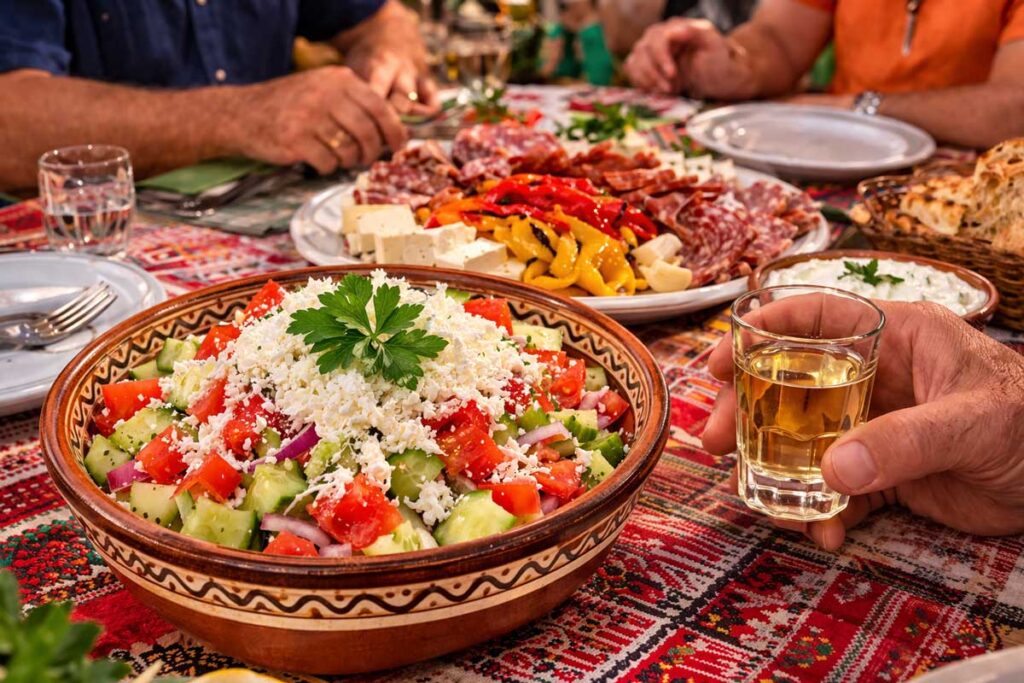
Shopska salad gained popularity during the 20th century as part of Bulgaria’s tourism promotion.
Today it is:
- Recognized worldwide
- Served across the Balkans
- Considered a “gateway dish” to Bulgarian cuisine
Its global appeal comes from its simplicity and universal flavors. Travelers often discover it while visiting Bulgaria and continue making it at home, helping spread its popularity internationally.
Today, it stands alongside other globally recognized products discussed in Famous Bulgarian Exports and Global Impact.
Health Benefits of This Traditional Bulgarian Salad
Because it is made from whole, natural ingredients, the famous Bulgarian salad fits well into many modern diets, including Mediterranean-style and low-calorie eating plans. The combination of fiber-rich vegetables and protein from cheese makes it both satisfying and nutritious without being heavy.
This traditional Bulgarian salad is:
- Low calorie
- Rich in vitamins
- High in antioxidants
It supports:
- Heart health
- Digestion
- Weight loss
In addition, the combination of fresh vegetables provides hydration and essential nutrients, while the cheese offers protein and calcium. This makes the classic Shopska dish a well-balanced and nutritious option for a healthy lifestyle.
Similar health benefits can be found in probiotic-rich foods like Bulgarian Yogurt, known worldwide for its nutritional value.
Variations of Shopska Salad
Some variations include:
- Adding olives
- Using red onions
- Including hot peppers
However, the traditional version remains the most popular.
In some regions, slight adjustments are made based on seasonal availability or personal taste. Despite these variations, the core identity of the salad—fresh vegetables and white cheese—always remains unchanged.
For more traditional recipes, explore our full collection of Bulgarian Recipes Collection featuring authentic dishes.
Common Mistakes
- Using bland tomatoes
- Adding too much dressing
- Mixing too aggressively
Another common mistake is using low-quality cheese, which can significantly affect the flavor. Authentic Bulgarian white cheese is essential for achieving the traditional taste that defines this salad.
Shopska Salad vs Greek Salad
While Shopska salad is often compared to Greek salad, there are key differences that make it uniquely Bulgarian. Greek salad typically includes olives, feta cubes, and oregano, whereas the authentic Shopska salad uses grated Bulgarian white cheese and omits olives. The texture, flavor balance, and presentation are also distinct, with this refreshing Bulgarian salad emphasizing freshness and simplicity over strong seasoning.
When Is Shopska Salad Traditionally Eaten?
This traditional Bulgarian salad is most commonly eaten during the summer months when fresh vegetables are in season. However, it is also served year-round in restaurants and homes across Bulgaria. It is typically enjoyed as a starter or side dish and is almost always paired with rakia, the country’s traditional fruit brandy.
What to Serve With Shopska Salad
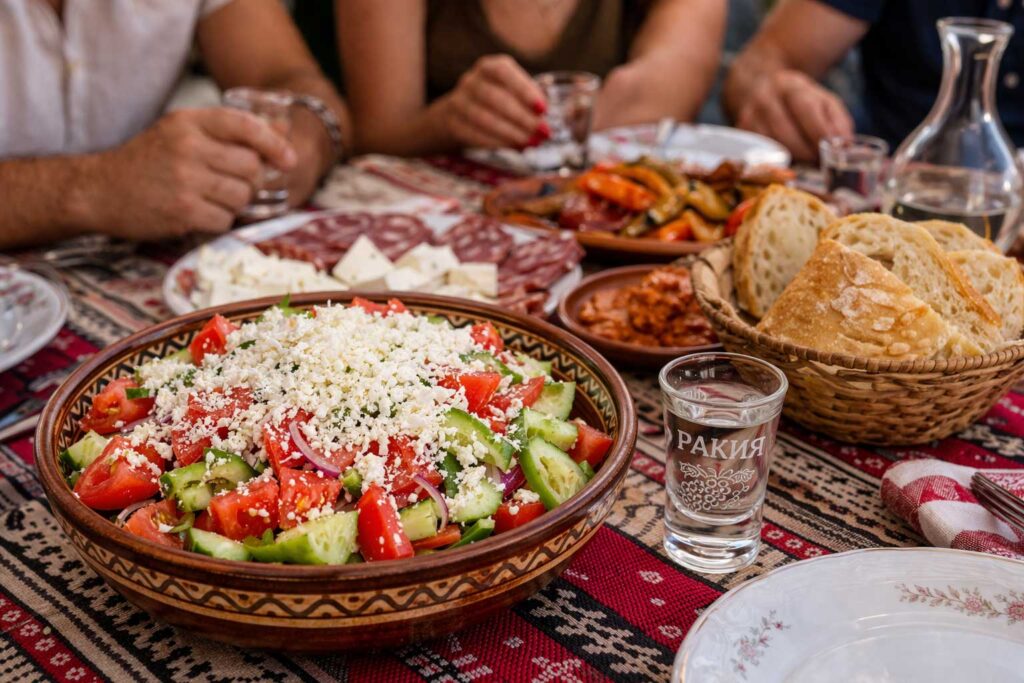
Pairs perfectly with:
- Grilled meats
- Bread
- Rakia
It also works well as part of a larger meal alongside other Bulgarian dishes, making it a versatile addition to both casual lunches and festive dinners.
Shopska salad pairs perfectly with grilled dishes featured in Bulgarian BBQ and Grilled Foods Guide.
Final Thoughts
The Shopska salad recipe is a perfect example of how simple ingredients can create something truly extraordinary. It remains one of the most beloved dishes in Bulgaria and a must-try for anyone exploring Balkan cuisine.
Whether you’re preparing it at home or tasting it in a traditional restaurant, Bulgarian Shopska salad offers a genuine experience of Bulgarian culinary tradition that is both refreshing and unforgettable.
If you enjoyed the classic Shopska dish recipe, make sure to explore more traditional dishes in our guides to Bulgarian Salads – Famous Recipes and Ingredients and Traditional Bulgarian Food – 30 Famous Dishes You Must Try, where you’ll discover the full depth of Bulgarian cuisine.
FAQs About Shopska Salad
What is Shopska salad?
A traditional Bulgarian salad made with fresh vegetables and white cheese.
Is this Bulgarian salad healthy?
Yes, it is low-calorie and rich in nutrients.
What cheese is used in Shopska salad?
Traditionally, Bulgarian white brined cheese (similar to feta) is used.
Can I use feta cheese instead?
Yes, feta is a common substitute if Bulgarian cheese is not available.
Is Shopska salad vegan?
Not traditionally, but it can be made vegan by omitting the cheese.
What makes Shopska salad authentic?
Fresh, high-quality vegetables and traditional Bulgarian cheese.
When is the classic Shopska dish typically served?
It is usually served as a starter or side dish, especially in summer.
Can I prepare Shopska salad in advance?
It’s best served fresh, but you can prep ingredients ahead and mix before serving.
What drink pairs best with this traditional Bulgarian salad?
Rakia is the traditional pairing, but it also goes well with wine or light beer.
Does authentic Shopska salad include olives?
No, traditional versions do not include olives.
What is the difference between feta and Bulgarian cheese?
Bulgarian sirene is creamier and slightly less salty than feta.
Is this traditional Bulgarian salad gluten-free?
Yes, it is naturally gluten-free.
Can this Bulgarian Shopska salad be made without onions?
Yes, onions are optional and can be adjusted to taste.
Why is the cheese grated on top?
Grating helps evenly distribute flavor and is the traditional presentation.
Why is Shopska salad so popular?
Because of its simplicity, fresh taste, and cultural significance in Bulgaria.
Where can I find more Bulgarian recipes?
You can explore a full collection of traditional dishes in Bulgarian Recipes Collection.