


Bulgarians abroad continue to feel a strong connection to their homeland, even when living thousands of miles away. Millions of Bulgarians live outside their country today, forming vibrant communities across Europe, North America, Australia, and beyond.
Despite the distance, Bulgarians abroad maintain deep ties to their culture, traditions, and identity through language, food, family values, and shared history. This connection is not just emotional—it is a powerful expression of national identity that continues across generations.
Millions of Bulgarians live outside their homeland today. From Europe and North America to Australia and beyond, Bulgarian communities exist in cities all over the world. Despite the distance, many Bulgarians living abroad maintain a strong emotional connection to their country, culture, and traditions.
Language, food, music, family values, and historical identity continue to play an important role in preserving this connection. Whether through cultural events, community organizations, or simple everyday traditions, Bulgarians abroad often carry their heritage with pride.
Despite living abroad, Bulgarians abroad often describe a unique emotional pull toward their homeland that never fades. This connection is not just nostalgia—it is rooted in identity, shared history, and deeply ingrained traditions that continue to shape daily life, even thousands of miles away.
This article explores why Bulgarians living abroad continue to feel deeply connected to their homeland.
A Deep Historical Identity
Bulgaria has one of the oldest continuous national identities in Europe, dating back to 681 AD.
For many Bulgarians, history plays an important role in shaping their cultural pride. Stories of historical figures such as Vasil Levski and Hristo Botev are deeply embedded in the national consciousness.
Even generations born abroad often learn about these historical heroes through family traditions and community schools.
This deep historical awareness creates a sense of belonging that transcends borders. Bulgarians abroad often see themselves not just as immigrants, but as carriers of a legacy that stretches back over 1,300 years, reinforcing pride and continuity no matter where they live.
👉 Learn more about Bulgaria’s past in our guide to The First Bulgarian Empire Explained.
The Bulgarian Language
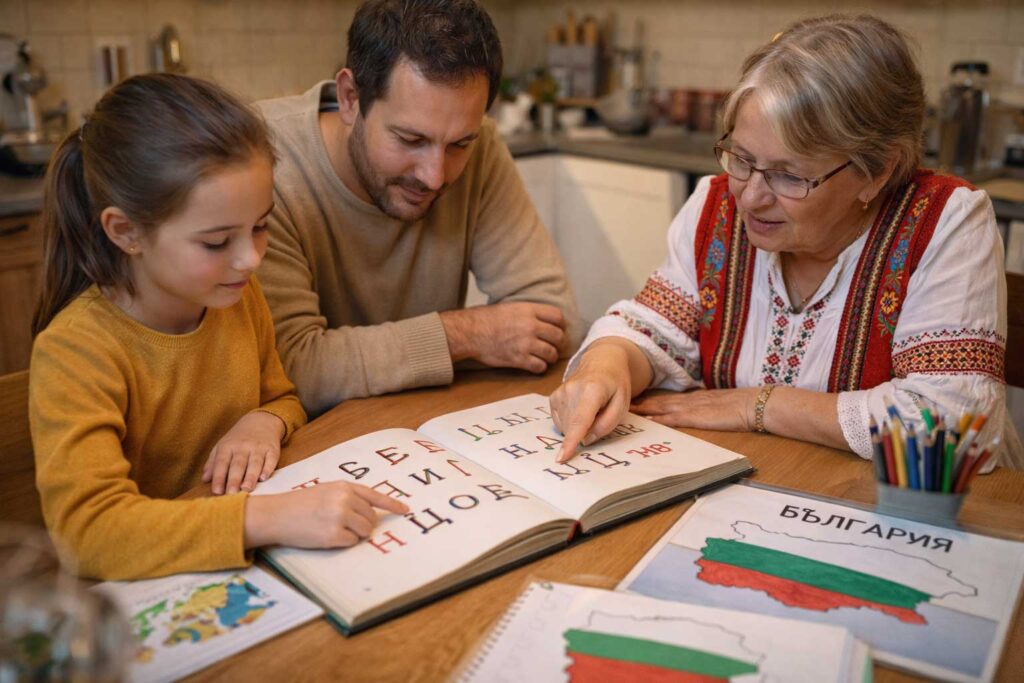
Language is one of the strongest links connecting Bulgarians around the world.
The Bulgarian language uses the Cyrillic alphabet, which developed during the First Bulgarian Empire and continues to be an important cultural symbol.
Many Bulgarian families abroad make efforts to teach their children the language, ensuring that future generations maintain a connection with their cultural roots.
Bulgarian weekend schools and cultural programs help preserve the language among diaspora communities.
For many Bulgarians abroad, speaking the language at home becomes a conscious effort to preserve identity. Even when children grow up bilingual, maintaining Bulgarian allows them to connect more deeply with grandparents, traditions, and cultural nuances that cannot be fully translated.
Food and Culinary Traditions
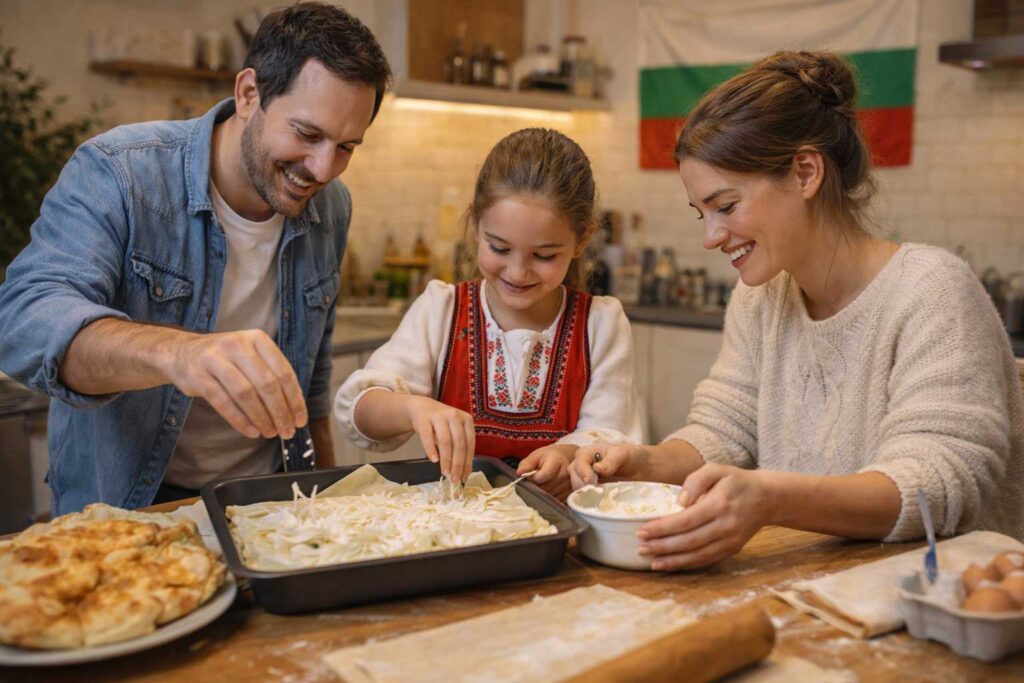
Food is another powerful way Bulgarians maintain their cultural identity abroad.
Cooking traditional meals is often more than just nourishment—it becomes a ritual of cultural preservation. Bulgarians abroad frequently recreate recipes exactly as they were taught, turning food into a living bridge between generations and a powerful reminder of home.
Traditional dishes such as:
- banitsa
- shopska salad
- kavarma
- yogurt made with Lactobacillus bulgaricus
remain important parts of family gatherings and celebrations.
Preparing traditional meals often helps families pass cultural traditions to younger generations.
👉 Explore traditional dishes in Bulgarian Salads – Famous Recipes and Ingredients.
Cultural Festivals and Traditions
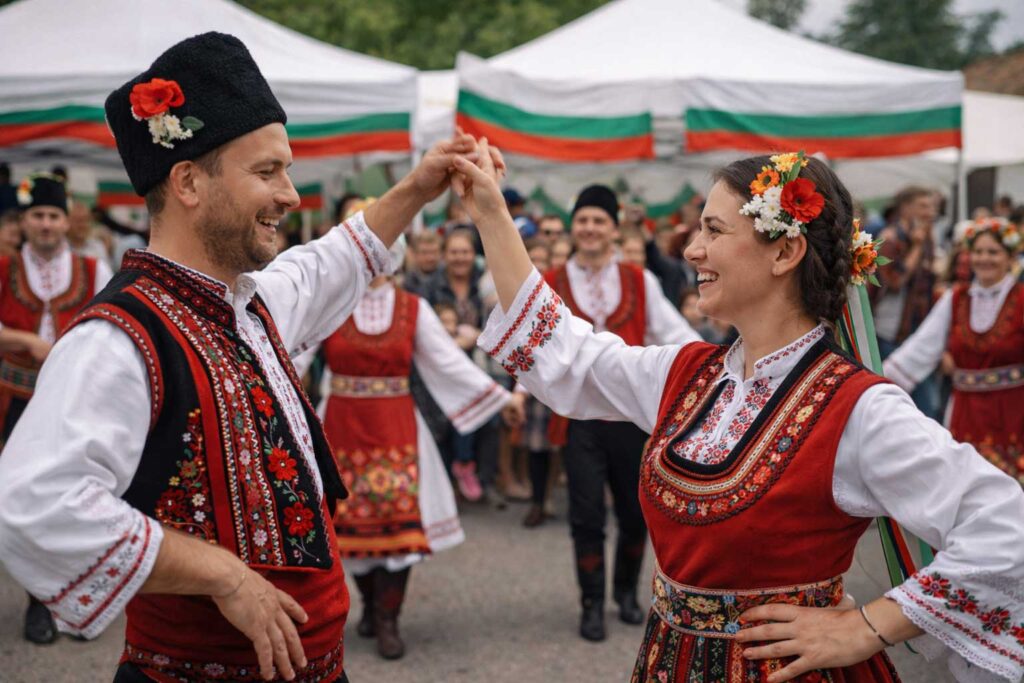
These events are especially important for younger generations who may not have lived in Bulgaria. Through music, dance, and costumes, Bulgarians abroad experience their culture in a vibrant and tangible way, strengthening community bonds and cultural pride.
Bulgarian cultural festivals are celebrated in many countries around the world.
Events often feature:
- folk music
- traditional dances
- national costumes
- Bulgarian crafts
Some communities even recreate traditional rituals such as the Kukeri festival, which involves elaborate masks and costumes designed to chase away evil spirits.
These festivals help diaspora communities stay connected with Bulgarian culture.
Discover more in Bulgarian Traditions and Customs Explained,
Bulgarian Churches Abroad
Orthodox churches also play an important role in maintaining community connections.
Bulgarian Orthodox churches abroad serve not only as places of worship but also as cultural centers where Bulgarians gather for holidays, celebrations, and community events.
These institutions help maintain traditions that have been part of Bulgarian life for centuries.
Beyond religion, these churches often serve as anchors of the Bulgarian diaspora. They provide a space where traditions are preserved, language is spoken, and cultural identity is reinforced through shared experiences and celebrations.
Pride in Bulgarian Achievements

Many Bulgarians abroad feel strong pride in the country’s achievements in areas such as science, sports, and culture.
Examples include:
- the creation of the Cyrillic alphabet
- discoveries by scientists such as John Vincent Atanasoff
- Olympic victories by Bulgarian athletes
- contributions to space exploration by astronauts such as Georgi Ivanov
These accomplishments help reinforce a shared sense of national identity.
Celebrating these achievements helps Bulgarians abroad maintain a positive national identity. It reminds them that, despite being a small country, Bulgaria has made significant contributions to the world—something that strengthens pride and unity across the diaspora.
Read about innovation in Famous Bulgarians Who Changed the World.
Strong Family Connections
Family relationships are central to Bulgarian culture.
Even when living abroad, many Bulgarians maintain close contact with relatives in Bulgaria.
Frequent visits, phone calls, and celebrations of traditional holidays help preserve these bonds.
Family ties often act as the strongest emotional link to Bulgaria. Bulgarians abroad frequently organize visits around major holidays, ensuring that traditions such as Easter, Christmas, and Baba Marta continue to be experienced authentically.
Digital Connections to Bulgaria
Modern technology has made it easier for Bulgarians abroad to stay connected to their homeland.
Through social media, online communities, and digital media platforms, people can follow Bulgarian news, watch cultural programs, and participate in virtual community groups.
These digital connections help maintain a sense of belonging even across great distances.
The rise of digital platforms has transformed how Bulgarians abroad stay connected. From watching Bulgarian TV online to participating in Facebook groups and forums, technology allows the diaspora to remain culturally engaged in real time.
Teaching Bulgarian Heritage to New Generations
For many diaspora families, one of the most important goals is ensuring that younger generations understand their cultural heritage.
Parents often teach children about:
- Bulgarian history
- traditional music and dance
- national holidays
- folklore and legends
These efforts help ensure that Bulgarian identity continues across generations.
This effort is especially important in multicultural environments where identity can easily blend or fade. By actively teaching traditions, Bulgarians abroad ensure that their heritage remains a meaningful part of their children’s lives.
Why the Connection Remains Strong
The continued connection between Bulgarians abroad and their homeland reflects the strength of the country’s cultural traditions and historical identity.
Even when living thousands of kilometers away, many Bulgarians still feel a deep emotional bond with their culture, language, and heritage.
This connection helps maintain a sense of unity among Bulgarian communities worldwide.
Ultimately, the strength of this connection lies in the balance between adaptation and preservation. Bulgarians abroad integrate into new societies while still holding onto the values, traditions, and identity that define them.
Conclusion
Although many Bulgarians now live abroad, their connection to their homeland remains strong. Through language, traditions, family values, and cultural pride, diaspora communities continue to celebrate their Bulgarian heritage.
These connections demonstrate how culture and identity can transcend geographic boundaries and remain meaningful across generations.
As globalization continues to reshape the world, the experience of Bulgarians abroad shows how cultural identity can remain resilient. No matter where life takes them, their connection to Bulgaria remains a defining part of who they are.
FAQs for Bulgarians Abroad
What does Bulgarians abroad mean?
Bulgarians abroad refers to people of Bulgarian origin who live outside Bulgaria while still maintaining cultural, emotional, and social connections to their homeland.
Why do Bulgarians abroad stay connected to Bulgaria?
Bulgarians abroad stay connected through language, traditions, family relationships, and cultural pride. These elements create a strong sense of identity that continues even across generations.
How do Bulgarians abroad preserve their culture?
They preserve their culture by:
- Speaking the Bulgarian language at home
- Celebrating traditional holidays
- Cooking authentic Bulgarian food
- Participating in cultural festivals and community events
Do Bulgarians abroad teach their children Bulgarian?
Yes, many Bulgarians abroad actively teach their children the language, history, and traditions to ensure their cultural identity continues across generations.
Where do most Bulgarians abroad live?
Large Bulgarian communities exist in:
- The United States
- The United Kingdom
- Germany
- Spain
- Canada
What role does food play for Bulgarians abroad?
Food is a major cultural connector. Traditional dishes like banitsa, Shopska salad, and yogurt help Bulgarians abroad maintain a strong emotional link to their homeland.
How has technology helped Bulgarians abroad stay connected?
Technology allows Bulgarians abroad to follow news, watch Bulgarian media, and stay in contact with family through social media, video calls, and online communities.
Are Bulgarian traditions still celebrated abroad?
Yes, many Bulgarian traditions such as Baba Marta, Easter, and folk festivals are actively celebrated by diaspora communities worldwide.
This article is based on historical records, cultural research, and data from trusted international and Bulgarian sources.
References
-
Bulgaria – Overview and Historical Background.
A comprehensive overview of Bulgaria’s geography, history, and cultural identity, providing context for the development of strong national traditions.
Encyclopedia Britannica -
Bulgaria – History, Culture, and Society.
General information about Bulgaria, including its cultural heritage, historical development, and modern society.
Wikipedia -
Bulgarian Diaspora – Global Distribution and Identity.
Details about Bulgarian communities living abroad and how they maintain cultural and national identity worldwide.
Wikipedia -
Culture of Bulgaria – Traditions, Customs, and Heritage.
Explores Bulgarian traditions, folklore, music, and cultural practices that continue to influence Bulgarians abroad.
Wikipedia -
Bulgarian Language – Origins and Cultural Importance.
Explains the significance of the Bulgarian language and its role in preserving identity among Bulgarians abroad.
Wikipedia -
Eastern Orthodox Church – Religious and Cultural Influence.
Describes the role of the Orthodox Church in shaping traditions and maintaining community ties among Bulgarians abroad.
Wikipedia -
Bulgarian Tourism Portal – Culture and Traditions.
Official resource highlighting Bulgarian traditions, festivals, and cultural identity.
BulgariaTravel.org -
Population and Migration Statistics in Bulgaria.
Statistical data on population trends and migration patterns relevant to the Bulgarian diaspora.
National Statistical Institute of Bulgaria