


Bulgarian Space Food and Experiments refer to scientific technologies and research developed by Bulgarian scientists during international space missions, especially through the Interkosmos program. These contributions included astronaut food systems, biological research equipment, medical monitoring technologies, and materials science experiments conducted aboard spacecraft and space stations.
One of the most fascinating yet lesser-known chapters in space history involves Bulgarian Space Food and Experiments developed during the late 20th century. Although Bulgaria was not a major spacefaring nation, the country played a meaningful role in international space research through scientific collaboration and technological innovation.
Bulgaria’s contributions became possible through its participation in the Interkosmos program, a Soviet-led international initiative that allowed scientists from allied countries to develop experiments and research equipment for space missions. This program created opportunities for Bulgarian researchers to test new technologies and scientific ideas in the unique environment of microgravity.
Through these collaborations, Bulgarian scientists developed space food systems and experimental equipment that were used aboard spacecraft and orbital stations. Their research focused primarily on areas such as space nutrition, biology, medicine, and materials science, all of which are essential for understanding how humans and living organisms adapt to the conditions of space.
These early Bulgarian Space Food and Experiments helped expand scientific knowledge about life beyond Earth and contributed valuable data that continues to support modern research in astronaut health, food preservation, and microgravity science.
The Interkosmos Scientific Program
A major part of Bulgarian Space Food and Experiments took place through the Interkosmos scientific program, an international space research initiative established by the Soviet Union in the 1960s. The goal of this program was to promote cooperation in space exploration by allowing scientists from participating countries to contribute experiments, technologies, and research equipment to space missions.
Through Interkosmos, Bulgaria gained the opportunity to test scientific instruments and experimental systems aboard spacecraft and space stations. This collaboration allowed Bulgarian researchers to conduct experiments in the unique environment of microgravity—conditions that cannot be replicated on Earth.
Bulgarian scientists developed experiments designed to study several important areas of space science, including:
- Biological processes in microgravity, examining how plants, microorganisms, and cells behave in space
- Human physiological adaptation to space, analyzing how the human body responds to long periods in orbit
- Materials behavior in orbit, exploring how crystals and other materials form without the influence of gravity
- Food preservation technologies, focusing on developing durable and nutritionally balanced space food systems
These studies significantly expanded scientific knowledge about how both living organisms and advanced technologies function in space environments. The work carried out through the Interkosmos program represents an important chapter in the history of Bulgarian Space Food and Experiments, highlighting the country’s meaningful contribution to international space research.
Bulgarian Space Food Innovation
One of the most remarkable achievements connected to Bulgarian Space Food and Experiments was the development of specialized food systems designed for astronauts. In space missions, food must meet strict requirements because spacecraft have limited storage space, and astronauts must receive balanced nutrition while living in microgravity environments.
Bulgarian scientists worked on creating foods that were lightweight, durable, and nutritionally complete, ensuring that astronauts could maintain their health during extended missions in orbit. Researchers focused on developing food products that could remain stable under extreme conditions while still being easy to consume in space.
Some of the space foods developed by Bulgarian researchers included:
- Freeze-dried meals, which remove moisture while preserving nutrients and flavor
- Nutrient-rich food pastes packaged in tubes, allowing astronauts to eat easily in microgravity
- Lightweight dehydrated foods, designed to minimize storage space aboard spacecraft
These foods were carefully designed to provide astronauts with balanced nutrition, long shelf life, and efficient storage—all critical factors for successful space missions.
In addition to preservation techniques, Bulgarian scientists also worked to improve the taste, texture, and nutritional value of astronaut meals. This research helped ensure that astronauts could maintain proper dietary intake even during long missions.
The innovations developed through Bulgarian Space Food and Experiments contributed to improving space nutrition technologies and influenced food preservation methods that are still used today in space programs, emergency supplies, and specialized food systems.

Traditional Bulgarian Ingredients in Space
IAn interesting aspect of Bulgarian Space Food and Experiments is that some of the foods developed for astronauts were inspired by traditional Bulgarian ingredients known for their nutritional value. Bulgarian scientists recognized that many foods commonly used in Bulgarian cuisine were naturally rich in nutrients and well suited for adaptation into space-friendly meals.
Researchers experimented with incorporating ingredients that could provide essential vitamins, proteins, and probiotics while remaining stable during long space missions. Some of the food concepts developed included:
- Yogurt-based products, adapted to preserve beneficial bacteria while remaining suitable for space storage
- Fruit concentrates, which provided natural sugars and vitamins in a lightweight form
- Vegetable mixtures, offering balanced nutrition with minimal storage requirements
Bulgaria has long been known for its expertise in fermentation and food science, especially through the study of Lactobacillus bulgaricus, the bacterium responsible for traditional Bulgarian yogurt. This scientific knowledge helped Bulgarian researchers explore ways to develop nutritious and stable food products that could support astronaut health.
By combining traditional food science with modern preservation technologies, Bulgarian Space Food and Experiments contributed to the development of space nutrition systems designed to keep astronauts healthy during extended missions in orbit.
Biological Experiments in Microgravity
Another important part of Bulgarian Space Food and Experiments involved biological research conducted in microgravity. Space provides a unique environment where gravity no longer influences biological processes in the same way it does on Earth. This allows scientists to observe how living organisms adapt to completely different conditions.
Bulgarian scientists developed and participated in numerous experiments designed to study the behavior of plants, microorganisms, and the human body in space. These studies were essential for understanding how life functions during long-duration space missions.
Plant Growth in Space
One area of research focused on how plants grow in microgravity. Scientists examined how the absence of gravity affects root development, nutrient absorption, and plant orientation.
Understanding plant growth in space is important for the future of long-term missions, where astronauts may need to grow food during extended stays in space stations or on other planets.
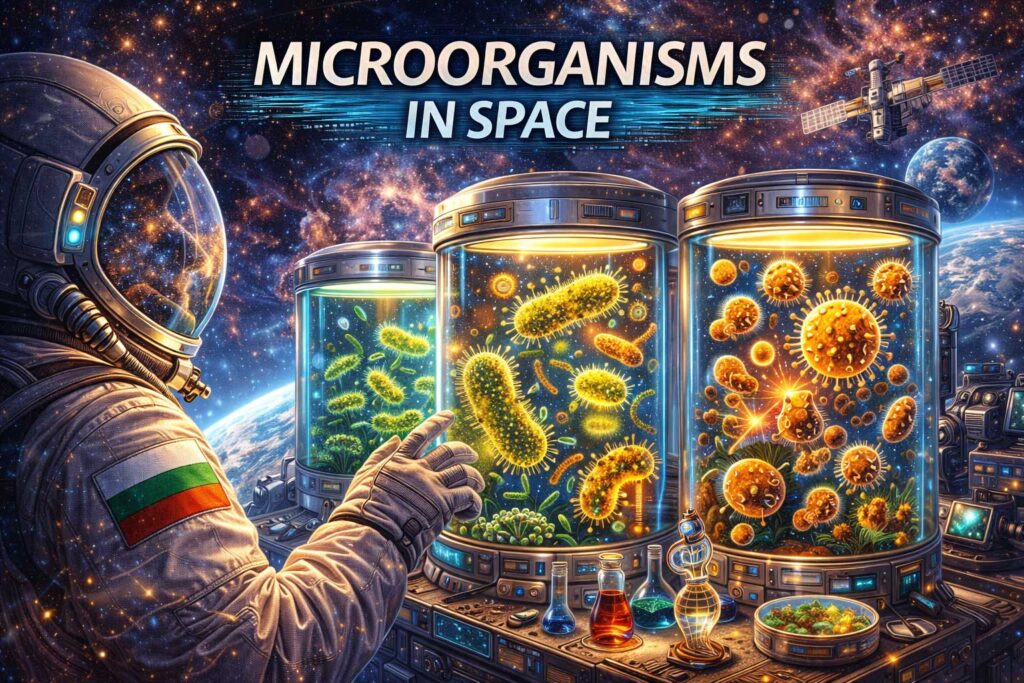
Microorganisms in Space
Bulgarian researchers also studied how bacteria and microorganisms behave in space environments. Experiments examined how microgravity influences microbial growth, reproduction, and adaptation.
These studies helped scientists understand how microorganisms might behave during space travel and how they could affect both astronaut health and spacecraft systems.
Human Physiology in Space
Another key focus of Bulgarian Space Food and Experiments was research on human physiology during spaceflight. Bulgarian scientists investigated how microgravity affects the human body, including:
- Muscle strength and bone density
- Cardiovascular function
- Metabolism and energy use
These experiments provided valuable insights into how the human body adapts to space conditions and helped scientists develop strategies to protect astronaut health.
Together, these biological experiments expanded scientific knowledge about life in space and helped researchers better understand the challenges associated with long-duration space travel.
Materials Science Experiments
Another important aspect of Bulgarian Space Food and Experiments involved materials science research conducted in orbit. Space provides a unique environment for studying how materials behave when gravity no longer affects the movement of particles and atoms.
In microgravity conditions, certain materials can form crystals more evenly and with fewer defects than they do on Earth. This makes space an ideal laboratory for scientists who want to understand how materials develop at the microscopic level.
Bulgarian researchers designed experiments to investigate several key processes, including:
- Crystal growth processes, examining how crystals form and develop in microgravity
- Metal solidification, studying how metals cool and solidify without the influence of gravity
- Material behavior in space environments, analyzing how different substances react in orbit
These experiments provided valuable insights into how materials form and behave under unique conditions. The knowledge gained from this research helped scientists improve manufacturing processes and develop more advanced materials.
The findings from these studies contributed to technological progress in areas such as modern electronics, semiconductor manufacturing, advanced materials engineering, and nanotechnology. This demonstrates how Bulgarian Space Food and Experiments not only supported space exploration but also influenced important technological developments here on Earth.

Bulgarian Experiments on the Mir Space Station
An important chapter in the story of Bulgarian Space Food and Experiments took place aboard the Mir space station, one of the most advanced orbital laboratories of its time. Mir served as a platform for international scientific cooperation, allowing researchers from several countries to conduct experiments in the microgravity environment of space.
Many Bulgarian scientific experiments were conducted on Mir as part of international space missions. A particularly significant moment occurred during the 1988 mission of Bulgarian cosmonaut Alexander Alexandrov, who traveled to orbit aboard the Soyuz TM-5 spacecraft. During this mission, Alexandrov carried a number of Bulgarian-developed experiments and scientific instruments into space.
These experiments covered several key research areas, including:
- Biological studies, examining how living organisms respond to microgravity
- Materials science experiments, exploring crystal growth and material behavior in space
- Space medicine research, analyzing the effects of spaceflight on human health
The data collected from these experiments provided valuable insights into how life and materials behave in the conditions of space. The findings helped scientists better understand the challenges associated with long-duration space missions and contributed to the development of technologies used in later space research.
The experiments conducted aboard Mir represent an important milestone in Bulgarian Space Food and Experiments, demonstrating Bulgaria’s meaningful contribution to international space science and technological innovation.
The Role of Bulgarian Research Institutions
The development of Bulgarian Space Food and Experiments involved the work of several leading scientific institutions in Bulgaria. These organizations brought together researchers, engineers, and specialists who contributed their expertise to international space research projects.
One of the most important institutions involved in these efforts was the Bulgarian Academy of Sciences. As the country’s leading research organization, the academy played a central role in coordinating scientific projects related to space technology, biology, medicine, and materials science.
Scientists and engineers working at the Bulgarian Academy of Sciences collaborated with international partners to design experiments and equipment suitable for use in space missions. Their work required careful planning and testing to ensure that the experiments could function properly in the challenging conditions of spaceflight.
Through these collaborations, Bulgarian researchers helped develop innovative technologies and experimental systems that were successfully carried aboard spacecraft and space stations. Their contributions allowed Bulgarian science to become part of broader international efforts aimed at expanding knowledge about life and technology in space.
The involvement of these research institutions helped integrate Bulgarian Space Food and Experiments into global space exploration initiatives, demonstrating how scientific cooperation can allow countries of all sizes to participate in humanity’s exploration of the universe.
The Impact of Bulgarian Space Food Research
The research behind Bulgarian Space Food and Experiments did not only benefit astronauts in orbit. Many of the technologies developed for space missions later influenced food preservation and nutrition systems used here on Earth. Scientists working on astronaut meals had to create food that was lightweight, durable, nutritionally balanced, and capable of lasting for long periods without refrigeration.
To meet these requirements, Bulgarian researchers developed advanced freeze-drying and long-term food preservation techniques. These methods allowed food to maintain its nutritional value and flavor while significantly reducing weight and storage space—two critical factors for space missions.
Today, these technologies are widely used in several industries, including:
- Emergency food supplies, designed to remain stable during disasters or crises
- Military rations, which require long shelf life and high nutritional value
- Camping and survival food, used by hikers, explorers, and outdoor enthusiasts
- Long-duration expeditions, such as polar exploration or remote scientific research missions
The innovations developed through Bulgarian Space Food and Experiments helped improve modern food science and demonstrated how research designed for space exploration can produce practical solutions for everyday life on Earth.
These advancements highlight the broader importance of space research. Technologies originally created to support astronauts often find valuable applications in many other fields, including food production, preservation, and global food security.
Bulgaria’s Legacy in Space Research
Bulgaria’s involvement in space research showed that even smaller countries can make important contributions to scientific discovery.
Through innovations in food science, biology, and materials research, Bulgarian scientists helped expand knowledge about how humans and technology operate beyond Earth.
These achievements remain an important part of the country’s scientific heritage.
Frequently Asked Questions
What food did Bulgarian scientists develop for astronauts?
Bulgarian researchers developed freeze-dried meals, nutrient-rich food tubes, and dehydrated foods designed for space missions.
Did Bulgarian scientists conduct experiments in space?
Yes. Bulgarian researchers designed biological, medical, and materials science experiments that were conducted aboard spacecraft and space stations.
Which Bulgarian astronaut carried these experiments into space?
Cosmonaut Alexander Alexandrov carried Bulgarian experiments during the 1988 Soyuz TM-5 mission to the Mir space station.
Conclusion
Bulgarian scientists made valuable contributions to space exploration through the development of innovative food technologies and scientific experiments. Their work helped expand knowledge about nutrition, biology, and materials science in space environments.
Although these achievements are not widely known, they represent an important chapter in the history of international space research and highlight Bulgaria’s role in scientific innovation.