


When discussing the technologies that power modern life—computers, aviation systems, wearable devices, and document reproduction—most people think of large industrial nations. However, a closer look at history reveals a different reality: Bulgarian engineers behind global technologies have played a crucial and often overlooked role in shaping the modern world.
These engineers did not always build widely recognized consumer products. Instead, they developed core systems, principles, and frameworks that became embedded in technologies used globally today. Their work forms part of the invisible infrastructure that supports digital systems, global communication, healthcare technologies, and industrial processes.
These examples highlight how Bulgarian engineers behind global technologies continue to shape modern systems and infrastructure worldwide.
👉 For a broader overview, explore Bulgarian achievements by industry and their global impact across science and technology.
Who Are Bulgarian Engineers Behind Global Technologies?
Bulgarian engineers behind global technologies are innovators who contributed to foundational developments in computing, aviation, electronics, and applied physics. Rather than focusing only on finished products, they shaped the underlying systems that modern industries rely on every day.
John Vincent Atanasoff and the Birth of Modern Computing
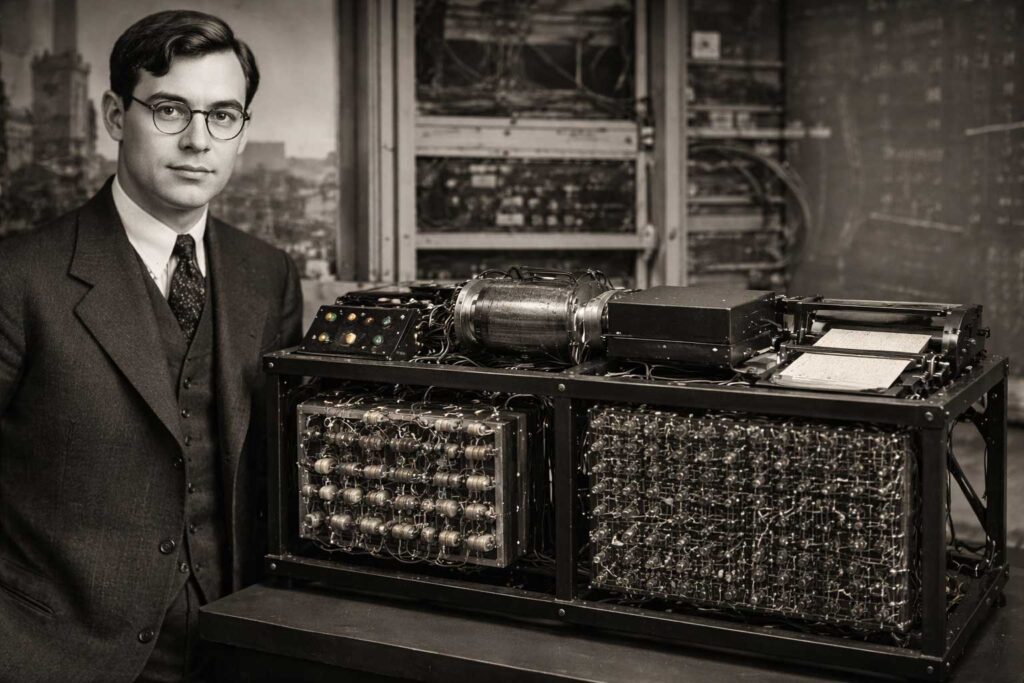
One of the most important figures is John Vincent Atanasoff, a Bulgarian-American physicist and inventor.
He is credited with developing the Atanasoff–Berry Computer (ABC), one of the first electronic digital computers.
👉 Explore the origins of this in Bulgarian computing history and early digital innovation.
Why This Matters
Before Atanasoff’s work, machines were mechanical or analog. His innovations introduced:
- Binary-based calculations
- Electronic switching instead of mechanical components
- Separation of memory and processing
These principles remain at the core of modern computing systems.
Atanasoff is considered one of the most important Bulgarian technology pioneers, influencing modern computing systems.
👉 See how this fits into Bulgarian computing history and innovation.
Global Impact
Today’s world depends on computing systems built on these ideas:
- Artificial intelligence
- Financial systems
- Medical imaging
- Internet infrastructure
- Cloud computing
Systems-Level Influence
Atanasoff’s work focused on how computing systems function internally, not just building a machine. His architectural ideas are still visible in:
- CPUs and processors
- Memory systems
- Distributed computing networks
Atanasoff’s approach fundamentally changed how machines process information. By introducing logical structure into computation, he helped shift technology from mechanical calculation to programmable systems. This transition enabled the development of software, operating systems, and eventually global digital networks that define modern life.
Without these concepts, modern digital technology would not exist in its current form.
These concepts remain central to modern computing architecture today.
Asen Yordanov and the Evolution of Aviation Systems

Another key figure is Asen Yordanov, known internationally as Assen Jordanoff.
His work influenced not only aircraft design but also how aviation knowledge is structured and shared globally.
Key Contributions
- Aircraft design and aerodynamics
- Pilot training systems
- Aviation manuals and education
- Standardization of technical knowledge
Why This Matters
Modern aviation depends on systems such as:
- Standardized training
- Global safety procedures
- Engineering precision
- Consistent operational protocols
Yordanov helped transform aviation into a scalable and safe global system.
His work places him among the most influential famous Bulgarian engineers in aviation history.
Systems-Level Impact
His influence continues through:
- Pilot certification processes
- Aviation safety standards
- Training frameworks used worldwide
His work also influenced how knowledge is transferred within engineering disciplines. By standardizing training materials and technical documentation, Yordanov helped create a consistent global framework for aviation education—something that remains essential in maintaining safety and efficiency in modern air travel.
His influence continues to shape aviation systems used worldwide.
👉 Explore Bulgarian aviation pioneers and their global engineering impact.
He helped turn aviation into a global infrastructure system.
Peter Petroff and the Rise of Wearable Technology
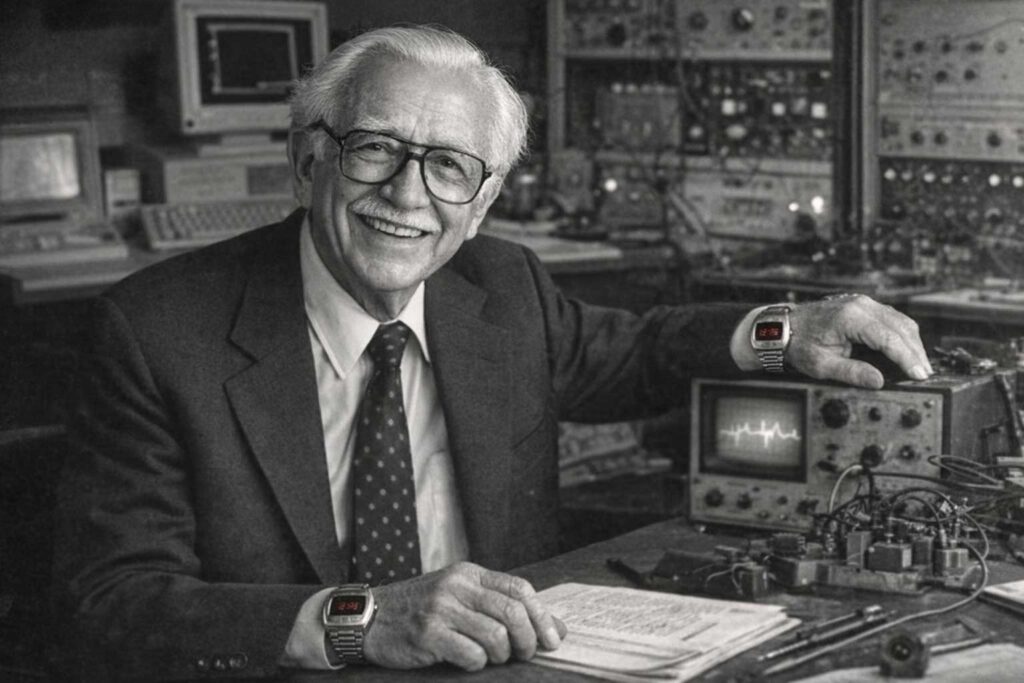
Peter Petroff represents a different type of innovation—one that connects multiple technological systems.
Key Contributions
- Early digital wristwatch technology
- Satellite telemetry systems
- Environmental monitoring devices
- Wireless medical technologies
Why This Matters Today
Petroff’s work connects:
- Electronics
- Healthcare technology
- Aerospace systems
- Data communication
These are the foundations of modern:
- Smartwatches
- Fitness trackers
- Remote health monitoring
- Internet of Things (IoT) systems
Petroff’s contributions reflect broader Bulgarian contributions to technology, especially in wearable and connected systems.
Long-Term Impact
His innovations anticipated the future of:
- Connected devices
- Real-time data systems
- Wearable computing
Petroff’s innovations represent an early shift toward human-centered technology. By focusing on portable, real-time data systems, his work helped pave the way for devices that integrate seamlessly into daily life, bridging the gap between advanced engineering and everyday usability.
His work anticipated the future of connected and wearable technologies.
👉 Discover more about Bulgarian innovations in modern technology and connected devices.
Many modern devices follow the same principles he helped pioneer.
Georgi Nadjakov and the Science Behind Photocopying

Not all technologies begin as products—many begin as scientific discoveries.
Georgi Nadjakov discovered the photoelectret effect, a key scientific principle.
What He Discovered
- Materials that retain electric charge after light exposure
- Behavior used in electrostatic imaging
Why This Matters
This discovery contributed to:
- Photocopying technology (xerography)
- Laser printing
- Document reproduction systems
His discovery is also recognized as part of major Bulgarian scientific achievements in applied physics.
Global Impact
These systems became essential in:
- Business operations
- Government institutions
- Education systems
- Legal documentation
This type of discovery highlights the importance of applied physics in technological development. While not immediately commercialized, the principles behind the photoelectret effect became essential building blocks for industries that rely on imaging, documentation, and information sharing.
👉 Read about Bulgarian discoveries that shaped everyday technology and modern systems.
His discovery continues to support imaging and printing systems globally.
Even today, imaging technologies remain critical to global workflows.
The Systems-Level Impact of Bulgarian Engineering
What makes Bulgarian engineers behind global technologies unique is their focus on systems rather than standalone inventions.
Instead of building isolated products, they contributed to:
- Core computing logic
- Engineering frameworks
- Scientific principles
- Scalable architectures
This approach to engineering reflects a deeper understanding of how technology evolves. Instead of focusing on isolated inventions, these engineers contributed to systems that could scale, adapt, and integrate into future innovations.
This systems-level thinking allowed their work to integrate into global technologies that continue to evolve today.
👉 Learn how these systems connect in Bulgaria’s contributions to global science and technology.
Multi-System Influence Across Technologies

These engineers influenced multiple technological systems, often contributing to foundational layers that support entire industries. Their work did not remain confined to a single field—instead, it spread across interconnected systems that power modern life.
Computing Systems
Digital logic, processors, and data infrastructure form the backbone of today’s digital world. Concepts introduced through early computing innovations continue to drive everything from cloud platforms to artificial intelligence.
Aviation Systems
Global transportation and safety frameworks rely on standardized engineering principles, training systems, and operational protocols that ensure consistency and reliability across international aviation.
Connected Devices
Wearables, IoT systems, and health monitoring technologies depend on the integration of sensors, data transmission, and real-time processing—areas influenced by early interdisciplinary engineering work.
Imaging Systems
Printing, copying, and digital imaging technologies are built on scientific principles that enable document reproduction, scanning, and visual data processing across businesses, education, and government.
Interconnected Impact
What makes these contributions especially powerful is how they interact. Improvements in computing enhance connected devices, aviation relies on digital systems, and imaging technologies depend on both physics and electronics.
This interconnected nature is what allows modern technology to evolve rapidly. Improvements in one system often lead to advancements in others, creating a cycle of innovation that continues to expand globally.
Their work spans systems—not just industries—creating a network of innovations that continue to evolve together.
👉 See how these systems interact in Bulgarian scientific achievements and discoveries across industries.
How Bulgarian Engineering Became Embedded in Global Systems
One of the most important aspects of Bulgarian engineers behind global technologies is how their work became embedded into systems that scale globally. Unlike isolated inventions, these contributions were integrated into technologies that expanded across industries and continents.
This process typically followed three stages:
1. Scientific or Engineering Breakthrough
An initial discovery or innovation—such as binary computing logic or electrostatic imaging—introduced a new way of solving technical problems.
2. System Integration
These ideas were incorporated into larger technological systems, including computers, aviation frameworks, and communication networks.
3. Global Adoption
As industries adopted these systems, the underlying Bulgarian contributions scaled worldwide, becoming part of everyday technology.
👉 This explains why Bulgarian engineers are often less visible—their work operates at the foundation level of global systems rather than at the consumer level.
Why Bulgarian Engineers Still Matter Today
The systems these engineers helped create continue to evolve.
Ongoing Influence
- Computing → AI, cloud computing, automation
- Aviation → global travel systems
- Wearables → health and consumer technology
- Imaging → digital workflows and cloud systems
As technology continues to evolve, these foundational contributions become even more important. Emerging fields such as artificial intelligence, automation, and data science rely heavily on the same core principles established decades ago.
Their contributions continue to scale with modern innovation.
👉 Explore the full scope in Bulgarian contributions to global science and technology.
Real-World Applications You Use Every Day
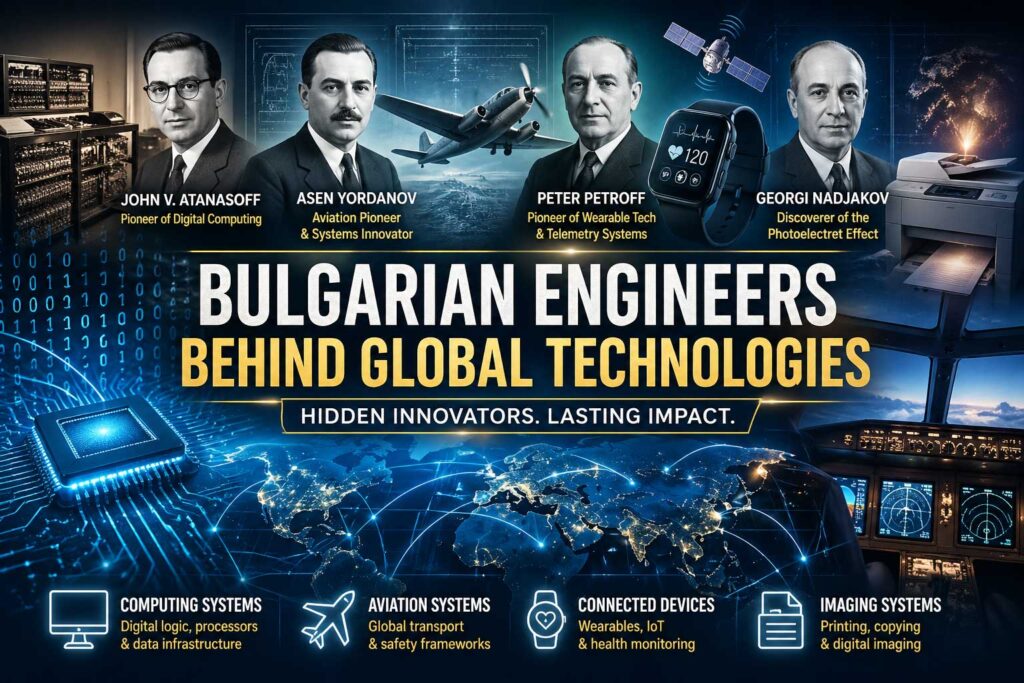
The impact of Bulgarian engineers behind global technologies is not limited to history—it is part of everyday life.
Digital Technology
Every time you use a smartphone, computer, or cloud-based service, you rely on computing principles developed through early innovations like those of John Vincent Atanasoff.
Air Travel
Commercial aviation systems, from pilot training to safety protocols, are influenced by frameworks shaped by Asen Yordanov.
Wearable Devices
Smartwatches, fitness trackers, and remote health monitoring systems reflect concepts advanced by Peter Petroff.
Printing and Imaging
Office printers, scanners, and document systems rely on scientific principles connected to Georgi Nadjakov.
This constant interaction with technology highlights how deeply these contributions are embedded in daily routines, often without users being aware of their origins.
These examples show that Bulgarian engineering is not abstract—it is used daily by billions of people.
👉 See more examples in Bulgarian inventions that impact everyday life.
Why These Engineers Are Often Overlooked
Many Bulgarian engineers behind global technologies are not widely recognized because their contributions exist within larger systems rather than visible consumer products. Unlike inventors who create branded devices or companies, these engineers focused on the underlying principles that make modern technology possible.
They contributed to:
- Foundational scientific principles
- Core engineering frameworks
- System-level architectures
- Technologies embedded within larger innovations
Rather than producing standalone products, their work became part of the infrastructure that powers global systems.
The Hidden Nature of System Innovation
Modern technologies are built in layers. At the surface, users interact with devices such as smartphones, computers, and software platforms. Beneath that layer, however, are complex systems based on earlier discoveries and engineering concepts.
Bulgarian engineers contributed to these deeper layers—the part of technology that is essential but rarely visible.
Real-World Example
You may not see “Bulgarian” written on your smartphone, laptop, or digital platform…
👉 But the systems that power these devices—computing logic, data processing, imaging technologies—are influenced by ideas developed by Bulgarian engineers.
Why Recognition Matters
Understanding these contributions changes how we think about innovation. It shows that:
- Global technology is built collaboratively
- Foundational work often goes unrecognized
- Systems-level thinking has the greatest long-term impact
This is what makes Bulgarian engineers behind global technologies uniquely important—their work is not always seen, but it is constantly used.
👉 Discover more hidden examples in the untold history of Bulgaria in global science.
This pattern of hidden innovation is common in engineering, where the most impactful work often happens behind the scenes, supporting visible technologies without being directly recognized.
Why Systems-Level Innovation Matters More Than Products
Most people associate innovation with visible products—phones, cars, or software platforms. However, the most impactful innovations often happen at a deeper level.
Bulgarian engineers behind global technologies focused on:
- System architecture
- Engineering frameworks
- Foundational logic
- Scalable designs
These types of innovations:
- Last longer than individual products
- Adapt across industries
- Continue evolving with new technologies
For example, a smartphone model may become outdated within a few years, but the computing principles inside it can last for decades.
Over time, these systems evolve while maintaining their core principles, allowing technologies to improve without completely replacing their underlying structure.
This is why systems-level contributions are often the most powerful—and why Bulgarian engineers played such an important role in shaping modern technology.
👉 Learn how this connects to Bulgarian achievements by industry.
Lessons from Bulgarian Engineers
1. Innovation Is Global
Breakthroughs are interconnected across countries.
2. Small Nations Can Lead
Impact is driven by knowledge—not size.
3. Systems Matter More Than Products
Core technologies outlast visible inventions.
4. Interdisciplinary Thinking Wins
Cross-field innovation creates long-term impact.
Future of Bulgarian Engineering
Today, Bulgaria continues to produce talent in:
- Software engineering
- Artificial intelligence
- Robotics
- Biotechnology
With global collaboration and remote work, Bulgarian engineers are more integrated into international innovation than ever before.
This continued integration into global innovation ensures that Bulgarian engineering remains relevant in shaping future technological developments.
👉 Explore how this continues today in modern Bulgarian technology, startups, and innovation.
The legacy of past pioneers continues to shape future technologies.
Key Takeaways
- Bulgarian engineers contributed to foundational global systems
- Their work spans computing, aviation, electronics, and physics
- Many innovations are embedded in modern technologies
- Their influence continues to grow in the digital era
These patterns reveal that some of the most important technological breakthroughs are not always the most visible—but they are often the most essential.
Famous Bulgarian Engineers Who Changed Global Technology
- Georgi Nadjakov – imaging science pioneer
- John Vincent Atanasoff – computing pioneer
- Asen Yordanov – aviation engineer
- Peter Petroff – wearable technology innovator
Conclusion: The Invisible Architects of Modern Technology
The story of Bulgarian engineers behind global technologies reveals how innovation often happens behind the scenes. While their names may not always be widely recognized, their contributions are embedded in the systems that power modern life.
From John Vincent Atanasoff shaping computing, to Asen Yordanov influencing aviation systems, to Peter Petroff advancing wearable technology, and Georgi Nadjakov enabling modern imaging—these innovators helped build the technological world we depend on today.
Their work proves that some of the most important innovations are not always the most visible—but they are often the most essential.
For a complete overview, explore:
- Bulgarian achievements by industry and their global impact
- Bulgaria’s contributions to global science and technology
- Bulgarian inventions that impact everyday life globally
References
- John Vincent Atanasoff https://en.wikipedia.org/wiki/John_Vincent_Atanasoff
- Atanasoff–Berry Computer https://en.wikipedia.org/wiki/Atanasoff%E2%80%93Berry_Computer
- Georgi Nadjakov https://en.wikipedia.org/wiki/Georgi_Nadjakov
- Peter Petroff https://en.wikipedia.org/wiki/Peter_Petroff
- Asen Yordanov https://en.wikipedia.org/wiki/Assen_Jordanoff