


Bulgarian traditions are a powerful blend of ancient pagan rituals, Orthodox Christian customs, and deeply rooted cultural practices that are still actively followed today. Unlike many countries where traditions have faded, traditions in Bulgaria remain a living part of everyday life—shaping celebrations, family values, and seasonal rhythms.
From the mystical Kukeri dances, designed to drive away evil spirits, to the symbolic Martenitsa bracelets that welcome the arrival of spring, these Bulgarian customs and traditions reflect a culture built on community, nature, and centuries-old beliefs passed down through generations.
These Bulgarian culture traditions have been preserved for centuries and continue to shape everyday life.
👉 In this complete guide, you’ll discover the most important Bulgarian traditions, their meanings, and why they continue to define Bulgarian identity in the modern world.
👉 To understand how these traditions apply in daily life, see Bulgarian Traditions and Customs Explained.
What Are Bulgarian Traditions?
Bulgarian traditions are a mix of ancient paganw rituals, Orthodox Christian customs, and cultural practices centered around family, nature, and seasonal celebrations. They include Kukeri festivals, Baba Marta, Easter rituals, and traditional weddings that are still practiced today.
This guide is based on cultural research, historical sources, and traditional practices still followed in Bulgaria today.
Bulgarian Traditions and Cultural Origins
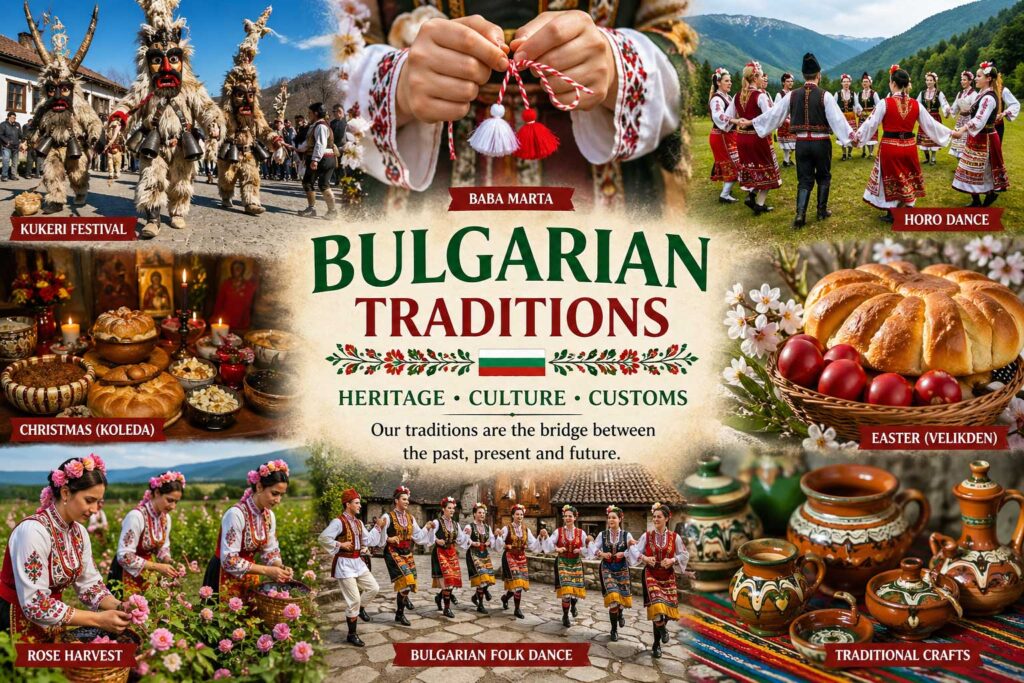
The richness of Bulgarian traditions comes from centuries of cultural layering. What makes traditions in Bulgaria so unique is that they were not created from a single source—instead, they developed through the blending of ancient Thracian beliefs, Slavic seasonal customs, and Orthodox Christian rituals.
Because of this, many Bulgarian customs and traditions feel both spiritual and practical at the same time. They are deeply connected to nature, family life, fertility, protection, and the rhythm of the year—making them one of the most complete cultural systems still preserved in Europe today.
Thracian Influence
Some of the oldest roots of Bulgarian cultural traditions can be traced to the ancient Thracians, who inhabited these lands long before the modern Bulgarian state existed.
Thracian spirituality was strongly tied to:
- Nature and sacred landscapes
- Fertility and seasonal cycles
- Ritual performance and symbolic acts
This deep connection to the natural world explains why many Bulgarian traditions are still associated with:
- Harvest and abundance
- Spring renewal
- Fire and purification rituals
- Protective symbolic practices
Early ritual masking and ceremonial performances are also linked to this ancient foundation. The survival of masked festivals, symbolic dances, and fertility rituals suggests a long cultural memory preserved within Bulgarian folk life.
👉 Traditions like Kukeri and Surva are powerful examples of how ancient belief systems continue to live on today.
Slavic Traditions
The Slavic cultural layer added another essential dimension to traditional Bulgarian customs, especially through its strong connection to agriculture and community life.
Slavic traditions emphasized:
- Planting and harvest cycles
- Seasonal celebrations
- Household protection rituals
- Community-based gatherings
This is why many Bulgarian traditions are still celebrated collectively through:
- Village festivals
- Shared meals
- Folk songs and dances
- Seasonal rituals tied to nature
Slavic belief systems also introduced a strong focus on unseen forces—spirits, luck, blessings, and omens. These ideas are still visible today in many Bulgarian superstitions and beliefs, such as:
- Martenitsa bracelets for health and renewal
- Rituals to drive away evil spirits
- Symbolic acts to attract luck and prosperity
👉 These customs show how ancient worldviews continue to influence modern life in Bulgaria.
Orthodox Christianity
Orthodox Christianity became one of the most influential forces shaping Bulgarian traditions, particularly after the Christianization of Bulgaria in the 9th century.
Instead of replacing older customs, Christianity often:
- Absorbed existing rituals
- Reinterpreted their meanings
- Integrated them into religious holidays
As a result:
- Pagan seasonal rituals became part of Easter and Christmas
- Folk symbols gained Christian significance
- Traditional practices continued within church celebrations
👉 This blending is one of the defining features of Bulgarian customs and traditions
Why This Cultural Blend Still Matters
The true strength of Bulgarian traditions lies in their ability to preserve all these cultural layers at once.
They are not just historical practices—they are:
- Living expressions of identity
- Carriers of ancient knowledge
- Bridges between generations
In many cases, a single tradition in Bulgaria contains:
- Thracian ritual symbolism
- Slavic seasonal meaning
- Orthodox Christian interpretation
👉 This is what makes Bulgaria’s cultural heritage one of the richest and most unique in Europe.
Many of these practices are deeply rooted Bulgarian rituals connected to nature and seasonal cycles.
Key Takeaway
👉 Many Bulgarian traditions today are ancient rituals preserved under newer cultural forms, which is exactly why they remain so meaningful and relevant in modern life.
👉 Explore deeper roots: Bulgarian Folklore and Traditions
Most Important Bulgarian Traditions
Kukeri Festival (Ancient Ritual Tradition)
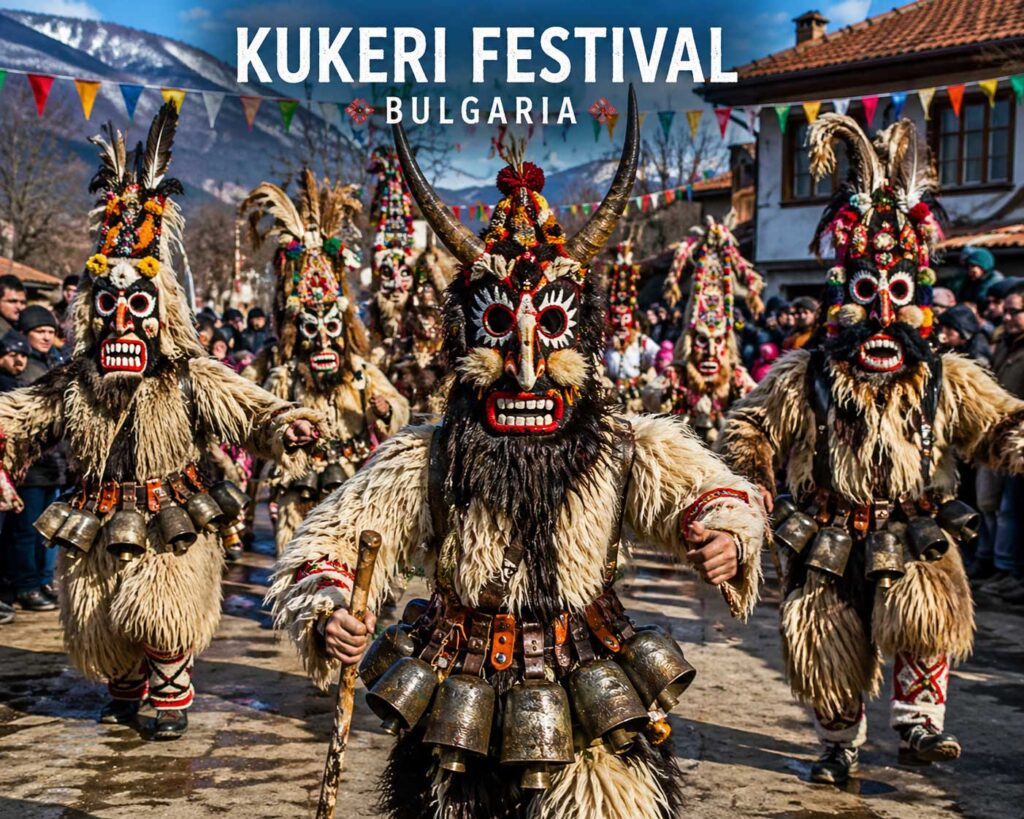
The Kukeri festival is one of the oldest and most powerful Bulgarian traditions, preserving a ritual that dates back thousands of years. These ceremonies are not simply performances—they are deeply symbolic acts rooted in ancient beliefs about protection, fertility, and the balance between good and evil.
During the festival, participants dress in elaborate, often terrifying costumes made of animal fur, decorated with massive wooden masks featuring horns, teeth, and exaggerated features. Around their waists, they wear heavy bells that create a thunderous, rhythmic sound as they move through villages and towns.
What Happens During Kukeri
- Participants wear large ritual masks designed to scare away evil spirits
- Costumes are often made from goat or sheep fur, symbolizing a connection to nature
- Heavy metal bells are tied around the waist and shaken rhythmically
- Groups perform ritual dances and processions through communities
The combination of sound, movement, and visual intensity is meant to create a powerful force that cleanses the environment and drives away negativity.
Symbolism and Meaning
The Kukeri tradition is rich in symbolism:
- Masks → represent spirits, demons, or protective forces
- Bells → believed to chase away evil energy through sound
- Dance movements → symbolize fertility, renewal, and the cycle of life
👉 At its core, this ritual is about protecting the community and ensuring prosperity for the coming year
Ancient Origins
The origins of Kukeri are believed to date back to pre-Christian Thracian rituals, making it one of the oldest surviving Bulgarian traditions.
These early ceremonies were closely tied to:
- Agricultural fertility
- Seasonal transitions (late winter → spring)
- Spiritual cleansing of communities
Even after the spread of Christianity, the tradition continued—absorbed into the cultural fabric of Bulgaria rather than disappearing.
Modern-Day Kukeri Festivals
Today, Kukeri is still actively celebrated across Bulgaria. One of the most famous events is the Surva Festival in Pernik—one of the largest masquerade festivals in the world.
- Attracts thousands of participants and visitors
- Showcases regional variations of costumes and rituals
- Preserves and promotes Bulgarian folklore globally
👉 Despite modernization, Kukeri remains a living tradition, not just a cultural display.
👉 Learn more about ancient rituals: Bulgarian Folklore and Traditions.
The Kukeri festival is one of the most iconic Bulgarian traditions, combining ancient ritual symbolism, community participation, and cultural preservation that continues to thrive today.
These are among the most powerful examples of Bulgarian folklore traditions still practiced today.
Affiliate Disclosure: Some links on this page are affiliate links, which means we may earn a small commission at no extra cost to you if you make a purchase. These commissions help support our work in creating high-quality, in-depth cultural guides like this one. We only recommend products and services that are relevant, useful, and aligned with Bulgarian traditions and travel experiences.
Experience the Kukeri Festival in Bulgaria
👉 Want to see one of the oldest Bulgarian traditions in person? These top-rated travel essentials and experiences will help you plan the perfect cultural trip to Bulgaria.
Top Travel Products for Bulgaria Trips
| Product | Best For | Why It’s Useful | Check Price |
|---|---|---|---|
| Lonely Planet Bulgaria Travel Guide | Planning | Detailed cultural insights, itineraries, and festival tips | Check Price |
| Rick Steves Eastern Europe Travel Guide | Cultural Travel | Includes Bulgaria with deep historical and cultural context | Check Price |
| European Travel Adapter (Type C/F Plug) | Travel Essential | Required for using electronics in Bulgaria and Europe | Check Price |
| Anti-Theft Travel Backpack | Safety | Perfect for festivals and crowded areas like Kukeri events | Check Price |
The Kukeri festival—especially the famous Surva celebration in Pernik—can get crowded and fast-paced. Having the right travel gear ensures you enjoy these incredible Bulgarian traditions comfortably and safely.
👉 Many travelers combine cultural tours with self-guided exploration using trusted travel guides and gear.
👉 Visiting during winter festivals gives you a rare chance to witness authentic Bulgarian traditions in their most powerful form
💡 The best time to visit Bulgaria for Kukeri festivals is January–March, especially during the Surva Festival in Pernik—one of the largest masquerade events in Europe.
Book a Kukeri Festival Experience (Top Tours)
👉 Want to experience the Kukeri festival in person? These highly rated tours and experiences let you explore authentic Bulgarian traditions with expert local guides.
👉 Many visitors choose guided experiences to fully understand the meaning behind these ancient Bulgarian traditions.
Top-Rated Bulgaria Cultural Tours
- GetYourGuide: Sofia Cultural Tours & Day Trips
- Viator: Bulgaria Folklore & Festival Experiences
- GetYourGuide: Day Trip to Pernik (Surva Festival)
- Viator: Traditional Bulgarian Village & Folklore Tour
Baba Marta (Martenitsa Tradition)
The Baba Marta tradition is one of the most recognizable and beloved Bulgarian traditions, celebrated every year on March 1st. It marks the symbolic arrival of spring and represents a powerful cultural ritual connected to health, renewal, and new beginnings.
At the center of this tradition is the Martenitsa—a small ornament or bracelet made of intertwined red and white threads that people exchange with family, friends, and colleagues across Bulgaria.
Symbolism of the Martenitsa
The colors of the Martenitsa carry deep meaning in Bulgarian cultural traditions:
- Red → life, energy, strength
- White → purity, peace, and new beginnings
👉 Together, they symbolize balance, health, and the cycle of life
The Ritual
The Martenitsa is worn starting on March 1st and follows a unique tradition:
- Worn on the wrist, clothing, or as decoration
- Kept on until you see:
- A stork (symbol of spring)
- A blossoming tree
Once that moment comes:
- The Martenitsa is removed
- Tied to a tree or placed under a stone
👉 This act symbolizes letting go of winter and welcoming spring, luck, and prosperity.
Who Is Baba Marta?
“Baba Marta” translates to “Grandmother March”, a folkloric figure in Bulgarian tradition.
- Seen as a symbolic spirit of spring
- Her mood is believed to influence the weather
- Sunny days mean she is happy; cold days mean she is upset
👉 This reflects the deep connection between Bulgarian traditions and nature
Cultural Importance Today
The Baba Marta tradition is still widely practiced:
- Martenitsi are exchanged in homes, schools, and workplaces
- Trees and public spaces are decorated with red and white threads
- Celebrated by Bulgarians worldwide
👉 It remains one of the strongest examples of a living Bulgarian tradition that has survived for centuries.
Ancient Origins
The origins of Baba Marta are believed to predate Christianity and are connected to:
- Seasonal transitions (winter → spring)
- Fertility and renewal rituals
- Protection from illness and bad luck
👉 Like many Bulgarian traditions, it blends ancient beliefs with modern cultural identity.
👉 Explore more seasonal traditions: Bulgarian Festivals Guide
The Baba Marta tradition is one of the most iconic Bulgarian traditions, symbolizing renewal, health, and the transition from winter to spring.
Buy Authentic Martenitsa & Bulgarian Gifts
👉 Want to take part in this beautiful Bulgarian tradition? These authentic Martenitsa bracelets and cultural items let you experience Baba Marta at home.
Top Martenitsa & Bulgarian Cultural Gifts
| Product | Best For | Why It’s Useful | Check Price |
|---|---|---|---|
| Martenitsa Bracelet Set (Red & White) | Tradition | Authentic bracelets for Baba Marta celebration | Check Price |
| Bulgarian Rose Oil (Pure Essential Oil) | Wellness | Famous Bulgarian product tied to cultural heritage | Check Price |
| Traditional Embroidery Kit (Bulgarian Style) | Craft | Inspired by traditional Bulgarian folk designs | Check Price |
| Bulgarian Folk Pattern Jewelry | Gift | Modern accessories inspired by Bulgarian traditions | Check Price |
The Baba Marta tradition is one of the easiest Bulgarian traditions to experience anywhere in the world. Wearing a Martenitsa is not just symbolic—it’s a way to connect with centuries of cultural heritage and celebrate the arrival of spring.
👉 Many people now participate in this tradition globally, making Martenitsa bracelets a meaningful and unique gift.
Christmas (Koleda & Badni Vecher)
Christmas is one of the most meaningful and symbolic Bulgarian traditions, centered around family, ritual, and spiritual reflection. Celebrated on December 24th and 25th, it combines ancient beliefs with Orthodox Christian customs, creating a unique cultural experience that has been preserved for generations across Bulgaria.
Christmas Eve (Badni Vecher)
The most important part of the celebration is Badni Vecher (Christmas Eve dinner), which follows strict traditional rules:
- The meal is entirely meat-free, symbolizing purity and humility
- The table must include an odd number of dishes (usually 7, 9, or 11)
- All foods are homemade and symbolic, representing health, prosperity, and abundance
Traditional Foods and Their Meanings
- Banitsa with fortunes → luck and future predictions
- Beans or lentils → wealth and prosperity
- Walnuts → health and well-being
- Honey → sweetness and harmony
- Dried fruits & grains → fertility and abundance
👉 Every dish has a deeper symbolic meaning, making the meal both spiritual and cultural.
Fortune Rituals
Christmas Eve is also a time for traditional rituals:
- Cracking walnuts → predicts health
- Hidden coin in bread → luck and success
- Incense rituals → protection for the home
👉 These customs show how Bulgarian traditions blend spirituality, symbolism, and family bonding.
Koledari (Carolers Tradition)
After midnight, the Koledari tradition begins:
- Groups of men visit homes
- Sing ritual songs and blessings
- Receive food or gifts
Their songs are meant to bring:
- Health
- Fertility
- Prosperity
👉 This strengthens community bonds and preserves ancient traditions.
Ancient Origins and Meaning
Although Christmas is a Christian holiday, many elements of Bulgarian Christmas traditions come from older beliefs:
- Winter solstice celebrations
- Solar renewal and light symbolism
- Protection rituals for the new year
👉 This blending of old and new is what makes Christmas in Bulgaria so culturally rich and unique.d unique.
Bring Bulgarian Christmas Traditions Home
👉 Want to recreate a traditional Bulgarian Christmas experience? These products help bring authentic holiday customs into your home.
Bulgarian Christmas Food & Tradition Essentials
| Product | Best For | Why It’s Useful | Check Price |
|---|---|---|---|
| Banitsa Baking Pan | Cooking | Perfect for making traditional Bulgarian pastry | Check Price |
| Raw Honey (Natural) | Tradition | Essential ingredient symbolizing sweetness and health | Check Price |
| Mixed Nuts (Walnuts Focus) | Rituals | Used for traditional fortune-telling customs | Check Price |
| Decorative Bread Stamp (Traditional Style) | Cultural Cooking | Used for symbolic ritual breads | Check Price |
Bulgarian Christmas traditions are deeply connected to food, ritual, and family. Recreating even a small part of this experience—like preparing banitsa or sharing symbolic foods—allows you to connect with one of the most meaningful Bulgarian traditions from anywhere in the world.
👉 Explore more seasonal traditions: Bulgarian Festivals Guide.
Christmas is one of the most important Bulgarian traditions, combining symbolic food rituals, ancient beliefs, and strong family values that continue to be practiced today.
Easter (Velikden)
Easter, known as Velikden, is the most important religious celebration and one of the most deeply rooted Bulgarian traditions. It represents renewal, faith, and the victory of life over death, combining Orthodox Christian rituals with older cultural customs that have been preserved for centuries.
Celebrated across Bulgaria, Easter is not just a holiday—it is a powerful spiritual and cultural experience that brings families and entire communities together.
Red Eggs Ritual
One of the most iconic Bulgarian Easter traditions is the dyeing of eggs:
- The first egg is always dyed red
- It symbolizes the blood of Christ and protection
- It is kept in the home for the entire year for health and good fortune
👉 The red egg is often used to bless children and family members by gently touching their foreheads.
Egg Cracking Tradition
A fun and symbolic ritual follows:
- People tap eggs together while saying:
- “Christ is risen”
- “Truly risen”
- The person whose egg remains unbroken is believed to have:
- Health
- Luck
- Success throughout the year
👉 This simple ritual is one of the most loved Bulgarian customs, especially among families.
Traditional Easter Foods
Food plays a central role in Bulgarian traditions during Easter:
- Kozunak (sweet braided bread) → abundance and celebration
- Roasted lamb → sacrifice and renewal
- Fresh spring foods → new life and seasonal change
👉 These dishes mark the end of fasting and the beginning of celebration.
Midnight Church Ceremony
One of the most powerful moments of Easter occurs at midnight:
- People gather in churches holding candles
- At midnight, the priest proclaims:
- “Christ is risen”
- The flame is shared from person to person, lighting up entire communities
👉 This creates one of the most emotional and visually striking experiences in Bulgaria.
Cultural and Spiritual Meaning
Although Easter is a Christian holiday, many elements of Bulgarian Easter traditions are connected to older beliefs:
- Light overcoming darkness (spring renewal)
- Eggs as symbols of life and rebirth
- Fire and candles as purification
👉 This reflects the broader pattern seen in Bulgarian traditions, where ancient symbolism blends seamlessly with religious practice.
Celebrate Bulgarian Easter Traditions at Home
👉 Want to recreate authentic Bulgarian Easter traditions? These essential products help you experience Velikden with traditional foods, rituals, and customs.
Bulgarian Easter Food & Tradition Essentials
Tip: The first egg is traditionally dyed red and kept for protection throughout the year.
| Product | Best For | Why It’s Useful | Check Price |
|---|---|---|---|
| Natural Egg Dye Kit (Red & Traditional Colors) | Tradition | Used for authentic Easter egg coloring rituals | Check Price |
| Bread Baking Mold (Kozunak Style) | Cooking | Perfect for making traditional Bulgarian Easter bread | Check Price |
| Organic Honey | Tradition | Symbolic ingredient for sweetness and prosperity | Check Price |
| Decorative Easter Egg Kit | Family Activity | Great for traditional egg decorating and celebrations | Check Price |
Bulgarian Easter traditions are deeply rooted in symbolism and family rituals. From dyeing red eggs to baking kozunak, these practices allow you to experience one of the most meaningful Bulgarian traditions from anywhere in the world.
👉 Many families recreate these traditions every year, making these products both practical and culturally meaningful.
👉 Explore more traditions: Bulgarian Festivals Guide
Easter is one of the most important Bulgarian traditions, combining religious rituals, symbolic customs, and strong family values that continue to thrive today.
Family and Social Traditions in Bulgaria
Bulgarian Wedding Traditions
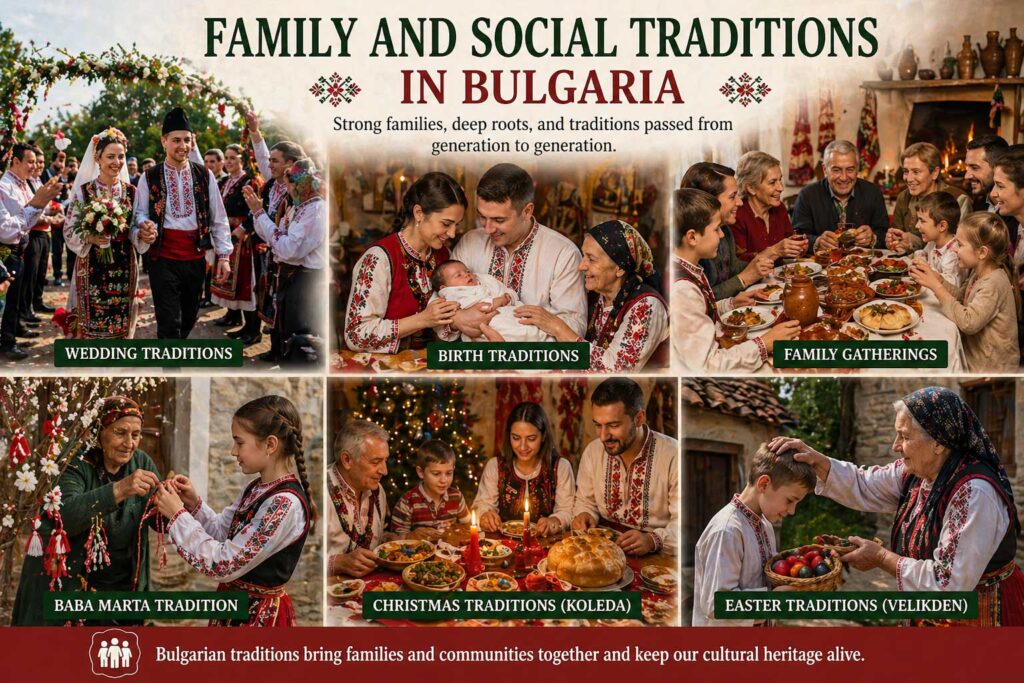
Bulgarian wedding traditions are among the richest and most symbolic in Europe, combining ancient rituals, Orthodox Christian ceremonies, and lively community celebrations. These weddings are not just events—they are deeply meaningful cultural experiences that reflect family values, unity, and the beginning of a new life together.
Across Bulgaria, many of these traditions are still practiced today, especially in traditional and rural settings.
Bread Ritual (Symbol of Leadership & Unity)
- Bread is held above the couple’s heads
- The bride and groom each break a piece
- The larger piece = symbolic household leader
👉 Represents balance, partnership, and shared responsibility
Honey Ritual (Sweet Life Together)
- Couple feeds each other honey
- Symbolizes:
- Sweet life
- Harmony
- Love
👉 Simple ritual, strong meaning
Crown Ceremony (Orthodox Tradition)
- Bride and groom wear ceremonial crowns
- Symbolizes:
- Honor
- Spiritual unity
- Creation of a new family
👉 Core Orthodox wedding ritual
Celebration & Horo Dancing
- Large gatherings with family and friends
- Traditional music and live bands
- Hours of horo dancing
👉 Represents community, joy, and unity
Cultural Meaning
Bulgarian weddings represent:
- Union of two families
- Continuation of tradition
- Community participation
👉 A perfect example of how Bulgarian traditions blend ancient and modern life
Birth Traditions in Bulgaria
Birth traditions in Bulgaria are deeply symbolic and focused on protection, health, and a prosperous future. These customs reflect some of the oldest Bulgarian traditions, combining ancient beliefs with strong family-centered rituals.
Across Bulgaria, these practices are still widely followed today.
Protection from the Evil Eye
- Red thread tied around baby’s wrist
- Sometimes includes charm or bead
- Protects from:
- Negative energy
- Envy
👉 One of the most common Bulgarian customs
Ritual Bread (Pogacha Ceremony)
- Held weeks after birth
- Family and close friends gather
- Bread is blessed and broken above the baby
👉 Symbolizes health, protection, and community support
Blessings for the Baby’s Future
- Elder women give blessings
- Guests bring symbolic gifts
- Wishes focus on:
- Health
- Happiness
- Prosperity
👉 Reflects strong family values in Bulgarian traditions
Cultural Meaning
Birth traditions emphasize:
- Protection from unseen forces
- Importance of family
- Hope for the child’s future
👉 These rituals show how Bulgarian traditions remain deeply rooted in everyday life
Funeral and Memorial Traditions
Funeral and memorial traditions in Bulgaria are deeply spiritual and symbolic, reflecting a strong belief in the soul’s journey and the continued connection between the living and the deceased. As one of the most meaningful Bulgarian traditions, these customs combine Orthodox Christian rituals with older cultural beliefs about remembrance, respect, and the afterlife.
Across Bulgaria, these traditions are still widely observed, especially within families that maintain strong ties to heritage and religion.
The Funeral Ritual
Bulgarian funerals are typically held in an Orthodox Christian context:
- Services take place in a church or at the gravesite
- Priests lead prayers, incense rituals, and blessings
- Candles are lit to symbolize the soul’s light and eternal life
👉 The ceremony emphasizes respect, humility, and spiritual transition
Memorial Days (3rd, 9th, 40th Day)
One of the most important parts of Bulgarian memorial traditions is the series of remembrance days:
- 3rd day → honors the soul’s initial departure
- 9th day → symbolizes spiritual transition
- 40th day → marks the soul’s journey to the afterlife
👉 The 40th day is especially significant and widely observed.
Ritual Foods and Offerings
Food plays a symbolic role in remembrance:
- Koliva (boiled wheat) → symbolizes resurrection and eternal life
- Bread and wine → shared among family and community
- Food is often distributed to others in memory of the deceased
👉 Sharing food represents continuity, remembrance, and community support
Zadushnitsa (Days of the Dead)
Several times a year, Bulgarians observe Zadushnitsa—special memorial days dedicated to honoring the dead:
- Families visit cemeteries
- Clean graves and bring flowers
- Light candles and offer food
👉 These rituals maintain a strong connection between generations
Cultural and Spiritual Meaning
Funeral traditions in Bulgaria reflect:
- Belief in the soul’s continued journey
- Respect for ancestors and family lineage
- The importance of remembrance
👉 Like many Bulgarian traditions, these customs blend Christian beliefs with ancient cultural practices.
👉 Explore deeper cultural roots: Bulgarian Folklore and Traditions.
Funeral and memorial customs remain one of the most meaningful Bulgarian traditions, preserving spiritual beliefs, family connections, and respect for past generations.
Memorial & Spiritual Essentials
| Product | Best For | Why It’s Useful | Check Price |
|---|---|---|---|
| Beeswax Candles (Natural) | Memorials | Used in traditional remembrance rituals | Check Price |
| Incense Set (Orthodox Style) | Spiritual Practice | Used in religious ceremonies and memorials | Check Price |
| Prayer Book (Orthodox Christian) | Reflection | Supports traditional prayer and remembrance | Check Price |
Bulgarian Food Traditions and Customs
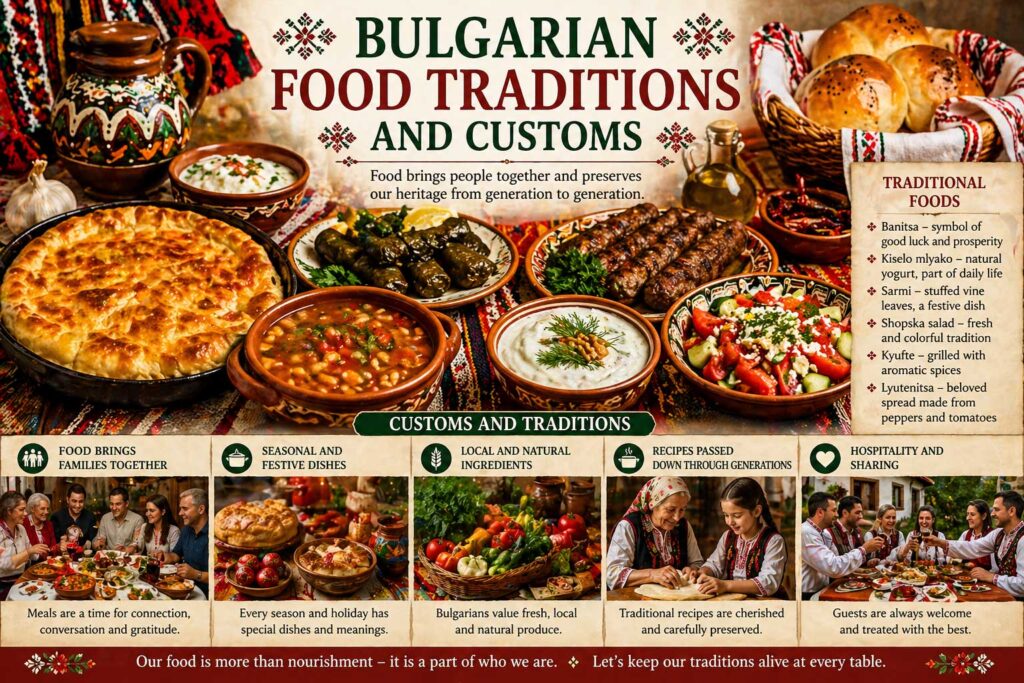
Food is at the heart of Bulgarian traditions, serving as a powerful expression of culture, identity, and community. More than just nourishment, meals in Bulgaria are deeply symbolic—linked to family gatherings, religious holidays, and seasonal cycles.
Many Bulgarian food traditions have remained unchanged for generations, preserving ancient practices while continuing to play a central role in modern life.
Bread as a Sacred Symbol
Bread holds a special place in Bulgarian customs and traditions:
- Bread is often blessed and shared during important events
- Special ritual breads are made for:
- Weddings
- Birth celebrations
- Holidays
- Breaking bread symbolizes:
- Unity
- Hospitality
- Prosperity
👉 In Bulgarian culture, bread is not just food—it is a symbol of life and connection
Traditional Foods and Cultural Identity
Some of the most iconic foods tied to Bulgarian traditions include:
- Banitsa → layered pastry with cheese, often eaten during holidays
- Shopska salad → fresh vegetables with white cheese
- Lyutenitsa → traditional pepper and tomato spread
- Kiselo mlyako (Bulgarian yogurt) → globally recognized probiotic food
👉 These dishes reflect simplicity, freshness, and strong regional identity.
Rakia and Social Rituals
No discussion of Bulgarian food traditions is complete without rakia:
- Traditional fruit brandy served before meals
- Always shared during gatherings
- Often paired with small dishes (meze)
👉 Drinking rakia is a social ritual, symbolizing friendship and hospitality.
Hospitality and Shared Meals
Hospitality is a core value in Bulgarian traditions:
- Guests are always welcomed with food
- Tables are often filled with multiple dishes
- Refusing food can be seen as impolite
👉 Sharing meals is one of the strongest ways Bulgarians express respect and connection
Seasonal and Ritual Foods
Many Bulgarian food traditions follow the rhythm of the year:
- Spring → fresh greens and dairy
- Summer → vegetables, fruits, and preservation
- Autumn → harvest foods and wine
- Winter → hearty dishes and preserved foods
👉 Food reflects the natural cycle of life and seasons.
Bring Bulgarian Traditions to Your Kitchen
👉 Want to experience authentic Bulgarian traditions at home? These essential ingredients and tools help recreate traditional flavors and cultural dishes.
Top Bulgarian Food Products & Cooking Essentials
Tip: Bulgarian yogurt is famous worldwide for its unique probiotic strains.
| Product | Best For | Why It’s Useful | Check Price |
|---|---|---|---|
| Bulgarian Yogurt Starter Culture | Health | Create authentic probiotic yogurt at home | Check Price |
| Lyutenitsa (Bulgarian Pepper Spread) | Cooking | Traditional spread used in many Bulgarian dishes | Check Price |
| Feta Cheese (Bulgarian Style) | Recipes | Key ingredient in banitsa and salads | Check Price |
| Rakia Glass Set | Drinks | Traditional way to enjoy Bulgarian spirits | Check Price |
| Cast Iron Skillet | Cooking | Perfect for traditional Balkan-style dishes | Check Price |
Bulgarian cuisine is one of the easiest ways to experience Bulgarian traditions at home. From homemade yogurt to traditional spreads like lyutenitsa, these products bring authentic Balkan flavors directly to your kitchen.
👉 Many of these foods are staples in Bulgarian households and are still prepared using traditional methods passed down for generations.
👉 Explore more: Bulgarian Cuisine: Complete Food Guide.
Bulgarian food traditions reflect a deep connection between culture, family, and seasonal living, making them one of the most important aspects of Bulgarian heritage.
Bulgarian Folk Traditions and Dance
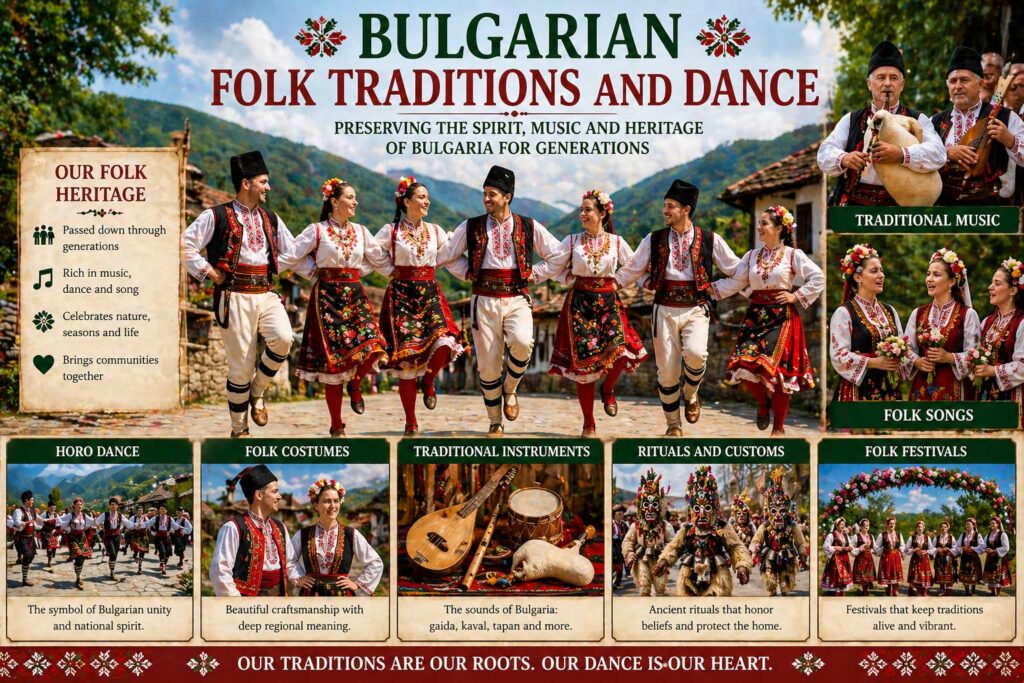
Bulgarian folk traditions and dance are among the most vibrant expressions of Bulgarian traditions, preserving centuries of history through music, movement, and costume. Unlike staged performances, these traditions are still actively practiced in everyday life—at weddings, festivals, village gatherings, and national celebrations across Bulgaria.
Rooted in ancient rituals and community life, Bulgarian folklore reflects identity, unity, and the rhythm of the seasons.
The Role of Music in Bulgarian Traditions
Music is central to Bulgarian cultural traditions:
- Live instruments often accompany dances
- Common instruments include:
- Gaida (bagpipe)
- Kaval (flute)
- Tapan (drum)
- Songs often tell stories about:
- Love
- Nature
- History
- Daily life
👉 Bulgarian folk music is known for its unique rhythms and complex time signatures, making it distinct worldwide.
Traditional Costumes (Nosii)
Traditional clothing plays a major role in Bulgarian traditions:
- Rich embroidery with symbolic patterns
- Bright colors representing regions and meanings
- Handcrafted designs passed down through generations
👉 Each region in Bulgaria has its own distinct costume style, reflecting local identity.
The Horo Dance (National Dance)
The most famous element of Bulgarian folk traditions is the horo dance:
- Performed in circles or lines
- Dancers hold hands or belts
- Everyone can join—no experience needed
👉 The horo is not just a dance—it is a symbol of unity and community
Cultural and Social Importance
Folk traditions in Bulgaria serve many purposes:
- Preserve history and identity
- Strengthen community bonds
- Connect generations
- Celebrate important life events
👉 These traditions are not limited to rural areas—they are still widely practiced in modern cities.
Ancient Roots and Continuity
Many Bulgarian folk traditions originate from:
- Pre-Christian rituals
- Agricultural ceremonies
- Seasonal celebrations
Over time, they evolved but were never lost.
👉 This continuity is one of the strongest reasons why Bulgarian traditions remain so authentic today
Experience Bulgarian Folk Culture at Home
👉 Want to bring Bulgarian music and dance into your home? These products help you explore authentic folklore traditions and sounds.
Bulgarian Folk Music & Culture Essentials
| Product | Best For | Why It’s Useful | Check Price |
|---|---|---|---|
| Bulgarian Folk Music CD / Playlist | Music | Experience authentic traditional rhythms and songs | Check Price |
| Traditional Dance Instruction DVD / Course | Learning | Learn horo and other Bulgarian dances at home | Check Price |
| Bulgarian Bagpipe (Gaida Instrument) | Instrument | Iconic instrument used in traditional music | Check Price |
| Embroidery Pattern Book (Bulgarian Designs) | Craft | Inspired by traditional costume patterns | Check Price |
Bulgarian folk traditions are one of the most accessible ways to experience Bulgarian traditions beyond travel. Music, dance, and crafts allow you to connect with the culture in a hands-on and meaningful way.
👉 Many people around the world now learn horo and explore Bulgarian folklore as part of cultural appreciation.
👉 Learn more: Bulgarian Folklore and Traditions.
Bulgarian folk traditions and dance preserve cultural identity through music, movement, and community, making them one of the most dynamic parts of Bulgarian heritage.
Horo Dance: The National Dance of Bulgaria
The horo dance is the most iconic expression of Bulgarian traditions, often called the national dance of Bulgaria. Performed in open circles or lines, horo brings people together through synchronized steps, music, and shared energy—making it a powerful symbol of unity and community.
Unlike many traditional dances, horo is not reserved for professionals. It is a participatory dance that anyone can join, whether at weddings, festivals, village squares, or public celebrations.
What Makes Horo Unique
- Danced in circles or curved lines
- Participants hold hands, belts, or shoulders
- Steps vary by region and rhythm
- Led by a dancer at the front of the line
👉 The structure itself represents connection, continuity, and collective identity
Music and Rhythm
Horo is performed to traditional Bulgarian folk music, known for its:
- Complex rhythms (such as 7/8, 9/8, 11/8 time signatures)
- Live instruments like:
- Gaida (bagpipe)
- Kaval (flute)
- Tapan (drum)
👉 These rhythms give Bulgarian dance its distinct and energetic character
Regional Variations
Different regions of Bulgaria have their own styles of horo:
- Pravo horo → simple and widely known
- Rachenitsa → more complex rhythm (7/8)
- Daichovo horo → lively and energetic
👉 Each variation reflects local identity and tradition.
Cultural Importance
Horo is more than just a dance—it is a central part of Bulgarian traditions:
- Performed at weddings and celebrations
- Brings together all generations
- Encourages participation and inclusion
👉 It represents unity, joy, and shared cultural identity
Ancient Roots
The origins of horo can be traced back to:
- Ancient Thracian rituals
- Community ceremonies
- Seasonal celebrations
👉 Over centuries, it evolved but remained a living tradition
Learn Bulgarian Dance at Home
👉 Want to experience horo yourself? These tools and resources help you learn and enjoy Bulgarian dance from anywhere.
Learn Bulgarian Dance & Music
| Product | Best For | Why It’s Useful | Check Price |
|---|---|---|---|
| Bulgarian Folk Dance Tutorial Course | Learning | Step-by-step guidance for horo and traditional dances | Check Price |
| Bulgarian Folk Music Collection | Music | Authentic songs used for horo dancing | Check Price |
| Portable Bluetooth Speaker | Practice | Play music anywhere for dance practice | Check Price |
The horo dance is one of the easiest Bulgarian traditions to experience anywhere in the world. With just music and a few steps, you can join a tradition that has connected communities for centuries.
👉 Many people start learning horo as a fun cultural activity and quickly discover its deeper meaning and sense of connection.
👉 Explore more: Bulgarian Folklore and Traditions
The horo dance is one of the most recognizable Bulgarian traditions, symbolizing unity, culture, and the enduring spirit of Bulgarian community life.
Seasonal Bulgarian Traditions
Seasonal Bulgarian traditions follow the natural rhythm of the year, reflecting a deep connection between people, nature, and cultural identity. Across Bulgaria, many traditions are tied directly to seasonal changes—marking transitions such as winter to spring, harvest cycles, and spiritual renewal.
Unlike modern holidays that are often fixed and commercialized, these Bulgarian traditions remain closely linked to agriculture, climate, and ancient beliefs about life cycles.
Spring Traditions in Bulgaria
Spring is one of the most symbolically rich seasons:
- Baba Marta (Martenitsa) → marks the arrival of spring and renewal
- Easter (Velikden) → celebrates rebirth and spiritual renewal
- Nature-based rituals → tied to growth, fertility, and new beginnings
👉 Spring traditions focus on health, renewal, and the start of a new cycle
Summer Traditions and Festivals
Summer is a time of celebration and abundance:
- Rose harvesting festivals in the Rose Valley
- Folk festivals and outdoor gatherings
- Agricultural celebrations tied to growth and prosperity
👉 Summer traditions highlight abundance, beauty, and community celebration
Autumn Traditions and Harvest Customs
Autumn reflects gratitude and preparation:
- Grape harvest and wine-making traditions
- Preservation of foods (pickling, drying, storing)
- Harvest festivals celebrating the year’s yield
👉 Autumn traditions are centered on gratitude, preparation, and sustainability
Winter Traditions and Rituals
Winter is one of the most ritual-rich periods in Bulgarian traditions, centered around protection, renewal, and the transition into a new year. Across Bulgaria, winter customs combine ancient beliefs, community rituals, and religious celebrations that remain deeply meaningful today.New Year Traditions (Surva & Survakari)
One of the most unique winter customs is the Survakari tradition, celebrated around New Year:
- Children called survakari visit homes early in the morning
- They carry decorated sticks known as survachki
- Lightly tap people on the back while offering blessings
Typical blessings include wishes for:
- Health
- Prosperity
- Success in the coming year
👉 In return, they receive sweets, money, or small gifts—reinforcing community bonds and cultural continuity.
Kukeri Rituals (Late Winter Festivals)
During late winter, one of the most dramatic Bulgarian traditions takes place:
- Kukeri wear elaborate masks and costumes
- Perform ritual dances with loud bells
- Move through villages to drive away evil spirits
👉 These rituals symbolize the end of winter and the beginning of renewal
Symbolism of Winter Traditions
Winter traditions in Bulgaria focus on:
- Protection from negative forces
- Spiritual cleansing
- Preparation for a new cycle
👉 They reflect a deep belief that winter is not an end—but a transition toward renewal, growth, and new beginnings.
Winter is one of the most important seasons for Bulgarian traditions, bringing together rituals, celebrations, and customs centered on protection, renewal, and community.
Cultural Meaning of Seasonal Traditions
Seasonal traditions in Bulgaria reflect:
- The cycle of life (birth → growth → harvest → renewal)
- A strong connection to nature
- The blending of ancient rituals with modern celebrations
👉 These traditions show how deeply Bulgarian traditions are connected to both the environment and cultural identity.
👉 Explore seasonal festivals: Bulgarian Festivals Guide.
Seasonal Bulgarian traditions reflect the natural cycle of life, connecting cultural practices with nature, agriculture, and spiritual renewal.
Many of these celebrations are part of Bulgarian holiday traditions tied to the natural calendar.
Bulgarian Superstitions and Beliefs
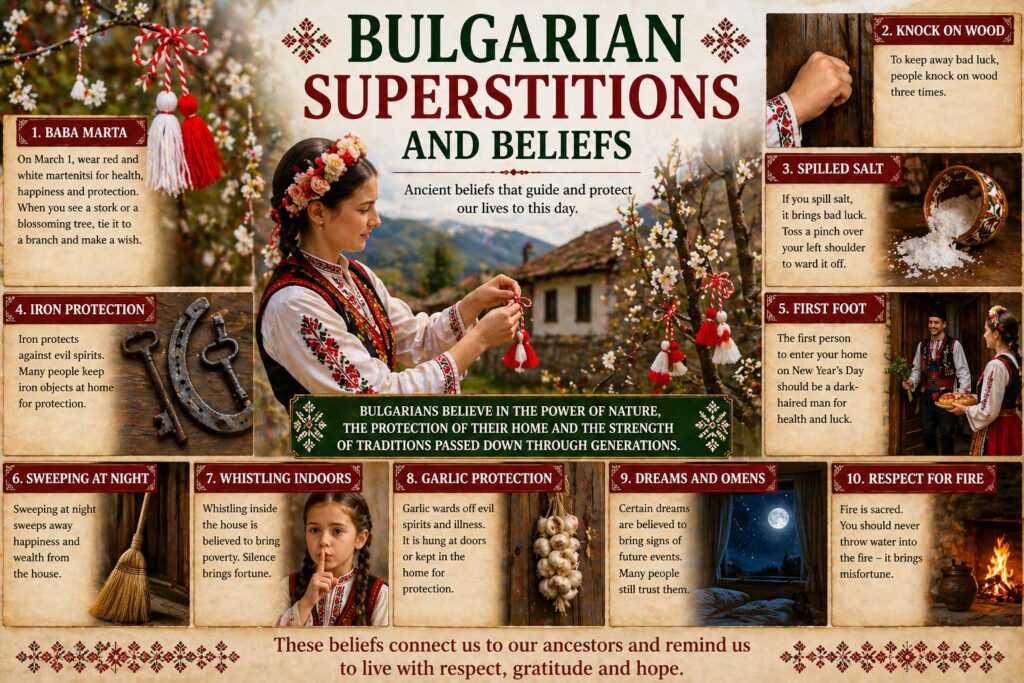
Bulgarian superstitions and beliefs are an essential layer of Bulgarian traditions, reflecting a worldview where unseen forces, luck, and symbolic actions influence everyday life. Rooted in ancient pagan practices and later shaped by Slavic folklore and Orthodox Christianity, these customs continue to be widely followed across Bulgaria.
Unlike many cultures where superstitions are fading, in Bulgaria they remain a natural part of daily behavior—often practiced automatically, even by younger generations.
Protection from the Evil Eye
One of the most common Bulgarian beliefs:
- Wearing a red thread bracelet on the wrist
- Sometimes combined with a small charm or bead
- Believed to protect against:
- Envy
- Negative energy
- The “evil eye”
👉 This is one of the most recognizable Bulgarian traditions, used by people of all ages.
Spilling Water for Good Luck
Before someone leaves for an important event:
- Water is poured behind them
- Symbolizes:
- Smooth journey
- Success
- Positive outcomes
👉 A simple ritual believed to influence future events.
Knocking on Wood
A widely practiced custom:
- People knock on wood after saying something positive
- Intended to avoid bad luck
👉 Reflects the belief that words can attract unseen forces.
Not Whistling Indoors
A very common superstition:
- Whistling inside the home is avoided
- Said to:
- Drive money away
- Bring misfortune
👉 Still followed in many households today.
Breaking Objects for Good Luck
In certain situations:
- Breaking a glass or object can be seen as lucky
- Especially during celebrations
👉 Symbolizes the removal of negative energy.
Cultural Meaning
These Bulgarian superstitions and beliefs reveal a deeper cultural mindset:
- Respect for unseen forces
- Desire for protection and balance
- Connection between actions and outcomes
👉 Like many Bulgarian traditions, they blend ancient beliefs with modern life.
👉 Explore deeper roots: Bulgarian Folklore and Traditions
Many everyday behaviors are influenced by Bulgarian superstitions and beliefs, showing how ancient traditions continue to shape modern life in Bulgaria.
Protection & Cultural Symbol Items
| Product | Best For | Why It’s Useful | Check Price |
|---|---|---|---|
| Red String Bracelet (Evil Eye Protection) | Tradition | Inspired by traditional Bulgarian protection customs | Check Price |
| Evil Eye Charm Jewelry | Protection | Modern version of traditional protective symbols | Check Price |
| Incense & Spiritual Kit | Rituals | Used in cleansing and protective traditions | Check Price |
Many of these symbolic items are modern adaptations of ancient Bulgarian traditions, allowing people to connect with cultural beliefs while incorporating them into everyday life.
👉 These products are especially popular as meaningful gifts and cultural symbols.
Why Bulgarian Traditions Still Matter Today
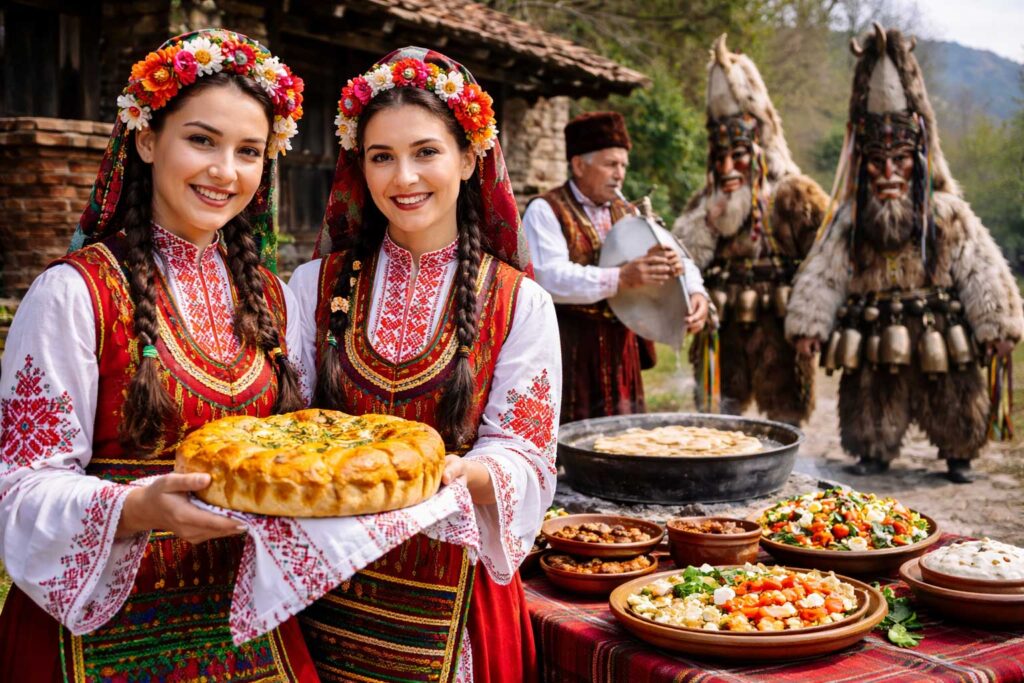
In a rapidly globalizing world, where many cultures are becoming increasingly uniform, Bulgarian traditions stand out as a powerful example of cultural continuity and resilience. Rather than fading into history, traditions in Bulgaria remain a meaningful part of everyday life—connecting past generations with the present.
A Strong Cultural Identity
One of the main reasons Bulgarian traditions still matter is their role in shaping national identity:
- They preserve a shared sense of history
- They reinforce cultural pride
- They connect people to their roots
👉 In many ways, traditions act as a living memory of the nation
Strengthening Family and Community
Bulgarian traditions are deeply tied to family life and community:
- Holidays bring families together
- Rituals are shared across generations
- Celebrations involve entire communities
👉 This strengthens social bonds and creates a strong sense of belonging.
Connection to Nature and Seasonal Cycles
Many Bulgarian cultural traditions follow the natural rhythm of the year:
- Spring → renewal (Baba Marta, Easter)
- Summer → abundance (harvest festivals)
- Autumn → gratitude (wine traditions)
- Winter → reflection (Christmas rituals)
👉 This connection to nature is something modern societies are increasingly rediscovering.
Preservation of Ancient Knowledge
Unlike many countries, Bulgaria has preserved traditions that date back thousands of years:
- Pre-Christian rituals still practiced today
- Symbolic customs tied to fertility, protection, and renewal
- Cultural knowledge passed down through generations
👉 These traditions act as a bridge between ancient civilizations and modern life
Cultural Value in a Globalized World
In today’s world:
- Many traditions are becoming commercialized
- Cultural differences are fading
But Bulgarian traditions remain:
- Authentic
- Community-driven
- Deeply meaningful
👉 This makes Bulgaria one of the few places where tradition is still truly lived, not just performed.
Why It Matters for the Future
Preserving Bulgarian traditions is not just about the past—it’s about the future:
- They teach values like respect, community, and continuity
- They offer a sense of identity in a fast-changing world
- They provide cultural richness for future generations
👉 Without traditions, culture loses its depth and meaning.
👉 Learn how traditions developed: History of Bulgaria.
Bulgarian traditions continue to matter today because they preserve cultural identity, strengthen communities, and connect modern life with centuries-old practices.
Deepen Your Knowledge of Bulgarian Culture
👉 Want to go deeper into Bulgarian traditions, history, and culture? These expert-recommended books provide valuable insight and cultural depth.
Top Books on Bulgarian Traditions & Culture
| Book | Best For | Why It’s Valuable | Check Price |
|---|---|---|---|
| Bulgarian Folklore and Traditions | Culture | In-depth exploration of rituals, customs, and beliefs | Check Price |
| The Bulgarians: From Pagan Times to the Ottoman Conquest | History | Deep historical context behind Bulgarian traditions | Check Price |
| Balkan Ghosts by Robert D. Kaplan | Regional Insight | Explores Balkan culture and historical influences | Check Price |
| Bulgarian Customs & Traditions Guide | Beginner | Accessible overview of everyday cultural practices | Check Price |
Understanding Bulgarian traditions goes beyond festivals and rituals—it requires exploring the deeper cultural and historical context behind them. These books offer valuable insight into how traditions developed and why they continue to shape Bulgarian identity today.
These events highlight the importance of Bulgarian festivals and traditions in preserving cultural identity.
👉 Many of these titles are recommended by historians, travelers, and cultural researchers interested in the Balkans.
FAQ About Bulgarian Traditions
What are Bulgarian traditions?
Bulgarian traditions are cultural customs that combine ancient pagan rituals, Slavic beliefs, and Orthodox Christian practices. They include seasonal celebrations, family rituals, folklore dances, and symbolic customs like Kukeri, Baba Marta, and traditional weddings that are still actively practiced today.
What is the most famous Bulgarian tradition?
The most famous Bulgarian traditions include Baba Marta (Martenitsa bracelets symbolizing spring and health) and the Kukeri festival, where masked dancers perform rituals to drive away evil spirits and bring good fortune.
Are Bulgarian traditions still practiced today?
Yes, Bulgarian traditions are still widely practiced today—especially in rural areas, small towns, and cultural festivals. Many customs, such as Easter rituals, Christmas traditions, and family celebrations, are also observed in modern urban life.
Why are Bulgarian traditions unique?
Bulgarian traditions are unique because they blend ancient pagan rituals with Orthodox Christianity and strong family-centered customs. This combination has been preserved for centuries, making Bulgaria one of the few countries where traditions remain an active part of daily life.
What are some examples of Bulgarian traditions?
Examples of Bulgarian traditions include:
- Kukeri masked rituals
- Baba Marta and Martenitsa bracelets
- Easter egg cracking
- Christmas Eve dinner customs
- Traditional Bulgarian weddings
When is the best time to experience Bulgarian traditions?
The best time to experience Bulgarian traditions is during major holidays and festivals:
- March (Baba Marta)
- Winter (Kukeri festivals)
- Spring (Easter)
- December (Christmas traditions)
Are Bulgarian traditions similar to other Balkan countries?
While some traditions are shared across the Balkans, Bulgarian traditions are unique in their specific rituals, symbols, and cultural meanings—especially customs like Kukeri and Martenitsa, which are strongly associated with Bulgaria.
What role does religion play in Bulgarian traditions?
Religion plays a major role in Bulgarian traditions, especially through Eastern Orthodox Christianity. Many traditions are tied to religious holidays, but often include older pagan elements that have been preserved over time.
Are Bulgarian traditions important today?
Yes, Bulgarian traditions remain an essential part of national identity. They help preserve cultural heritage, strengthen family bonds, and connect modern generations with their historical roots.
What are Bulgarian traditions?
Bulgarian traditions are a mix of ancient pagan rituals, Orthodox Christian customs, and family-centered practices that are still widely observed today through festivals, celebrations, and daily life.
Final Thoughts
Bulgarian traditions are among the strongest examples of cultural preservation in Europe, blending ancient rituals, religious customs, and everyday practices into a living cultural system. Unlike many modern societies where traditions have faded, traditions in Bulgaria remain deeply woven into daily life—from family gatherings and seasonal festivals to food, beliefs, and social customs.
These Bulgarian customs and traditions are more than history—they are a bridge between generations, connecting the past with the present in a way that few countries have managed to preserve.
In a rapidly modernizing world, Bulgarian traditions remain one of the strongest examples of cultural continuity in Europe.
👉 Understanding Bulgarian traditions means understanding Bulgaria itself—its identity, values, and enduring cultural spirit.
👉 Ready to experience these traditions yourself? Explore our guides to Bulgarian festivals, food, and culture—or bring them into your home with authentic products and experiences above.
References
- UNESCO Intangible Cultural Heritage. “Surova Folk Feast in the Pernik Region.” https://ich.unesco.org/en/RL/surova-folk-feast-in-pernik-region-00968
- UNESCO Intangible Cultural Heritage. “Cultural Practices Associated to the 1st of March.” https://ich.unesco.org/en/RL/cultural-practices-associated-to-the-1st-of-march-01287
- Encyclopaedia Britannica. “Bulgaria: Cultural Life.” https://www.britannica.com/place/Bulgaria/Cultural-life
- Encyclopaedia Britannica. “Bulgaria: Government and Society.” https://www.britannica.com/place/Bulgaria/Government-and-society