


Bulgaria is one of Europe’s oldest cultural regions, where ancient rituals continue to survive beneath the surface of modern life. While globalization has reshaped traditions worldwide, Bulgaria still preserves remarkable customs rooted in Thracian, Slavic, and Orthodox Christian heritage.
Many of these traditions date back thousands of years, making Bulgaria one of the oldest continuous cultural regions in Europe.
👉 To fully understand these traditions, it’s important to explore the deeper roots in History of Bulgaria and how they shaped modern identity.
These forgotten Bulgarian traditions that still exist are not entirely lost—they remain alive in rural villages, seasonal festivals, and family practices passed down through generations.
👉 These customs are also a key part of Bulgarian culture and identity, shaping how traditions are preserved even today.
What Are Forgotten Bulgarian Traditions?
Forgotten Bulgarian traditions that still exist are ancient customs, rituals, and cultural practices that are no longer widely practiced but still survive in certain regions, villages, or family traditions. These include rituals like Kukeri dances, fire dancing (Nestinarstvo), rain-calling ceremonies, and seasonal celebrations tied to agriculture, spirituality, and community life.
👉 Many of these rituals are explained in more detail in our guide to Bulgarian traditions and customs, where their origins and meanings are explored further.
Affiliate Disclosure: Some links on this page are affiliate links, which means we may earn a small commission at no extra cost to you if you make a purchase. These commissions help support our work in creating high-quality, in-depth cultural guides like this one. We only recommend products and services that are relevant, useful, and aligned with Bulgarian traditions and travel experiences.
Bulgarian Culture & Folklore
To better understand the meaning behind these ancient rituals, these recommended books provide deeper insight into Bulgarian folklore, symbolism, and cultural traditions.
| Product | Best For | Why It’s Useful | Rating | Check Price |
|---|---|---|---|---|
| Light Love Rituals: Bulgarian Myths, Legends, and Folklore | Beginner-friendly overview | Covers Bulgarian rituals, myths, and traditions like Kukeri and folklore beliefs | ⭐⭐⭐⭐☆ | Check Price |
| Bulgarian Folk Tales – Nana Tomova | Authentic storytelling | Traditional Bulgarian stories with cultural context and symbolism | ⭐⭐⭐⭐⭐ | Check Price |
| Slavic Folklore: A Handbook – Natalie Kononenko | Academic insight | Explains rituals, symbolism, and beliefs across Slavic cultures | ⭐⭐⭐⭐☆ | Check Price |
| The Oxford Handbook of Slavic and East European Folklore | Deep research / authority | Comprehensive academic resource for folklore and traditions (EEAT boost) | ⭐⭐⭐⭐☆ | Check Price |
Kukeri: Ancient Ritual to Drive Away Evil Spirits
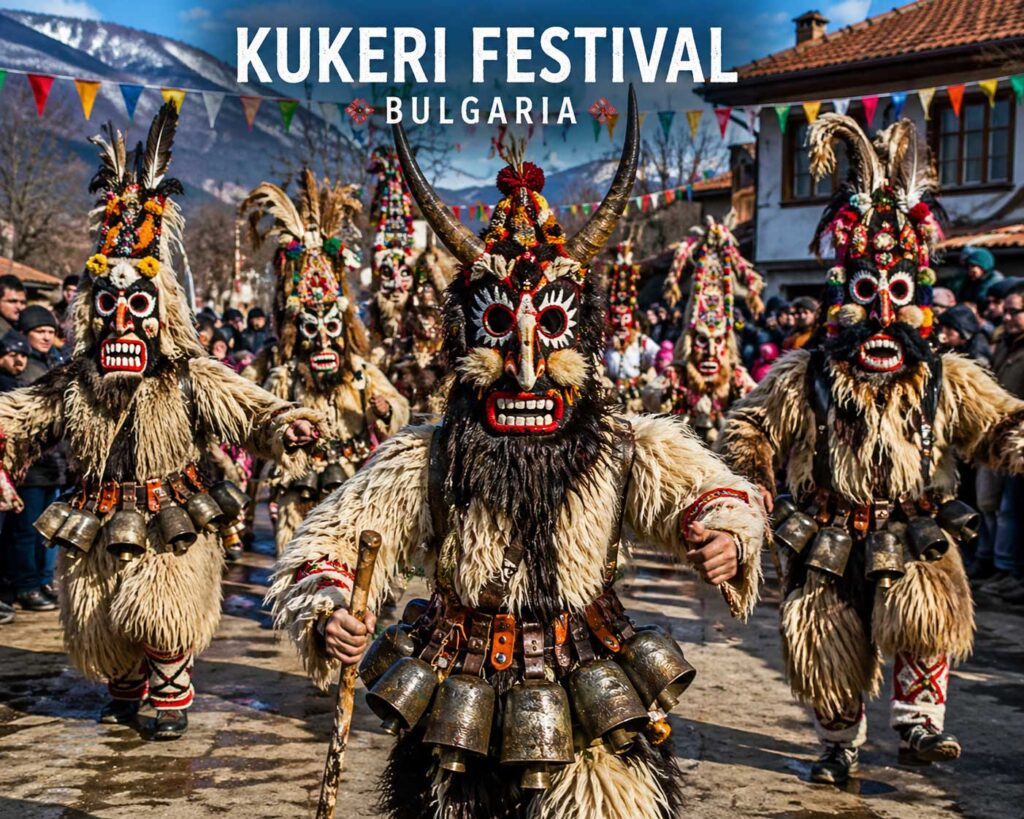
The Kukeri tradition is one of the most powerful surviving pagan rituals in Europe.
👉 These practices are closely connected to Bulgarian pagan traditions and beliefs, which influenced many early rituals.
Men dress in elaborate costumes made from:
- Animal skins
- Horned masks
- Heavy bells (up to 50kg)
They perform loud, rhythmic dances believed to:
- Drive away evil spirits
- Ensure fertility and harvest success
- Protect the village
Modern performances often take place at Surva Festival, but the original spiritual purpose is slowly fading. Festivals like Surva Festival, but in many places, it has shifted from sacred ritual to cultural performance.
Beyond their dramatic appearance, Kukeri rituals were deeply tied to agricultural survival. Villages depended on successful harvests, and these ceremonies were believed to influence not only the land but also the spiritual balance of the community. The loud bells, for example, were not just for spectacle—they symbolized the clearing of negative energy and the awakening of life forces.
In some regions, Kukeri performances also included symbolic marriages, fertility rites, and even comedic elements. This combination of ritual, performance, and storytelling made Kukeri one of the most complex cultural traditions in Bulgaria.
👉 Today, Kukeri remains one of the most recognizable parts of Bulgarian festivals and traditions, attracting both locals and visitors.
👉 Learn more about Bulgaria’s deeper roots in History of Bulgaria.
Nestinarstvo: Fire Dancing on Sacred Embers
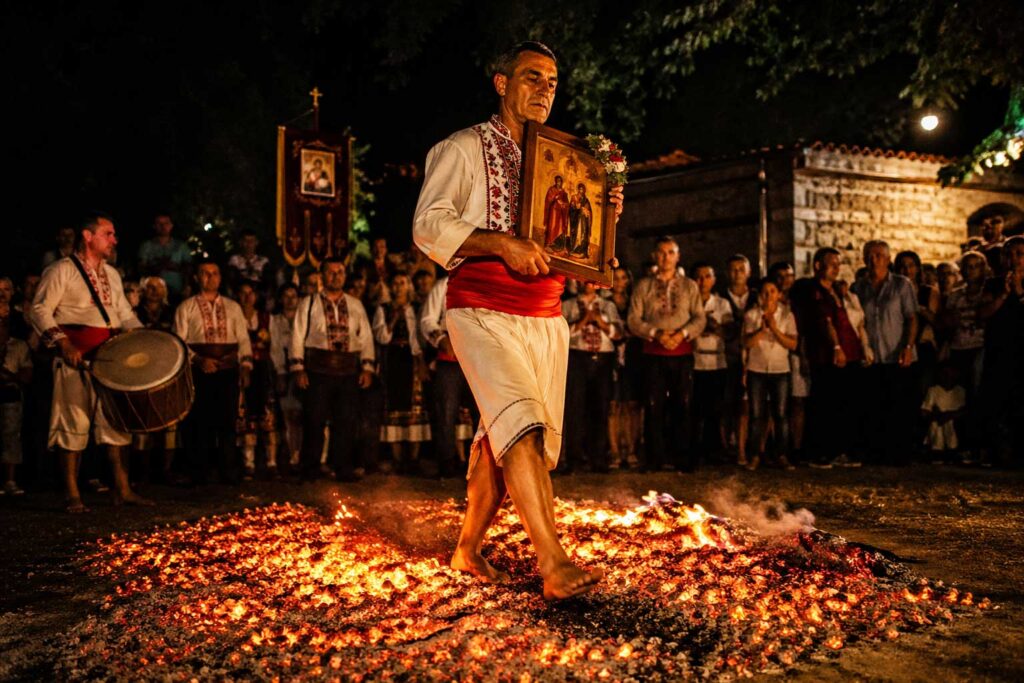
Nestinarstvo is one of Bulgaria’s most mystical traditions, involving barefoot dancing on glowing embers.
The fire itself plays a central symbolic role. It represents purification, transformation, and the boundary between the physical and spiritual worlds. Walking barefoot over embers is seen as a test of faith and connection rather than physical endurance.
Historically, Nestinarstvo was not performed for an audience—it was a deeply private and sacred act. The modern shift toward staged performances has helped preserve visibility, but it has also changed the meaning of the ritual.
Recognized by UNESCO, this ritual combines:
- Pagan beliefs
- Christian symbolism
- Spiritual trance states
👉 It is considered one of the most powerful examples of Bulgarian traditions and customs still practiced today.
Participants hold icons of Saints Constantine and Helena while dancing over fire, believed to bring:
- Healing
- Protection
- Spiritual cleansing
Today, authentic Nestinari are rare, and many performances are staged for tourism.
👉 This ritual is often grouped among the most unique Bulgarian spiritual rituals, reflecting deep connections between faith and nature.
Lazaruvane: The Forgotten Rite of Passage for Girls
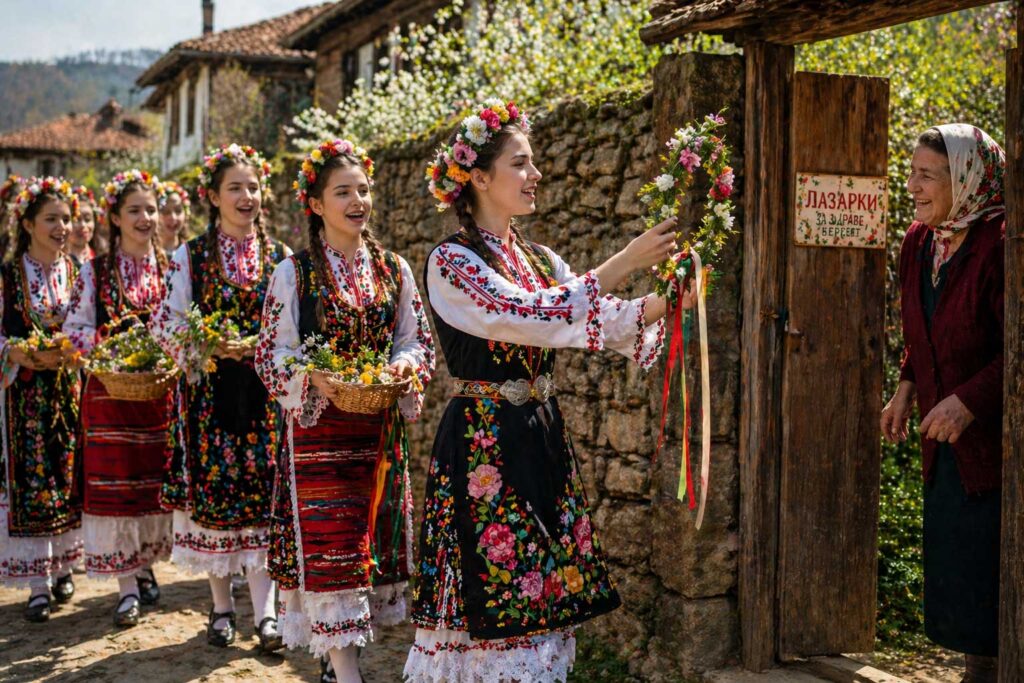
Lazaruvane was once a crucial coming-of-age ritual.
The songs performed during Lazaruvane were highly specific, often tailored to each household. They included blessings for health, fertility, and prosperity, making the ritual both personal and communal.
Participation was essential—girls who did not take part were often excluded from social recognition within the village. This highlights how traditions once played a direct role in shaping social structure.
👉 This connection between tradition and life stages is also seen in Bulgarian wedding traditions, where similar symbolic roles exist.
Young girls (lazarki) would:
- Dress in traditional clothing
- Visit homes singing blessings
- Wear flower crowns symbolizing fertility
This ritual marked:
- Transition into adulthood
- Eligibility for marriage
- Social recognition
Today, it survives mostly in folklore festivals rather than real community life.
👉 Traditions like this are an important part of Bulgarian family traditions, shaping social roles within communities.
German (Gherman): Rain-Calling Ceremony
The German ritual is one of the most unusual traditions.
The emotional intensity of the ritual is what makes it unique. The mourning was often exaggerated, almost theatrical, yet deeply symbolic. It reflected the seriousness of drought and the fear of losing crops and livelihood.
This ritual also demonstrates how ancient communities used symbolic actions to cope with uncertainty. In the absence of scientific understanding, ritual provided structure, hope, and a sense of control.
During drought:
- A clay or straw doll is created
- A symbolic funeral is held
- Villagers mourn and pray for rain
This ritual reflects:
- Deep agricultural dependence
- Spiritual connection to nature
- Community cooperation
It is now almost extinct, preserved only in ethnographic records and rare reenactments.
👉 This ritual highlights the importance of environment and agriculture, which you can explore further in Geography of Bulgaria.
👉 It also connects to older Bulgarian agriculture traditions, where survival depended on natural cycles.
Enyovden: The Day of Healing Herbs
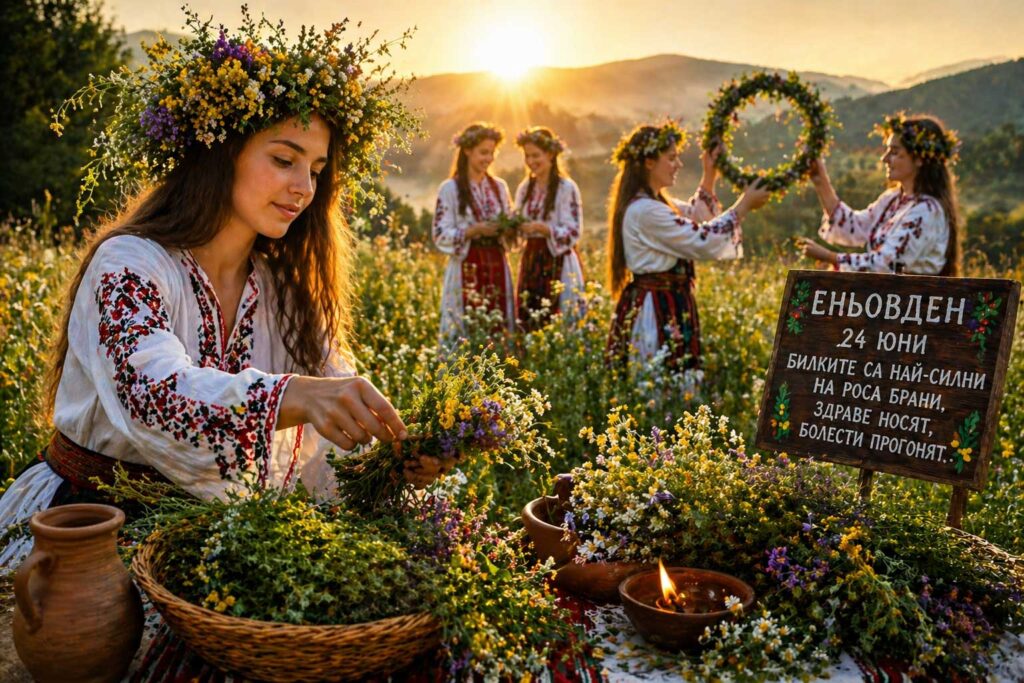
Celebrated on June 24, Enyovden is deeply tied to herbal medicine.
Many of the herbs collected during Enyovden are still used in traditional Bulgarian medicine today. These include chamomile, thyme, and St. John’s wort, all known for their healing properties.
The ritual also reflects a broader belief that nature reaches its peak power during midsummer. This connection between seasonal cycles and human health is a recurring theme in Bulgarian traditions.
👉 Many of these practices are still used in Bulgarian herbs and natural remedies, passed down through generations.
Associated with Saint John the Baptist, the day holds that:
- Herbs picked at sunrise have maximum power
- Rituals ensure health and protection
- Nature is at peak energy
This tradition still exists, but much of the detailed herbal knowledge has faded.
👉 These traditions also connect to Bulgarian superfoods and their health benefits, which continue to be valued today.
Herbal & Wellness Tools
Many of the herbal practices connected to Enyovden can still be experienced today using traditional tools and natural remedies inspired by Bulgarian healing traditions.
| Product | Best For | Why It’s Useful | Rating | Check Price |
|---|---|---|---|---|
| Herbal Tea Kit | Enyovden experience | Traditional herb preparation | ⭐⭐⭐⭐⭐ | Check Price |
| Essential Oils Set (Rose/Lavender) | Healing rituals | Inspired by Bulgarian traditions | ⭐⭐⭐⭐ | Check Price |
| Herbal Drying Rack | DIY herbs | Authentic traditional process | ⭐⭐⭐⭐⭐ | Check Price |
Survakane: New Year Blessing Ritual
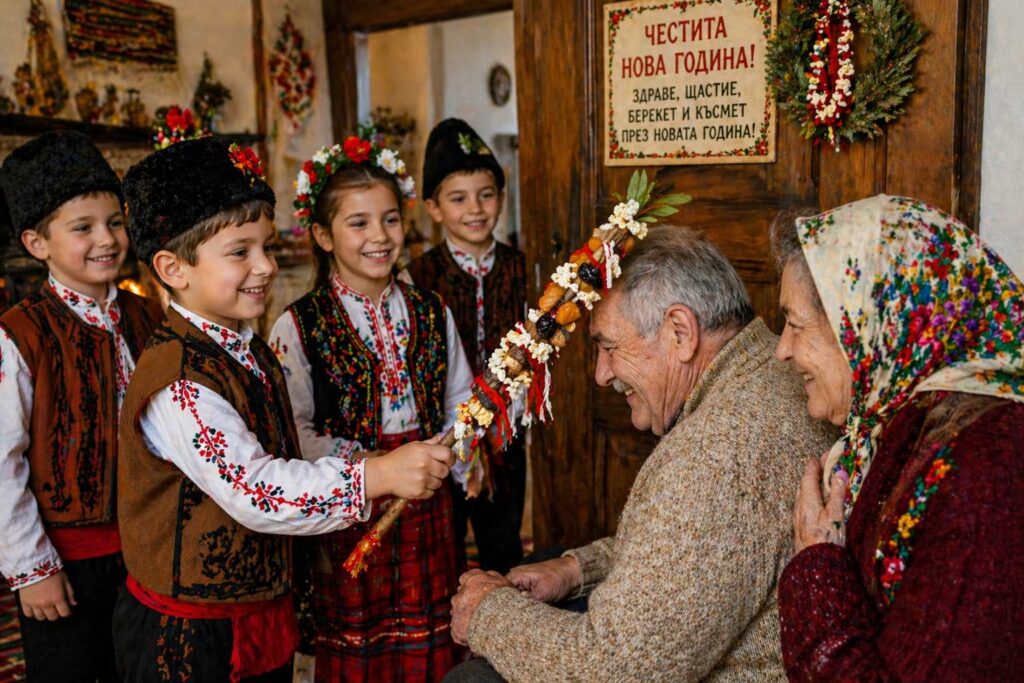
Survakane is still practiced but often misunderstood.
In traditional households, the blessings recited during Survakane were memorized and passed down through generations. Each phrase carried symbolic meaning tied to prosperity, livestock, crops, and family well-being.
Even today, receiving a Survakane blessing is considered a positive sign for the year ahead, showing how deeply rooted the tradition remains in Bulgarian culture.
Children use decorated sticks (survachki) to:
- Tap elders on the back
- Recite blessings
- Wish prosperity
Symbolizes:
- Respect
- Renewal
- Good fortune
While popular, its deeper meaning is often overlooked in modern times.
👉 The decorations and symbolism of the survachka are deeply tied to Bulgarian symbols and their meanings.
Zharava: The Nearly Lost Fire Ritual
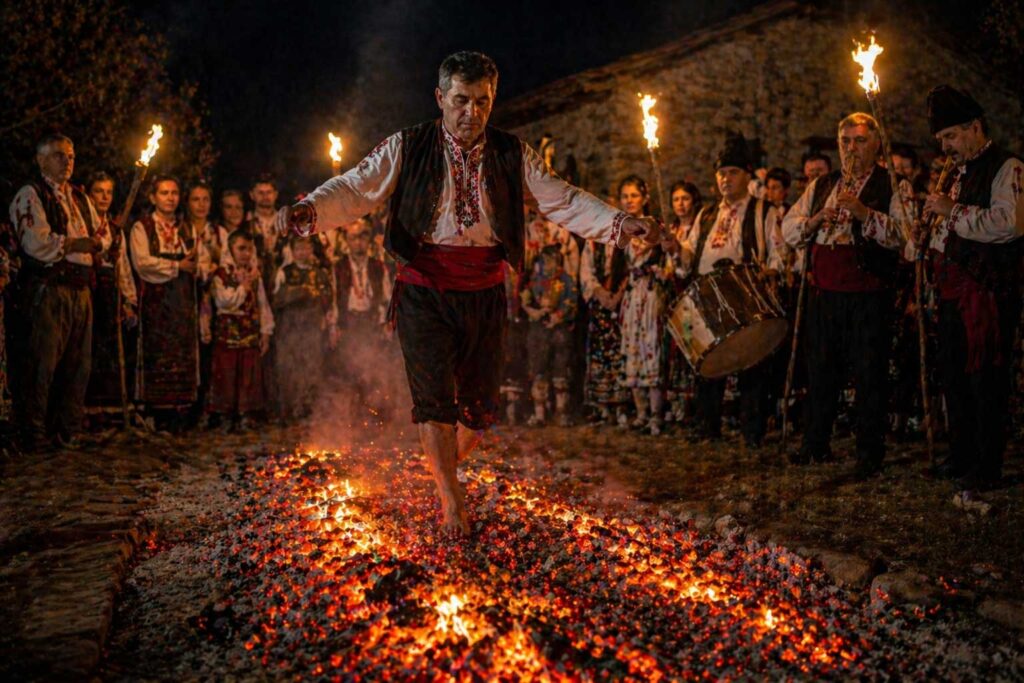
Zharava is a lesser-known ember-walking tradition separate from Nestinarstvo.
Unlike Nestinarstvo, Zharava was less structured and more communal. It was often part of larger celebrations, where participants would test their courage and endurance in front of the community.
This tradition highlights the human fascination with fire as both a destructive and purifying force—a theme seen across many ancient cultures.
It focused on:
- Courage
- Purification
- Community bonding
Today, it is almost entirely forgotten or merged with other rituals.
👉 Similar fire-based traditions can be found across Balkan traditions and customs, showing shared cultural roots.
Trifon Zarezan: Wine and Vine Ritual
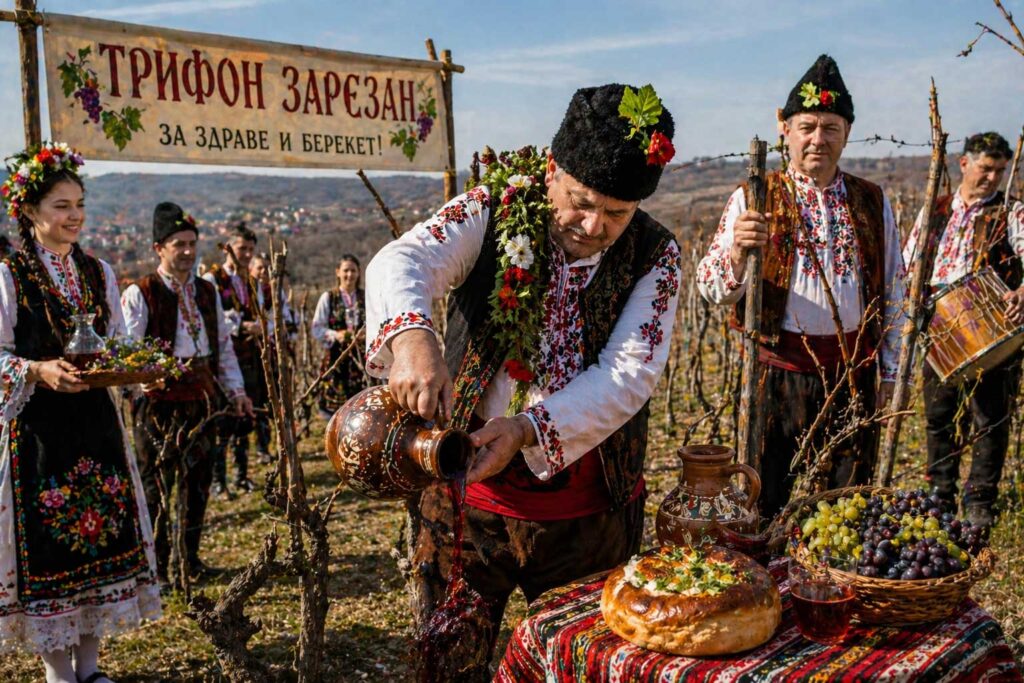
Celebrated on February 14, this tradition honors winemaking.
Wine has always played a central role in Bulgarian culture, not just as a drink but as a symbol of life, celebration, and connection to the land. The act of pouring wine over vines represents giving back to nature.
Even today, small family vineyards continue to honor these traditions, especially in rural areas where winemaking remains a personal craft.
Linked to Saint Tryphon, it includes:
- Vine pruning
- Wine blessings
- Selection of a “Vine King”
Though still celebrated, modern agriculture has reduced its everyday importance.
👉 This celebration is closely connected to Bulgarian drinks you must try, especially traditional wines and rakia.
Wine & Tradition Tools
If you want to experience Bulgaria’s wine traditions at home, these tools help recreate the rituals and enhance the cultural experience.
| Product | Best For | Why It’s Useful | Rating | Check Price |
|---|---|---|---|---|
| Wine Decanter Set | Trifon Zarezan | Enhances wine rituals | ⭐⭐⭐⭐⭐ | Check Price |
| Pruning Shears | Vineyard tradition | Symbolic experience | ⭐⭐⭐⭐ | Check Price |
| Wine Aerator | Wine culture | Improves flavor experience | ⭐⭐⭐⭐⭐ | Check Price |
How These Traditions Survive in Modern Bulgaria
While many traditions are no longer practiced in their original form, they continue to survive through festivals, tourism, and cultural preservation efforts across Bulgaria.
Local communities, schools, and cultural organizations play a key role in keeping these customs alive. Children learn traditional songs, dances, and rituals from a young age, ensuring that cultural knowledge is passed down to future generations rather than forgotten.
In many cases, traditions have been adapted to fit modern life. Rituals that were once deeply spiritual or tied to survival are now often performed during festivals, national celebrations, or cultural events. While this changes their original context, it also makes them more accessible and visible to a wider audience.
Tourism has also contributed to preservation. Events like Kukeri festivals and regional celebrations attract visitors from around the world, creating economic incentives for communities to maintain their traditions. At the same time, museums and ethnographic centers document and protect rituals that are no longer widely practiced.
👉 To understand how these traditions connect to everyday life, explore Bulgarian traditions and customs and their role in modern society.
Travel & Experience Gear
Planning to experience these traditions in person? These travel essentials will help you explore Bulgarian villages, festivals, and cultural sites comfortably.
| Product | Best For | Why It’s Useful | Rating | Check Price |
|---|---|---|---|---|
| Travel Backpack | Festivals & villages | Practical exploration gear | ⭐⭐⭐⭐⭐ | Check Price |
| DSLR Camera | Cultural photography | Capture traditions | ⭐⭐⭐⭐⭐ | Check Price |
| Portable Charger | Travel convenience | Long festival days | ⭐⭐⭐⭐ | Check Price |
The Role of Villages in Preserving Traditions
Rural villages are the heart of Bulgaria’s cultural preservation. Unlike cities, where modernization and globalization dominate daily life, villages maintain a much stronger connection to traditional customs, seasonal rhythms, and ancestral ways of living.
In these communities, traditions are not staged performances—they are part of everyday identity. Rituals such as Kukeri, Survakane, and seasonal celebrations are often practiced naturally within family and community settings, rather than only during organized festivals.
Generational continuity plays a key role. Knowledge is passed down informally—from grandparents to children—through storytelling, participation, and daily life. This organic transmission ensures that traditions remain authentic, even if they evolve over time.
Many villages also serve as cultural anchors, preserving dialects, music, clothing, and rituals that have disappeared elsewhere. Without these communities, much of Bulgaria’s intangible heritage would likely be lost.
👉 To better understand how these traditions shape everyday life, explore Bulgarian culture and identity and its roots in rural communities.
Why Some Traditions Are Disappearing
Despite ongoing preservation efforts, many Bulgarian traditions are gradually disappearing as society continues to modernize. While some customs have adapted to fit contemporary life, others have faded due to major social and economic changes.
Several key factors contribute to this decline:
- Urban migration – Younger generations are moving to cities or abroad, leaving villages with aging populations
- Generational disconnect – Traditional knowledge is not always passed down, especially when lifestyles change
- Lack of documentation – Many rituals were never formally recorded and exist only in oral tradition
As a result, some customs are now practiced only during festivals or have disappeared entirely from everyday life. Traditions that once played a practical role—such as ensuring harvest success or protecting communities—are no longer seen as necessary in a modern, technology-driven world.
However, this decline also highlights the importance of cultural preservation. Efforts by historians, educators, and local communities are essential in documenting and protecting what remains. Without these efforts, valuable parts of Bulgaria’s cultural identity could be lost over time.
👉 To understand why these traditions are still important today, explore Bulgarian traditions and customs and their role in shaping modern identity.
Why These Traditions Still Matter
These traditions are more than cultural artifacts—they are living expressions of Bulgaria’s identity, shaped over thousands of years.
They reveal:
- Bulgaria’s ancient Thracian roots
- The unique blend of pagan and Christian beliefs
- A deep connection to nature and seasonal cycles
- The importance of community, family, and shared rituals
Together, they form the foundation of Bulgarian culture and identity, connecting past and present.
Beyond their symbolic meaning, these customs also reflect how people once understood the world. Rituals were not just traditions—they were tools for survival, used to ensure health, fertility, protection, and successful harvests.
Even today, their influence can still be seen in everyday life, from holiday celebrations to food, music, and social customs. This continuity creates a powerful sense of identity, linking modern Bulgaria to its ancient past.
👉 Learn more about Bulgarian culture and identity in Why Bulgaria’s Culture Is So Unique.
FAQs About Forgotten Bulgarian Traditions
What are the oldest Bulgarian traditions?
Some of the oldest Bulgarian traditions include the Kukeri rituals, Nestinarstvo fire dancing, and agricultural ceremonies like the German (Gherman) rain ritual. Many of these date back to ancient Thracian times and were later influenced by Slavic and Christian beliefs.
How old are Bulgarian traditions?
Bulgarian traditions date back thousands of years, with roots in Thracian, Slavic, and early European civilizations, making them some of the oldest cultural practices in Europe.
Are Bulgarian traditions still practiced today?
Yes, many Bulgarian traditions are still practiced today, especially in rural areas and during cultural festivals. However, some have evolved into symbolic or staged performances rather than everyday rituals.
Why are Bulgarian traditions so unique?
Bulgarian traditions are unique because they combine Thracian, Slavic, and Orthodox Christian influences. This blend creates a rich cultural identity where ancient pagan rituals coexist with religious practices and seasonal customs.
What is the most famous Bulgarian ritual?
The Kukeri ritual is the most famous Bulgarian tradition due to its dramatic costumes, loud bells, and symbolic dances meant to drive away evil spirits and bring prosperity.
Is fire dancing real in Bulgaria?
Yes, fire dancing—known as Nestinarstvo—is a real and authentic Bulgarian ritual. It is still practiced in the Strandzha region and is recognized by UNESCO as intangible cultural heritage.
What Bulgarian traditions are almost extinct?
Some traditions that are nearly extinct include the German (Gherman) rain ritual and Zharava ember walking. These customs have largely disappeared due to modernization and the decline of traditional village life.
What is the purpose of Bulgarian rituals?
Most Bulgarian rituals were created to ensure health, fertility, protection, and successful harvests. They often reflect a deep connection between people, nature, and spiritual beliefs.
Where can you see Bulgarian traditions today?
You can experience Bulgarian traditions at festivals, cultural events, and in rural villages. Events like Kukeri festivals and seasonal celebrations offer the most authentic glimpse into these customs.
Final Thoughts
Bulgaria’s forgotten traditions are not truly gone—they have simply become quieter, surviving beneath the surface of modern life.
In villages, seasonal festivals, and family customs, these rituals continue to exist, carrying centuries of meaning, belief, and identity. They are living reminders that culture is not only defined by what is widely visible, but by what is carefully preserved, remembered, and passed from one generation to the next.
These traditions also reveal something deeper: a connection between people, nature, and spirituality that has endured despite modernization. Even as lifestyles change, the essence of these customs remains—adapted, but not erased.
👉 If you want to truly understand Bulgaria, look beyond the popular attractions and explore its Bulgarian traditions and customs—because this is where the real story of the country lives.
References
- UNESCO Intangible Cultural Heritage – Nestinarstvo
https://ich.unesco.org/en/RL/nestinarstvo-messages-from-the-past-panagyr-of-saints-constantine-and-helena-in-the-village-of-balgari-00191 - Bulgarian Academy of Sciences – Folk Traditions Research
https://www.bas.bg - Encyclopaedia Britannica – Bulgarian Culture
https://www.britannica.com/place/Bulgaria/Cultural-life - National Geographic – Balkan Traditions
https://www.nationalgeographic.com