


John Vincent Atanasoff is one of the most important figures in the history of modern technology—yet for decades, his contributions remained largely unrecognized. Today, he is widely acknowledged as the inventor of the first electronic digital computer, a revolutionary breakthrough that transformed science, engineering, and eventually everyday life.
In a time when most machines were mechanical and slow, Atanasoff introduced concepts that now define every modern computer: binary logic, electronic processing, and memory separation. His invention—the Atanasoff-Berry Computer (ABC)—laid the foundation for everything from smartphones and artificial intelligence to cloud computing and global networks.
To better understand the broader impact of innovators like John Vincent Atanasoff, explore our full guide on Bulgarian Scientists Who Changed the World, where you’ll discover how Bulgarian minds have shaped global science and technology.
👉 This article explores his life, invention, impact, and why his legacy is one of the most important in global scientific history.
Early Life and Bulgarian Roots
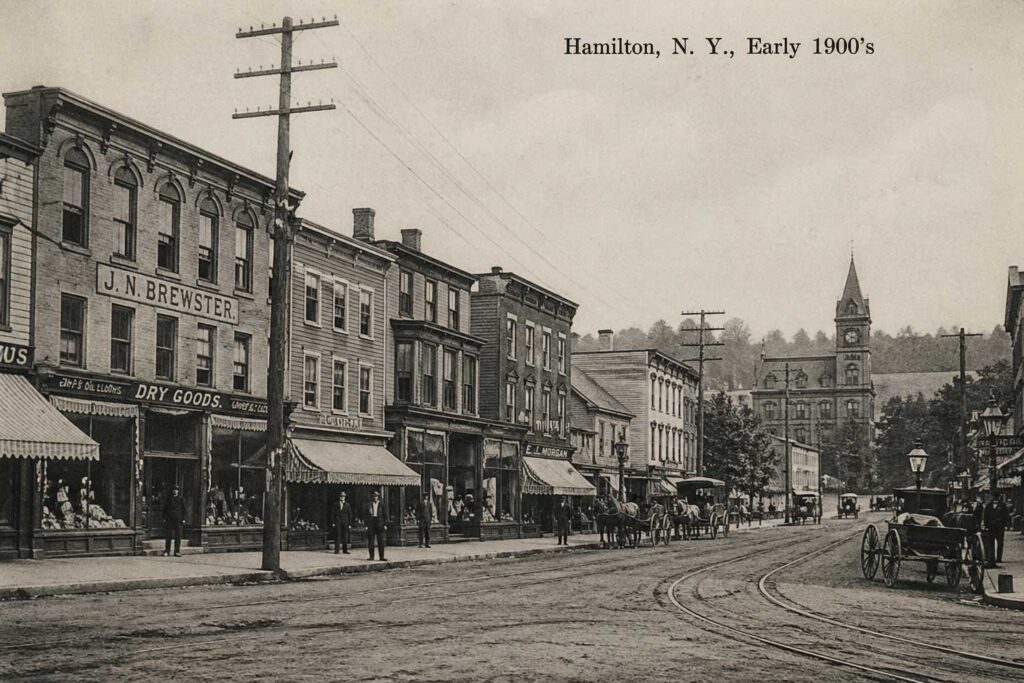
John Vincent Atanasoff was born on October 4, 1903, in Hamilton, New York. His father, Ivan Atanasov, was a Bulgarian immigrant who carried with him a strong cultural emphasis on education, discipline, and intellectual curiosity—values deeply rooted in Bulgarian tradition. This influence played a critical role in shaping Atanasoff’s mindset from an early age.
Growing up in a household where learning was highly valued, Atanasoff was encouraged to explore complex ideas beyond his years. His father, an electrical engineer, introduced him to the fundamentals of electricity and mechanical systems, sparking a fascination that would later define his career.
From a young age, Atanasoff demonstrated exceptional ability in mathematics and science. While other children focused on basic arithmetic, he was drawn to deeper questions—how numbers worked, how systems could be optimized, and how physical laws governed the world. This early intellectual curiosity set him apart and laid the groundwork for his future innovations.
Key Influences That Shaped His Genius
- Strong mathematical upbringing
Early exposure to advanced mathematics helped him develop analytical thinking and problem-solving skills far beyond his age. - Engineering and electrical influence from his father
Hands-on exposure to electrical systems gave him a practical understanding of how machines and circuits function. - Curiosity for solving complex problems
Rather than accepting limitations, Atanasoff constantly questioned how systems could be improved—especially in computation.
👉 These influences would ultimately lead him to confront one of the greatest scientific challenges of the 20th century:
how to dramatically improve the speed and efficiency of computation—a problem that would eventually lead to the invention of the first electronic digital computer.
The Problem That Sparked a Revolution
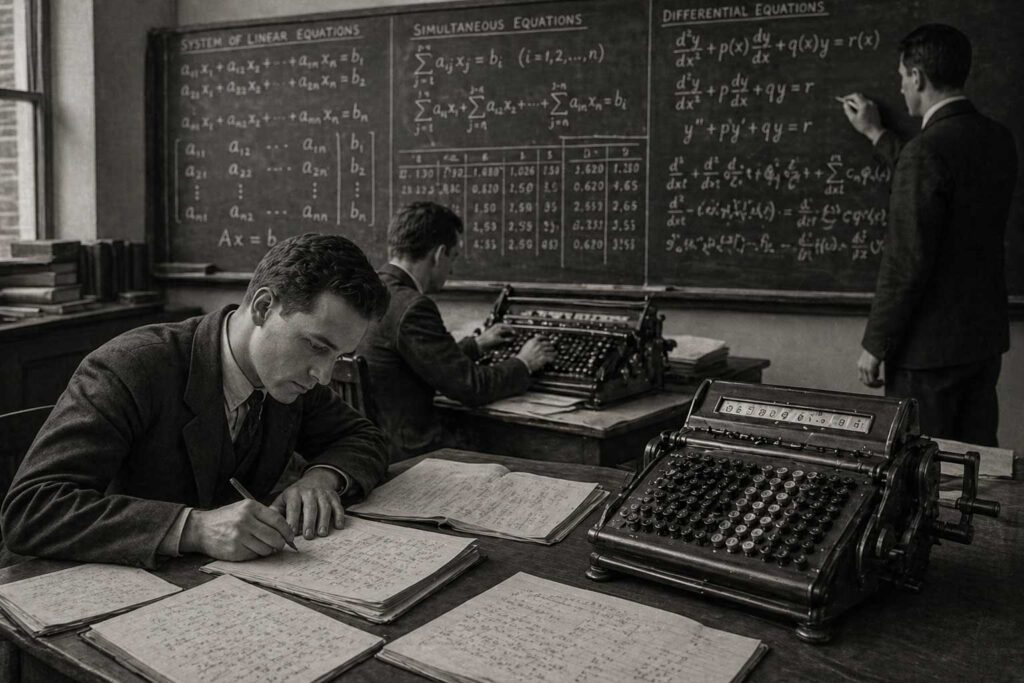
By the 1930s, the scientific world was advancing rapidly—but computation had become a major bottleneck. Researchers across physics, engineering, and mathematics were dealing with increasingly complex equations, yet the tools available to solve them had barely evolved.
At the time, most calculations were performed using mechanical calculators—devices filled with gears, levers, and rotating parts. While innovative for their era, these machines had serious limitations:
- Complex equations could take days or even weeks to solve
- Human intervention was constant, increasing the risk of errors
- Mechanical wear and limitations reduced reliability and speed
- Large datasets were nearly impossible to process efficiently
For scientists working on advanced problems—such as differential equations and systems of linear equations—this created a frustrating barrier to progress.
John Vincent Atanasoff, then a professor of physics at Iowa State College, encountered these challenges firsthand. His work required solving large systems of equations, and he quickly realized that existing machines were not just inefficient—they were fundamentally limited by their design.
The Core Problem
Atanasoff identified two critical flaws in traditional computing methods:
- Dependence on decimal systems (base-10), which complicated calculations
- Reliance on mechanical components, which slowed down processing and increased failure rates
Instead of trying to improve these machines incrementally, he took a radically different approach.
👉 He stepped back and reimagined the entire concept of computation.
The Breakthrough Question
Rather than asking how to make mechanical calculators better, Atanasoff asked a deeper, more transformative question:
“What if we built a machine based entirely on electronics?”
This idea was revolutionary.
At a time when electronics were still in their infancy, proposing a fully electronic computing system meant abandoning centuries of mechanical tradition. But this single insight would lead to one of the most important inventions in human history—the first electronic digital computer.
This moment marked the beginning of the transition from mechanical calculation to electronic computing, a shift that would ultimately power the modern digital world.
The Birth of the First Computer
Between 1937 and 1942, John Vincent Atanasoff began developing a revolutionary idea that would change the world forever.
Working at Iowa State College, he sought to solve one of the biggest challenges of his time—how to dramatically improve the speed and efficiency of computation.
👉 This effort led to the creation of the first electronic digital computer.
The Atanasoff-Berry Computer (ABC)
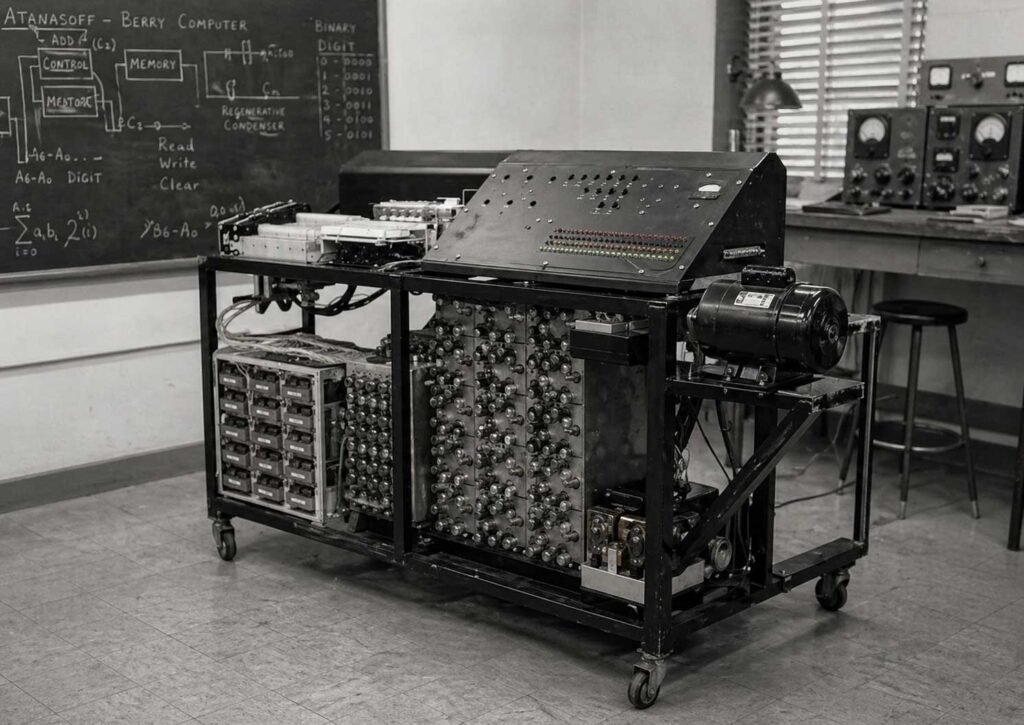
Between 1937 and 1942, John Vincent Atanasoff, together with his graduate student Clifford Berry, developed the Atanasoff-Berry Computer (ABC)—a machine that would fundamentally change the course of technological history.
At a time when most “computers” were mechanical devices operated by hand, the ABC introduced an entirely new paradigm. Instead of relying on gears and manual input, it used electronic components and binary logic, allowing it to solve complex equations far more efficiently.
👉 This was the first machine to implement the core principles that define modern digital computing.
The development of the ABC is a key milestone in Bulgarian Science and Technology History, highlighting the country’s long-standing contributions to global innovation.
Revolutionary Innovations Introduced by the ABC
1. Binary System (0 and 1)
One of the most groundbreaking ideas behind the ABC was its use of binary logic.
Instead of relying on the traditional decimal system (base-10), the ABC used only two digits:
- 0
- 1
This approach dramatically simplified calculations and made electronic processing far more efficient. Today, every computer—from smartphones to supercomputers—still relies on this exact principle.
👉 Binary became the universal language of computing.
2. Electronic Components (Vacuum Tubes)
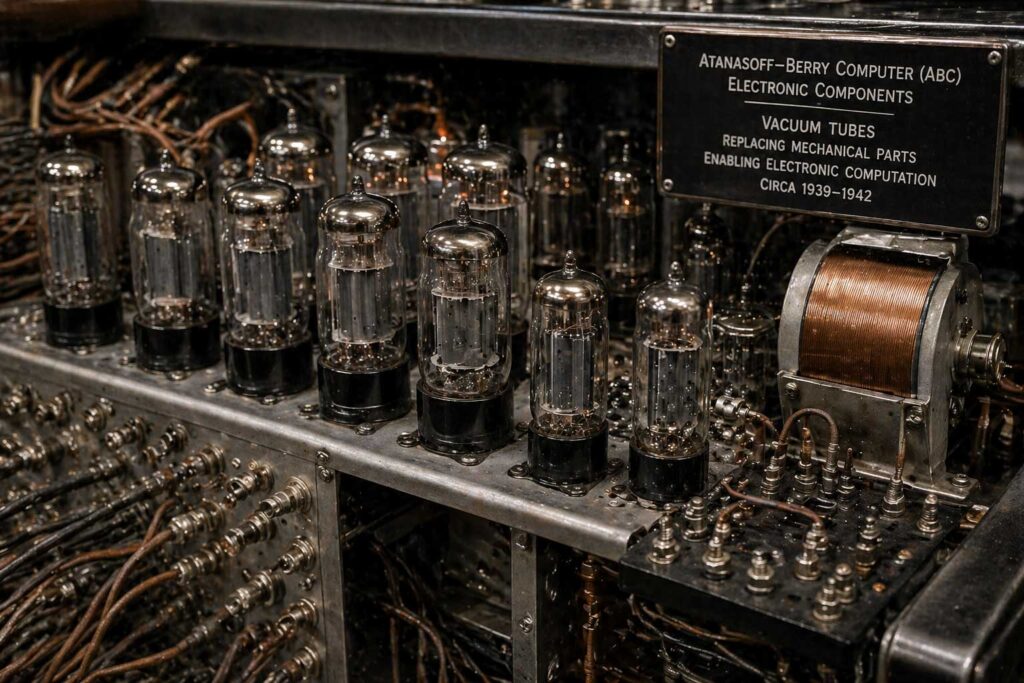
Unlike earlier machines that depended on gears and mechanical switches, the ABC used vacuum tubes to perform calculations.
This innovation allowed the machine to:
- Process data much faster
- Reduce mechanical wear and breakdown
- Operate with greater reliability
👉 This marked the shift from mechanical computing to electronic computing—a turning point in technological history.
3. Separation of Memory and Processing
Another critical innovation was the separation of two essential functions:
- Processing (computation)
- Memory (data storage)
This design allowed the ABC to handle complex calculations more efficiently by organizing tasks into distinct components.
👉 This concept remains at the heart of modern computer architecture, influencing everything from CPUs to RAM systems.
4. Regenerative Memory (Early RAM Concept)
The ABC stored data using capacitors mounted on a rotating drum, which required continuous refreshing to maintain information.
This process—known as regenerative memory—was revolutionary because it introduced the idea of dynamic data storage.
- Data was not static—it had to be refreshed
- Memory could be reused and updated continuously
- It enabled more complex and scalable computations
👉 This innovation is considered an early form of RAM (Random Access Memory), a critical component in all modern computers.
The Atanasoff-Berry Computer is just one example of groundbreaking innovation—see more in Bulgarian Inventions That Changed the World, where you’ll find discoveries that transformed industries across the globe.
Why the ABC Was Revolutionary
The Atanasoff-Berry Computer was not just a prototype—it was the first machine to combine all essential elements of modern computing into a single system:
- Binary processing
- Electronic operation
- Structured memory
- Logical architecture
While it was designed specifically to solve systems of linear equations and was not programmable like today’s computers, its underlying concepts became the blueprint for the digital age.
👉 Every modern computer system—from laptops to artificial intelligence—traces its roots back to the innovations introduced by the ABC.
John Vincent Atanasoff is widely considered the father of electronic digital computing.
Compared to Earlier Machines:
| Feature | Old Machines | ABC |
|---|---|---|
| System | Decimal | Binary |
| Operation | Mechanical | Electronic |
| Speed | Slow | Fast |
| Memory | Minimal | Dedicated |
👉 These breakthroughs made the ABC the first true electronic digital computer.
Affiliate Disclosure: Some links below are Amazon affiliate links. We may earn a commission at no extra cost to you.
Learn & Build Like a Computing Pioneer
Want to Understand How Computers Really Work?
If you want to understand how modern computers actually work, these tools and books will help you learn the same core principles pioneered by John Vincent Atanasoff—from binary logic to electronic circuits.
Best Books on Computing & Atanasoff
| Product | Best For | Why It’s Useful | Rating | Price |
|---|---|---|---|---|
| The First Electronic Computer | History learners | Deep dive into ABC | ⭐⭐⭐⭐⭐ | Check Price |
| Code: The Hidden Language | Beginners | Explains computing fundamentals | ⭐⭐⭐⭐⭐ | Check Price |
| Computer Science Distilled | Fast learners | Quick modern overview | ⭐⭐⭐⭐ | Check Price |
Electronics & Computing Kits
| Product | Best For | Why It’s Useful | Rating | Price |
|---|---|---|---|---|
| Breadboard Kit | Beginners | Learn circuits hands-on | ⭐⭐⭐⭐⭐ | Check Price |
| Arduino Starter Kit | Coding learners | Build real projects | ⭐⭐⭐⭐⭐ | Check Price |
| Logic Gate Trainer | Students | Understand binary logic | ⭐⭐⭐⭐ | Check Price |
Essential Computing Gear
| Product | Best For | Why It’s Useful | Rating | Price |
|---|---|---|---|---|
| Lightweight Laptop | Productivity | Modern computing power | ⭐⭐⭐⭐⭐ | Check Price |
| Mechanical Keyboard | Developers | Faster typing | ⭐⭐⭐⭐ | Check Price |
| External SSD | Storage | Fast data access | ⭐⭐⭐⭐⭐ | Check Price |
The Lost Recognition and Legal Battle
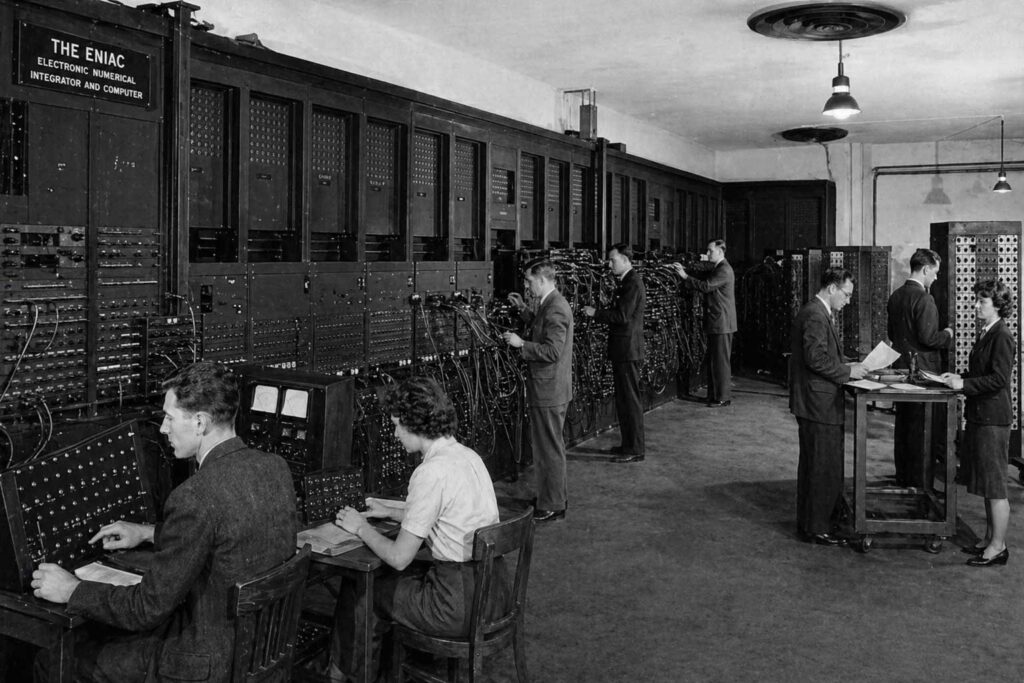
For decades, the groundbreaking work of John Vincent Atanasoff remained largely unrecognized. As computing technology advanced during and after World War II, attention shifted to newer machines—most notably the ENIAC, which was widely promoted as the first electronic computer.
Because the Atanasoff-Berry Computer (ABC) was never fully commercialized or patented, its influence faded from public awareness. Meanwhile, the creators of ENIAC filed patents and gained recognition, shaping the early narrative of computing history.
👉 For years, Atanasoff’s contributions were overlooked, despite the fact that many of ENIAC’s core ideas had already been introduced in the ABC.
The Turning Point: 1973 Court Case
History was finally corrected in 1973 during the landmark case:
This case examined the validity of the ENIAC patent and investigated whether prior inventions had influenced its design.
Key Findings of the Court
After extensive review of evidence, documentation, and testimony, the court concluded:
- The ENIAC patent was invalid
- Key concepts used in ENIAC were derived from earlier work
- John Vincent Atanasoff had already developed these foundational ideas
👉 Most importantly, the court officially recognized Atanasoff as the inventor of the first electronic digital computer.
Why This Case Was So Important
The ruling did more than settle a patent dispute—it rewrote the history of computing.
Impact of the Decision:
- Restored Atanasoff’s rightful place in history
- Corrected decades of misinformation about the origins of computing
- Established the ABC as the first true electronic digital computer
- Highlighted the importance of foundational innovation over commercialization
Before this case, the story of computing largely began with ENIAC. After the ruling, it became clear that the real origins traced back to Atanasoff’s earlier work in the late 1930s.
A Legacy Finally Recognized
Although the recognition came later in his life, it ensured that John Vincent Atanasoff would be remembered as one of the true founders of the digital age.
Today, historians, engineers, and institutions worldwide acknowledge that the principles introduced in the ABC—years before ENIAC—formed the foundation of modern computing systems.
👉 This legal victory didn’t just honor one man—it restored the true origin story of the computer revolution.
Connection to Modern Technology

The influence of John Vincent Atanasoff extends far beyond his time. While the Atanasoff-Berry Computer (ABC) was created to solve specific mathematical problems, the principles it introduced became the foundation of every modern computing system.
Today, nearly every digital device and technology operates using the same core ideas Atanasoff pioneered: binary processing, electronic circuits, and structured memory systems.
His Contributions Power the Modern World
Smartphones
Modern smartphones rely on binary logic and electronic processing to perform billions of operations per second. Every app, message, and interaction is powered by systems rooted in Atanasoff’s original concepts.
Laptops & Personal Computers
From basic tasks to advanced computing, laptops use the same architecture:
- CPU (processing)
- RAM (memory)
- Storage systems
👉 This separation of functions was first introduced in the ABC.
Artificial Intelligence
Artificial intelligence depends on processing massive datasets using binary computation and electronic circuits—exactly the framework Atanasoff helped establish.
- Machine learning models
- Neural networks
- Automation systems
👉 All rely on the computational logic he pioneered.
Cloud Computing
Cloud platforms store and process data across global networks of servers. These systems depend on:
- Efficient data storage (memory concepts)
- Fast electronic processing
- Scalable architecture
👉 All rooted in early computing principles introduced by Atanasoff.
Data Centers
Data centers—the backbone of the internet—operate using the same fundamental ideas:
- Binary data processing
- Electronic circuitry
- Memory management
These facilities handle everything from websites to global communications.
Why This Matters
Atanasoff didn’t just build a machine—he introduced a new way of thinking about computation.
Before him:
- Machines were mechanical
- Calculations were slow
- Systems were limited
After him:
- Computing became electronic
- Speed increased exponentially
- Systems became scalable and programmable
The Bigger Picture
👉 Without John Vincent Atanasoff, the digital revolution would not exist in its current form.
Every modern innovation—from smartphones in your pocket to AI shaping the future—can trace its origins back to the breakthroughs he made in the late 1930s.
His work didn’t just solve equations.
It unlocked the digital age.
These early innovations continue to influence today’s digital economy—explore The Rise of Bulgaria’s Tech Industry and discover modern leaders in Bulgarian Tech Companies You Should Know to see how this legacy continues today.
Bulgarian Contribution to Global Science
The story of John Vincent Atanasoff is not an isolated achievement—it is part of a much larger legacy of Bulgarian contributions to global science and innovation.
Despite being a relatively small country, Bulgaria has produced a remarkable number of scientists, engineers, and innovators whose work has influenced industries and technologies around the world. This legacy spans multiple disciplines and continues to grow today.
👉 To explore this impact in more detail across different sectors, visit Bulgarian Achievements by Industry, where you’ll see how Bulgarian innovation spans technology, medicine, and beyond.
Key Areas of Bulgarian Scientific Impact

Computing & Technology
Bulgaria has played a significant role in the development of modern computing—from early pioneers like Atanasoff to today’s rapidly growing tech sector.
- Foundations of electronic computing
- Software engineering and IT services
- Emerging startups in AI and fintech
👉 Explore Bulgarian Inventions That Changed the World to see more groundbreaking discoveries.
Medicine & Healthcare
Bulgarian scientists have made globally recognized contributions to medicine, including discoveries that continue to impact healthcare worldwide.
- Development of important pharmaceuticals
- Advances in microbiology and immunology
- Breakthroughs in neuroscience and treatment methods
👉 Learn more in Bulgarian Scientists Who Changed Medicine.
Physics & Fundamental Science
From theoretical physics to applied research, Bulgarian scientists have contributed to a deeper understanding of the physical world.
- Discoveries in energy and materials science
- Research in quantum physics and electronics
- Contributions to scientific education and research institutions
👉 Learn more in Bulgarian Achievements by Industry.
Space Research & Engineering
Bulgaria is also one of the few countries to have contributed to space exploration, particularly through its participation in the Interkosmos program.
- Development of space food technologies
- Satellite instrumentation and research
- Participation in international space missions
👉 Explore Bulgarian Contributions to Space Exploration to see how Bulgaria reached beyond Earth.
Why Atanasoff Represents This Legacy
John Vincent Atanasoff stands as one of the most powerful examples of Bulgarian impact on the world stage.
His invention of the first electronic digital computer demonstrates how Bulgarian-rooted talent has influenced:
- Global technological development
- Scientific progress across industries
- The foundation of the digital age
The work of John Vincent Atanasoff directly influenced the architecture of modern computers.
The Bigger Perspective
Bulgaria’s contributions to science are not limited by geography—they are defined by innovation, resilience, and intellectual tradition.
👉 From computing to medicine to space exploration, Bulgarian scientists have consistently helped shape the modern world.
And at the center of this legacy stands Atanasoff—
a pioneer whose ideas continue to power the future.
Legacy and Global Recognition
Today, John Vincent Atanasoff is widely recognized as one of the foundational figures in the history of modern technology. What was once overlooked is now firmly established: his ideas reshaped how the world processes information.
He is regarded as:
- A pioneer of computing — for introducing the core principles of electronic digital machines
- A key figure in scientific history — whose work influenced generations of engineers and innovators
- A symbol of Bulgarian innovation — representing the global impact of Bulgarian scientific talent
Honors and Recognition
Although recognition came later in his life, it has since become both widespread and enduring.
Awards and National Recognition
Atanasoff received numerous honors in both the United States and Bulgaria, celebrating his groundbreaking contributions to computing and science. His legacy is often highlighted in national scientific achievements and educational institutions.
Recognition by Scientific Institutions
Universities, research centers, and technology organizations worldwide now acknowledge Atanasoff’s role in creating the first electronic digital computer. His work is studied as a foundational milestone in computer science and engineering.
Preservation of the Atanasoff-Berry Computer (ABC)
Efforts have been made to preserve and reconstruct the Atanasoff-Berry Computer (ABC), ensuring that future generations can understand its significance.
- Reconstructions displayed in museums
- Educational exhibits explaining its innovations
- Archival documentation maintained by institutions
The innovations introduced by John Vincent Atanasoff remain fundamental to all modern computing systems.
👉 These efforts highlight the importance of preserving not just the machine itself, but the revolutionary ideas behind it.
A Lasting Global Impact
The recognition of John Vincent Atanasoff goes beyond awards—it is reflected in the very fabric of modern life.
- His principles power today’s digital infrastructure
- His innovations are taught in computer science worldwide
- His legacy continues to influence future technologies
👉 What began as a solution to a scientific problem became the foundation of the digital world.
Final Perspective
Atanasoff’s story is one of delayed recognition—but ultimate validation.
Today, he stands not just as an inventor, but as a visionary whose ideas helped define the modern era. His legacy is permanently embedded in the evolution of computing, and his influence will continue to shape technology for generations to come.
Key Facts About John Vincent Atanasoff
Here is a quick overview of the most important facts about one of the pioneers of modern computing:
- Born: 1903
- Died: 1995
- Field: Physics & Computing
- Major Invention: Atanasoff-Berry Computer (ABC)
- Core Contribution: First electronic digital computer
Why These Facts Matter
Each of these points represents a major milestone in the history of technology:
- His lifespan (1903–1995) covered a period of massive scientific transformation, from early electrical experiments to the dawn of the digital age
- His work in physics enabled him to approach computation from a scientific and analytical perspective, rather than purely mechanical
- The invention of the ABC computer introduced the principles that power modern devices
- His contribution to the first electronic digital computer places him among the most influential innovators in human history
👉 These key facts may seem simple—but they represent the foundation of everything from modern computing to artificial intelligence.
FAQs (Featured Snippet Optimized)
Who invented the first computer?
John Vincent Atanasoff is credited with inventing the first electronic digital computer.
What is the Atanasoff-Berry Computer?
The ABC was the first machine to use binary logic and electronic processing.
Why is Atanasoff important?
He introduced the fundamental principles used in all modern computers.
Was Atanasoff recognized during his lifetime?
Recognition came later, especially after the 1973 court ruling.
What did the ABC actually do?
It solved complex linear equations faster than any machine of its time.
If you want a deeper understanding of Bulgaria’s global influence, read Why Bulgaria Matters to the World and discover why its contributions continue to shape modern civilization.
Why John Vincent Atanasoff Still Matters Today
John Vincent Atanasoff still matters today because every modern computing system is built on the principles he introduced. From smartphones and cloud computing to artificial intelligence and data centers, his innovations continue to power the digital world.
👉 Without John Vincent Atanasoff, modern computing would not exist in its current form.
Final Thoughts: The Man Behind the Digital Age
John Vincent Atanasoff was not just an inventor—he was the architect of the digital age.
From the first electronic computer to today’s advanced artificial intelligence systems, his ideas continue to shape how the world works, communicates, and innovates.
Every time you use a computer, search online, or interact with technology—you are experiencing the legacy of John Vincent Atanasoff.
Every click, every search, every digital interaction traces back to his ideas.
References
- Atanasoff, John V. – Biography https://www.britannica.com/biography/John-V-Atanasoff
- Computer History Museum – Atanasoff-Berry Computer https://computerhistory.org
- Honeywell v. Sperry Rand Case Summary https://law.justia.com
- Iowa State University Archives https://archives.iastate.edu