


The Tarator recipe is one of the most refreshing and unique dishes in Bulgarian cuisine. Known for its cooling effect and simple ingredients, this traditional Bulgarian cold yogurt soup is especially popular during the hot summer months.
Unlike most soups around the world, Tarator is served cold and is often considered both a salad and a drinkable dish. It combines creamy yogurt, crisp cucumbers, garlic, dill, and walnuts into a light yet nourishing meal.
Bulgarian cuisine is known for its fresh and natural dishes, especially traditional salads like Shopska salad, which shares the same simple ingredients and vibrant flavors.
If you want to explore more dishes like this, check out our complete guide to Bulgarian salads and their cultural importance.
In this complete guide, you’ll learn everything about Tarator:
- Authentic Tarator recipe
- Traditional Bulgarian ingredients
- Step-by-step preparation
- Health benefits and nutrition
- Cultural importance
- Variations and serving ideas
What Is Tarator?
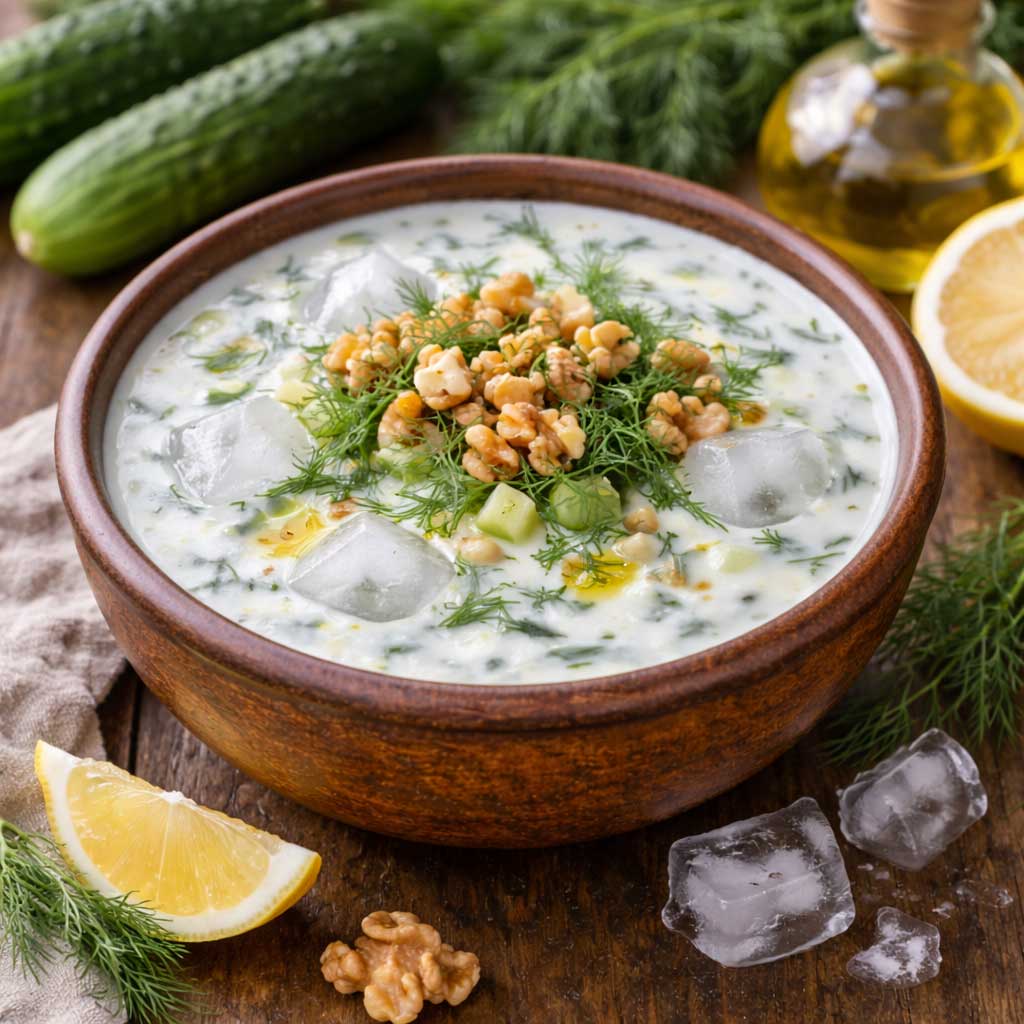
If there’s one dish that perfectly captures the freshness of Bulgarian cuisine, it’s tarator.
Tarator is a traditional Bulgarian dish made primarily from yogurt and cucumbers. It has a thin, soup-like consistency and is served chilled.
It is commonly:
- Served as a starter
- Consumed as a light meal
- Drunk directly from a glass in some regions
Tarator is similar to other Balkan and Mediterranean dishes, but what makes it unique is the use of Bulgarian yogurt, which gives it a distinct taste and probiotic benefits.
Perfect for hot summer days, tarator is:
- Light
- Healthy
- Quick to prepare
- Packed with flavor
👉 And the best part?
You can make this tarator recipe in 10 minutes or less.
It’s similar to dishes like Greek tzatziki—but thinner and served as a soup.
👉 The key ingredient is authentic yogurt, ideally made with:
This gives the tarator recipe its signature tangy taste.
Tarator recipe is more than just a simple yogurt soup recipe—it represents a philosophy of eating that focuses on freshness, balance, and natural ingredients. In Bulgarian cuisine, dishes are often built around what is available seasonally, and tarator is a perfect example of this approach. The combination of dairy, vegetables, and herbs creates a dish that is both satisfying and incredibly light, making it ideal not only for summer but also for anyone seeking a clean and nutritious meal option.
Similar to other yogurt-based dishes, the tarator recipe is closely related to recipes featured in our Bulgarian yogurt guide, where you can learn more about its unique health benefits.
The Origins of Tarator
Tarator has deep roots in Bulgarian culinary history. It is believed to have originated as a practical dish for rural communities who needed something cooling, hydrating, and easy to prepare during hot summers.
Historically:
- Farmers and shepherds consumed Tarator during long workdays
- It required minimal cooking
- Ingredients were easily available
Over time, the tarator recipe evolved into a staple dish across all regions of Bulgaria.
As Bulgarian society modernized, tarator transitioned from a rural necessity to a national favorite found in restaurants, homes, and even modern fusion cuisine. Today, it is served everywhere—from traditional taverns (mehanas) to contemporary restaurants—often with slight variations. Despite these adaptations, the core identity of tarator has remained unchanged, preserving its authenticity across generations.
Many traditional Bulgarian dishes, including tarator, have roots in rural life—just like the foods featured in our traditional Bulgarian food guide.
Authentic Tarator Recipe Ingredients
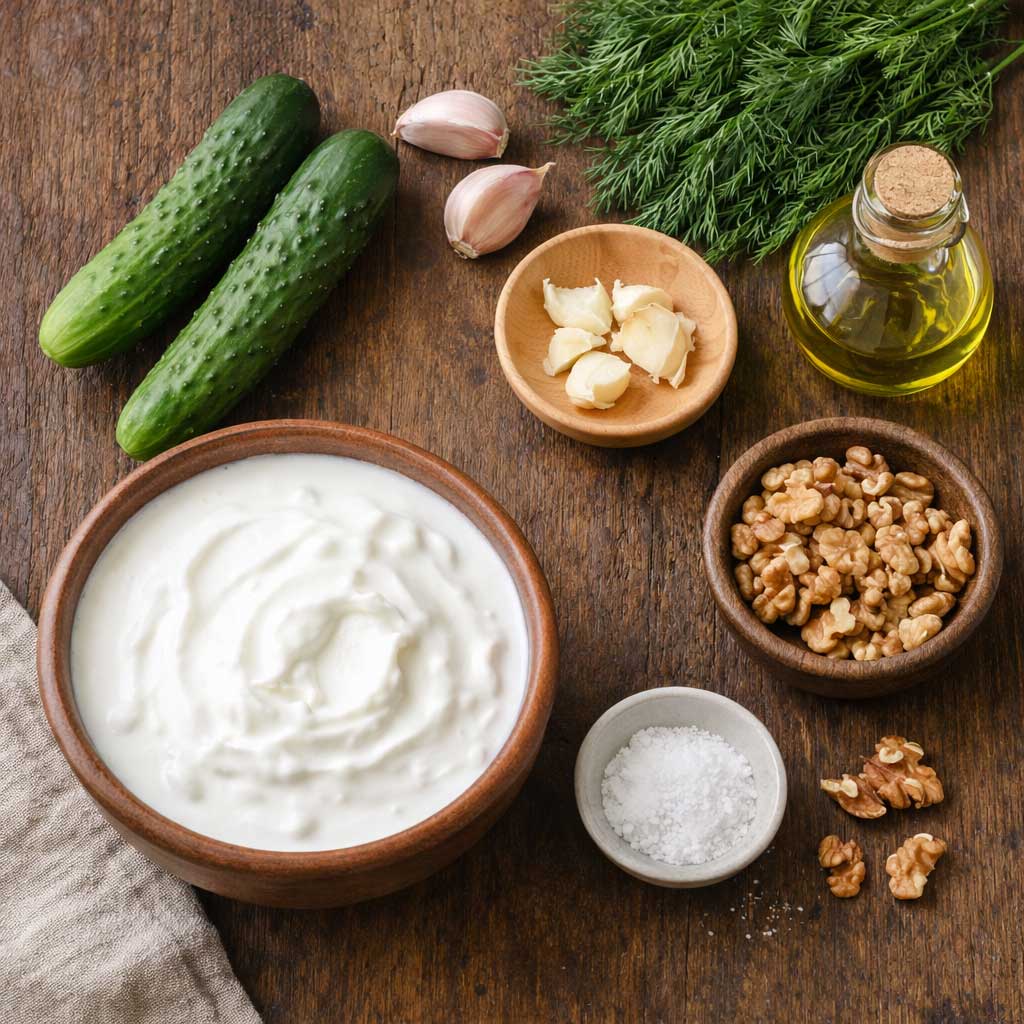
What makes tarator truly special is the quality of its ingredients rather than their quantity. Because the recipe is so simple, each component plays a crucial role in the final taste. Using fresh cucumbers, high-quality yogurt, and aromatic herbs significantly elevates the dish. In Bulgaria, many families still use homemade yogurt, which enhances both the texture and probiotic value of the soup.
The quality of ingredients plays a major role, especially yogurt, which is explained in detail in our article about Bulgarian yogurt and its unique bacterial cultures.
Main Ingredients for 2–3 servings:
- 2 cups plain yogurt (preferably Bulgarian yogurt)
- 1–2 cucumbers (finely chopped or grated)
- 2 cloves garlic (crushed)
- 2 cups cold water (adjust to desired thickness)
- 2 tablespoons olive oil /sunflower oil/
- 1–2 tablespoons fresh dill (chopped)
- Salt to taste
Optional:
- Crushed walnuts
- Ice cubes (for extra chill)
Step-by-Step Instructions
Although the preparation process is straightforward, attention to detail can make a big difference. For example, the balance between yogurt and water determines whether your tarator is thick and creamy or light and drinkable. Many Bulgarians adjust the consistency based on personal preference, making the recipe highly customizable while still maintaining its traditional essence.
If you enjoy quick and easy recipes like this, explore more traditional Bulgarian recipes that follow the same simple preparation style.
Step 1: Prepare the Cucumbers
- Peel if desired
- Chop finely or grate
👉 Smaller pieces = better texture
Step 2: Mix Yogurt and Water
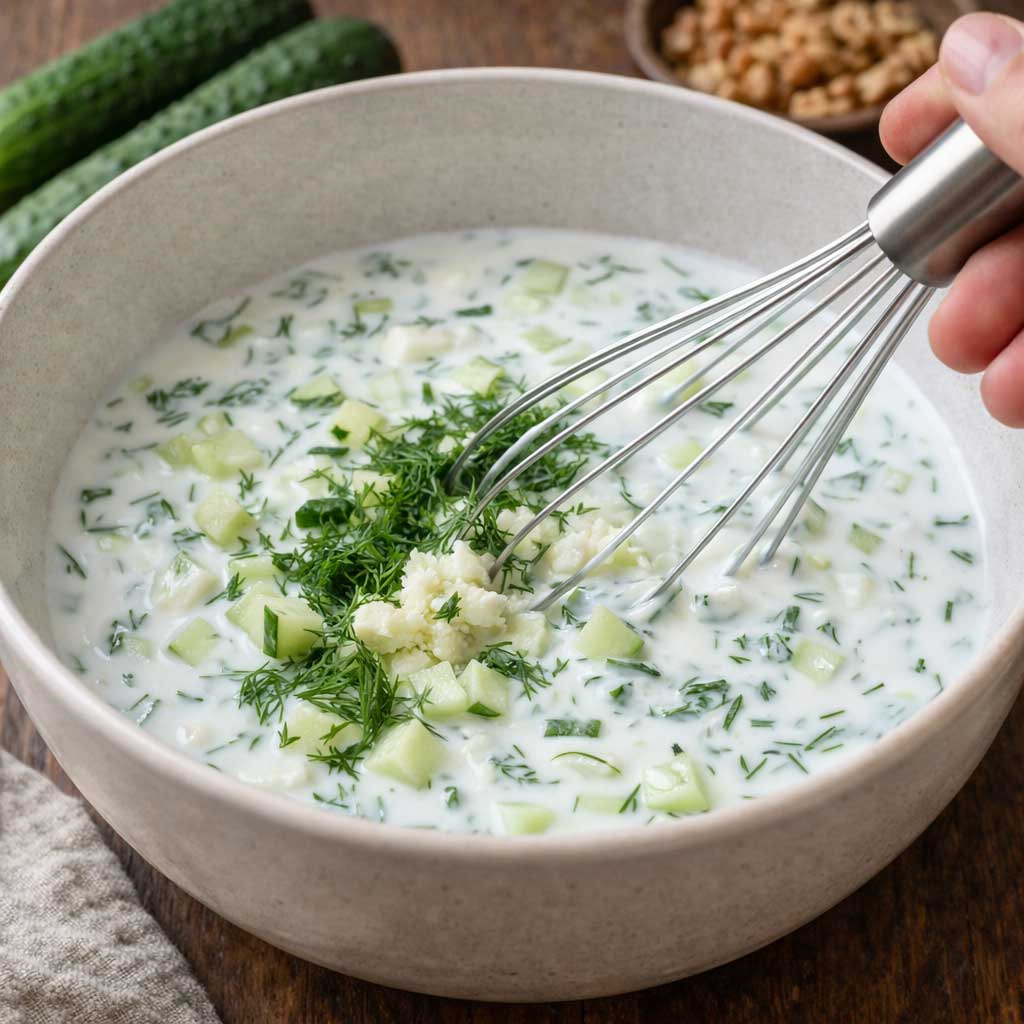
- Whisk yogurt and water together
- Aim for a smooth, drinkable consistency
Step 3: Add Garlic and Dill
- Add crushed garlic
- Add chopped dill
👉 This creates the signature flavor
Step 4: Combine Everything
- Add cucumbers
- Add olive oil
- Season with salt
- Mix well
Step 5: Chill & Serve
- Chill for 30 minutes (optional but recommended)
- Serve cold
👉 Add walnuts or ice cubes if desired
What Does Tarator Taste Like?
The flavor of tarator is clean and refreshing, with each ingredient contributing to a layered taste experience. The yogurt provides a creamy tang, the cucumbers add crispness, and the garlic delivers a subtle sharpness. Together, these flavors create a dish that feels both energizing and calming, especially during hot weather.
- Refreshing
- Light
- Slightly tangy
- Garlicky and herby
👉 It’s like drinking a cool summer breeze in a bowl
Why Tarator Is Perfect for Summer
Tarator is specifically designed for hot climates. In addition to its cooling effect, tarator is incredibly easy to digest, making it ideal during periods of intense heat when heavy meals can feel overwhelming. Its high water content helps regulate body temperature naturally, while the combination of nutrients supports overall hydration and well-being throughout the day.
Cooling Effect:
- Served cold
- Hydrating ingredients
- Light on the stomach
Hydration:
Cucumbers and yogurt provide water and electrolytes, helping prevent dehydration.
Health Benefits of Tarator
Tarator is one of the healthiest Bulgarian dishes. Beyond its refreshing qualities, tarator is often recommended as part of a balanced diet. Its combination of probiotics, vitamins, and healthy fats supports gut health, boosts immunity, and provides sustained energy without heaviness. This makes it a popular choice among people looking for nutritious yet simple meals.
Probiotics
Bulgarian yogurt contains beneficial bacteria that:
- Improve digestion
- Strengthen immunity
Low Calories
Tarator is ideal for:
- Weight loss
- Clean eating
Healthy Fats
Walnuts provide:
- Omega-3 fatty acids
- Brain support
Ingredient Deep Dive
Each ingredient in tarator has both culinary and nutritional value. The harmony between them is what creates the dish’s signature identity. Bulgarian yogurt, in particular, is globally recognized for its unique bacterial cultures, while herbs like dill not only enhance flavor but also offer digestive benefits, making tarator both delicious and functional.
Bulgarian Yogurt
Bulgarian yogurt is considered one of the healthiest in the world—learn why in our full breakdown of Bulgarian yogurt health benefits. The key ingredient that defines Tarator. It is known for:
- Rich flavor
- Creamy texture
- Unique bacterial cultures
Cucumbers
Provide:
- Crunch
- Freshness
- Hydration
Dill
Adds:
- Aroma
- Signature Balkan taste
Garlic
Enhances flavor and provides antimicrobial benefits.
Traditional Preparation Secrets
Traditional Bulgarian cooks emphasize balance and texture when preparing tarator. Rather than blending everything into a smooth mixture, they prefer a slightly chunky consistency that allows each ingredient to stand out. This approach preserves the natural freshness and ensures that every bite—or sip—feels vibrant and satisfying.
- Always use cold ingredients
- Don’t overblend (keep texture)
- Adjust thickness based on preference
Regional Variations of Tarator
These variations highlight how adaptable tarator can be while still staying true to its roots. In some regions, additional herbs or even vinegar are added for extra tang, while others focus on a thicker, more yogurt-heavy version. This flexibility has helped tarator remain relevant across different tastes and generations.
You can also compare tarator with other Balkan dishes in our guide to Balkan cuisine and traditional foods.
1. With walnuts
Adds crunch and richness
2. Thicker version
Less water → more like dip
3. Drinkable version
More water → served like a beverage
Pro Tips for Authentic Tarator
Achieving the perfect tarator is all about balance. Too much water can dilute the flavor, while too little can make it overly thick. The key is to taste as you go and adjust gradually. Many Bulgarians also recommend letting the dish rest briefly in the fridge, allowing the flavors to blend and intensify.
- Use real Bulgarian yogurt if possible
- Don’t skip the garlic
- Use fresh dill (not dried)
- Chill before serving
👉 Simplicity is key.
Tarator vs Tzatziki
While tarator and tzatziki share similar ingredients, their purpose in a meal is quite different. Tarator is meant to be consumed as a standalone dish or drink, whereas tzatziki typically complements other foods. This distinction highlights how regional cuisines can take similar components and transform them into entirely different culinary experiences.
| Feature | Tarator | Tzatziki |
|---|---|---|
| Texture | Liquid (soup) | Thick (dip) |
| Water | Added | Not added |
| Use | Soup / drink | Dip / sauce |
| Origin | Bulgaria | Greece |
👉 Same roots — different styles.
While tarator is unique, you can explore similar dishes and regional variations in our Balkan food comparison guide.
When Do Bulgarians Eat Tarator?
Although most commonly associated with summer, tarator can be enjoyed year-round depending on personal preference. However, its popularity peaks during hot months when its cooling properties are most appreciated. It is often included in traditional meals alongside grilled dishes or fresh salads.
- Summer lunch
- Light dinner
- Side dish
- Refreshing starter
👉 It’s a warm-weather staple.
How Tarator Is Served
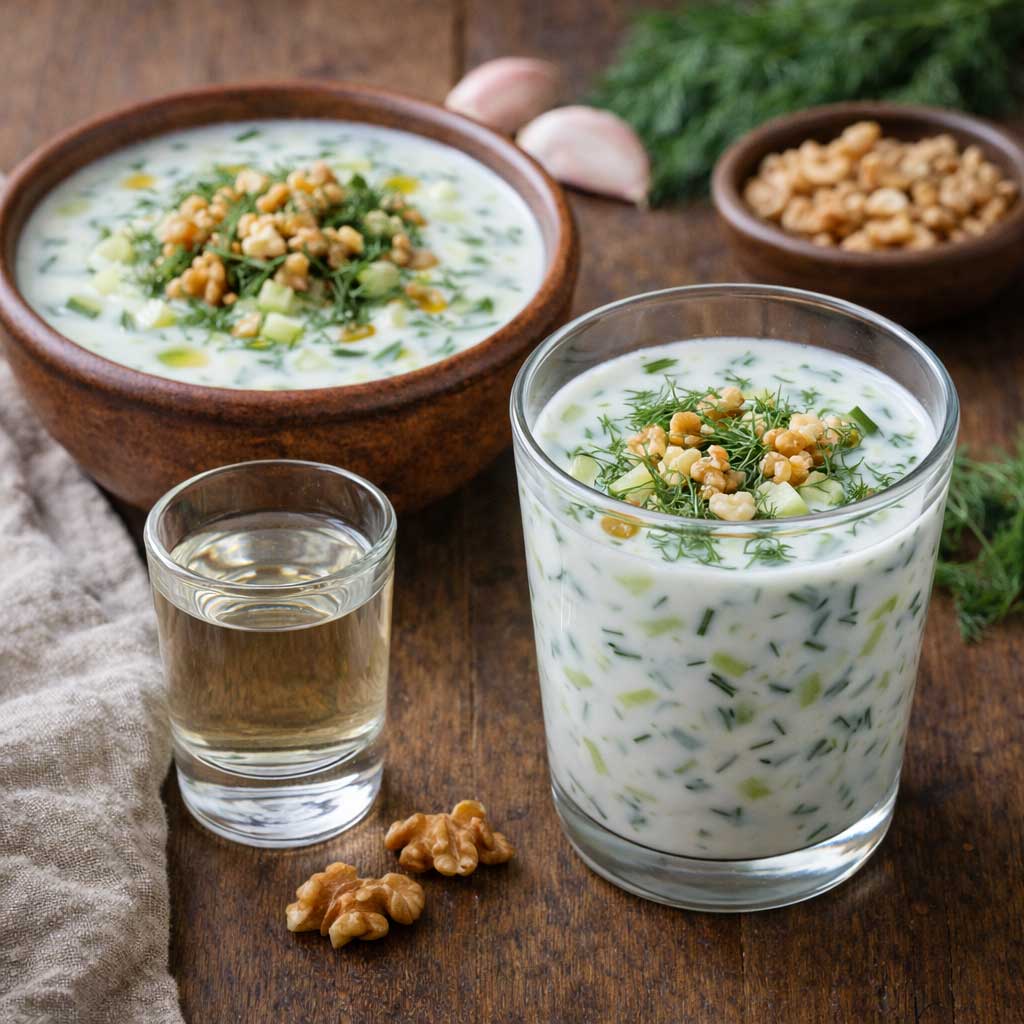
Presentation also plays a role in the enjoyment of tarator. Some prefer it in a bowl with visible chunks of cucumber and herbs, while others enjoy it as a smooth, drinkable soup served in a glass. Garnishes like walnuts and dill not only enhance flavor but also add visual appeal.
Tarator is typically served:
- Cold
- In a bowl or glass
- Garnished with dill and walnuts
Tarator and Bulgarian Culture
Tarator is deeply tied to Bulgarian identity and everyday life. It reflects the country’s agricultural roots and emphasis on fresh, local ingredients. Sharing tarator during meals is often associated with hospitality, family gatherings, and the simple joy of seasonal eating.
Tarator is often paired with:
- Rakia
- Bread
- Summer meals
It represents:
- Simplicity
- Freshness
- Tradition
Tarator is just one example of Bulgaria’s rich culinary heritage—discover more in our guide to Bulgarian traditions and customs.
Common Mistakes
Even though tarator is easy to make, small mistakes can affect the final result. For example, using low-quality yogurt or skipping fresh herbs can significantly reduce its flavor. Paying attention to ingredient quality and preparation techniques ensures an authentic and enjoyable dish every time.
- Using warm yogurt
- Adding too much water
- Skipping garlic
What to Serve With Tarator
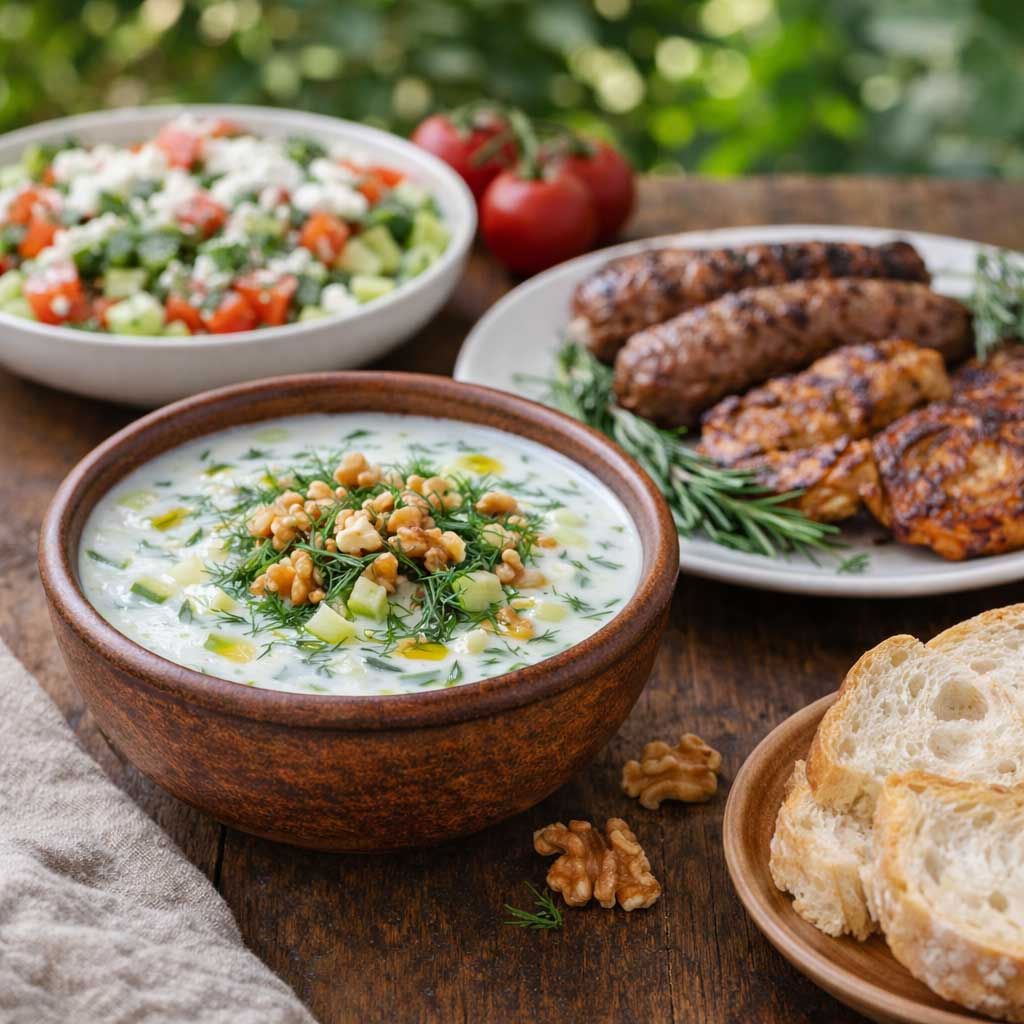
Tarator pairs beautifully with a wide variety of dishes, making it a versatile addition to any meal. Its refreshing nature complements heavier foods like grilled meats, while also enhancing lighter options such as salads and bread. This balance makes it a staple on Bulgarian dining tables.
Pairs well with:
- Grilled meats
- Shopska salad
- Bread
Tarator pairs perfectly with dishes from our traditional Bulgarian food list, including grilled meats and fresh salads.
Tarator Around the World
Although similar dishes exist globally, tarator stands out due to its specific use of Bulgarian yogurt and traditional preparation style. As Bulgarian cuisine gains international recognition, tarator is increasingly being introduced to new audiences who appreciate its simplicity and health benefits.
Similar dishes exist in:
But Bulgarian Tarator remains unique due to its yogurt.
Bulgarian cuisine continues to gain global recognition—learn more about its impact in our article on famous Bulgarian foods worldwide.
FAQs About Tarator Recipe
Is tarator healthy?
Yes, it’s low-calorie, hydrating, and rich in probiotics.
Can I make this tarator recipe without dill?
Yes, but dill gives it authentic flavor.
How long does tarator last?
Up to 2 days in the fridge.
Can I use Greek yogurt for this tarator recipe?
Yes, but dilute it more with water.
Can tarator recipe be made vegan?
Yes, you can substitute traditional yogurt with plant-based yogurt such as almond or coconut yogurt. However, the taste will differ from the authentic version.
Is tarator keto-friendly?
Tarator can be keto-friendly depending on the yogurt used. Full-fat, low-carb yogurt options make it suitable for ketogenic diets.
Can I prepare tarator in advance?
Yes, tarator can be prepared a few hours ahead. In fact, letting it sit in the fridge allows the flavors to blend better.
Why is Bulgarian yogurt important for this tarator recipe?
Bulgarian yogurt contains specific probiotic bacteria that give tarator its authentic taste and health benefits.
Can tarator be served warm?
No, tarator is traditionally served cold. Serving it warm would significantly change its flavor and purpose.
What type of cucumbers are best?
Fresh, crisp cucumbers with low seeds are ideal. English cucumbers for this authentic tarator recipe are often a good choice.
Does tarator contain alcohol?
No, tarator itself does not contain alcohol, but it is often served alongside drinks like rakia.
Can children eat tarator?
Yes, tarator is safe and healthy for children, especially due to its probiotic content.
Is tarator good for digestion?
Yes, thanks to the probiotics in yogurt and the fiber from cucumbers, tarator supports healthy digestion.
What makes tarator different from cold soups worldwide?
Its use of Bulgarian yogurt and specific flavor balance sets it apart from other cold soups like gazpacho.
Final Thoughts
The Tarator recipe is a perfect example of how simple ingredients can create something refreshing, healthy, and deeply satisfying. It remains one of Bulgaria’s most beloved summer dishes and continues to gain popularity worldwide.
As global interest in healthy and traditional foods continues to grow, tarator is gaining recognition beyond Bulgaria. Its simplicity, nutritional value, and refreshing taste make it a timeless dish that fits perfectly into modern lifestyles while preserving its cultural heritage.
If you enjoyed this recipe, explore more authentic dishes in our complete Bulgarian food guide and expand your knowledge of Balkan cuisine.
Recommended Reads
- Bulgarian Yogurt – Why It Is Famous Around the World
- Bulgarian Salads – Famous Recipes and Ingredients
- Traditional Bulgarian Food – 30 Famous Dishes
- Bulgarian Traditions and Customs Explained
- Balkan Cuisine – Traditional Foods Guide
References
- Tarator. (n.d.). In Wikipedia. Retrieved from https://en.wikipedia.org/wiki/Tarator
- Bulgarian cuisine. (n.d.). In Wikipedia. Retrieved from https://en.wikipedia.org/wiki/Bulgarian_cuisine
- Yogurt. (n.d.). In Wikipedia. Retrieved from https://en.wikipedia.org/wiki/Yogurt
- Lactobacillus delbrueckii subsp. bulgaricus. (n.d.). In Wikipedia. Retrieved from https://en.wikipedia.org/wiki/Lactobacillus_delbrueckii_subsp._bulgaricus
- Cucumber. (n.d.). In Wikipedia. Retrieved from https://en.wikipedia.org/wiki/Cucumber
- Dill. (n.d.). In Wikipedia. Retrieved from https://en.wikipedia.org/wiki/Dill
- Garlic. (n.d.). In Wikipedia. Retrieved from https://en.wikipedia.org/wiki/Garlic
- Walnut. (n.d.). In Wikipedia. Retrieved from https://en.wikipedia.org/wiki/Walnut
- Encyclopaedia Britannica. (n.d.). Bulgarian Cuisine Overview. Retrieved from https://www.britannica.com/topic/Bulgarian-cuisine
- Official Bulgaria Travel. (n.d.). Traditional Bulgarian Food. Retrieved from https://bulgariatravel.org