

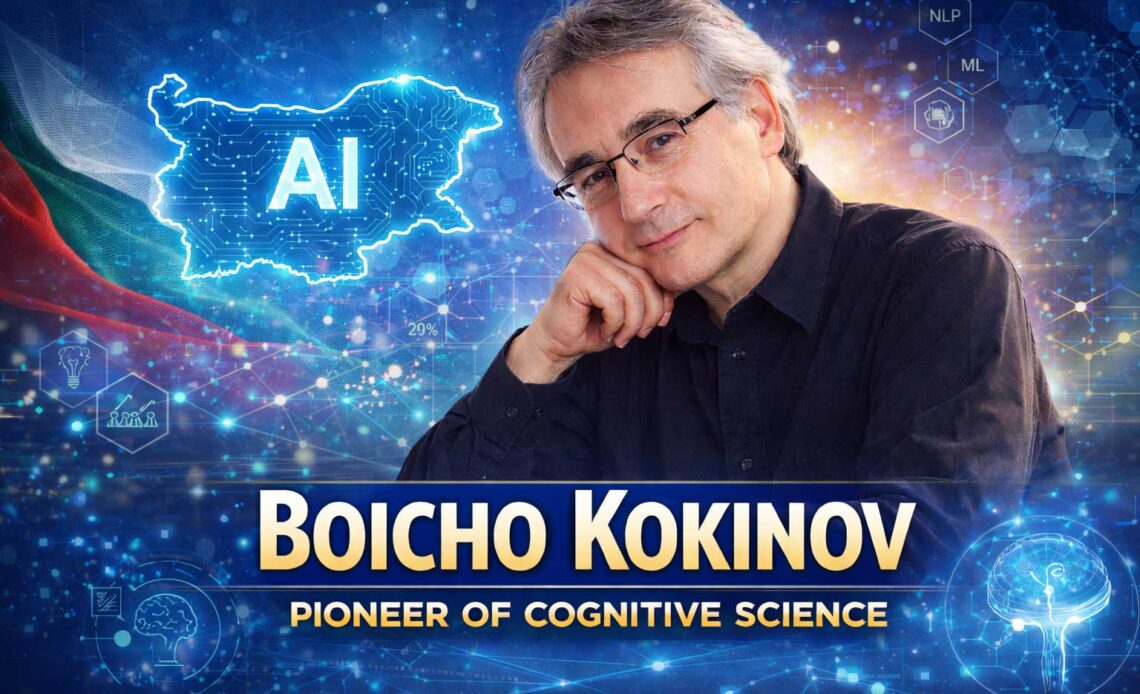

Boicho Kokinov (Bulgarian: Бойчо Кокинов; 27 December 1960 – 10 May 2013) was one of the most important Bulgarian scholars in the fields of cognitive science, artificial intelligence, psychology, and computer science. He became widely recognized for his research on human thinking, memory, analogy-making, judgment, context, and problem-solving, helping position Bulgaria within the global cognitive science community.
He served as an associate professor at New Bulgarian University in Sofia and founded the Central and East European Center for Cognitive Science. Beyond his research, Kokinov played a key role in building academic networks, most notably as the organizer of the Annual Summer Schools in Cognitive Science from 1994 until his death. These events connected researchers from across Europe and beyond, fostering collaboration in a rapidly evolving interdisciplinary field.
Kokinov’s work addressed fundamental questions about human cognition: how people use past experiences to understand new situations, how memory and context shape reasoning, and how analogies support learning and creativity. His most influential contribution, the DUAL Cognitive Architecture, provided a framework for understanding how structured reasoning and associative processes interact in the human mind.
His legacy extends beyond his publications. Through his research, collaborations, and institution-building, Kokinov helped establish cognitive science as a serious academic field in Bulgaria and contributed to broader discussions in artificial intelligence and human cognition.
To explore more remarkable thinkers and innovators, see Bulgarian Scientists Who Changed the World.
Who Was Boicho Kokinov?
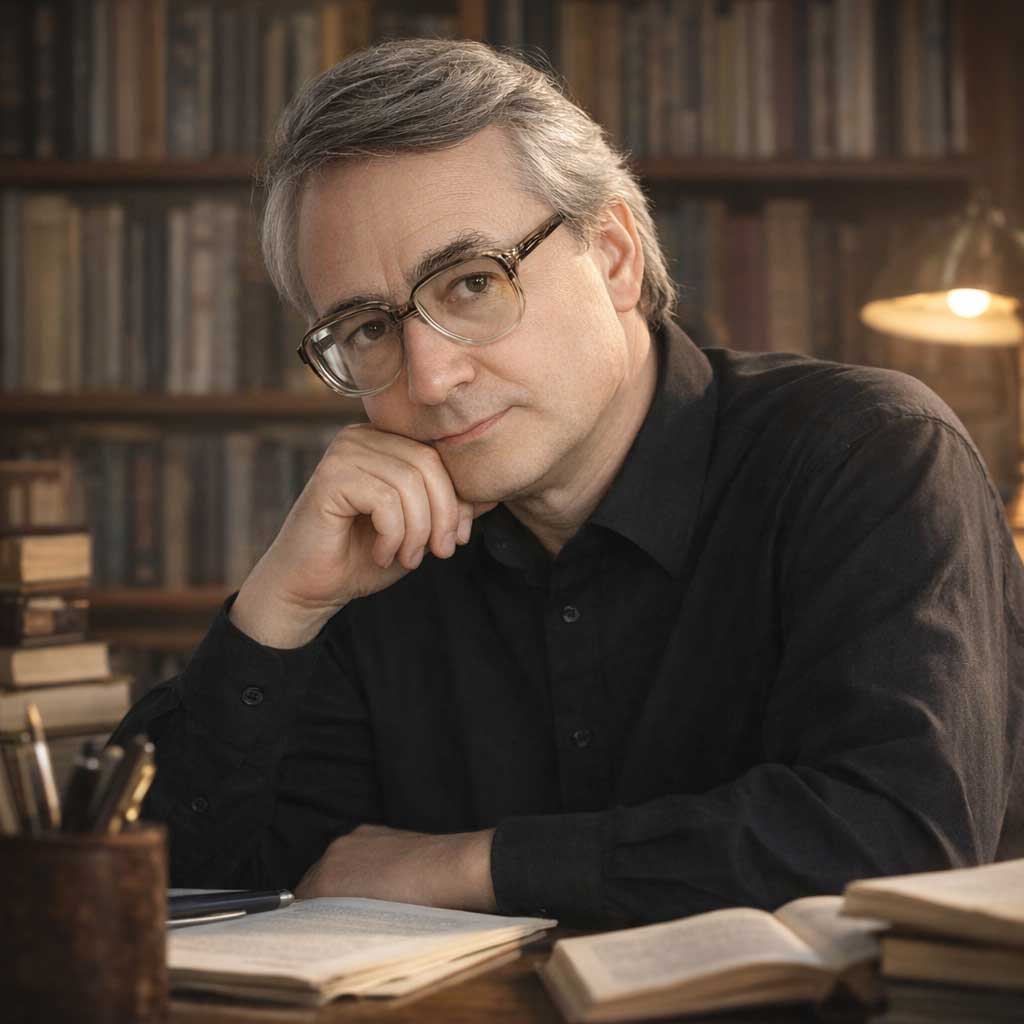
Boicho Kokinov was a Bulgarian scientist whose work spanned multiple disciplines, including cognitive science, psychology, computer science, and artificial intelligence. He belonged to a generation of researchers who recognized that understanding the human mind requires an interdisciplinary approach. While psychology explains behavior and neuroscience studies the brain, cognitive science brings these fields together—and Kokinov played a key role in shaping this field in Bulgaria and Eastern Europe.
He is best known for studying how people think in both everyday and complex situations. Rather than focusing only on abstract logic, Kokinov examined the dynamic processes of thought—how memories are activated, how analogies are formed, how judgments are made, and how context influences understanding. His work emphasized that cognition is not static, but active, creative, and adaptive.
Kokinov was also part of a broader movement that helped integrate Eastern European science into the global research community. Through collaborations with leading scholars such as Dedre Gentner and Keith Holyoak, he demonstrated that Bulgarian researchers could contribute to—and help shape—major international discussions in cognitive science.
More than a researcher, Kokinov was a foundational figure in modern Bulgarian cognitive science. He built institutions, organized academic events, mentored young scholars, and developed theoretical models that continue to influence research today.
Early Academic Path and Intellectual Formation
Although detailed biographical accounts of Boicho Kokinov are limited, his career reveals a clear intellectual direction. He was drawn to complex questions that required interdisciplinary thinking, making cognitive science a natural fit. This field is built on the idea that understanding intelligence, learning, and memory requires integrating multiple disciplines rather than studying them in isolation.
During the late twentieth century, cognitive science was rapidly expanding. Researchers were exploring whether the mind could be modeled computationally, whether analogy is central to intelligence, and whether memory is a static storehouse or an active, reconstructive process. These questions had far-reaching implications for education, creativity, artificial intelligence, and philosophy. Kokinov entered the field at a time when it was still evolving, allowing him to contribute to its foundational development.
What made his work distinctive was his refusal to oversimplify human cognition. Instead of reducing thinking to a single mechanism, he examined how memory, reasoning, context, and emotion interact dynamically. Problem-solving, in his view, involves recalling past experiences, recognizing partial similarities, adapting to context, and often reaching solutions through analogy rather than strict logic.
This approach gave his work lasting relevance. While many models become outdated by oversimplifying the mind, Kokinov focused on the complex, context-sensitive nature of real human thought—a perspective that continues to influence both cognitive science and modern artificial intelligence.
New Bulgarian University and His Academic Leadership

Boicho Kokinov spent much of his career at New Bulgarian University in Sofia, where he served as an associate professor in cognitive science and computer science. His work reflected a dual strength: he was both a theorist of the human mind and a builder of computational models, making him especially effective in an interdisciplinary academic environment.
At the university, Kokinov played a key role in establishing cognitive science as a serious field of study rather than a niche discipline. He helped bring researchers together, encouraged collaboration, and contributed to shaping research directions at a time when the field was still developing in the region.
His academic leadership also reflected broader changes in Bulgarian higher education after the late twentieth century, as universities became more open to international collaboration and interdisciplinary approaches. Through his work, New Bulgarian University became part of a growing global network of cognitive science research.
Students and younger scholars benefited significantly from this environment. Beyond formal teaching, Kokinov promoted a research culture based on interdisciplinary thinking, collaboration, and ambition—helping inspire a new generation of Bulgarian scientists to engage with the international academic community.
For broader context on the country’s scientific development, read Bulgarian Science and Technology History.
The Central and East European Center for Cognitive Science

One of Boicho Kokinov’s most important achievements was founding the Central and East European Center for Cognitive Science. This was more than an administrative initiative—it reflected a long-term vision to create a stable and internationally connected research hub for cognitive science in the region.
At the time, many Central and Eastern European countries were still emerging from decades of limited integration into global academic networks. Building sustained collaboration required significant effort: organizing conferences, connecting researchers, training students, and developing publication platforms. Kokinov understood that advancing science depends not only on individual research, but on building strong academic communities.
The Center brought together scholars working on memory, analogy, context, learning, and computational modeling. It helped position Bulgaria as an active participant in international cognitive science rather than a peripheral contributor.
Although such institution-building often receives less recognition than individual discoveries, its long-term impact can be even greater. By creating a collaborative research environment, Kokinov helped ensure continuity, visibility, and growth for cognitive science in the region.
The DUAL Cognitive Architecture
The scientific idea most closely associated with Boicho Kokinov is the DUAL Cognitive Architecture. This framework was designed to model the complexity of human cognition by combining both structure and flexibility. It explains how mental activity can be organized yet dynamic, rule-based yet context-sensitive, and grounded in both memory and creativity.
The term “DUAL” reflects the integration of two key aspects of thinking. On one side, human cognition relies on structured representations and relationships. On the other, it depends on associative processes such as spreading activation, context sensitivity, and dynamic memory interaction. A realistic model of intelligence must account for both.
This was a major challenge in cognitive science and artificial intelligence. Earlier approaches often leaned too far in one direction. Symbolic AI emphasized logic and rules but struggled with real-world flexibility, while connectionist models captured dynamic processes but sometimes lacked clear structure. Kokinov’s work aimed to bridge this gap.
The DUAL architecture is significant because it treats cognition as emergent and context-dependent. Instead of assuming fixed reasoning patterns, it models how different mental elements become active based on the situation, prior experience, and relational similarity. This helps explain how people recognize analogies, reinterpret problems, and recall relevant experiences in flexible ways.
In practical terms, the DUAL framework contributes to ongoing efforts in artificial intelligence to build systems capable of more human-like reasoning. It highlights that true intelligence is not just about processing speed or data, but about the dynamic interaction between structure, memory, and context.
AMBR: A Model of Analogy-Making and Memory
Among the models developed within Boicho Kokinov’s research program, AMBR (Analogy-Making Based Reasoning) is one of the most important. Developed with collaborators including Alexander Petrov, Maurice Grinberg, Georgi Petkov, and Ivan Vankov, AMBR explains how analogy-making emerges through the interaction between memory and reasoning.
Analogy is often described as recognizing similarity, but in reality it involves deeper relational structures rather than surface features. People can identify meaningful connections between situations that appear different on the surface but share underlying patterns. This ability is central to problem-solving, creativity, learning, and scientific thinking.
AMBR models analogy-making as a dynamic process. Instead of relying on a separate “analogy module,” it shows how relevant memories are activated, partially matched, and reinterpreted over time. Cognitive elements compete and cooperate, allowing new connections to emerge depending on context.
This helps explain why analogies sometimes appear instantly and at other times require a shift in perspective. AMBR demonstrates that analogy is not a specialized skill but a fundamental part of how memory and thought interact in everyday cognition.
The significance of AMBR extends beyond cognitive science. In artificial intelligence, analogy remains a key marker of flexible reasoning, while in education it supports deeper understanding by linking new ideas to existing knowledge. As a result, AMBR connects multiple fields, from psychology to AI and learning theory.
JUDGEMAP and the Study of Human Judgment
Another important model associated with Boicho Kokinov’s work is JUDGEMAP, developed together with Georgi Petkov. This model focuses on how people evaluate situations, make decisions, and form judgments in complex or uncertain environments.
Judgment is one of the most challenging areas in cognitive science. While it is often assumed to be purely rational, real decision-making is influenced by memory, context, emotion, prior experience, and cognitive shortcuts. These factors can lead to both effective, adaptive decisions and to bias or error.
JUDGEMAP models judgment as a dynamic process rather than a fixed calculation. It examines how different cognitive elements interact to shape evaluation and choice, offering a more realistic view of decision-making across domains such as psychology, economics, law, and everyday life.
This work also connects closely to Kokinov’s broader research. Judgments are rarely isolated from analogy and memory—people often evaluate situations by comparing them to past experiences and interpreting them within a specific context. In this way, JUDGEMAP complements DUAL and AMBR by showing that human cognition is interconnected, context-dependent, and continuously evolving.
Experimental Contributions and Key Findings
Boicho Kokinov’s work was not limited to theoretical models. Together with his collaborators, he conducted experimental research to test and refine his ideas. This commitment to empirical evidence strengthened his contributions and grounded his theories in real cognitive behavior.
His research revealed several important insights into human thinking:
- Blending of experiences:
Dissimilar episodes can be combined through indirect analogies with a third situation, showing that cognition can link ideas in creative and non-obvious ways. - Deep vs. surface similarity:
Analogical episodes are easier to blend than superficially similar ones, highlighting the importance of deeper relational structures over obvious visual resemblance. - Child development:
Analogy supports children’s ability to perform relational mapping and logical inference, demonstrating that analogical thinking is fundamental to learning. - Automatic cognition:
Simple analogies can occur automatically and without conscious awareness, suggesting that analogy is a core feature of everyday thinking. - Embodied reasoning:
Comparing relations may involve mental simulations of physical actions, connecting Kokinov’s work to theories of embodied cognition. - Emotion and thinking:
Anxiety can restrict analogy generation, showing how emotional states influence creativity and problem-solving.
Together, these findings highlight the complexity of human cognition. Kokinov’s research showed that thinking emerges from the interaction of memory, analogy, emotion, and context—offering a more realistic view of how the mind works in real-world situations.
Constructive Memory and Memory Distortion
One of the most important aspects of Boicho Kokinov’s work is his focus on constructive memory. This concept challenges the idea that memory is a passive storage system. Instead, memory is an active process in which past experiences are reconstructed based on context, current goals, emotions, and related knowledge.
This perspective has major implications. It explains why people can recall events inaccurately, why present concerns shape recollection, and why memories sometimes blend together. At the same time, it highlights a positive side: the same processes that create distortions also enable creativity. By reconstructing the past, the mind can generate new combinations, analogies, and insights.
Kokinov’s work shows that memory distortion is not simply a flaw, but a feature of flexible cognition. A mind capable of analogy and creative thinking must be able to reorganize past experiences rather than preserve them exactly. In this sense, memory becomes a resource for future thinking, not just a record of the past.
This idea remains highly relevant today. Research on false memories, contextual retrieval, and reconstructive thinking continues to influence psychology, neuroscience, law, and artificial intelligence. Kokinov’s contribution was to connect these processes directly to reasoning, showing how memory and thinking work together as part of a dynamic cognitive system.
The Annual Summer Schools in Cognitive Science
One of the most enduring and human aspects of Boicho Kokinov’s legacy is his role as the main organizer of the Annual Summer Schools in Cognitive Science from 1994 until his death. These were more than academic events—they became lasting institutions of intellectual exchange.
Summer schools play a unique role in academia. Unlike formal courses or conferences, they create intensive environments where students, early-career researchers, and established scholars can interact more openly. Ideas are explored through lectures, workshops, and informal discussions, often leading to collaborations that continue long after the events themselves. For a highly interdisciplinary field like cognitive science, such settings are especially valuable.
Kokinov recognized this potential. The summer schools helped train a new generation of researchers while connecting them to the international scientific community. They also positioned Bulgaria as an active center for cognitive science, contributing to the global exchange of ideas rather than remaining on the periphery.
Their long-term impact is significant. Many scholars credit their development not only to formal study but to the communities that shaped their thinking. Through these summer schools, Kokinov helped build an environment where collaboration, learning, and innovation could thrive.
International Collaborations and Global Academic Influence
Boicho Kokinov’s influence extended beyond Bulgaria through his collaborations with leading scholars in cognitive science. His work with researchers such as Dedre Gentner and Keith Holyoak—both prominent figures in the study of analogy and reasoning—helped place his research within the core international discourse of the field.
These collaborations were significant for several reasons. They confirmed that Kokinov’s ideas were part of the central scientific conversation, increased the visibility of Bulgarian research, and encouraged the exchange of perspectives across different academic traditions. Such collaboration is especially important in cognitive science, where complex questions benefit from diverse methods and approaches.
Kokinov’s collaborative work reflects a scholar who was both internationally respected and committed to building broader research networks. His contributions helped connect Eastern European scholarship with global developments in cognitive science.
For Bulgaria, this had lasting importance. Internationally recognized researchers not only advance their fields but also reshape how their countries are perceived in the global knowledge landscape. Kokinov’s work demonstrated that Bulgarian scientists could contribute original and influential ideas in one of the most challenging modern disciplines.
To see how Bulgarian research connects to wider scientific and technological developments, visit Bulgarian Contributions to Modern Technology.
Major Publications and Scholarly Works
Boicho Kokinov also left an important printed legacy through books and edited volumes. These publications reflect both his own research interests and his role in shaping wider academic discussions.
Among the most notable are:
- Kokinov, B., Holyoak, K., Gentner, D. eds. (2009). New Frontiers in Analogy Research. Sofia: NBU Press
- Kokinov, B., Richardson, D., Roth-Berghofer, Th., Vieu, L. eds. (2007). Modeling and Using Context. Lecture Notes in Computer Science / Lecture Notes in Artificial Intelligence, vol. 4635. Berlin: Springer
- Kokinov, B. ed. (2005). Advances in Cognitive Economics. Sofia: NBU Press
- Dey, A., Kokinov, B., Leake, D., Turner, R. eds. (2005). Modeling and Using Context. Lecture Notes in AI, vol. 3554. Berlin: Springer
- Kokinov, B., Hirst, W., eds. (2003). Constructive Memory. Sofia: NBU Press
- Gentner, D., Holyoak, K., Kokinov, B., eds. (2001). The Analogical Mind: Perspectives from Cognitive Science. Cambridge, MA: MIT Press
- Holyoak, K., Gentner, D., Kokinov, B., eds. (1998). Advances in Analogy Research: Integration of Theory and Data from the Cognitive, Computational, and Neural Sciences. Sofia: NBU Press
These works matter because they document key themes in his career: analogy, context, constructive memory, judgment, and interdisciplinary collaboration. They also show that Kokinov was not only producing ideas but curating and advancing major scholarly conversations.
Disclosure: This article may contain affiliate links. If you purchase through these links, we may earn a small commission at no additional cost to you. We only recommend books and resources that are relevant to the topic and valuable for readers.
Essential Books Related to Boicho Kokinov’s Work
If you want to explore the ideas behind Boicho Kokinov’s research more deeply, the books below offer an excellent introduction to analogy, constructive memory, and context in cognitive science. Several of these volumes are academically rigorous, but they are also among the best resources for understanding why Kokinov’s work remains important in both psychology and artificial intelligence.
| Book | Why It Matters | Best For | Where to Buy |
|---|---|---|---|
| The Analogical Mind: Perspectives from Cognitive Science | One of the most important volumes connected to Kokinov’s work and the study of analogy | Readers wanting the strongest starting point | Check Price |
| Constructive Memory | Highly relevant for readers interested in memory distortion, reconstruction, and cognition | Psychology and memory readers | Check Price |
| Modeling and Using Context | Useful for understanding context-sensitive cognition and AI-related modeling | AI, cognitive science, and philosophy readers | Check Price |
Recommended Reading on Cognitive Science and Artificial Intelligence
| Book | Why It Matters | Best For | Check Price |
|---|---|---|---|
| The Analogical Mind | Foundational academic work on analogy and reasoning closely related to Kokinov’s research | Students, researchers | Check Price |
| Surfaces and Essences | Explains analogy as the core mechanism of human thinking in an accessible way | General readers, AI enthusiasts | Check Price |
| Artificial Intelligence: A Modern Approach | The most widely used AI textbook covering reasoning, knowledge, and intelligent systems | AI learners, students | Check Price |
| Thinking, Fast and Slow | Explores human judgment, biases, and decision-making processes | Psychology, decision science | Check Price |
| How to Create a Mind | Connects neuroscience, cognition, and artificial intelligence | AI + neuroscience readers | Check Price |
Why Cognitive Science Matters
To understand Boicho Kokinov’s importance, it helps to see why cognitive science matters. Cognitive science is the study of the mind and intelligent behavior, bringing together psychology, artificial intelligence, linguistics, neuroscience, philosophy, and computer science to explore questions such as:
- How do humans think?
- How is knowledge represented in the mind?
- How do memory and perception interact?
- How do people solve problems?
- What is creativity?
- How can intelligent systems be modeled or built?
These questions are fundamental because they influence many real-world fields. Education depends on understanding how people learn, psychology depends on memory and judgment, and artificial intelligence depends on reasoning and representation. Even economics increasingly studies how people actually make decisions rather than assuming perfect rationality.
Kokinov’s work belongs to this broader effort. He focused on complex processes such as analogy, contextual thinking, memory reconstruction, and judgment under uncertainty—key elements that make human intelligence flexible and adaptive, but also difficult to model in machines.
His research sits at the intersection of understanding the human mind and building intelligent systems. It helps explain how people think while also contributing to the ongoing challenge of creating more human-like artificial intelligence.
Why Boicho Kokinov Matters for Artificial Intelligence
Boicho Kokinov’s research is highly relevant to artificial intelligence, even though it may seem theoretical at first glance. One of the biggest challenges in AI is building systems that go beyond simple classification or data retrieval. True intelligence requires the ability to reason across contexts, form meaningful analogies, use prior knowledge, and adapt to new situations.
These are exactly the kinds of cognitive processes Kokinov studied. His models explored how knowledge is represented, how context influences reasoning, and how memory interacts with problem-solving. While his work was not focused on commercial AI applications, it addressed fundamental questions that continue to shape the field today.
As AI technologies evolve, these challenges remain unresolved. Kokinov’s research highlights that human-like intelligence is not just about speed or data processing, but about flexible, context-aware, and relational thinking—qualities that modern AI systems are still striving to achieve.
Why Boicho Kokinov Matters for Education and Human Learning
Boicho Kokinov’s research has important implications for education and how people learn. Teaching is most effective when it helps students connect new information to what they already know. In this sense, learning relies heavily on analogy—understanding new ideas by relating them to familiar concepts.
His work on constructive memory further shows that learning is not a passive process. Students do not simply store information; they actively reconstruct it by interpreting, transforming, and connecting it with prior knowledge. This means effective teaching must engage active thinking rather than rely on memorization alone.
Kokinov’s research also highlights the role of analogy in child development. Studies show that analogy helps children perform relational mapping and logical inference, supporting deeper understanding. When students focus only on isolated facts, they struggle to apply knowledge in new situations. In contrast, learning relational structures leads to more flexible and transferable intelligence.
Boicho Kokinov’s Legacy in Bulgarian Science
In the broader story of Bulgarian science, Boicho Kokinov stands out for several key reasons. First, he made original contributions to the highly complex and international field of cognitive science. Second, he built institutions and research communities rather than focusing solely on individual achievements. Third, he demonstrated that Bulgarian scholars can actively shape global conversations in cognitive science and artificial intelligence.
Although his name is less widely known in popular culture compared to inventors or medical pioneers, his influence within academic circles is profound. Kokinov helped establish a foundation for cognitive science in Bulgaria and made it easier for younger researchers from the region to participate in the global scientific community.
His legacy reflects a modern model of scientific contribution. Rather than a single breakthrough discovery, his impact spans theory, computational modeling, experimental research, edited volumes, collaboration, mentorship, and institution-building. This kind of interconnected contribution defines many of today’s most influential scientists.
For Bulgaropedia, Boicho Kokinov deserves recognition not only as a Bulgarian scientist, but as a thinker who explored one of humanity’s most fundamental questions: how the human mind works.
Why His Research Matters
Boicho Kokinov’s work is important because it explains how human thinking actually works in real life, not just in theory.
His research shows that:
- Thinking is context-dependent, not fixed
- Memory is dynamic and reconstructive, not static
- Analogy is a core mechanism of intelligence
- Emotions and experience directly influence reasoning
👉 These insights continue to influence modern research in cognitive science, psychology, and artificial intelligence.
Frequently Asked Questions About Boicho Kokinov
Who was Boicho Kokinov?
Boicho Kokinov was a Bulgarian cognitive scientist known for his research on human thinking, analogy-making, and memory. He played a key role in developing cognitive science in Eastern Europe and connecting it to global research.
Where did he work?
He worked at New Bulgarian University in Sofia as an associate professor in cognitive science and computer science. He also founded the Central and East European Center for Cognitive Science.
What is he best known for?
He is best known for developing the DUAL Cognitive Architecture, a model explaining how human thinking combines structured reasoning with associative processes. His work on analogy-making is also widely recognized.
What is AMBR?
AMBR is a cognitive model that explains how people use past experiences to understand new situations through analogy. It shows how memory and reasoning work together dynamically.
What is JUDGEMAP?
JUDGEMAP is a model that studies how humans make judgments and decisions. It focuses on the role of context, experience, and cognitive biases.
What did he study?
He studied human cognition, including analogy, memory, decision-making, and problem-solving. His work emphasized how these processes are interconnected.
What is analogy-making?
Analogy-making is the ability to identify similarities between different situations and use them to solve problems. It is a key mechanism behind learning and creativity.
Did he work in AI?
Yes, his research connects cognitive science and artificial intelligence. His models aim to explain human thinking and inspire more flexible AI systems.
What are memory distortions?
Memory distortions are changes or inaccuracies in how we remember events. Kokinov showed that memory is dynamic and influenced by context and experience.
What is constructive memory?
Constructive memory is the idea that memories are rebuilt each time we recall them. This process allows both errors and creative thinking.
What did his experiments show?
His experiments showed that analogy plays a central role in thinking and creativity. They also revealed that deeper similarities matter more than surface ones.
Did he collaborate internationally?
Yes, he worked with leading cognitive scientists from Europe and the United States. These collaborations helped expand the global impact of his research.
What are Summer Schools in Cognitive Science?
They are international academic events organized by Kokinov to train students and researchers in cognitive science. They helped build a strong research community.
Where were these held?
They were mainly held in Sofia, Bulgaria, often at New Bulgarian University. They attracted participants from across Europe and beyond.
Why is he important?
He is important because he helped establish cognitive science in Bulgaria and Eastern Europe. His work continues to influence psychology and AI.
What is cognitive architecture?
A cognitive architecture is a model of how the mind works. Kokinov’s DUAL architecture combines different types of thinking into one system.
What fields did he influence?
He influenced cognitive science, psychology, artificial intelligence, and education. His work connects multiple disciplines.
Did he publish books?
Yes, he edited and contributed to several important academic books. These works focus on analogy, memory, and cognition.
When did he pass away?
He passed away on May 10, 2013. His work continues to influence researchers today.
Is his work still relevant?
Yes, especially in AI and cognitive science. His ideas about analogy and memory remain important for understanding human thinking.
Conclusion
Boicho Kokinov was one of Bulgaria’s most important figures in cognitive science. Through his research on analogy, memory, judgment, and context, he helped advance our understanding of how human thinking works. His development of the DUAL Cognitive Architecture, along with models like AMBR and JUDGEMAP, contributed to cognitive science, psychology, and artificial intelligence.
Beyond his research, Kokinov played a key role in shaping the field through his publications, international collaborations, and the creation of the Central and East European Center for Cognitive Science. His organization of the Annual Summer Schools in Cognitive Science helped build a lasting academic community and connect researchers across Europe and beyond.
His work continues to matter because it addresses fundamental questions about human intelligence—how people reason, how memory shapes thinking, and how context influences decisions. These ideas remain central not only to cognitive science, but also to modern AI, education, and neuroscience.
Boicho Kokinov’s legacy shows that Bulgaria has made meaningful contributions to the scientific understanding of the human mind. His work remains an important part of the global effort to understand intelligence and cognition.
Discover more notable figures and topics in our wider collection of Bulgarian history and culture articles.
References
- New Bulgarian University. Central and East European Center for Cognitive Science. https://nbu.bg/en
- Gentner, D., Holyoak, K., Kokinov, B. (eds.). The Analogical Mind: Perspectives from Cognitive Science. Cambridge, MA: MIT Press, 2001. https://mitpress.mit.edu/9780262571396/the-analogical-mind/
- Kokinov, B., Holyoak, K., Gentner, D. (eds.). New Frontiers in Analogy Research. Sofia: New Bulgarian University Press, 2009.
- Kokinov, B., Hirst, W. (eds.). Constructive Memory. Sofia: New Bulgarian University Press, 2003.
- Kokinov, B., Richardson, D., Roth-Berghofer, T., Vieu, L. (eds.). Modeling and Using Context. Lecture Notes in Computer Science, vol. 4635. Berlin: Springer, 2007. https://link.springer.com/book/10.1007/978-3-540-74255-5
- Dey, A., Kokinov, B., Leake, D., Turner, R. (eds.). Modeling and Using Context. Lecture Notes in Artificial Intelligence, vol. 3554. Berlin: Springer, 2005. https://link.springer.com/book/10.1007/b137452
- Kokinov, B. (ed.). Advances in Cognitive Economics. Sofia: New Bulgarian University Press, 2005.
- Holyoak, K., Gentner, D., Kokinov, B. (eds.). Advances in Analogy Research: Integration of Theory and Data from the Cognitive, Computational, and Neural Sciences. Sofia: New Bulgarian University Press, 1998.
- Wikipedia contributors. Boicho Kokinov. https://en.wikipedia.org/wiki/Boicho_Kokinov
- Wiki2 contributors. Boicho Kokinov. https://wiki2.org/en/Boicho_Kokinov