


Elias Canetti stands as one of the most intellectually profound and globally influential writers of the 20th century. Born in Bulgaria but writing primarily in German, Canetti represents a rare cultural bridge between Eastern and Western Europe. His works explore power, identity, memory, and the psychology of crowds—topics that remain deeply relevant in today’s world.
Awarded the Nobel Prize in Literature in 1981, Canetti was recognized “for writings marked by a broad outlook, a wealth of ideas and artistic power.” His legacy extends far beyond literature—he is considered a philosopher of human behavior, a cultural historian, and a keen observer of society.
👉 Explore more Bulgarian intellectual figures → Bulgarian Scientists Who Changed Medicine
From his early life in Ruse to his final years in Zurich, Canetti’s journey reflects the turbulence and transformation of Europe in the 20th century.
Early Life and Bulgarian Origins
Elias Canetti was born on July 25, 1905, in the city of Ruse, one of Bulgaria’s most culturally dynamic and cosmopolitan urban centers at the time. Situated along the banks of the Danube River, Ruse served as a major gateway between Central Europe and the Balkans, attracting merchants, intellectuals, and travelers from across the continent.
👉 Discover more about Bulgarian cities → Bulgarian Country Facts
During the late 19th and early 20th centuries, Ruse earned the nickname “Little Vienna” due to its elegant architecture, European-style boulevards, and vibrant cultural life. This unique environment exposed Canetti from an early age to a fusion of traditions, languages, and worldviews—something that would later become central to his intellectual identity.
Elias Canetti was born into a Sephardic Jewish merchant family, descendants of Jews who had been expelled from Spain in the 15th century and had settled across the Ottoman Empire, including Bulgaria. His family maintained strong cultural and linguistic traditions, particularly through the use of Ladino (Judeo-Spanish)—a language that preserved elements of medieval Spanish blended with Hebrew and other influences.
Growing up in this richly layered environment, Canetti was immersed in multiple languages from a very young age:
- Ladino (Judeo-Spanish) – the language of his home and family heritage
- Bulgarian – the language of everyday life in Ruse
- German – later adopted as his primary literary language
- English and French – acquired during his education and travels
This early exposure to linguistic diversity did more than shape his ability to communicate—it fundamentally influenced how he perceived the world. For Elias Canetti, language was not just a tool but a gateway into different modes of thinking, cultural identities, and systems of power.
The coexistence of multiple cultures and languages in his childhood environment laid the foundation for his later exploration of themes such as:
- Identity and belonging
- Cultural memory
- Communication and misunderstanding
- The relationship between language and power
In many ways, Elias Canetti’s upbringing in Ruse provided him with a pan-European perspective long before he physically moved across the continent. This early foundation would later allow him to navigate—and critically analyze—the complexities of 20th-century European society with remarkable depth and insight. It also played a crucial role in his ability to analyze culture, identity, and communication.
Family Life and Early Trauma
The early years of Elias Canetti were shaped not only by cultural richness but also by profound personal loss. His father, a successful and forward-thinking businessman, played a crucial role in fostering intellectual curiosity within the family. He encouraged reading, discussion, and exposure to European ideas—values that would later define Canetti’s intellectual identity.
However, this formative stability was abruptly shattered in 1912, when his father died suddenly while the family was living in Manchester. Canetti was just seven years old.
This traumatic event became one of the defining psychological turning points of his life.
The Impact of Early Loss
The sudden death of his father deeply affected Canetti and left a lasting imprint on his emotional and intellectual development. In many ways, this experience introduced him to the fragility of human life and the unpredictability of existence—concepts that would later become central themes in his work.
His writings frequently reflect an intense preoccupation with:
- Death and mortality – not merely as biological events, but as existential realities shaping human behavior
- Authority and control – influenced by the loss of a paternal figure and the resulting shift in family dynamics
- Emotional memory – the way early experiences are preserved and reinterpreted throughout life
These themes are especially visible in his later philosophical work, including Crowds and Power, where fear, dominance, and human vulnerability are explored in depth.
The Role of His Mother
Following her husband’s death, Canetti’s mother assumed a dominant role in shaping his upbringing. A highly intelligent and determined woman, she was deeply committed to her children’s education and cultural development.
She made a decisive move to leave England and return to continental Europe, eventually settling in Vienna, one of the leading intellectual and cultural centers of the time.
Her influence on Elias Canetti was profound:
- She insisted he learn German, which later became his primary literary language
- She exposed him to European literature, philosophy, and music
- She maintained strict intellectual discipline, pushing him toward excellence
This intense maternal influence created a complex emotional dynamic—one that combined admiration, pressure, and intellectual stimulation. It also contributed to Canetti’s lifelong interest in power relationships within families and society.
Transition to Vienna and a New Intellectual World
The move to Vienna marked a new chapter in Canetti’s life. While the loss of his father remained a deep emotional undercurrent, the city provided him with an environment rich in ideas, debate, and artistic expression.
👉 Learn more about Bulgaria’s intellectual legacy → Bulgarian Science and Technology History
In Vienna, Elias Canetti would encounter:
- A thriving intellectual culture
- Influential thinkers and writers
- The early foundations of modern psychology and philosophy
This transition—from personal tragedy to intellectual awakening—helped shape Canetti into one of the most insightful observers of human nature in modern literature.
Education and Intellectual Formation in Vienna
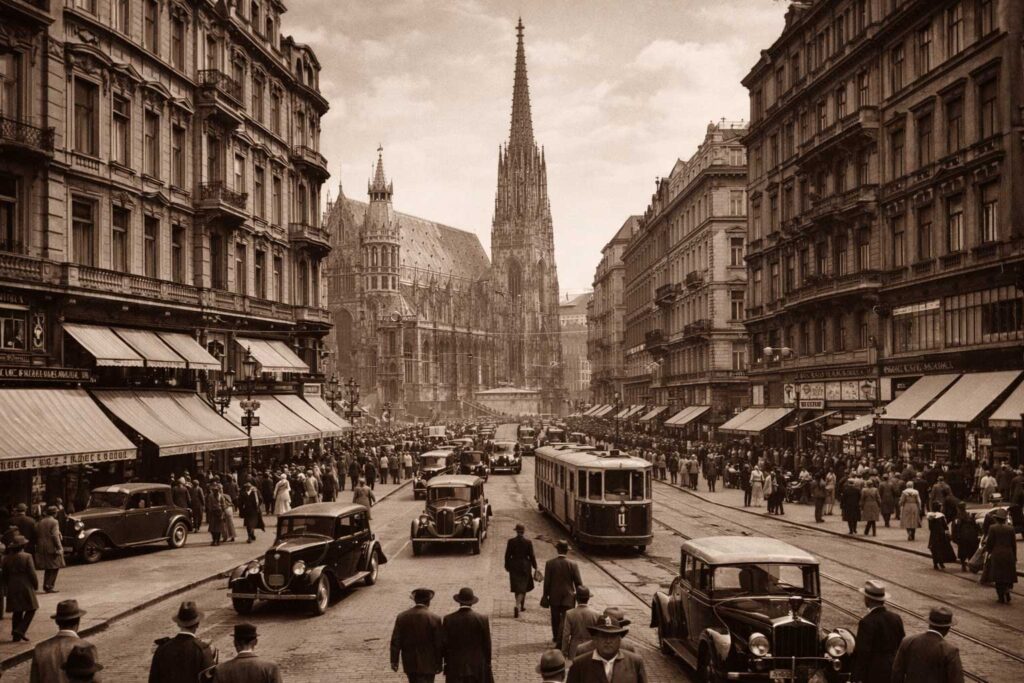
After relocating to Vienna, Elias Canetti found himself immersed in one of the most intellectually dynamic environments in early 20th-century Europe. Vienna during this period was not just a political capital—it was a center of revolutionary thought, where ideas in philosophy, psychology, literature, and the arts were being redefined.
The city served as a meeting point for some of the most influential minds of the time and was particularly known for its contributions to:
- Philosophy – including debates on logic, language, and human consciousness
- Psychoanalysis – shaped by figures like Sigmund Freud, whose theories transformed the understanding of the human mind
- Modernist literature – characterized by experimentation, introspection, and a break from traditional narrative forms
- Political upheaval – following the collapse of the Austro-Hungarian Empire, which created an atmosphere of instability and ideological conflict
Academic Beginnings and Shift in Direction
Despite his growing interest in intellectual and artistic life, Elias Canetti initially pursued a more traditional academic path. He enrolled at the University of Vienna, where he studied chemistry and eventually earned a doctorate.
However, this scientific training did not define his future. Instead, it provided him with a disciplined analytical mindset that he would later apply to literature and philosophy. Over time, his true passions became increasingly clear:
- Literature and storytelling
- Philosophy and human behavior
- Cultural analysis and critique
This shift marked a decisive turning point, as Elias Canetti moved away from science and toward becoming a writer and thinker.
Vienna’s Coffeehouse Culture and Intellectual Circles
One of the most influential aspects of Canetti’s education was not confined to lecture halls but found in Vienna’s famous coffeehouse culture. These cafés functioned as informal intellectual hubs where writers, philosophers, and artists gathered to exchange ideas, debate, and collaborate.
In these environments, Canetti was exposed to:
- Diverse political ideologies
- Avant-garde literary movements
- Experimental artistic expressions
- Deep philosophical discussions
He became actively involved in these circles, forming connections with prominent cultural figures and absorbing the intellectual energy of the city.
Influence on His Later Work
The impact of Vienna on Canetti’s development cannot be overstated. It was here that he began to formulate the ideas that would later define his major works, including Crowds and Power.
This article may contain affiliate links. If you purchase through these links, we may earn a small commission at no extra cost to you.
His experiences in Vienna contributed directly to his lifelong exploration of:
- Mass psychology and collective behavior
- Power structures within society
- The tension between individuality and conformity
- The role of language in shaping thought
The political instability and ideological clashes he witnessed also deepened his understanding of authority, control, and human vulnerability—core themes that appear throughout his writings.
A Crucible of Intellectual Identity
Ultimately, Vienna served as a crucible for Canetti’s intellectual identity. It was the place where his early experiences, personal trauma, and multicultural background converged with a rich and challenging intellectual environment.
Here, Elias Canetti transformed from a student of science into:
- A literary thinker
- A cultural critic
- A future Nobel laureate
This period laid the foundation for a body of work that would go on to influence literature, philosophy, and social theory on a global scale.
Escape from Nazi Persecution
The rise of totalitarianism in Europe during the 1930s marked a decisive and dangerous turning point in the life of Elias Canetti. As political tensions escalated and antisemitic policies intensified, Canetti—like many intellectuals of Jewish descent—found himself increasingly at risk.
In 1938, following the Anschluss, Austria was absorbed into Nazi Germany. This event triggered immediate and widespread persecution of Jewish communities, intellectuals, and political dissidents. For Canetti, remaining in Vienna was no longer an option.
Forced Exile and Flight to England
Faced with the threat of persecution, Canetti fled Austria and relocated to London. This move marked the beginning of a prolonged period of exile—one defined by displacement, uncertainty, and cultural dislocation.
In London, Canetti joined a broader community of European exiles, including writers, artists, and thinkers who had escaped the oppressive regimes spreading across the continent. While the city offered safety, it also presented new challenges:
- Adapting to a different cultural and linguistic environment
- Navigating life as an outsider
- Rebuilding intellectual and social networks
Despite these difficulties, London became a place of intellectual resilience and survival.
The Psychological Impact of Exile
The experience of exile profoundly shaped Canetti’s worldview and became a central influence on his later writings. Being uprooted from his cultural and intellectual home forced him to confront fundamental questions about identity, belonging, and survival.
During this period, his thinking increasingly focused on:
- Power and authoritarianism – observing firsthand the destructive reach of totalitarian regimes
- Identity and exile – exploring what it means to lose one’s homeland and cultural anchors
- Cultural survival – preserving intellectual and artistic identity in foreign environments
These themes would later be developed with remarkable depth in works such as Crowds and Power, where he examines how fear, control, and mass movements shape human behavior.
Life in Wartime London
Living in London during World War II exposed Elias Canetti to yet another layer of historical upheaval. The city itself was under constant threat during the Blitz, and daily life was marked by uncertainty and tension.
Yet this environment also reinforced his observations about:
- Collective fear and solidarity
- The psychology of crowds under stress
- The resilience of individuals within larger social systems
These lived experiences enriched his intellectual framework, allowing him to analyze not only abstract theories of power but also their real-world consequences.
British Citizenship and a New Identity
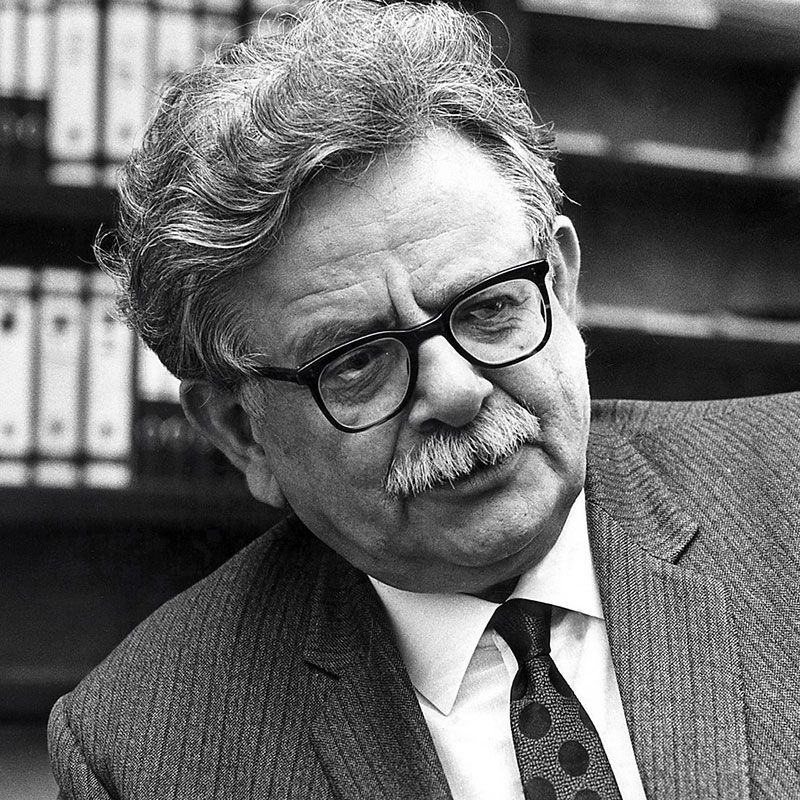
In 1952, Canetti became a British citizen, a milestone that symbolized both stability and transformation. By this point, his identity had evolved into something deeply layered and transnational:
- Bulgarian by birth
- Jewish by heritage
- Austrian by intellectual formation
- British by citizenship
This complex identity became one of the defining features of his work. Rather than belonging to a single nation or tradition, Canetti emerged as a truly European thinker, capable of analyzing culture, power, and society from a uniquely broad perspective.
Lasting Influence of Exile
The years of exile were not merely a period of survival—they were a formative intellectual crucible. The loss of homeland, the confrontation with authoritarian power, and the experience of displacement all contributed to the depth and originality of Canetti’s thought.
These experiences helped shape:
- His critique of mass movements
- His understanding of authority and control
- His lifelong resistance to ideological conformity
Ultimately, exile did not silence Canetti—it sharpened his voice, transforming personal upheaval into profound intellectual insight.
Literary Career and Major Works
Published in 1935, Auto-da-Fé (Die Blendung in German) stands as the only novel written by Elias Canetti, yet it remains one of the most powerful and unsettling works of modernist literature.
👉 Related literary analysis → Bulgarian Contributions to Modern Technology
Despite producing just a single novel, Canetti achieved what many writers strive for across entire careers—he created a work of such depth and originality that it secured his place among the most important literary voices of the 20th century.
A Dark Vision of Intellectual Isolation
At its core, Auto-da-Fé is a deeply psychological and symbolic exploration of the dangers of intellectual detachment. The novel presents a world where knowledge, when isolated from reality, becomes destructive rather than enlightening.
👉 Read Auto-da-Fé and more works by Elias Canetti on Amazon.
The story follows Peter Kien, a reclusive and obsessive scholar whose life revolves entirely around his vast personal library. Kien believes that knowledge exists purely within books and rejects the outside world as chaotic and inferior.
Through this character, Canetti explores several profound themes:
- Intellectual isolation – the dangers of withdrawing completely from society
- Obsession with knowledge – when learning becomes disconnected from lived experience
- Distortion of reality – the inability to distinguish between ideas and real-world consequences
Kien’s rigid worldview ultimately leads to his psychological and physical downfall, illustrating the catastrophic consequences of extreme detachment.
Symbolism and Modernist Style
Auto-da-Fé is not a conventional novel—it is a modernist masterpiece, rich in symbolism, exaggerated characters, and philosophical undertones. Canetti uses extreme situations and grotesque portrayals to reflect deeper truths about human nature.
The novel is often compared to works by:
- Franz Kafka – for its surreal and oppressive atmosphere
- Fyodor Dostoevsky – for its psychological depth and moral complexity
Rather than offering a linear narrative, Canetti constructs a world that feels distorted and unstable, mirroring the internal collapse of its protagonist.
Critique of Intellectual Elitism
One of the most striking aspects of Auto-da-Fé is its critique of intellectual arrogance. Canetti challenges the idea that knowledge alone can elevate an individual above society.
Through Kien’s character, he exposes:
- The fragility of intellectual superiority
- The dangers of ignoring human relationships
- The illusion of control through knowledge
This critique reflects Canetti’s broader philosophical concerns about power, control, and the human tendency to isolate oneself in systems of thought.
Connection to His Broader Work
Although Auto-da-Fé is Canetti’s only novel, it introduces many of the themes that he would later expand in works like Crowds and Power.
The novel can be seen as a precursor to his later exploration of:
- Human behavior in extreme conditions
- The relationship between the individual and the collective
- The psychological foundations of power
Lasting Legacy of the Novel
Over time, Auto-da-Fé has come to be recognized as a cornerstone of modernist literature. Initially misunderstood by some critics, it later gained widespread acclaim for its originality and intellectual depth.
Today, the novel is studied for its:
- Philosophical insight
- Psychological complexity
- Innovative narrative style
It remains a powerful warning about the dangers of isolation—both intellectual and emotional—and continues to resonate in an age where information is abundant but understanding is not guaranteed.ll.
Crowds and Power (Masse und Macht)
Published in 1960, Crowds and Power (Masse und Macht) is widely regarded as the most influential and intellectually ambitious work of Elias Canetti. Unlike traditional academic studies, this book defies classification—it blends philosophy, sociology, anthropology, psychology, and literary insight into a single, powerful exploration of human behavior.
👉 Explore influential Bulgarian thinkers → Bulgarian Scientists Who Changed Medicine
At its core, Crowds and Power seeks to answer a fundamental question:
👉 Why do individuals behave differently when they become part of a crowd?
A Radical Analysis of Human Behavior
Canetti’s approach is both original and deeply analytical. Rather than relying solely on scientific methodology, he draws from:
- Historical events and revolutions
- Religious rituals and ceremonies
- Mythological narratives
- Personal observations and lived experience
This interdisciplinary method allows him to construct a theory of human behavior that is both universal and timeless.
Key Concepts and Ideas
One of the most striking elements of Crowds and Power is Canetti’s ability to break down complex social phenomena into powerful, memorable concepts.
The Psychology of Crowds
Canetti argues that crowds create a sense of equality among individuals. In a crowd, social hierarchies dissolve, and people feel liberated from their individual identities.
The Dynamics of Power
Power, in Canetti’s view, is rooted in control and survival. He explores how leaders maintain dominance and how masses respond to authority.
The Fear of Being Touched
One of his most original ideas is that humans have an innate fear of being touched by strangers—something that disappears within a crowd, where physical closeness becomes acceptable and even desired.
Group Identity and Mass Movements
Canetti examines how collective identity forms and how crowds can transform into powerful social forces capable of both creation and destruction.
Relevance in the Modern World
Although written in the mid-20th century, Crowds and Power remains remarkably relevant today. Its insights can be applied to:
- Political movements
- Social media dynamics
- Mass protests and revolutions
- Collective behavior in crises
The book continues to be studied across multiple disciplines, proving its lasting intellectual significance.
Autobiographical Trilogy
In addition to his philosophical and literary works, Canetti produced one of the most celebrated autobiographical series in modern literature. His trilogy offers a deeply personal yet culturally rich account of his life and the world around him.
The trilogy consists of:
- The Tongue Set Free (1977)
- The Torch in My Ear (1980)
- The Play of the Eyes (1985)
A Window into European History and Identity
These memoirs go far beyond personal storytelling. They provide:
- A vivid account of Canetti’s childhood in Bulgaria and early years in Europe
- A detailed portrait of intellectual life in pre-war Vienna
- Insight into the cultural and political tensions of the early 20th century
Through these works, Canetti reconstructs not only his own life but also the broader cultural landscape that shaped him.
Themes of Memory and Self-Discovery
Central to the trilogy is the idea that memory is not passive but actively shapes identity. Canetti uses his recollections to explore:
- The formation of the self
- The influence of language and culture
- The emotional weight of past experiences
The memoirs are often praised for their literary elegance, psychological depth, and historical value.
Other Notable Works
Beyond his major works, Canetti’s literary output is diverse and intellectually rich, spanning multiple genres and styles.
Plays and Dramatic Works
- The Comedy of Vanity (1934)
- Their Days Are Numbered (1956)
These works often explore themes of identity, illusion, and societal behavior through dramatic expression.
Essays and Philosophical Reflections
Canetti’s essays, including those collected in The Conscience of Words, reveal his deep engagement with literature, language, and thought. These writings offer:
- Reflections on other authors and thinkers
- Insights into the role of language in shaping reality
- Observations on culture and intellectual life
Travel Writing
- The Voices of Marrakesh (1968)
This work captures Canetti’s observations during his travels, blending vivid description with cultural analysis. It demonstrates his ability to interpret unfamiliar environments with sensitivity and depth.
Character Studies
A unique collection of brief character sketches, this work showcases Canetti’s talent for capturing human personalities with precision and insight.
Writing Style and Intellectual Approach
Across all his works, Canetti’s writing is characterized by a distinctive and powerful style. It is often described as:
- Analytical – deeply examining human behavior and social structures
- Symbolic – using imagery and metaphor to convey complex ideas
- Philosophically rich – engaging with fundamental questions about existence, power, and identity
- Deeply observational – rooted in careful attention to human interactions and cultural patterns
Rather than offering simple narratives or conclusions, Canetti challenges readers to think critically and engage with the deeper forces shaping human life.
Themes and Philosophy
The intellectual depth of Elias Canetti lies not only in his works but in the powerful themes that run through them. His writing is unified by a relentless effort to understand human behavior—especially how individuals relate to power, society, and identity.
The Nature of Power
A central theme in Canetti’s work is the nature of power—how it is acquired, maintained, and resisted. Unlike traditional political thinkers, Canetti approached power not as a purely institutional force, but as something deeply rooted in human psychology.
👉 See how Bulgarian minds shaped global thought → Bulgarian Science and Technology History
He viewed power as:
- A psychological force – emerging from fear, survival instincts, and dominance
- A social construct – shaped by relationships between individuals and groups
- A dangerous tool when concentrated – capable of leading to oppression and destruction
In Crowds and Power, Canetti dissects how authority figures maintain control and how masses respond—often irrationally—to power structures. His analysis goes beyond politics, offering insight into everyday human interactions and hierarchies.
Crowd Psychology
One of Canetti’s most original and influential contributions is his exploration of crowd psychology. He argued that individuals undergo a profound transformation when they become part of a mass.
Key ideas include:
- Loss of individuality in crowds – personal identity dissolves into collective identity
- Desire for equality within masses – social differences temporarily disappear
- Fear of isolation – individuals seek belonging and security within groups
For Canetti, the crowd is not just a social phenomenon—it is a psychological state. Within it, people feel both liberated and vulnerable, capable of actions they would never consider alone.
These insights remain highly relevant today, especially in understanding:
- Political movements
- Social media behavior
- Mass protests and collective action
Memory and Identity
In his autobiographical works, Canetti explores the powerful relationship between memory and identity. He rejected the idea that memory is simply a record of the past. Instead, he saw it as an active force that shapes who we are.
He believed:
- Memory is constructive, not passive – it evolves and reshapes itself over time
- Personal history defines cultural identity – individuals carry their past into the present
- Experience influences perception – how we remember shapes how we interpret reality
These ideas are central to his memoir trilogy, where personal recollection becomes a tool for understanding broader cultural and historical forces.
Language and Multiculturalism
Canetti’s multilingual upbringing gave him a unique perspective on language as more than just communication—it was a gateway to different ways of thinking.
Although he chose to write in German, his identity remained complex and layered:
- Bulgarian by birth
- Jewish by heritage
- European by intellectual formation
- British by citizenship
This multicultural identity allowed him to move beyond national boundaries and develop a broader, more inclusive understanding of human culture. For Canetti, language was deeply tied to power, identity, and perception.
Awards and Recognition
Throughout his career, Canetti received numerous prestigious honors that recognized his exceptional contribution to literature and intellectual thought.
Among the most notable are:
- Nobel Prize in Literature (1981)
- Georg Büchner Prize (1972)
- Austrian State Prize for Literature (1967)
- Nelly Sachs Prize (1975)
- Franz Kafka Prize (1981)
These awards reflect not only his literary achievements but also the global relevance of his ideas. His work transcended genres and disciplines, earning recognition across Europe and beyond.
Later Life in Zurich
In the 1970s, Canetti settled permanently in Zurich, where he spent the final decades of his life. After years marked by displacement and intellectual struggle, Zurich offered him a stable and शांत environment for reflection and writing.
During this period, he continued to produce:
- Essays and philosophical writings
- Personal notes and reflections
- Literary fragments and observations
This phase of his life was characterized by introspection and consolidation of his ideas. Although he was no longer as publicly active, his intellectual influence continued to grow.
Canetti passed away on August 14, 1994, leaving behind a body of work that continues to shape discussions in literature, philosophy, sociology, and cultural studies.
Enduring Legacy
The legacy of Elias Canetti is one of intellectual courage and originality. His ability to analyze the deepest aspects of human behavior—power, fear, identity, and memory—ensures that his work remains relevant in an ever-changing world.
Today, he is remembered as:
- A Nobel Prize-winning author
- A philosopher of human behavior
- A cultural bridge between East and West
His writings continue to challenge readers to think critically about society, authority, and the forces that shape human existence.
Legacy and Global Influence
The intellectual legacy of Elias Canetti extends far beyond the boundaries of literature. His work continues to shape academic thought and cultural discourse across multiple disciplines, making him one of the most influential thinkers of the 20th century.
👉 Discover more global Bulgarian impact → Bulgarian Contributions to Modern Technology.
Literature
In the field of literature, Canetti is widely regarded as one of the most important modernist writers of his time. His unique ability to blend narrative, philosophy, and psychological insight set him apart from his contemporaries.
Works such as Auto-da-Fé and his autobiographical trilogy demonstrate:
- A mastery of modernist storytelling techniques
- Deep psychological characterization
- A commitment to exploring the complexities of human existence
Unlike many writers who focus on plot-driven narratives, Canetti’s literary approach emphasizes ideas, structure, and symbolic meaning, aligning him with the broader modernist movement in European literature.
Sociology and Psychology
Canetti’s influence is perhaps most profound in the fields of sociology and psychology, particularly through his seminal work Crowds and Power.
His analysis of mass behavior and authority continues to be studied in:
- Social psychology
- Political theory
- Cultural studies
- Behavioral science
Key contributions include:
- Understanding how individuals behave within groups
- Analyzing the mechanisms of power and control
- Exploring fear, conformity, and collective identity
In an era shaped by rapid communication, global movements, and digital communities, Canetti’s insights remain strikingly relevant.
Philosophy
Beyond literature and social science, Canetti’s work holds a significant place in modern philosophy. His reflections on identity, memory, and authority engage with fundamental questions about human existence.
His philosophical contributions explore:
- The nature of self and individuality
- The role of memory in shaping perception
- The ethical implications of power and dominance
Unlike traditional philosophers, Canetti did not present systematic theories. Instead, he offered deep, fragmented insights that challenge readers to think critically and interpret meaning for themselves.
A Cross-Disciplinary Intellectual Legacy
What makes Canetti truly exceptional is his ability to transcend disciplines. His work cannot be confined to a single field—it exists at the intersection of:
- Literature
- Sociology
- Psychology
- Philosophy
- Cultural analysis
This interdisciplinary reach ensures that his ideas continue to influence scholars, writers, and thinkers across the globe.
Enduring Relevance
Decades after his death, Canetti’s work remains highly relevant in understanding:
- Political movements and mass behavior
- Social dynamics in both physical and digital spaces
- The psychological foundations of power and authority
His ability to capture universal patterns of human behavior ensures that his legacy is not confined to the past—it continues to evolve alongside modern society.
Elias Canetti and Bulgaria
Although Elias Canetti spent most of his life abroad, his connection to Bulgaria remains deeply significant. Born in Ruse, Canetti is widely recognized today as one of the country’s most important literary and cultural figures—an intellectual whose influence extends far beyond national borders.
A Bulgarian Beginning with Global Impact
Canetti’s early years in Ruse played a crucial role in shaping his worldview. The city’s multicultural environment, positioned along the Danube, exposed him to a blend of languages, traditions, and perspectives from a young age.
This early foundation contributed to:
- His multilingual identity
- His sensitivity to cultural diversity
- His ability to analyze society from a broader, transnational perspective
Even though he later lived in cities such as Vienna, London, and Zurich, the influence of his Bulgarian origins remained embedded in his intellectual development.
Cultural Recognition in Ruse
Today, Ruse actively preserves and celebrates Canetti’s legacy through a range of cultural institutions and initiatives.
Among the most important is the Elias Canetti House Museum, located in his birthplace. This site serves as:
- A cultural landmark dedicated to his life and work
- A center for exhibitions and literary events
- A place of education for visitors and scholars
In addition to the museum, the city hosts:
- Literary festivals and cultural events honoring his contribution
- Academic discussions and conferences focused on his work
- Local and international collaborations promoting his legacy
These efforts ensure that Canetti’s connection to Bulgaria is not only remembered but actively integrated into the country’s cultural identity.
Bulgaria’s Place in Canetti’s Identity
Although Canetti wrote in German and became a British citizen, his identity remained layered and complex. His Bulgarian roots are an essential part of that identity.
They represent:
- His geographical origin
- His early cultural environment
- His first exposure to diversity and multilingualism
Rather than belonging to a single nation, Canetti embodied a broader European identity—but one that began in Bulgaria.
National Pride and International Recognition
Today, Bulgaria proudly claims Elias Canetti as part of its cultural and intellectual heritage. His Nobel Prize achievement and global recognition have elevated his status as:
- A symbol of Bulgarian cultural contribution to world literature
- A bridge between Bulgarian and European intellectual traditions
- An example of how local origins can lead to global impact
His legacy continues to inspire writers, scholars, and readers both within Bulgaria and internationally.
👉 Explore more about Bulgaria → 35+ Bulgarian Country Facts
Complete List of Major Works
The literary output of Elias Canetti spans multiple genres, including novels, plays, philosophical essays, memoirs, and notes. While not extensive in volume, his works are exceptionally rich in intellectual depth and continue to be widely studied.
Early Works and Drama
- Komödie der Eitelkeit (1934) – The Comedy of Vanity
- Die Blendung (1935) – Auto-da-Fé
- Die Befristeten (1956) – Their Days Are Numbered
👉 These early works reflect Canetti’s fascination with identity, illusion, and the structure of society, often expressed through dramatic and symbolic narratives.
Philosophical and Analytical Works
- Masse und Macht (1960) – Crowds and Power
- Der andere Prozess (1969) – Kafka’s Other Trial
- Das Gewissen der Worte (1975) – The Conscience of Words
- Hitler nach Speer – Essay
👉 These works establish Canetti as a major thinker, exploring power, authority, and literary interpretation, often drawing from historical and psychological perspectives.
Notes, Reflections, and Intellectual Fragments
- Aufzeichnungen 1942–1948 (1965) – Sketches
- Die Provinz des Menschen (1973) – The Human Province
- Der Ohrenzeuge. Fünfzig Charaktere (1974) – Ear Witness: Fifty Characters
- Das Geheimherz der Uhr (1987) – The Secret Heart of the Clock
- Die Fliegenpein (1992) – The Agony of Flies
- Nachträge aus Hampstead (1994) – Notes from Hampstead
👉 These fragmented writings are among Canetti’s most philosophical, offering condensed insights into human nature, language, and perception.
Memoirs (Autobiographical Trilogy)
- Die Gerettete Zunge (1977) – The Tongue Set Free
- Die Fackel im Ohr (1980) – The Torch in My Ear
- Das Augenspiel (1985) – The Play of the Eyes
👉 This trilogy is widely considered one of the greatest autobiographical works in modern literature, documenting his life, intellectual development, and European cultural history.
Travel Writing
- Die Stimmen von Marrakesch (1968) – The Voices of Marrakesh
👉 A unique travelogue blending observation, anthropology, and literary reflection.
Posthumous Publications
- The Voices of Marrakesh (2001 edition with artwork)
- Party im Blitz; Die englischen Jahre (2003) – Party in the Blitz
- Aufzeichnungen für Marie-Louise (2005)
👉 Explore more from Elias Canetti and discover his most influential works on Amazon
👉 These later publications provide additional insight into Canetti’s life in exile and his private reflections.
👉 Continue exploring → 35+ Bulgarian Country Facts | Bulgarian Scientists
FAQs About Elias Canetti
Who was Elias Canetti?
Elias Canetti was a Bulgarian-born writer, thinker, and intellectual who became one of the most influential literary figures of the 20th century. He was awarded the Nobel Prize in Literature in 1981 for his works exploring human behavior, power, and society. His writings combine elements of literature, philosophy, and social analysis, making them unique and widely studied.
What is Elias Canetti most famous for?
Elias Canetti is best known for several groundbreaking works that continue to influence multiple disciplines:
- Crowds and Power – a profound study of mass psychology and authority
- Auto-da-Fé – his only novel and a modernist masterpiece
- His autobiographical trilogy, including:
These works collectively explore themes such as identity, memory, power, and the dynamics of human interaction.
Why did Elias Canetti leave Austria?
Canetti left Austria in 1938 following the Anschluss, when Nazi Germany annexed Austria. As a Jewish intellectual, he faced increasing danger under the regime and was forced to flee to London to escape persecution.
What language did Elias Canetti write in?
Although born in Bulgaria and raised in a multilingual environment, Canetti wrote primarily in German. This was largely due to his education and intellectual formation in Vienna, where German was the dominant cultural and literary language.
Where did Elias Canetti live most of his life?
Throughout his life, Canetti lived in several countries, reflecting his complex and multicultural identity:
- Bulgaria – birthplace in Ruse
- Austria – formative intellectual years in Vienna
- United Kingdom – years of exile in London
- Switzerland – later life in Zurich
This transnational life experience played a crucial role in shaping his worldview and literary voice.
Conclusion
Elias Canetti remains one of the most profound intellectual figures of the 20th century, whose work continues to shape how we understand power, identity, and human behavior.
From his early life in Bulgaria to his recognition as a Nobel Prize laureate, Canetti’s journey reflects the complexity of European history and the enduring relevance of great ideas. His writings challenge readers not only to observe the world—but to question it.
👉 Discover more of Elias Canetti’s books and writings on Amazon
Explore More from Bulgaropedia
- 35+ Bulgarian Country Facts
- Bulgarian Scientists
- Bulgarian Science and Technology History
- Bulgarian Contributions to Modern Technology
References
Note: Many of Elias Canetti’s works were originally written in German and later translated into English and other languages.
- NobelPrize.org. “The Nobel Prize in Literature 1981 – Elias Canetti.” Available at: https://www.nobelprize.org/prizes/literature/1981/canetti/
- Encyclopaedia Britannica. “Elias Canetti.” Available at: https://www.britannica.com/biography/Elias-Canetti
- Lorenz, Dagmar C. G. (2004). “Elias Canetti.” The Literary Encyclopedia. Available at: https://www.litencyc.com/php/speople.php?rec=true&UID=522
- Random House Webster’s Unabridged Dictionary. “Canetti.”
- A Companion to the Works of Elias Canetti. Twayne Publishers. ISBN: 978-080-578-276-9.
- Internationale Elias Canetti Gesellschaft. “The Canetti House – A Forum for Alternative Culture.” Available at: https://eliascanetti.org/en/home/
- Angelova, Penka (2006). “Die Geburtsstadt von Elias Canetti.” Elias Canetti: Der Ohrenzeuge des Jahrhunderts.
- Beit Hatfutsot. “Heroes – Trailblazers of the Jewish People.”
- Hanser Verlag. “Author Page: Elias Canetti.” Available at: https://www.hanser-literaturverlage.de/autor/elias-canetti/
- German Academy for Language and Literature. “Georg Büchner Prize.” Available at: https://www.deutscheakademie.de/en/awards/georg-buechner-preis
- University of Manchester. Honorary doctorate records.
- Austrian National Library. Literary archives and historical documentation. Available at: https://www.onb.ac.at/en/
- Swiss National Library. Swiss Literary Archives. Available at: https://www.nb.admin.ch/snl/en/home.html
- Elias Canetti House Museum, Ruse, Bulgaria. Available at: https://eliascanetti.org/en/canetti-house-2/
- Stieg, Gerard (1989). Fruits de Feu – L’incendie du Palais de Justice de Vienne en 1927 et ses conséquences dans la littérature autrichienne. Université de Rouen.
- Labesse, Patrick (1997). “Jacques Canetti, le découvreur de Brassens et de Brel.” Le Monde. Available at: https://www.lemonde.fr/archives/article/1997/06/10/jacques-canetti_3772530_1819218.html
- Austrian Parliamentary Records. “Reply to a Parliamentary Question.”