

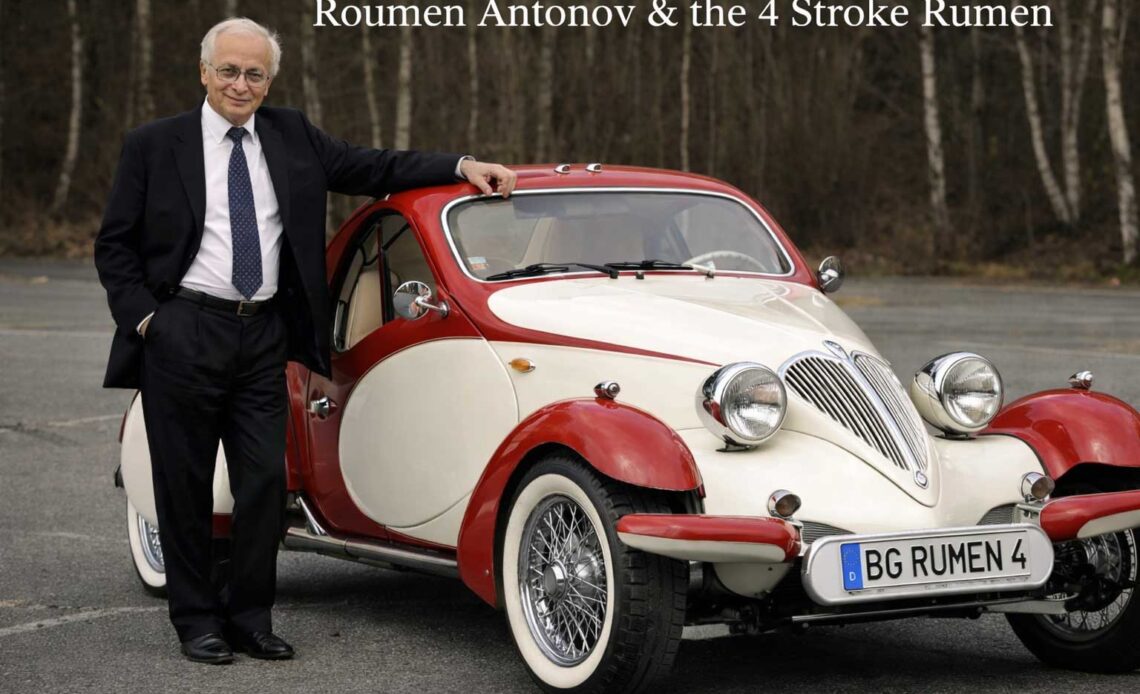

Roumen Antonov is one of the most innovative yet underrecognized figures in modern automotive engineering. Born in 1944 in Sofia, Bulgaria, he devoted his career to solving one of the most complex and inefficient components in vehicles—the automatic transmission.
At a time when the automotive industry relied heavily on bulky, energy-consuming systems, Antonov introduced a radically different philosophy. Instead of adding more complexity, he focused on simplification, efficiency, and intelligent use of mechanical forces.
His work is especially important in the context of modern mobility, where fuel efficiency, emissions reduction, and compact engineering are critical. Long before these became global priorities, Antonov was already designing systems that addressed them.
👉 Explore more: Bulgarian Scientists Who Changed Medicine
Roumen Antonov’s work stands at the intersection of mechanical engineering innovation and modern automotive efficiency. While many engineers focused on refining existing systems, Antonov challenged the core assumptions behind automatic transmissions. His approach reflects a deeper engineering philosophy—simplify where others complicate, and optimize what others overlook.
Roumen Antonov is a Bulgarian automotive engineer and inventor known for developing innovative automatic transmission systems that improve efficiency, reduce weight, and eliminate traditional torque converters.
Early Life and Education
Roumen Antonov was born in Sofia in 1944, during a period of significant political and technological transformation in Europe. From an early age, he showed strong interest in mechanics and engineering, which later shaped his academic and professional path.
He pursued engineering studies and expanded into design and scientific disciplines. This combination gave him a unique advantage—he was not only capable of solving technical problems but also of rethinking systems from a conceptual perspective.
Unlike many engineers who specialize narrowly, Antonov developed a broader understanding of how systems interact. This allowed him to challenge conventional automotive design principles later in his career.
In 1988, he left Bulgaria and moved to France. This transition proved crucial, as it placed him in a more dynamic industrial environment where he could develop and test his ideas on a global stage.
The Problem: Why Traditional Automatic Gearboxes Were Inefficient
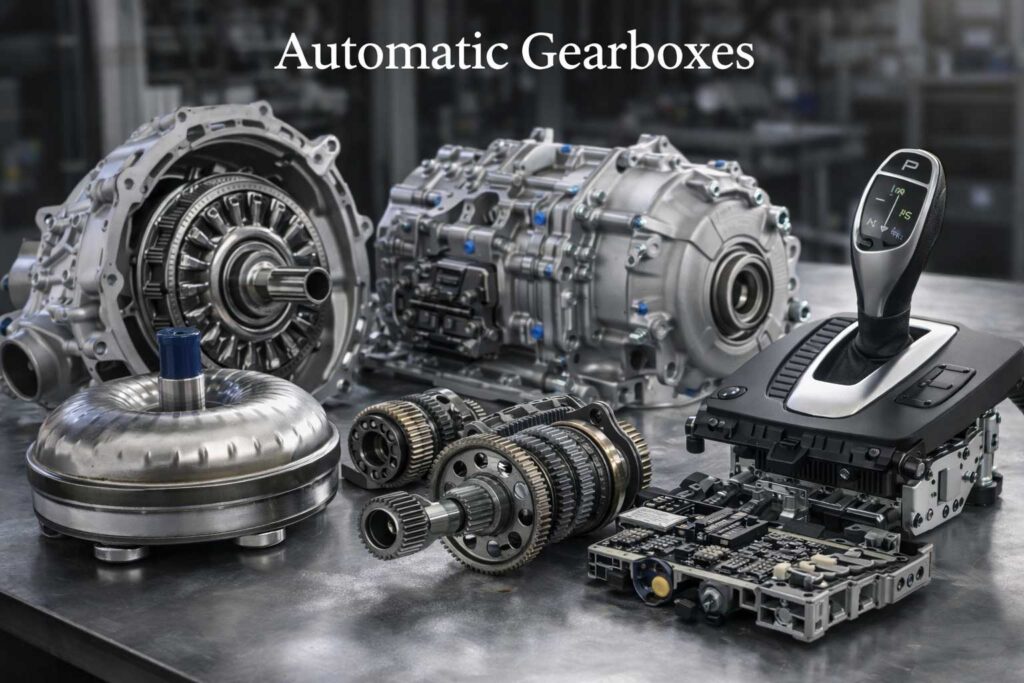
Before Antonov’s innovations, automatic transmissions were already widely used but came with major drawbacks. These systems were heavily dependent on hydraulic pressure and torque converters, both of which consumed significant energy.
A torque converter, while useful for smooth driving, wastes engine power by transferring energy through fluid rather than direct mechanical contact. This results in reduced fuel efficiency and slower response.
Additionally, traditional automatic gearboxes required:
- Complex hydraulic circuits
- Multiple heavy components
- Continuous energy consumption
These issues became even more significant in smaller vehicles, where efficiency and weight are critical.
Antonov recognized that the existing approach was fundamentally flawed—not because it didn’t work, but because it relied on inefficient principles.
👉 Learn more: Bulgarian Science and Technology History.
The Breakthrough: Roumen Antonov’s Automatic Drive (AAD)
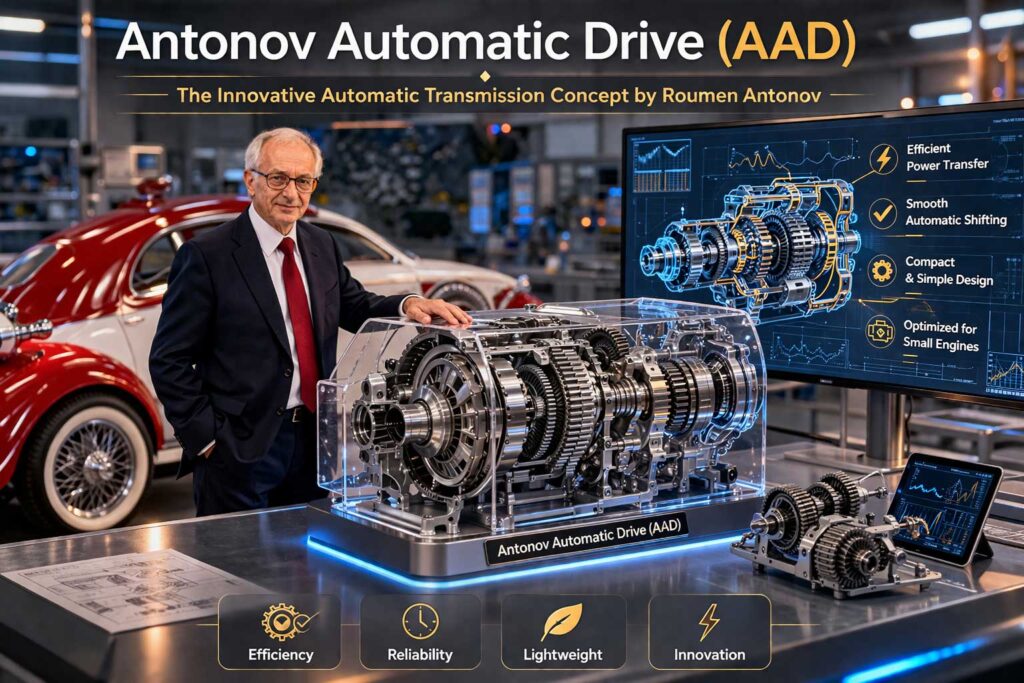
Antonov’s most important innovation was the Antonov Automatic Drive (AAD)—a concept designed to rethink how automatic transmissions operate.
Instead of relying entirely on hydraulic force, Antonov introduced the idea of using internal mechanical forces already present in the gearbox. Specifically, he utilized the axial forces generated by helical gears.
These forces, typically considered a side effect, were transformed into a functional component of the system. This reduced the need for external energy input and simplified the overall design.
The AAD system represents a shift from energy-intensive systems to energy-efficient engineering, making it one of the most forward-thinking concepts in transmission design.
How Antonov’s Gearbox Works
At the core of Antonov’s innovation is a simple but powerful idea: let the system assist itself.
In traditional gearboxes, engineers often try to control or eliminate internal forces. Antonov did the opposite—he embraced these forces and used them to help move gear components during shifting.
This approach reduces:
- Dependence on hydraulic pressure
- Energy loss during operation
- Mechanical complexity
By integrating mechanical and hydraulic behavior more intelligently, Antonov created a system that is both simpler and more efficient.
This philosophy reflects a broader engineering principle: the best solutions often come from working with natural forces, not against them.
The TX6 Transmission: A Major Step Forward
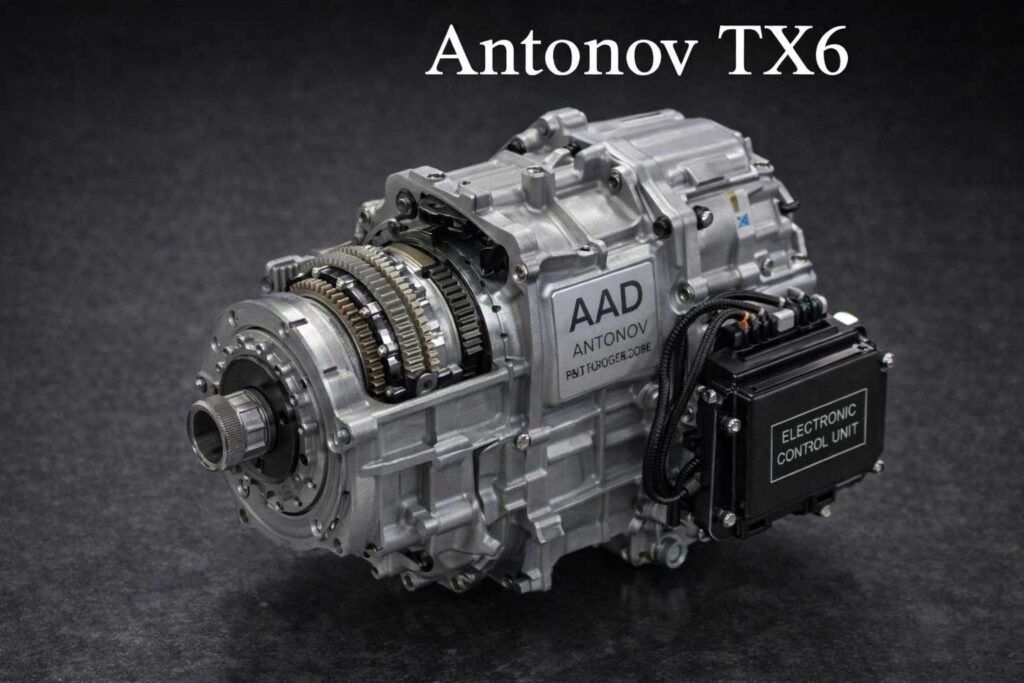
The TX6 transmission represents one of Antonov’s most advanced developments and a practical application of his concepts.
Unlike conventional systems, the TX6 eliminates the traditional torque converter and replaces it with a system of wet clutches. This allows for more direct power transfer from the engine to the wheels.
This change significantly improves efficiency because it reduces the energy losses associated with fluid-based systems.
The TX6 was specifically designed for compact vehicles, making it highly relevant for European and Asian markets where smaller engines dominate.
It also reflects the industry’s gradual shift toward more efficient drivetrain solutions—something Antonov anticipated years earlier.
Antonov Gearbox vs Traditional Automatic Transmission
Understanding Roumen Antonov’s innovation becomes much clearer when compared directly with conventional automatic gearboxes. While both systems aim to deliver smooth driving and ease of use, the way they achieve this is fundamentally different.
Traditional automatic transmissions were designed decades ago and have evolved gradually, often adding complexity rather than removing it. Antonov’s approach, on the other hand, rethinks the system from the ground up.
Key Differences at a Glance
| Feature | Antonov Gearbox | Traditional Automatic Transmission |
|---|---|---|
| Core Design | Simplified, efficiency-focused | Complex, multi-component system |
| Torque Converter | ❌ Not required | ✔ Required |
| Energy Efficiency | ✔ High | ❌ Lower due to fluid losses |
| Weight | ✔ Lightweight | ❌ Heavier |
| Hydraulic Dependency | ❌ Reduced | ✔ High |
| Power Loss | ✔ Minimal | ❌ Significant |
| Complexity | ✔ Lower | ❌ Higher |
| Maintenance | ✔ Potentially lower | ❌ Often higher |
👉 Learn more about engineering breakthroughs: Bulgarian Science and Technology History.
How Power Is Transferred
One of the biggest differences lies in how engine power is transferred to the wheels.
Traditional Gearbox
- Uses a torque converter filled with fluid
- Transfers power indirectly
- Causes energy loss through slippage
This results in smoother driving but reduces efficiency.
Antonov Gearbox
- Uses wet clutch systems instead of torque converter
- Transfers power more directly
- Reduces energy loss
👉 This makes Antonov’s system more efficient, especially in smaller engines.
Efficiency and Fuel Economy
Efficiency is where Antonov’s design truly stands out.
Traditional automatic transmissions lose energy because of:
- Fluid coupling
- Constant hydraulic pressure
- Internal friction
Antonov’s system minimizes these losses by:
- Using mechanical forces inside the gearbox
- Reducing reliance on hydraulics
- Eliminating unnecessary energy conversion
👉 The result: better fuel economy and lower emissions.
Mechanical Complexity
Traditional systems rely on:
- Multiple hydraulic circuits
- Complex control systems
- Numerous moving parts
Antonov’s design simplifies this by:
- Reducing the number of components
- Using natural gear forces
- Integrating functions into fewer systems
This simplicity can lead to:
- Lower manufacturing cost
- Easier maintenance
- Greater reliability potential
Real-World Applications
Traditional automatic transmissions dominate the global market and are used in millions of vehicles worldwide.
Antonov’s technology, while innovative, faced challenges in mass adoption. However, it remains highly relevant for:
- Small engine vehicles
- Efficiency-focused designs
- Future lightweight mobility systems
Why This Comparison Matters
This comparison highlights something important:
👉 Antonov didn’t just improve the gearbox—he challenged its core design philosophy.
Instead of asking: “How can we make this system better?”
He asked: “How can we make this system simpler and more efficient?”
That mindset is what defines true innovation.
👉 This post may contain affiliate links. If you purchase through these links, we may earn a small commission at no extra cost to you. This helps support our content. We only recommend products that are relevant and useful to our readers.
Recommended Automotive Engineering Books & Tools
👉 Looking to dive deeper into transmission engineering and automotive innovation? These tools and books will help you understand concepts like those developed by Roumen Antonov.
| Product | Best For | Why It’s Useful | Check Price |
|---|---|---|---|
| Automotive Engineering Fundamentals (Richard Stone) | Beginners | Strong foundation in vehicle systems and engineering basics | 👉 Check Price on Amazon |
| Vehicle Powertrain Systems (James Halderman) | Intermediate learners | Covers transmissions, engines, and drivetrain systems | 👉 Check Price on Amazon |
| Automatic Transmissions and Transaxles | Technical deep dive | Focused specifically on gearbox systems and operation | 👉 Check Price on Amazon |
| Fundamentals of Vehicle Dynamics (Thomas Gillespie) | Advanced engineers | Explains how powertrain affects vehicle behavior | 👉 Check Price on Amazon |
👉 These resources help you understand real-world automotive systems like those developed by Roumen Antonov.
How Automatic Car Transmissions Work (Simple Explanation)
👉 To understand why Roumen Antonov’s gearbox is different, it’s important to first understand how automatic transmissions work.
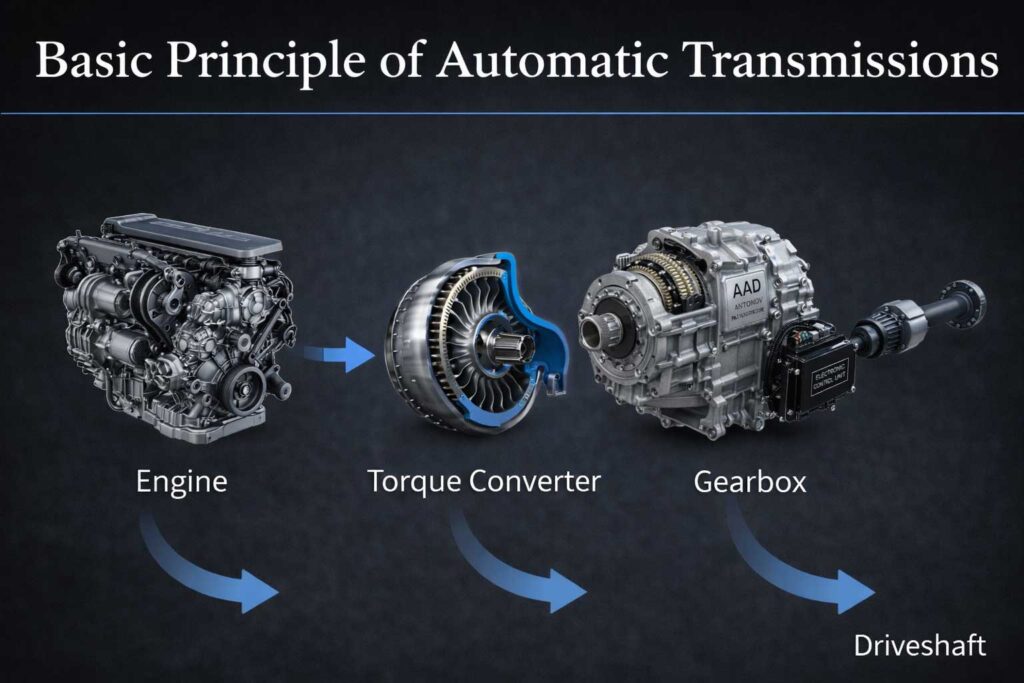
Basic Principle of Automatic Transmissions
An automatic transmission changes gears without driver input, allowing the car to adjust speed and power automatically based on driving conditions.
Instead of manually shifting gears, the system decides when to shift using a combination of:
- Engine speed
- Vehicle speed
- Throttle position
Key Components of a Traditional Automatic Transmission
1. Torque Converter
Replaces the clutch and uses fluid to transfer power from the engine to the transmission.
👉 Smooth but inefficient due to energy loss.
2. Planetary Gear Sets
These are the core of the transmission and allow multiple gear ratios using a compact system.
👉 Responsible for changing speeds.
3. Hydraulic System
Uses pressurized fluid to control gear shifting.
👉 Complex and energy-consuming.
4. Control System
Modern transmissions use electronic sensors and computers to decide when to shift gears.
Types of Car Transmissions Explained (CVT, DCT, Manual)
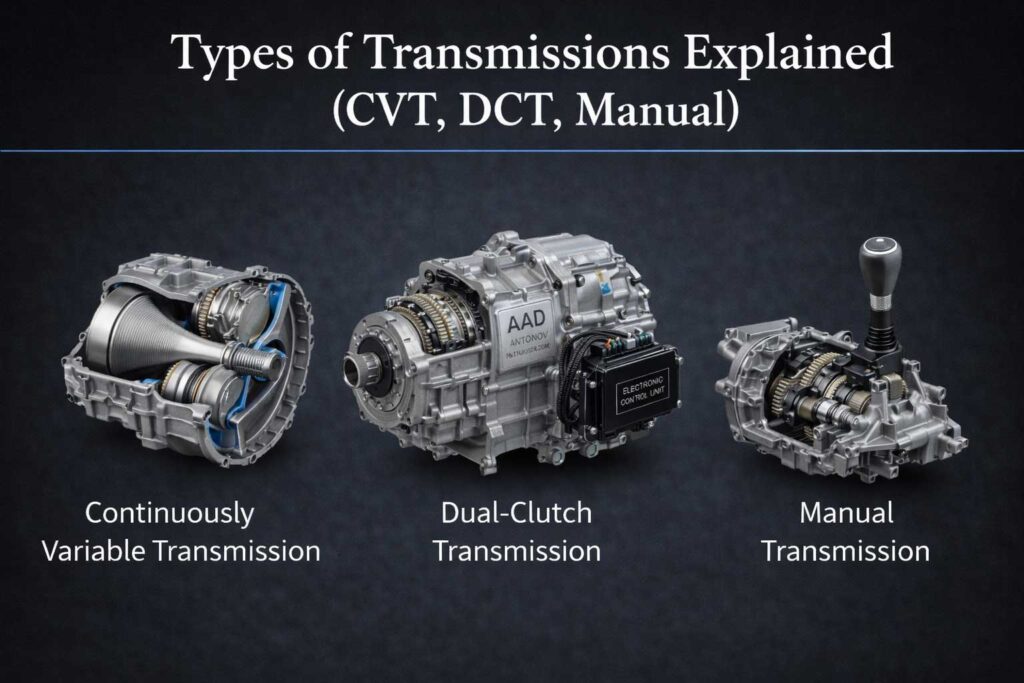
To fully understand the importance of Roumen Antonov’s innovations, it helps to compare them with the most common types of transmissions used in modern vehicles today.
Each transmission type has its own strengths, weaknesses, and engineering philosophy. Antonov’s system sits alongside these as an alternative approach focused on efficiency and simplicity.
Manual Transmission
How It Works
A manual transmission requires the driver to manually change gears using a gear stick and clutch pedal.
- The driver engages/disengages the clutch
- Selects gears directly
- Controls power delivery manually
| ✅ Advantages | ❌ Disadvantages |
|---|---|
| ✔ Full driver control✔ High efficiency (minimal power loss)✔ Lower cost and simpler design | ❌ Requires skill to operate❌ Less convenient in traffic❌ Not beginner-friendly |
Where It Fits
Manual transmissions are still popular in:
- Performance driving
- Budget vehicles
- Enthusiast markets
CVT (Continuously Variable Transmission)
How It Works
A CVT uses a system of pulleys and a belt (or chain) to provide an infinite number of gear ratios instead of fixed gears.
- No traditional gear steps
- Smooth, continuous acceleration
- Always operates at optimal engine speed
| ✅ Advantages | ❌ Disadvantages |
|---|---|
| ✔ Extremely smooth driving✔ Excellent fuel efficiency✔ Simple operation | ❌ “Rubber band” driving feel❌ Limited performance capability❌ Less engaging for drivers |
Where It Fits
CVTs are commonly used in:
- Economy cars
- Hybrid vehicles
- City driving environments
DCT (Dual-Clutch Transmission)
How It Works
A DCT uses two separate clutches:
- One for odd-numbered gears
- One for even-numbered gears
This allows the next gear to be pre-selected, resulting in extremely fast gear changes.
| ✅ Advantages | ❌ Disadvantages |
|---|---|
| ✔ Lightning-fast shifting✔ High performance✔ Better efficiency than traditional automatics | ❌ More complex system❌ Higher cost❌ Can be jerky at low speeds |
Where It Fits
DCTs are popular in:
- Sports cars
- Performance vehicles
- Premium brands
Car Tech Tools & Learning Equipment
👉 If you’re interested in understanding advanced automotive systems like those developed by Roumen Antonov, these books and tools are a great place to start.
| Product | Best For | Why It’s Useful | Check Price |
|---|---|---|---|
| OBD2 Scanner Diagnostic Tool | Car enthusiasts | Understand real vehicle performance and diagnostics | 👉 Check Price on Amazon |
| Digital Torque Wrench | Mechanics & DIY | Essential for precision mechanical work | 👉 Check Price on Amazon |
| Automotive Tool Kit Set | Beginners | Complete starter set for hands-on learning | 👉 Check Price on Amazon |
| Gear Puller Kit | Advanced DIY | Useful for working with transmission components | 👉 Check Price on Amazon |
👉 Explore more tools and books on Amazon →
Where Antonov’s Transmission Fits
Antonov’s gearbox does not fall neatly into these categories. Instead, it represents a hybrid engineering philosophy:
| Compared To | What It Shares |
|---|---|
| Manual Transmission | Efficient power transfer |
| Automatic Transmission | Ease of use |
| DCT (Dual-Clutch) | Clutch-based operation |
Antonov’s system stands out because it combines the strengths of multiple transmission types while removing many of their weaknesses.
Key advantages of Antonov’s approach include:
- ✔ Simpler design
- ✔ Reduced hydraulic dependency
- ✔ Optimized for small engines
👉 This combination makes it a unique hybrid solution in modern transmission engineering.
How Antonov’s System Is Different
Antonov’s design modifies this traditional structure by:
- Removing or reducing the torque converter
- Using wet clutches for direct power transfer
- Using mechanical gear forces to assist shifting
- Reducing reliance on hydraulic pressure
This results in:
- Less energy loss
- Better efficiency
- More compact design
Why Roumen Antonov’s Technology Matters
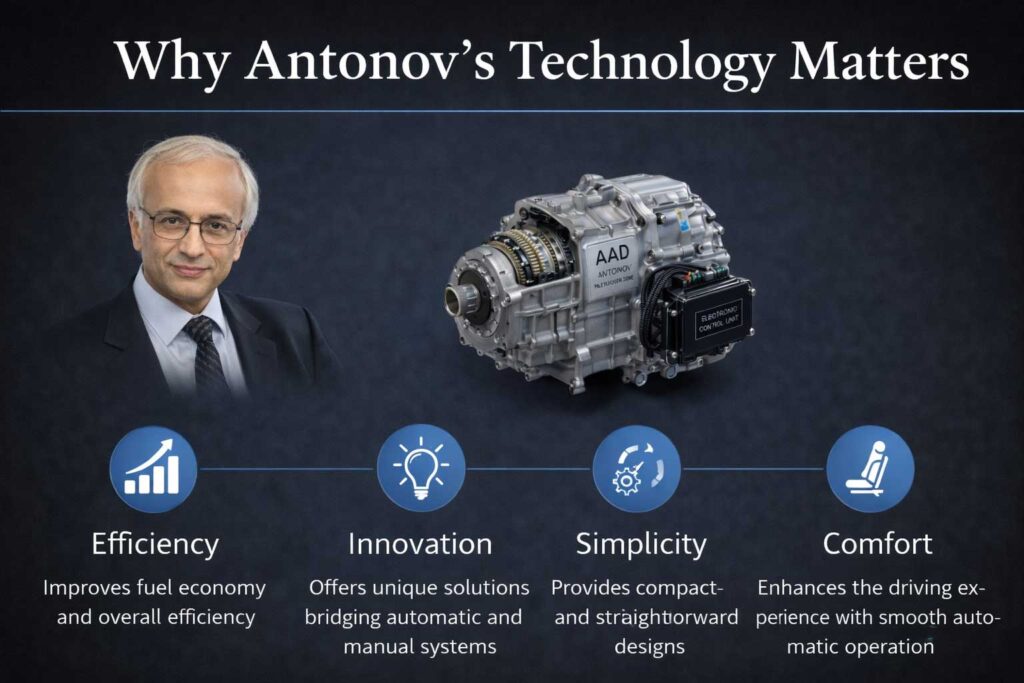
Antonov’s work is particularly relevant in today’s world, where environmental concerns and efficiency are top priorities.
His transmission designs contribute to:
Lower Emissions
By improving efficiency, less fuel is consumed, leading to reduced CO2 output.
Improved Engineering Efficiency
Fewer components mean lower manufacturing costs and easier maintenance.
Better Vehicle Performance
Reduced energy loss results in better responsiveness and smoother operation.
These benefits align closely with modern automotive trends, including electrification and hybrid systems, where efficiency is critical.
👉 Related topic: Bulgarian Contributions to Modern Technology
Antonov plc and Global Expansion
To bring his ideas to the market, Antonov established Antonov plc, a company focused on developing and licensing transmission technologies.
Rather than manufacturing products directly, the company’s strategy was to collaborate with major automotive manufacturers. This approach allowed Antonov to focus on innovation while leveraging the production capabilities of larger companies.
The company attracted attention from global industry players and pursued partnerships in Europe and Asia, including manufacturing initiatives in China.
Although not all projects reached full-scale production, the level of industry interest demonstrates the significance of Antonov’s work.
The Antonov Mechanical Module (AMM)
The Antonov Mechanical Module (AMM) is another example of his innovative thinking.
This system is designed to simplify automatic transmissions by introducing a mechanical shifting solution that can be integrated into various drivetrain configurations.
Its simplicity makes it adaptable for multiple uses beyond passenger cars, including:
- Recreational vehicles
- ATVs
- Marine applications
The AMM reflects Antonov’s broader vision of creating modular, flexible systems that can be applied across industries.
4 Stroke Rumen: The Bulgarian Retro Supercar

Antonov’s creativity extended beyond engineering systems into full vehicle design with the 4 Stroke Rumen.
This concept car combines classic automotive styling with modern engineering. Inspired by the iconic Bugatti 57SC Atlantic, the design pays homage to pre-war elegance while incorporating contemporary technology.
The car was lightweight, compact, and engineered with efficiency in mind. It demonstrated that Antonov was not only interested in solving technical problems but also in redefining how cars could look and feel.
Presented at major auto shows, the 4 Stroke Rumen attracted attention from both the public and the media, further cementing Antonov’s reputation as an innovator.
Challenges and Missed Opportunities in Bulgaria
Despite his international success, Antonov faced significant challenges when trying to bring his ideas back to Bulgaria.
Limited access to funding, lack of industrial infrastructure, and reluctance from financial institutions made it difficult to launch large-scale projects locally.
This ultimately prevented him from realizing his vision of producing a Bulgarian luxury car.
His experience highlights a broader issue faced by many innovators from smaller countries—the difficulty of scaling ideas without strong institutional support.
Antonov Foundation
In addition to his engineering work, Antonov established the Antonov Foundation in 2002.
The foundation supports research and development in fields such as:
- Medicine
- Microbiology
- Scientific innovation
This initiative shows that his interests extended beyond automotive engineering and into the advancement of science as a whole.
Legacy of Roumen Antonov
Roumen Antonov’s legacy lies in his ability to challenge established systems and propose better alternatives.
His work demonstrates that innovation does not always come from large corporations—it often comes from individuals willing to question assumptions.
Today, his ideas remain relevant as the automotive industry continues to search for more efficient and sustainable solutions.
Why He Matters
Antonov represents the spirit of Bulgarian innovation:
- Creative problem-solving
- Global impact
- Persistence despite challenges
He stands as an example of how one engineer can influence an entire field.
Frequently Asked Questions (FAQ) About Roumen Antonov
Who is Roumen Antonov?
A Bulgarian automotive engineer and inventor known for innovative transmission technologies.
When was Roumen Antonov born?
He was born in 1944 in Sofia, Bulgaria.
What is Antonov famous for?
He is known for developing advanced automatic gearbox systems.
What is the Antonov Automatic Drive?
A system designed to simplify and improve automatic transmissions.
What is the TX6 transmission?
A six-speed automatic transmission without a traditional torque converter.
Did major car companies use his technology?
They showed interest and explored partnerships, though large-scale adoption was limited.
Why is his gearbox important?
It improves efficiency, reduces weight, and lowers energy loss.
What is the AMM system?
A mechanical module used for simplifying automatic transmission systems.
What is the 4 Stroke Rumen?
A retro-inspired concept car created by Antonov.
Where did Antonov work after leaving Bulgaria?
Primarily in France and internationally.
Why did he leave Bulgaria?
He moved for better opportunities and development conditions.
Did he try to build a Bulgarian car?
Yes, but the project was not realized due to lack of funding.
What industries did he impact?
Automotive engineering and mechanical systems.
Is Antonov plc still active?
The company was later dissolved.
What is his legacy?
He is recognized as a pioneer in transmission innovation.
Is Antonov’s gearbox used today?
Some concepts have influenced modern designs, but widespread commercial adoption remains limited.
What makes Antonov’s design innovative?
It uses internal mechanical forces to assist gear shifting instead of relying heavily on hydraulics.
Is Antonov’s system similar to dual-clutch transmissions?
It shares clutch-based characteristics but is simpler and more mechanically efficient.
Conclusion: Why Roumen Antonov Still Matters Today
Roumen Antonov’s work represents a powerful example of how innovation can challenge even the most established technologies. At a time when automatic transmissions were becoming increasingly complex, he introduced a radically different approach focused on simplicity, efficiency, and intelligent engineering.
His ideas anticipated many of the priorities that define today’s automotive industry:
- Fuel efficiency
- Reduced emissions
- Compact design
- Smarter mechanical systems
Even though his technologies were not widely adopted on a global scale, the principles behind them remain highly relevant. Modern transmission systems, hybrid drivetrains, and even electric vehicle technologies all reflect the same core goal—maximizing efficiency while minimizing complexity.
👉 Explore more Bulgarian innovation: Bulgarian Achievements by Industry
Final Takeaway
Roumen Antonov proves that:
- Great ideas can come from anywhere
- Innovation often challenges industry norms
- Bulgarian engineers have made global impact
His story is not just about gearboxes—it’s about thinking differently and pushing engineering forward.
References
- Novinite. Bulgarian Engineer Formed New Concepts of Speed.
https://www.novinite.com/articles/34232/Bulgarian%2BEngineer%2BFormed%2BNew%2BConcepts%2Bof%2BSpeed - WardsAuto. Transmission Developer Antonov Shifts Into New Direction.
https://www.wardsauto.com/news/archive-wards-transmission-developer-antonov-shifts-into-new-direction/778705/ - Companies House. Antonov plc Overview.
https://find-and-update.company-information.service.gov.uk/company/03003533 - Google Patents. Transmission and Mechanical Systems.
https://patents.google.com
In 1998 Antonov created the company “4 Stroke” (Four Stroke) and set a workshop in Le Mesnil-Amelot, near Paris’s Charles de Gaulle airport. The Four Stroke Design looks a lot like a classic 1938 Bugatti 57SC and combines the Antonov Automatic Drive with a valveless 4-stroke engine, and a prototype car was shown at the 2002 Paris Motor Show where he gathered much interest from media and the public. 4 Stroke Rumen is equipped with a 54 hp 700 cc engine and weighs less than 400 kg, and has ABS and stability control. He continues to propose innovative engines at different exhibitions in Paris and the Frankfurt Motorshow in September 2005.
Roumen Antonov made several attempts to start a business in Bulgaria, unfortunately, unable to invest in his own country, including the production of a luxury sports car, due to bankers were unwilling to work with him and his dream to start the production of luxurious Bulgarian car was abandoned.