


From groundbreaking medical discoveries to technologies used every day, Bulgarian scientists have shaped the modern world in ways most people never realize.
Bulgaria may be a relatively small country, but its contributions to global science are profound and far-reaching. Across physics, medicine, microbiology, psychology, and space science, Bulgarian scientists have played a crucial role in shaping the modern world.
Bulgaria’s scientific achievements are part of a broader legacy explored in our guide to Bulgarian scientific discoveries that changed the world.
From discoveries that revolutionized medicine to innovations that enabled everyday technologies like photocopying and digital imaging, Bulgarian researchers have left a lasting global impact.
This article explores the lives, discoveries, and legacy of the most influential Bulgarian scientists—individuals whose work continues to affect millions of people today.
👉 Despite limited resources, Bulgarian scientists have consistently produced discoveries that rival those of the world’s largest research institutions.
Bulgarian scientists have made significant contributions to global science, including discoveries in microbiology, physics, medicine, and space exploration, influencing technologies and knowledge used worldwide today.
The Rise of Bulgarian Science

Scientific development in Bulgaria accelerated rapidly in the late 19th and early 20th centuries, following the country’s liberation and national modernization.
Key institutions such as Sofia University and the Bulgarian Academy of Sciences became central hubs for research, education, and innovation—laying the foundation for Bulgaria’s scientific advancement.
The rise of Bulgarian science began in the late 19th and early 20th centuries, driven by institutions like Sofia University and the Bulgarian Academy of Sciences, which fostered research, education, and international collaboration.
Building a Scientific Tradition
Despite limited resources and infrastructure, Bulgarian scientists achieved international recognition through:
- Strong academic foundations – rigorous education in mathematics, physics, and natural sciences
- Collaboration with European institutions – particularly in France, Germany, and Russia
- Persistence in fundamental research – focusing on deep scientific questions rather than short-term results
A Foundation for Global Impact
These early efforts created a powerful scientific ecosystem that produced generations of world-class researchers across multiple disciplines.
👉 This foundation enabled Bulgarian scientists to contribute discoveries that continue to influence modern technology, medicine, and global knowledge today.
Georgi Nadjakov (1896–1981)
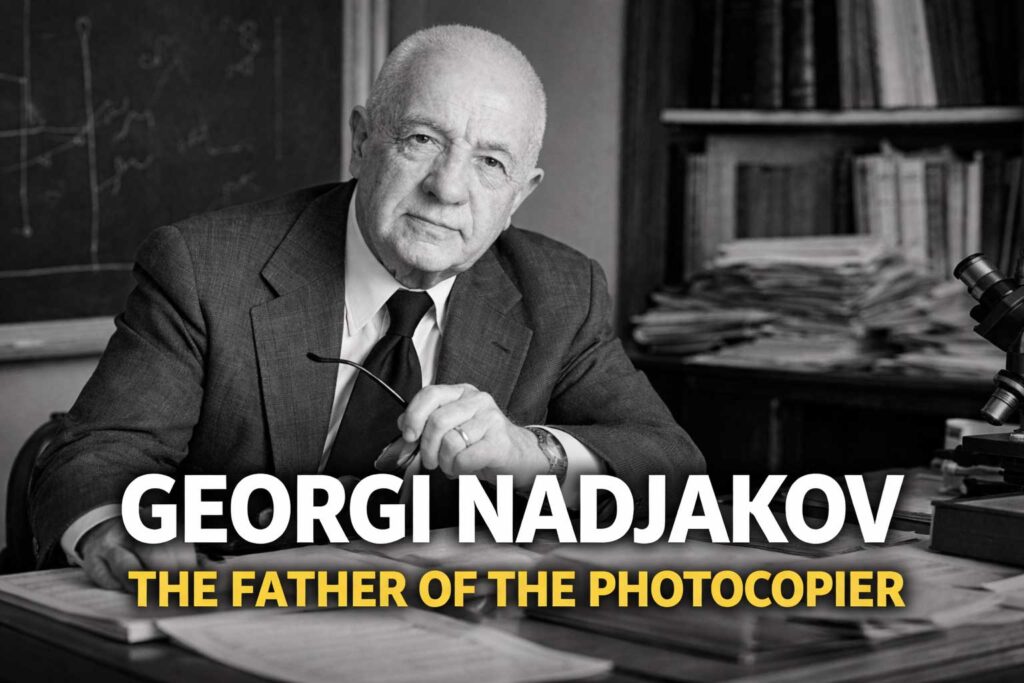
The Discovery That Enabled Photocopying
Georgi Nadjakov discovered the photoelectret state of matter in 1937.
👉 This showed that light can create permanent electrical polarization in materials.
Why It Matters
His discovery laid the foundation for:
👉 Without Nadjakov, modern document reproduction technology would not exist.
Beyond its immediate scientific significance, Nadjakov’s discovery represented a major breakthrough in the understanding of how light interacts with matter. At a time when the fields of solid-state physics and electronics were still developing, his work introduced the concept that materials could store electrical information triggered by light—a principle that would later become essential in imaging technologies and electronic devices.
His contribution is a powerful example of how fundamental research leads to real-world innovation. While Nadjakov himself did not build photocopiers or printers, his discovery provided the scientific mechanism that made such technologies possible. Today, every printed page, scanned document, and reproduced image relies—directly or indirectly—on the principles he uncovered, securing his place among the most influential physicists of the 20th century.
To explore his groundbreaking discovery in detail, read the full Georgi Nadjakov biography.
2. Stamen Grigorov (1878–1945)
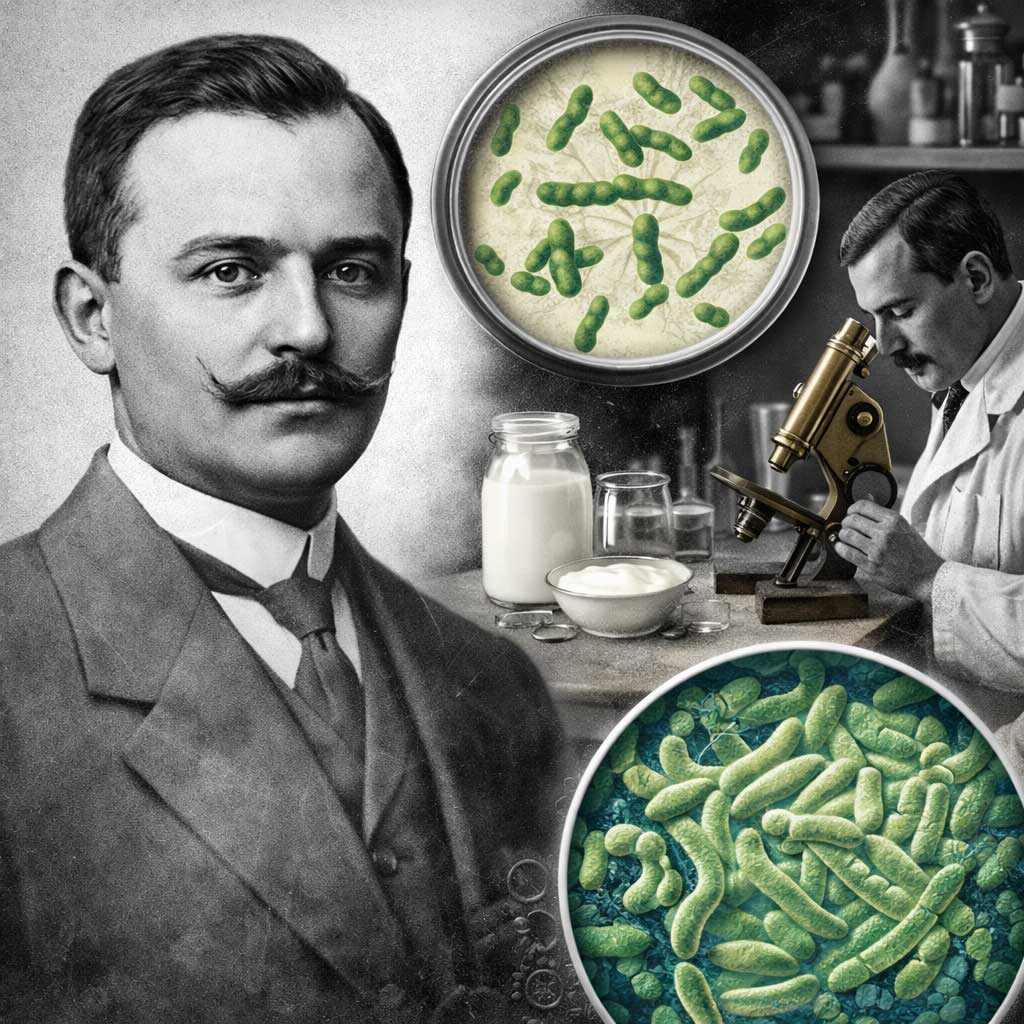
The Science Behind Yogurt
Stamen Grigorov made a groundbreaking discovery in microbiology when he identified the bacterium:
👉 Lactobacillus bulgaricus
This microorganism is responsible for:
- The fermentation of yogurt
- The development of its unique taste and texture
- Many probiotic health benefits that support gut health
Why It Matters
Grigorov’s discovery was one of the earliest scientific explanations of how beneficial bacteria function in food and the human body.
At a time when microbiology was still in its early stages, his work helped establish the connection between microorganisms and human health, paving the way for modern research in probiotics and digestive wellness.
Global Impact
His discovery influenced:
- Modern microbiology
- Nutrition science
- Probiotic medicine
- Functional foods and dietary research
👉 Bulgarian yogurt became globally recognized thanks to his work, earning a reputation as one of the healthiest fermented foods in the world.
Grigorov’s research also attracted international attention, including interest from scientists like Ilya Metchnikoff, who studied the relationship between lactic acid bacteria and longevity.
👉You can learn more about his discovery in our detailed Stamen Grigorov article.
👉 This connection helped popularize yogurt as a health-promoting food across Europe and beyond.
3. Georgi Lozanov (1926–2012)

The Father of Accelerated Learning
Georgi Lozanov was a pioneering Bulgarian scientist who developed:
A revolutionary learning method based on psychology, suggestion, and the idea that the human brain can absorb information far more efficiently under the right conditions.
What Is Suggestopedia?
Suggestopedia is a teaching approach that combines:
- Relaxed learning environments
- Music and rhythm
- Positive suggestion and emotional engagement
- Accelerated memory techniques
👉 The goal is to unlock the brain’s hidden learning potential, allowing students to acquire knowledge faster and with less stress.
Georgi Lozanov developed Suggestopedia, an accelerated learning method that uses psychology and suggestion to improve memory, language acquisition, and overall learning efficiency.
Global Impact
Lozanov’s method gained international recognition and was:
- Adopted in schools and language programs worldwide
- Studied by educators and psychologists
- Recognized and evaluated by UNESCO
His work influenced:
- Modern language learning techniques
- Alternative education models
- Cognitive and behavioral teaching strategies
Why It Matters
At a time when traditional education relied heavily on repetition and memorization, Lozanov introduced a radically different idea:
👉 Learning could be faster, more enjoyable, and more effective
His research helped shift the focus of education toward:
- Student-centered learning
- Emotional and psychological factors
- Brain-based teaching methods
Georgi Lozanov’s work transformed how people approach learning, proving that education is not just about information—but about how the mind receives and processes it.
👉 For a deeper look at his learning theory, see the full Georgi Lozanov guide.
4. Ivan Mitev (1924–2006)

Discovery of the Sixth Heart Tone
Ivan Mitev was a Bulgarian physician and cardiologist best known for discovering:
👉 The sixth heart sound, also known as the Mitev tone
This rare and previously undocumented cardiac phenomenon added a new dimension to the understanding of heart function and acoustic diagnostics.
What Is the Sixth Heart Sound?
The sixth heart tone is an additional sound detected during specific phases of the cardiac cycle. Its identification helped physicians better interpret subtle variations in heart activity.
👉 This discovery expanded the field of cardiac auscultation, allowing for more precise clinical observations.
Ivan Mitev discovered the sixth heart sound, a rare cardiac phenomenon that improved diagnostic techniques and expanded understanding of heart function in modern medicine.
Importance
Mitev’s work contributed to:
- ❤️ Advanced cardiology diagnostics – improving how doctors detect and analyze heart conditions
- 🔬 Deeper understanding of heart function – offering insights into complex cardiac rhythms
- 🩺 Clinical practice improvements – refining methods of patient examination
Why It Matters
At a time when medical diagnostics relied heavily on physical examination and listening techniques, Mitev’s discovery provided:
👉 A more detailed acoustic map of the human heart
This helped physicians detect abnormalities that might otherwise go unnoticed.
Ivan Mitev’s contribution demonstrates how even subtle discoveries in medicine can significantly enhance diagnostic precision and patient care.
👉 To explore his work in more detail, read the full Ivan Mitev biography.
5. Dimitar Paskov

A Breakthrough in Medicine
Dimitar Paskov was a Bulgarian chemist who led the development of a major pharmaceutical breakthrough:
This compound was extracted from the bulbs of the snowdrop, a common plant found across Europe.
What Is Galantamine?
Galantamine is an alkaloid that affects the nervous system by improving communication between nerve cells.
👉 It works by inhibiting the breakdown of acetylcholine, a neurotransmitter essential for memory and cognitive function.
Dimitar Paskov developed Galantamine, a drug derived from snowdrops that is used worldwide to treat Alzheimer’s disease and improve cognitive function.
Medical Importance
Galantamine is widely used in the treatment of:
- Alzheimer’s disease – helping slow cognitive decline
- Neurological disorders – improving nerve signal transmission
- Cognitive impairment conditions
Global Impact
Paskov’s discovery had a lasting global impact on medicine:
- Became a standard treatment in modern neurology
- Used in pharmaceutical therapies worldwide
- Demonstrated the medical potential of plant-based compounds
👉 This breakthrough helped bridge natural compounds and modern medicine, opening new pathways for drug development.
Why It Matters
At a time when treatments for neurological diseases were limited, Galantamine offered:
👉 A scientifically validated and effective approach to improving brain function
It remains one of the key drugs used in managing Alzheimer’s disease today.
Dimitar Paskov’s work shows how discoveries rooted in nature can transform modern medicine and improve the lives of millions.
Explore the full story behind this medical breakthrough in the Dimitar Paskov article.
6. Dimitar Sasselov

Exploring the Universe
Dimitar Sasselov is a world-renowned Bulgarian astronomer and professor at Harvard University, known for his pioneering work in astrophysics and the study of distant planetary systems.
Achievements
Sasselov has made significant contributions to modern astronomy, including:
- Discovery of distant planets (exoplanets) beyond our solar system
- Research on the origin of life in the universe
- Leadership in interdisciplinary studies combining astronomy, biology, and chemistry
👉 His work has helped scientists better understand how planets form and whether life could exist beyond Earth.
Dimitar Sasselov is a Bulgarian astronomer known for discovering distant planets and researching the origin of life, contributing to modern astrophysics and space exploration.
Global Impact
Sasselov’s research has influenced:
- Modern exoplanet discovery techniques
- The search for habitable planets
- Scientific understanding of life beyond Earth
He also serves as a leader in initiatives exploring the fundamental question:
👉 Are we alone in the universe?
Why It Matters
At a time when space exploration is rapidly advancing, Sasselov’s work plays a crucial role in:
- Expanding knowledge of planetary systems
- Guiding future space missions
- Bridging astronomy with life sciences
👉 His research brings humanity closer to understanding the origins of life itself.
Dimitar Sasselov represents the modern frontier of Bulgarian science—exploring not just our planet, but the universe beyond it.
Discover his work in astronomy in the Dimitar Sasselov biography.
Comparison Table (SEO GOLD)
| Scientist | Field | Key Contribution | Global Impact |
|---|---|---|---|
| Georgi Nadjakov | Physics | Photoelectret | Photocopiers, printers |
| Stamen Grigorov | Microbiology | Lactobacillus bulgaricus | Yogurt, probiotics |
| Georgi Lozanov | Psychology | Suggestopedia | Education |
| Ivan Mitev | Medicine | Sixth heart tone | Cardiology |
| Dimitar Paskov | Chemistry | Galantamine | Alzheimer’s treatment |
| Dimitar Sasselov | Astronomy | Exoplanet research | Space science |
Global Impact of Bulgarian Scientists
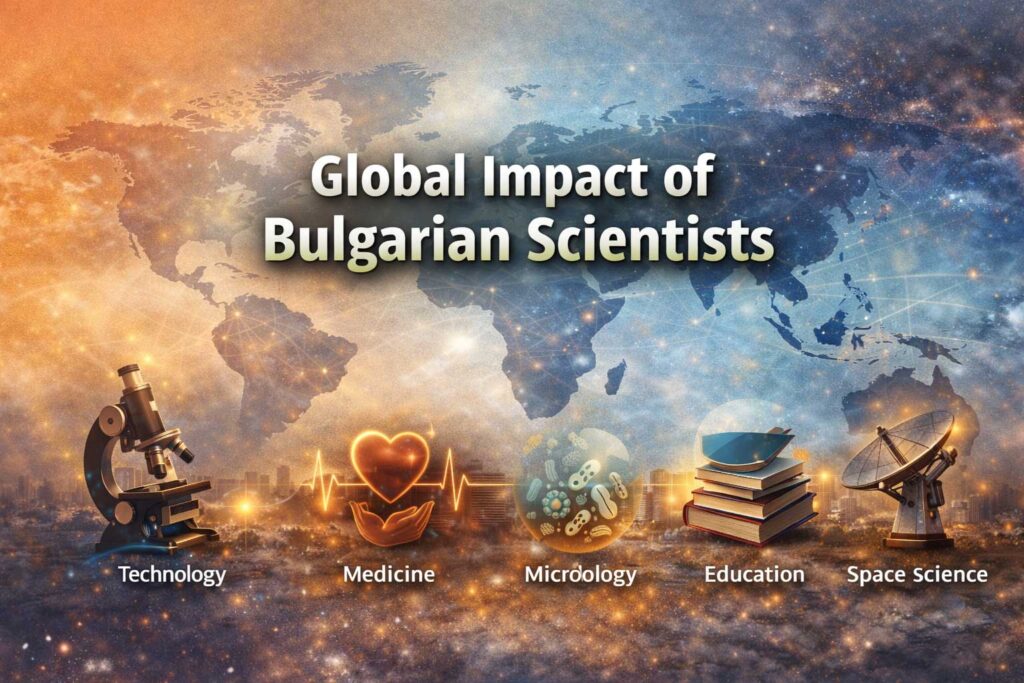
Bulgarian scientists have made contributions that extend far beyond their national borders, shaping industries, technologies, and scientific understanding across the globe.
Bulgarian scientists have influenced global technology, medicine, microbiology, education, and space science through discoveries that continue to impact millions of people worldwide.
Key Areas of Bulgarian Contributions to Science
Bulgarian scientific achievements span multiple fields, including:
- Technology (printing & imaging) – breakthroughs like the photoelectret enabled modern photocopiers and laser printers
- Medicine (cardiology & neurology) – discoveries improved diagnostics and treatments for heart and neurological conditions
- Microbiology (probiotics) – research on beneficial bacteria transformed nutrition and health science
- Education (learning methods) – innovative approaches like accelerated learning reshaped teaching worldwide
- Space science (astronomy) – contributions to exoplanet discovery and the study of life in the universe
A Global Scientific Footprint
These contributions demonstrate how Bulgarian scientists have helped advance:
- Everyday technologies used in homes and offices
- Medical treatments that improve quality of life
- Scientific knowledge that expands our understanding of the universe
👉 Their work is integrated into systems and technologies that millions of people rely on every day.
The global impact of Bulgarian scientists proves that innovation is not limited by geography—ideas developed in one country can transform the entire world.
Timeline
- 1905 – Grigorov discovers Lactobacillus bulgaricus
- 1937 – Nadjakov discovers the photoelectret
- 1959 – Paskov develops Galantamine
- 1960s – Lozanov develops Suggestopedia
- 2000s – Sasselov discovers distant planets
Why Bulgarian Scientists Matter
Bulgarian scientists represent far more than individual achievements—they embody a tradition of curiosity, resilience, and global contribution.
These pioneers demonstrate how a nation, regardless of size, can shape the future of humanity through knowledge and innovation.
What These Scientists Represent:
- National excellence – A strong scientific tradition built through education and persistence
- Scientific innovation – Breakthrough discoveries across physics, medicine, and technology
- Global influence – Contributions that impact millions of lives worldwide
👉 Their work proves that groundbreaking discoveries can come from anywhere.
Bulgarian scientists matter because their discoveries have influenced global technology, medicine, and education, proving that groundbreaking innovation can come from any country.
A Legacy That Continues
From the discovery of microorganisms that improve human health to breakthroughs that enabled modern technologies like photocopying and digital imaging, Bulgarian scientists have consistently contributed to global progress.
Their work shows that:
👉 Innovation is not defined by geography, but by curiosity, dedication, and vision.
These innovations are part of a larger story covered in Bulgarian contributions to modern technology.
Conclusion
The legacy of Bulgarian scientists is not just historical—it is ongoing, inspiring future generations to push boundaries and contribute to the world in meaningful ways.
Bulgarian scientists have made extraordinary contributions to global knowledge and technology. From the microscopic world of bacteria to the vastness of space, their discoveries continue to shape the modern world.
👉 Their legacy is a powerful reminder that innovation knows no borders.
FAQs About Bulgarian Scientists Who Changed the World
Who are the most famous Bulgarian scientists?
Some of the most famous Bulgarian scientists include Georgi Nadjakov, Stamen Grigorov, Georgi Lozanov, and Dimitar Sasselov.
What did Bulgarian scientists discover?
Bulgarian scientists discovered key innovations such as the photoelectret effect, Lactobacillus bulgaricus, Galantamine for Alzheimer’s treatment, and advanced learning methods like Suggestopedia.
Why are Bulgarian scientists important?
Bulgarian scientists are important because their discoveries have influenced global technology, medicine, education, and scientific research.
What is Bulgaria known for in science?
Bulgaria is known for contributions in microbiology, physics, medicine, and space science, with discoveries that impact everyday life worldwide.
Which Bulgarian scientist influenced modern technology?
Georgi Nadjakov influenced modern technology through his discovery of the photoelectret, which helped enable photocopiers and laser printers.