

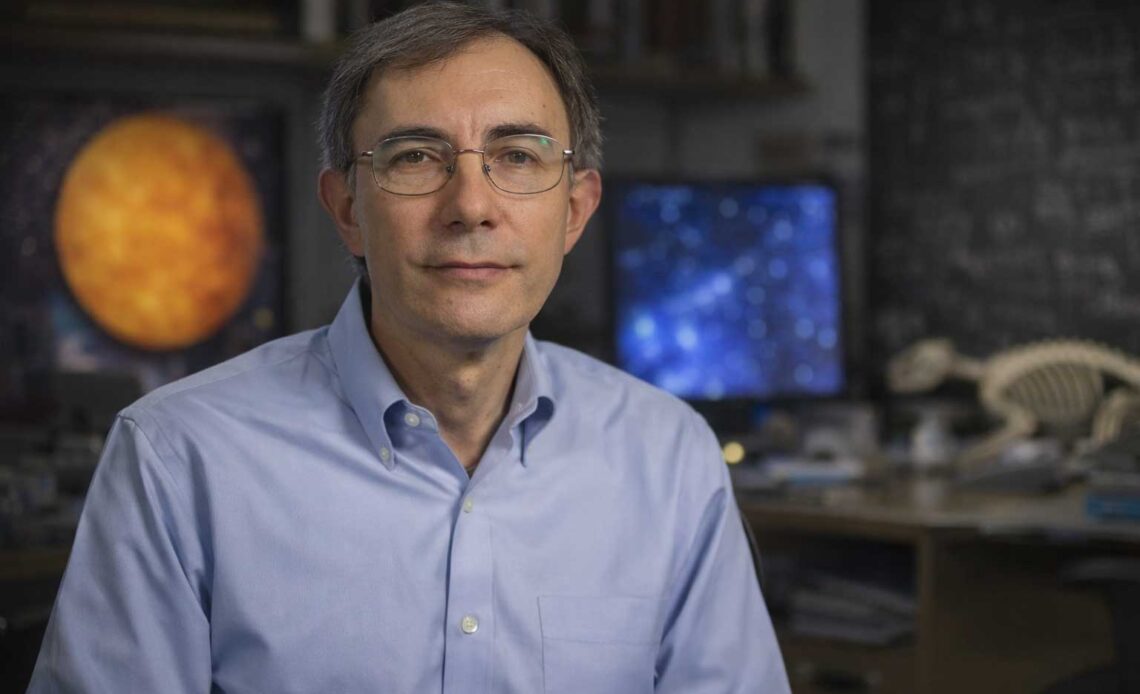

Dimitar Sasselov is a world-renowned Bulgarian astronomer whose work is helping answer one of humanity’s biggest questions: Are we alone in the universe? From discovering distant planets in the Milky Way to leading cutting-edge research on the origins of life, Sasselov has become a key figure in modern astronomy and astrobiology.
Born in Sofia and now a professor at Harvard University, his journey from Bulgaria to the global scientific stage is both inspiring and extraordinary. As director of the Harvard Origins of Life Initiative, he leads groundbreaking efforts to discover Earth-like planets and understand how life begins in the universe.
His work has helped transform the search for life beyond Earth from speculation into a real scientific discipline.
Today, as director of the Harvard Origins of Life Initiative, Sasselov leads global efforts to understand the origins of life and identify Earth-like planets that could potentially support it.
What if the answer to one of humanity’s greatest questions—“Are we alone in the universe?”—was being uncovered by a scientist from Bulgaria?
👉 In this article, you will discover:
- How Dimitar Sasselov rose from a young astronomy enthusiast in Bulgaria to a leading Harvard scientist
- His groundbreaking discoveries of distant exoplanets
- His role in missions searching for life beyond Earth
- Why his research is shaping the future of science and humanity
Whether you’re passionate about space, science, or Bulgarian achievements, this deep dive into Sasselov’s life will expand your perspective on the universe.
Dimitar Sasselov is one of the most remarkable examples of how Bulgarian talent has shaped global science. His story also fits into the broader history of Bulgarian science and technology, where innovators from Bulgaria have made lasting contributions far beyond the country’s borders.
Who Is Dimitar Sasselov?
Dimitar Sasselov (born 1961) is one of the most influential modern astronomers in the field of exoplanet discovery and astrobiology. A Bulgarian-born scientist who rose to global prominence in the United States, Sasselov is a Professor of Astronomy at Harvard University and the founding director of the Harvard Origins of Life Initiative.
His work sits at the intersection of astronomy, physics, chemistry, and biology—bringing together multiple scientific disciplines to explore how planets form, how environments evolve, and how life can emerge under the right conditions.
Over the past decades, Dimitar Sasselov has played a key role in transforming astronomy from a field focused mainly on stars and galaxies into one deeply engaged with the discovery of new worlds. His research on exoplanets—planets orbiting stars beyond our own Sun—has helped scientists understand that planetary systems are not rare exceptions, but a common feature of the universe.
At the same time, his work in astrobiology goes even further. By studying the chemical and physical processes that lead to life, Sasselov is helping to define what makes a planet truly habitable. This includes investigating planetary atmospheres, radiation environments, and the delicate balance required for life to begin and evolve.
Dimitar Sasselov discovered a distant exoplanet located in the constellation Sagittarius. At the time, it was considered one of the farthest known planets in the Milky Way, marking a major milestone in the study of planetary systems.
Through his leadership, research, and global collaborations, Dimitar Sasselov continues to push the boundaries of what we know about the cosmos—moving humanity closer to answering one of its most profound questions:
Are we alone in the universe?
His achievements place him among the most important Bulgarian contributions to modern technology and science, showing how researchers from Bulgaria have helped expand humanity’s understanding of the world and the cosmos.
Early Life in Bulgaria
A Scientific Upbringing
Dimitar Sasselov was born in Sofia, into a family deeply rooted in science and intellectual curiosity. His early environment played a crucial role in shaping the way he viewed the world and sparked his lifelong interest in discovery.
- His father was an archaeologist, exploring the history of ancient civilizations
- His mother was a horticulturist, working closely with plants, nature, and biological systems
Growing up surrounded by scientific thinking, research, and curiosity, Sasselov was naturally drawn toward understanding how the world—and eventually the universe—works. This early exposure to both the natural sciences and historical exploration helped develop his analytical mindset from a young age.
Like many other great Bulgarian scientists and innovators, Sasselov’s path began with curiosity, education, and a strong intellectual foundation formed early in life.
First Encounters with the Cosmos
Like many great astronomers, Dimitar Sasselov’s journey began with a simple yet powerful experience: looking up at the night sky.
As a child, he developed a deep fascination with space and began observing celestial objects using a small telescope. One of his earliest and most memorable observations was of the moons of Jupiter, a moment that sparked a lifelong passion for astronomy.
This hands-on experience—seeing distant worlds with his own eyes—transformed curiosity into purpose.
Education Across Coastal Bulgaria
Sasselov’s early education took place across different parts of Bulgaria, further shaping his perspective:
- 🏫 Primary school in Nesebar
- 🎓 High school in Burgas
These formative years provided not only academic foundations but also exposure to different environments—from the historic coastal town of Nesebar to the vibrant city of Burgas.
From observing Jupiter’s moons as a child to discovering planets beyond our solar system, Dimitar Sasselov’s journey began with curiosity—and a telescope pointed at the stars.
Education and the Struggle to Leave Bulgaria

Academic Path
After developing a strong passion for science early in life, Dimitar Sasselov continued his academic journey at Sofia University, one of the most prestigious institutions in Bulgaria.
There, he focused on physics, building a solid foundation in the fundamental laws that govern the universe.
- Earned a PhD in Physics (1988)
- Published research in international scientific journals early in his career
Even at this stage, Sasselov was already showing signs of becoming a world-class scientist, contributing to global research despite being based in a politically restricted environment.
Political Barriers
However, talent alone was not enough to guarantee opportunity.
During the communist era in Eastern Europe, many scientists faced severe restrictions on travel and collaboration. Sasselov encountered this reality firsthand.
- He received a prestigious scholarship from the University of Toronto
- But was denied an exit visa by Bulgarian authorities
His experience also reflects the challenges faced throughout the history of Bulgarian science, where political barriers often limited the international reach of highly talented researchers.
This meant he was unable to leave the country and continue his academic career abroad—a common obstacle for researchers behind the Iron Curtain during the Cold War.
👉 For many, this would have ended their international ambitions.
👉 For Sasselov, it was only a temporary setback.
Breakthrough After Political Change
Everything changed with the political transformation of Eastern Europe and the collapse of the Soviet Union.
As restrictions lifted, new opportunities emerged.
Sasselov was finally able to continue his journey:
- Moved to Canada
- Completed a PhD in Astronomy (1990) at the University of Toronto
- Stepped onto the global scientific stage
This transition marked a turning point in his life—transforming him from a promising Bulgarian physicist into an internationally recognized astronomer.
After overcoming political barriers, Sasselov entered a new phase of his life that would define his global scientific impact.
His journey reflects not only scientific excellence, but also resilience—overcoming political barriers to reach the stars.
Career at Harvard and Global Recognition
Harvard–Smithsonian Center for Astrophysics
In 1991, Dimitar Sasselov joined the Harvard–Smithsonian Center for Astrophysics, one of the world’s most prestigious centers for astrophysical research.
This marked the beginning of his rise on the global scientific stage.
Working alongside leading scientists, Sasselov quickly established himself as a key figure in the study of stars, planetary systems, and distant worlds. His innovative approach and interdisciplinary mindset helped him stand out in a highly competitive field.
By 1998:
- He became a full professor at Harvard University
- Gained international recognition for his contributions to astronomy
- Expanded his research into new and emerging areas like exoplanets and astrobiology
Sasselov’s success at Harvard shows how Bulgarian innovators and scientists have continued to influence global research, education, and discovery at the highest level.
Harvard Origins of Life Initiative
One of Sasselov’s most important leadership roles is serving as the director of the Harvard Origins of Life Initiative.
This groundbreaking program brings together scientists from multiple disciplines to tackle one of the most profound scientific challenges:
How does life begin—and where else in the universe could it exist?
Under his leadership, the initiative combines:
- Astronomy – studying planets and stars
- Planetary science – understanding planetary environments
- Chemistry – analyzing the building blocks of life
- Biology – exploring how life forms and evolves
A Global Scientific Leader
Through his work at Harvard, Dimitar Sasselov has become a central figure in modern science—bridging multiple disciplines and inspiring collaboration across the world.
His research not only expands our understanding of the universe but also brings humanity closer to answering one of its biggest questions:
Is life unique to Earth—or is it a common outcome of the universe?
Landmark Discovery: OGLE-TR-56b

The Most Distant Known Planet (At the Time)
A groundbreaking discovery that helped redefine modern astronomy:
- 🪐 OGLE-TR-56b planet
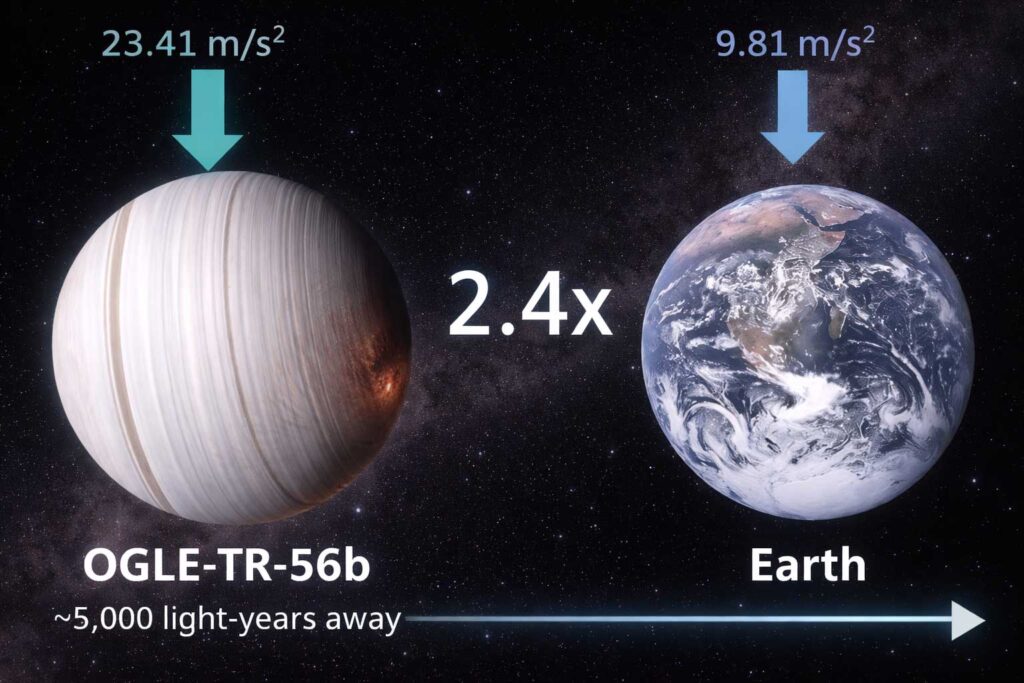
In 2002, Dimitar Sasselov and his team made a groundbreaking discovery: OGLE-TR-56b, one of the most distant known exoplanets at the time. This discovery helped reshape our understanding of planetary systems beyond our solar system.
This discovery marked a major milestone in the search for planets beyond our solar system and positioned Sasselov as a leading figure in the field of exoplanet research.
This breakthrough stands as another example of the global impact of Bulgarian scientific achievement, especially in fields that shape how we understand the future of humanity.
Why It Matters
The discovery of OGLE-TR-56b was significant for several reasons:
- Located in the constellation Sagittarius
- At the time, it was the most distant known planet in the Milky Way
- Classified as a “hot Jupiter”—a massive gas giant orbiting extremely close to its parent star
Unlike planets in our solar system, hot Jupiters have extremely short orbital periods and very high surface temperatures, challenging existing theories about how planetary systems form and evolve.
👉 This discovery proved that:
- Planetary systems can be very different from our own
- Large planets can exist in extreme environments
- The universe is far more diverse than previously imagined
To learn more about this remarkable discovery and its significance, explore the full breakdown of OGLE-TR-56b and why it was considered one of the farthest known planets from Earth.
Method Used: The Transit Technique
To detect OGLE-TR-56b, Sasselov’s team used the transit method, one of the most important techniques in modern astronomy.
This method works by:
- Observing a star’s brightness over time
- Detecting tiny dips in light when a planet passes (or “transits”) in front of the star
- Measuring these changes to determine the planet’s size, orbit, and distance
👉 Even a small dip in light can reveal the presence of a massive planet orbiting far beyond our solar system.
The discovery of OGLE-TR-56b was not just about finding a new planet—it was proof that entirely new worlds exist, waiting to be explored.
Work with NASA and the Kepler Mission
Searching for Earth-Like Planets
Dimitar Sasselov collaborated with NASA on one of the most revolutionary space projects in modern astronomy:
Launched to explore distant star systems, the Kepler Mission fundamentally changed our understanding of the universe by revealing that planets are not rare—they are everywhere.
Mission Goals
The Kepler Mission was designed with a clear and ambitious purpose:
- Detect Earth-sized planets beyond our solar system
- Identify habitable zones—regions where conditions may allow liquid water to exist
- Measure how common planetary systems are across the Milky Way
👉 In simple terms, Kepler aimed to answer:
How many Earth-like worlds are out there?
Sasselov’s Contribution
Dimitar Sasselov played a key role in advancing the scientific methods behind the mission and interpreting its discoveries.
His contributions include:
- Developing models to detect Earth-like planets more accurately
- Advancing techniques for analyzing planetary atmospheres
- Helping define what makes a planet truly habitable
His work helped scientists move beyond simply finding planets to understanding their potential to support life.
A New Era of Discovery
Thanks to the Kepler Mission and contributions from scientists like Sasselov, astronomy entered a new era:
- Thousands of exoplanets have been discovered
- Many are located in habitable zones
- The idea of life beyond Earth is now scientifically testable
Dimitar Sasselov’s work with NASA helped transform the search for life from science fiction into a real scientific pursuit.
Research Areas and Scientific Contributions
1. Exoplanets and Planetary Systems
Dimitar Sasselov is a leading expert in the study of planets beyond our solar system—known as exoplanets. His research has played a major role in shaping how scientists understand the formation and behavior of planetary systems across the Milky Way.
He studies:
- Formation of planets – how dust and gas evolve into fully formed worlds
- Orbital dynamics – how planets move, interact, and stabilize within star systems
- Atmospheric composition – what gases surround planets and what they reveal about conditions on the surface
👉 This work helps scientists determine which planets could potentially support life.
2. Astrobiology and Origins of Life
One of Sasselov’s most important research areas is astrobiology—the study of how life begins and exists in the universe.
His work explores:
- Conditions necessary for life – temperature, water, atmosphere, and chemical balance
- Chemical pathways to biological systems – how simple molecules evolve into complex, living organisms
- Habitability beyond Earth – identifying planets that could sustain life
Through this research, Sasselov is helping redefine what it means for a planet to be “Earth-like” and expanding the search for life far beyond our solar system.
3. Radiation and Matter Interaction
Another critical area of Sasselov’s research focuses on how energy and matter interact in space.
He investigates:
- How radiation affects planetary atmospheres, including temperature and chemical stability
- How energy influences chemical reactions, potentially triggering the building blocks of life
👉 Understanding these processes is essential for determining whether a planet can maintain stable conditions long enough for life to develop.
By combining astronomy, chemistry, and biology, Dimitar Sasselov is helping scientists move closer to answering how life begins—and where it might exist in the universe.
The Big Question: Are We Alone?
One of the most profound contributions of Dimitar Sasselov is not just in what he has discovered—but in how he has transformed the way scientists think about life in the universe.
For decades, the central question in astronomy was:
❌ “Is there life out there?”
Sasselov shifted this perspective to a more scientific and measurable approach:
✅ “Under what conditions does life emerge?”
A Scientific Shift in Thinking
This change may seem subtle, but it is revolutionary.
Instead of searching blindly for life, Sasselov’s approach focuses on:
- Identifying habitable environments
- Understanding the chemical building blocks of life
- Studying how energy and planetary conditions support biological processes
By doing this, scientists can now predict where life is most likely to exist, rather than simply hoping to find it.
Impact on Modern Science
This new way of thinking has had a major influence on:
- Exoplanet research – focusing on Earth-like conditions
- Astrobiology – studying how life begins and evolves
- Space missions – targeting planets with the highest potential for habitability
It has transformed the search for life from speculation into a data-driven scientific field.
Dimitar Sasselov didn’t just help search for life—he changed the question, making the search itself far more powerful.
Publications and Thought Leadership
Dimitar Sasselov is not only a pioneering scientist but also a powerful voice in making complex scientific ideas accessible to a global audience. Through his writing, lectures, and public appearances, he has helped bring the mysteries of the universe closer to everyday readers.
Notable Work
One of his most recognized books is:
- The Life of Super-Earths
In this widely acclaimed work, Sasselov takes readers on a journey through the science of planets beyond our solar system and the search for life in the universe.
What the Book Explores
In The Life of Super-Earths, Sasselov breaks down complex scientific concepts into engaging and understandable ideas, covering topics such as:
- Planet formation – how planets are born from cosmic dust and gas
- Habitability – what makes a planet capable of supporting life
- The future of space exploration – how new technologies and missions will expand our understanding of the cosmos
A Voice Bridging Science and Society
Beyond his book, Sasselov is known for:
- Public lectures and academic teaching at Harvard University
- Speaking on global platforms about science and the future of humanity
- Promoting interdisciplinary thinking across scientific fields
His ability to communicate complex ideas clearly has made him an important figure not just in research, but in science education and public understanding.
Through his writing and thought leadership, Dimitar Sasselov brings humanity closer to understanding the universe—and our place within it.
Legacy and Impact
Why Sasselov Matters
Dimitar Sasselov has left a lasting mark on modern science, not only through his discoveries but through the way he has shaped entire fields of research.
Today, his research continues to influence global space missions and the scientific search for habitable worlds.
He stands out as:
- A pioneer in exoplanet discovery, helping prove that planets beyond our solar system are abundant
- A leader in astrobiology research, exploring how life begins and where it might exist
- A bridge between Bulgarian science and global innovation, bringing talent and knowledge from Bulgaria to the world stage
His work continues to influence how scientists search for habitable planets and understand the conditions necessary for life.
Bulgarian Contribution to Global Science
Dimitar Sasselov stands among a distinguished group of Bulgarian scientists who have made significant contributions to global knowledge and innovation.
From physics and chemistry to space science, Bulgaria has produced thinkers whose work reaches far beyond national borders. Sasselov’s success is a powerful example of how determination, education, and curiosity can overcome limitations and achieve worldwide impact.
His legacy stands alongside other notable Bulgarian figures such as Georgi Nadjakov and Ivan Stranski, whose discoveries also helped elevate Bulgaria’s name in the global scientific community.
👉 His journey proves that:
- Great science is not defined by geography
- Talent from smaller nations can shape global discovery
- Curiosity and persistence can lead to breakthroughs that impact all of humanity
Dimitar Sasselov’s legacy is not just in the planets he helped discover—but in expanding humanity’s understanding of life, the universe, and our place within it.
For readers interested in exploring more examples of world-changing researchers, see our guide to Bulgarian scientists who changed medicine and related fields.
FAQs About Dimitar Sasselov
What is Dimitar Sasselov’s main research focus?
Dimitar Sasselov focuses on exoplanets, astrobiology, and the origins of life—studying how planets form, what makes them habitable, and how life can emerge in the universe.
What is the Harvard Origins of Life Initiative?
The Harvard Origins of Life Initiative is an interdisciplinary research program that brings together scientists from astronomy, chemistry, and biology to understand how life begins and exists beyond Earth.
How did Dimitar Sasselov contribute to NASA missions?
Sasselov collaborated with NASA, particularly on the Kepler Mission, helping develop methods to detect Earth-like planets and analyze their potential habitability.
Why is OGLE-TR-56b important?
The discovery of OGLE-TR-56b provided strong evidence that planets exist far beyond our solar system and can survive in extreme conditions, reshaping theories about planetary formation.
What inspired Dimitar Sasselov to study astronomy?
As a child, Sasselov was fascinated by the night sky and observed celestial objects like the moons of Jupiter using a small telescope—an experience that sparked his lifelong passion for space.
What impact has Dimitar Sasselov had on modern science?
Dimitar Sasselov has helped transform astronomy into a field focused on discovering and analyzing planets beyond Earth, while also advancing the scientific search for life in the universe.
Is Dimitar Sasselov involved in teaching?
Yes, he is a professor at Harvard University, where he teaches and mentors students in astronomy, astrophysics, and planetary science.
What is a “habitable zone”?
A habitable zone is the region around a star where conditions may allow liquid water to exist on a planet’s surface—making it a key factor in the search for life beyond Earth.
References
- “Dimitar Sasselov Bio” (PDF). NASA. Retrieved 21 July 2010. https://www.nasa.gov/pdf/135641main_Sasselov.pdf
- Cromie, William J. (14 October 2004). “Finding the hot planets beyond our solar system”. Harvard Gazette. Harvard University. Archived from the original on 26 July 2010. Retrieved 21 July 2010. Read article
- Cromie, William J. (16 January 2003). “New, far-out planet is discovered”. Harvard Gazette. Harvard University. Archived from the original on 27 August 2009. Retrieved 21 July 2010. Read article
- “Планета, открита с участието на BG-учен”. Наука (in Bulgarian). Демокрит. 21 March 2003. Archived from the original on 9 July 2011. Retrieved 21 July 2010.
- “Dimitar D. Sasselov”. Edge.org. Archived from the original on 31 July 2010. Retrieved 21 July 2010.
- “Dimitar Sasselov – Faculty Profile”. Harvard University. https://astronomy.fas.harvard.edu/people/dimitar-sasselov
- “Harvard Origins of Life Initiative”. Harvard University. https://origins.harvard.edu/
- “Kepler Mission Overview”. NASA. https://www.nasa.gov/mission_pages/kepler/main/index.html
- “OGLE-TR-56b Overview”. NASA Exoplanet Archive. https://exoplanetarchive.ipac.caltech.edu/overview/OGLE-TR-56b
- “Exoplanets”. NASA Science. https://science.nasa.gov/exoplanets/
- Sasselov, Dimitar (2012). The Life of Super-Earths: How the Hunt for Alien Worlds and Artificial Cells Will Revolutionize Life on Our Planet. Basic Books. View on Amazon
- “Dimitar Sasselov”. Wikipedia. https://en.wikipedia.org/wiki/Dimitar_Sasselov
- “Transit Method of Detecting Exoplanets”. NASA. https://exoplanets.nasa.gov/alien-worlds/ways-to-find-a-planet/
- “What Is a Habitable Zone?”. NASA Exoplanet Exploration. https://exoplanets.nasa.gov/search-for-life/habitable-zone/