


When discussing aviation pioneers, names like the Wright brothers often dominate history books. However, few people know that Bulgaria also played a significant role in early aviation innovation through the work of Asen Yordanov.
Yordanov was not only responsible for building the first Bulgarian-made airplane, but he also contributed to global technological advancements—including designing what is widely considered the world’s first airbag.
This article explores the life, inventions, and global impact of one of Bulgaria’s most overlooked innovators.
The story of the first Bulgarian airplane and the innovations of Asen Yordanov show how Bulgarian inventions helped shape modern technology. From early aviation breakthroughs to the development of the world’s first airbag, these Bulgarian innovations continue to influence aviation, automotive safety, and engineering today. Understanding the history of the first Bulgarian airplane provides valuable insight into how global aviation evolved and highlights the importance of Bulgarian scientific achievements.
The First Bulgarian-Made Airplane (1915)
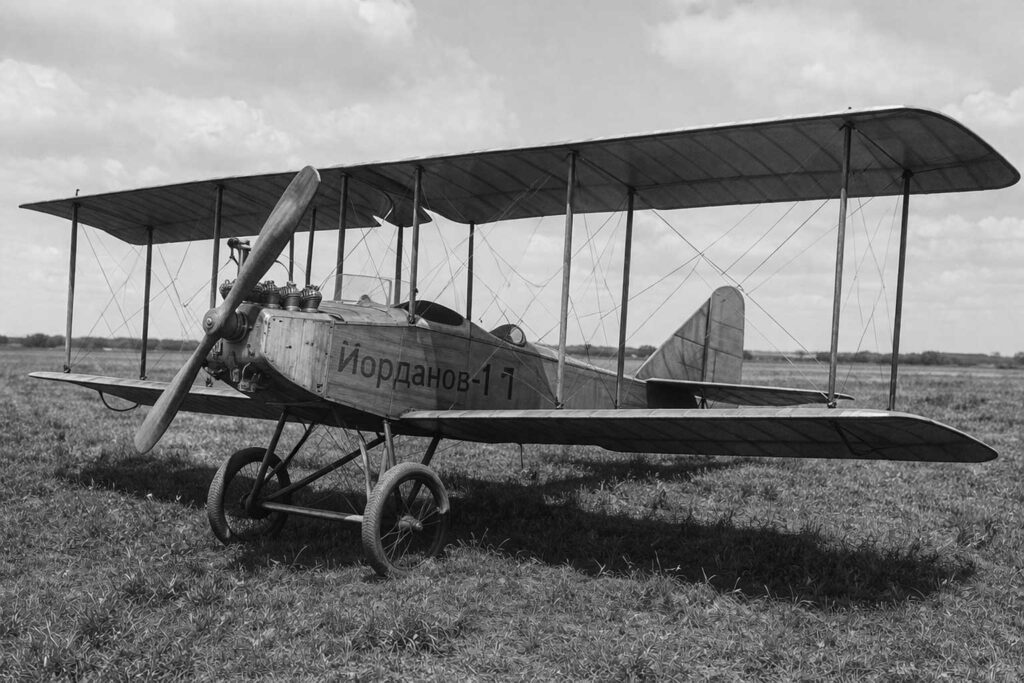
In 1915, during a time when aviation technology was still in its infancy, Asen Yordanov designed and built the first Bulgarian-made airplane, known as the Yordanov-1 Diplane (biplane).
Key Highlights:
- Designed and built in Bulgaria
- Test-flown personally by Yordanov
- Adopted by the Bulgarian military
- Mass production followed shortly after
Within just one year, Bulgaria had produced 23 aircraft based on his design—a remarkable achievement for a country with limited industrial infrastructure at the time.
Why This Matters
The creation of the first Bulgarian airplane marked a turning point in:
- Bulgaria’s military capabilities
- Technological independence
- Early European aviation development
This innovation positioned Bulgaria among the early adopters of aviation technology during World War I.
Expanding the Impact of the First Bulgarian Airplane
The development of the Yordanov-1 Diplane was not just a technical achievement—it was a symbol of Bulgaria’s ambition to enter the modern technological era. At a time when aviation was still experimental across Europe, the ability to design, build, and successfully test a functional aircraft placed Bulgaria among a select group of nations advancing in aeronautical engineering. The work of Asen Yordanov demonstrated that innovation was not limited to industrial superpowers, but could emerge from smaller nations with vision and determination.
What makes this accomplishment even more impressive is the context in which it occurred. In 1915, aviation technology relied heavily on trial and error. Aircraft were constructed from wood, fabric, and basic mechanical components, and even minor design flaws could result in catastrophic failure. Despite these limitations, Yordanov successfully engineered an aircraft that was not only capable of flight but reliable enough to be adopted by the military. This level of precision and understanding of aerodynamics at such an early stage highlights his exceptional talent as both an engineer and a visionary.
Military Significance During World War I
The introduction of the Yordanov-1 came at a critical moment during World War I, when air power was rapidly becoming a decisive factor in warfare. Aircraft were increasingly used for reconnaissance, surveillance, and eventually combat missions. By producing its own airplanes, Bulgaria reduced its dependence on foreign technology and strengthened its strategic military capabilities.
Having domestically produced aircraft allowed Bulgaria to:
- Improve reconnaissance operations
- Enhance battlefield intelligence
- Train pilots locally
- Build a foundation for an independent air force
This shift was crucial, as control of the skies was beginning to influence the outcomes of battles on the ground. Yordanov’s design contributed directly to Bulgaria’s ability to participate in this new dimension of warfare.
Technological Independence and National Pride
The success of the first Bulgarian airplane also had a strong symbolic impact. It represented a step toward technological independence, proving that Bulgaria could develop advanced engineering solutions without relying entirely on imports from more industrialized nations.
At a national level, this achievement:
- Boosted confidence in Bulgarian engineering talent
- Encouraged further scientific development
- Inspired future generations of inventors and engineers
In many ways, Yordanov’s airplane was more than a machine—it was a statement that Bulgaria could compete on the global stage in innovation and technology.
Influence on Early European Aviation
Although often overlooked in mainstream aviation history, the Yordanov-1 contributed to the broader evolution of early European aviation. During this period, engineers across Europe were experimenting with different aircraft configurations, stability mechanisms, and propulsion systems. Yordanov’s work added valuable insights into aircraft design, particularly in improving flight stability and reliability.
His contributions aligned with a wider movement of aviation pioneers who were shaping the future of flight. While countries like France, Germany, and the United Kingdom are more commonly associated with early aviation breakthroughs, Bulgaria—through Yordanov’s work—played a meaningful role in this technological revolution.
A Foundation for Future Innovations
Perhaps most importantly, the success of the first Bulgarian-made airplane laid the groundwork for Yordanov’s future achievements. The experience he gained from designing and building aircraft would later influence his work in the United States, where he continued to innovate in aviation, safety systems, and engineering.
The principles he applied in 1915—precision, safety, and forward-thinking design—remained consistent throughout his career. These same principles would eventually lead him to develop concepts such as improved pilot training systems, communication devices, and even early safety technologies like the airbag.
Long-Term Historical Importance
Looking back today, the creation of the Yordanov-1 can be seen as a foundational moment in Bulgarian technological history. It marked the beginning of a legacy that extends far beyond aviation, influencing multiple industries and demonstrating the global potential of Bulgarian innovation.
The story of the first Bulgarian airplane is not just about a single invention—it is about the emergence of a mindset:
👉 A belief in progress
👉 A commitment to innovation
👉 And the courage to build something entirely new
This is what makes Asen Yordanov such an important figure—not only in Bulgaria, but in the broader history of science and engineering.
Yordanov decided to remain in the United States, where he later found his new home.
Engineering Innovation Ahead of Its Time
Asen Yordanov was not simply focused on building aircraft—he was deeply invested in improving how they performed, how they handled in the air, and most importantly, how safe they were for pilots. At a time when aviation was still experimental and often dangerous, Yordanov approached aircraft design with a mindset that combined engineering precision with practical problem-solving.
One of his most important contributions was the development of a flight stability mechanism, a system designed to help aircraft maintain consistent altitude and control during flight. In the early 20th century, maintaining stable flight was one of the biggest challenges pilots faced. Aircraft were highly sensitive to wind conditions, weight distribution, and control input, making them difficult—and often dangerous—to operate.
ing Stability and Control
Yordanov’s stability mechanism helped address these issues by improving how aircraft responded to changes in flight conditions.
While early designs relied heavily on manual correction, his improvements introduced:
- Better balance between lift and weight distribution
- More predictable flight behavior
- Increased responsiveness to pilot input
This allowed aircraft to:
- Maintain altitude more consistently
- Reduce sudden and dangerous movements
- Improve overall flight smoothness
These advancements made flying safer and more manageable, especially for less experienced pilots.
Impact on Safety and Reliability
At a time when aviation accidents were extremely common, even small improvements could have life-saving consequences.
Yordanov’s innovations directly contributed to:
✈️ Increased Safety
- Reduced risk of mid-air instability
- Lower chances of sudden crashes
- Improved pilot confidence
🎯 Better Flight Control
- More precise maneuvering
- Easier handling during takeoff and landing
- Greater control during adverse weather conditions
🔧 Enhanced Aircraft Reliability
- More stable flight performance
- Reduced mechanical strain on aircraft
- Longer operational lifespan
A Step Toward Modern Aviation
Although these innovations may seem basic by today’s standards, they were revolutionary for their time. Yordanov’s work contributed to a broader shift in aviation—from experimental machines to more reliable and functional aircraft.
His approach reflected an early understanding of principles that are now fundamental in aviation, including:
- Stability control systems
- Aerodynamic balance
- Pilot-centered design
These concepts would later evolve into:
- Autopilot systems
- Advanced flight control technologies
- Computer-assisted aviation systems
Engineering Mindset That Set Him Apart
What made Asen Yordanov stand out was not just his ability to invent, but his ability to anticipate problems before they became widespread.
He didn’t wait for failures—he engineered solutions in advance.
This forward-thinking mindset:
- Reduced risks in early aviation
- Accelerated technological progress
- Positioned him as a leader in aircraft innovation
Why This Still Matters Today
Modern aviation is built on layers of incremental improvements made by early pioneers like Yordanov. Every stable flight today—from commercial jets to private aircraft—relies on principles of balance, control, and safety that innovators like him helped establish.
His work reminds us that:
👉 Even small engineering improvements can have massive long-term impact
👉 Safety innovations are just as important as performance advancements
👉 True innovation comes from solving real-world problems
From Bulgaria to America: A Global Career
After achieving early success in Bulgaria with the creation of the first Bulgarian-made airplane, Asen Yordanov made a pivotal decision that would shape the rest of his life and career—he moved to the United States. This transition marked the beginning of a new chapter, one that would elevate his influence from national innovation to global impact.
At the time, the United States was rapidly emerging as a leader in aviation technology, offering opportunities that were not yet available in many parts of Europe. For Yordanov, this environment provided access to cutting-edge resources, advanced research facilities, and collaboration with some of the most influential engineers and scientists of the era.
Entering the World’s Leading Aviation Hub
By relocating to the United States, Yordanov placed himself at the center of one of the most dynamic periods in aviation history. The early to mid-20th century saw rapid advancements in aircraft design, propulsion systems, and military aviation—especially leading up to and during World War II.
This move allowed him to:
- Work with advanced aviation technologies that were unavailable in Bulgaria
- Participate in large-scale engineering projects
- Gain exposure to new methodologies in aircraft design and production
- Contribute to the evolution of modern aviation systems
Yordanov was no longer working in isolation—he became part of a global network of innovators pushing the boundaries of flight.
Collaboration with Leading Engineers
In the United States, Yordanov collaborated with engineers, designers, and military specialists who were shaping the future of aviation. These collaborations were crucial, as aviation had become increasingly complex, requiring expertise across multiple disciplines.
Through his work, he:
- Exchanged knowledge with top aviation experts
- Contributed to technical problem-solving in aircraft systems
- Helped refine engineering standards and practices
This collaborative environment amplified his impact, allowing his ideas to reach far beyond individual inventions.
Influencing Global Aviation Standards
One of Yordanov’s most significant contributions during this period was his role in shaping how aviation knowledge was communicated and standardized.
As aviation expanded rapidly, there was a growing need for:
- Clear technical documentation
- Standardized training materials
- Accessible engineering knowledge
Yordanov helped bridge this gap.
His work contributed to:
- The standardization of aviation procedures
- Improved pilot training systems
- Better understanding of aircraft operation and maintenance
These contributions had a lasting global effect, influencing not just American aviation but international practices as well.
Becoming a Recognized Aviation Authority
Over time, Asen Yordanov earned a reputation as a leading authority in aviation. His expertise extended beyond engineering into education and communication, making him a unique figure in the field.
He became widely respected as:
✈️ An Aviation Expert
Known for his deep understanding of aircraft systems, flight dynamics, and aviation technology.
🔬 A Scientist and Engineer
Contributing to both theoretical and practical aspects of aviation innovation.
📚 A Leading Technical Educator
Perhaps one of his most important roles—translating complex aviation knowledge into clear, usable information for others.
Bridging Engineering and Education
What truly set Yordanov apart was his ability to simplify complexity.
Aviation technology can be highly technical, but Yordanov had a rare talent for:
- Breaking down complicated systems
- Explaining them in practical terms
- Making knowledge accessible to pilots, engineers, and technicians
This skill made his manuals and publications invaluable, especially during a time when thousands of new pilots and crew members needed training.
A Career That Extended Beyond Borders
Yordanov’s move to the United States did not erase his Bulgarian identity—it expanded his influence. He became a bridge between nations, demonstrating how innovation can transcend geography.
His career is a powerful example of:
- How talent can thrive in the right environment
- How knowledge can spread globally
- How one individual can impact multiple industries
Long-Term Impact of His American Career
The work Yordanov did in the United States laid the foundation for many of his later achievements, including:
- Advanced aviation manuals
- Military training systems
- Communication technologies
- Safety innovations like the airbag
His time in America allowed him to scale his ideas and bring them to a global stage.
Why This Transition Was Crucial
Without this move, Yordanov’s contributions might have remained limited in scope. Instead, by entering one of the most advanced technological environments in the world, he was able to:
👉 Expand his reach
👉 Increase his impact
👉 Shape the future of aviation and engineering
A Global Legacy Begins
The decision to move from Bulgaria to the United States transformed Yordanov from a national innovator into an international figure. His work would go on to influence not only aviation but also safety engineering, communication systems, and education.
Today, his legacy stands as proof that innovation knows no borders—and that the right environment can amplify the impact of great ideas.
Aviation Manuals That Shaped Modern Training
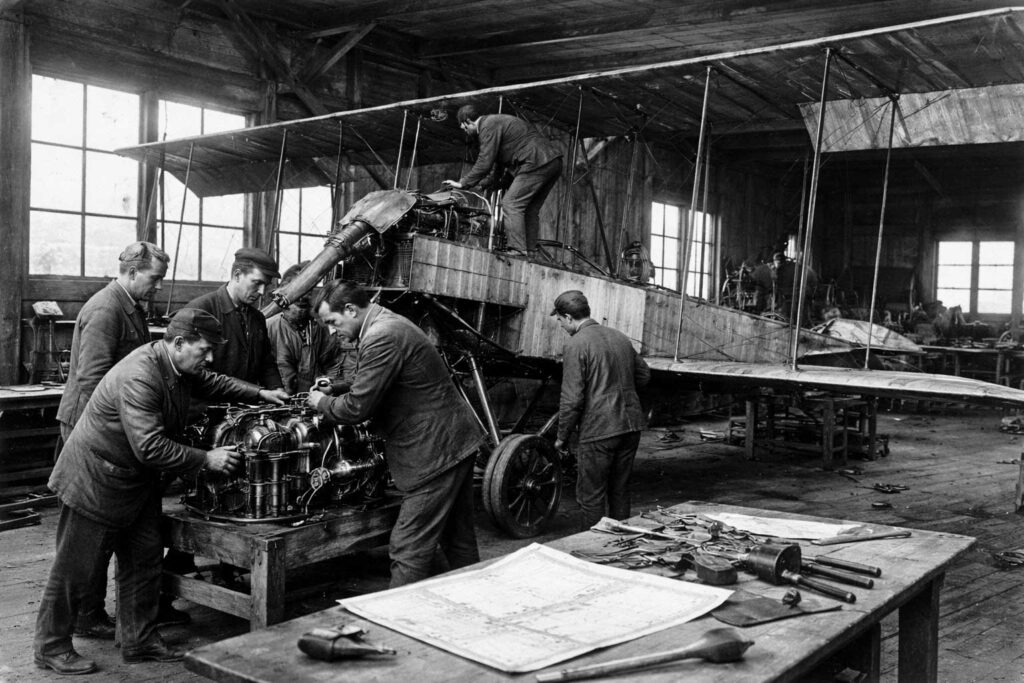
During the 1940s, Yordanov worked closely with the United States Department of Defense.
He was tasked with creating instruction manuals for military personnel, covering:
Topics Included:
- Aircraft operation
- Submarine systems
- Aircraft carriers
- Radio communication
- Air meteorology
- Pilot training (day and night flying)
Impact:
These manuals became essential resources for:
- Pilots
- Engineers
- Maintenance crews
Yordanov’s publications simplified complex technical systems, making them accessible to thousands of military personnel.
He eventually became one of the largest publishers of specialized military manuals in America.
The Jordaphone: A Forgotten Communication Revolution
Beyond aviation, Yordanov also explored electronics.
One of his most fascinating inventions was the Jordaphone—a device that combined:
- Wireless communication
- Answering machine functionality
- Amplifier system
- Intercom capabilities
Why It Was Revolutionary:
The Jordaphone predated modern answering machines and communication systems by decades.
It introduced concepts that would later become standard in:
- Telecommunication devices
- Voice recording systems
- Smart communication tools
This invention shows that Yordanov was not limited to aviation—he was a true multidisciplinary innovator.
The Frozen Gasoline System
Yordanov also experimented with improving aircraft safety through fuel technology.
Concept:
- Super-cooling fuel using dry ice and alcohol
- Making gasoline less flammable
Purpose:
- Reduce fire risks in aircraft
- Improve safety during crashes
Although not widely implemented, this concept influenced later developments in:
- Fuel safety systems
- Aviation engineering
Reverse Thrust Technology
Another important innovation attributed to Yordanov is the development of reverse thrust concepts.
Benefits:
- Reduced landing distance
- Improved braking efficiency
- Better fuel usage
Today, reverse thrust is standard in modern aviation, used in commercial jets worldwide.
More from Discoveries
Recommended
Dimitar Ivanov Popov
Dimitar Sasselov
The World’s First Airbag (1957)

One of the most remarkable and forward-thinking contributions of Asen Yordanov was his design of what is widely regarded as the world’s first airbag in 1957. At a time when vehicle safety systems were still extremely limited, Yordanov envisioned a device that could dramatically reduce injuries during collisions—decades before airbags became standard in modern vehicles.
This invention demonstrates not only his engineering brilliance but also his deep understanding of human safety in high-risk environments such as aviation and transportation.
The Idea Behind the Airbag
In the mid-20th century, safety in both automobiles and aircraft was minimal compared to today’s standards. Seatbelts were not widely used, and protective systems during crashes were nearly nonexistent.
Yordanov approached this problem from an engineering perspective:
👉 How can impact forces be reduced before they reach the human body?
His solution was revolutionary:
- A rapidly inflating cushion
- Activated during sudden impact
- Designed to absorb and distribute force
This concept is exactly what modern airbags do today.
Key Features of Yordanov’s Airbag Design
Yordanov’s early airbag concept included several advanced features that were far ahead of their time:
1. Dual Application (Aircraft + Automobiles)
Unlike later designs that focused only on cars, Yordanov envisioned airbags for:
- Pilots in aircraft
- Drivers and passengers in automobiles
This dual-purpose thinking shows his cross-industry innovation mindset.
2. Rapid Inflation Mechanism
The system relied on:
- Instant activation during collision
- Rapid inflation within milliseconds
- Cushioning before full impact
This principle remains the core mechanism of modern airbags.
3. Impact Energy Absorption
The airbag was designed to:
- Reduce direct contact with hard surfaces
- Spread impact forces over a larger area
- Minimize head and chest injuries
This dramatically increases survival rates in accidents.
4. Preventive Safety Engineering
Yordanov’s approach was not reactive—it was preventive.
Instead of reducing damage after impact, he focused on:
- Preventing injury during impact
- Protecting vital organs
- Improving survival probability
This philosophy is now central to modern safety engineering.
Why This Invention Was Revolutionary
At the time Yordanov introduced this concept, the world was not yet focused on vehicle safety.
The Reality in the 1950s:
- No airbags in vehicles
- Limited use of seatbelts
- High fatality rates in crashes
Yordanov’s idea was decades ahead of mainstream adoption.
From Concept to Global Standard
Although his airbag design was not immediately commercialized, its core principles were later adopted and refined.
Today, airbags are standard in:
- Cars
- Trucks
- Aircraft safety systems
- Military vehicles
They are one of the most important safety innovations in modern history.
How Airbags Changed the World
The global adoption of airbags has had a massive impact on human safety.
Modern Benefits:
- Reduced fatalities in car accidents
- Lower injury severity
- Protection for drivers and passengers
- Integration with advanced safety systems
According to safety research, airbags have helped save millions of lives worldwide.
Yordanov’s Influence on Modern Safety Engineering
Even though his name is not widely associated with airbags today, Yordanov’s early work helped shape:
Key Fields:
- Crash protection engineering
- Automotive safety systems
- Aviation safety design
- Impact absorption technologies
His thinking laid the groundwork for:
- Smart airbags
- Multi-stage deployment systems
- Integrated vehicle safety networks
After moving to the United States, Asen Yordanov gained significant recognition for his work.
Honors and Achievements:
- Named honorary citizen of New York City
- Featured in prestigious Who’s Who publications
- Recognized as a leading authority in aviation and engineering
His expertise extended beyond invention—he became a global educator and technical leader.
Preservation of His Legacy
Today, Yordanov’s work is preserved at the:
👉 Smithsonian National Air and Space Museum
This institution holds:
- His documents
- Technical materials
- Historical records
This ensures his contributions remain part of global aviation history.
Why Asen Yordanov Matters Today
Despite his groundbreaking contributions, Yordanov is still relatively unknown compared to other inventors.
However, his impact is undeniable.
His Key Contributions Include:
- The first Bulgarian-made airplane (1915)
- Aviation stability improvements
- Military training systems and manuals
- Communication innovations (Jordaphone)
- Early airbag invention (1957)
Modern Technologies Influenced by His Work
Yordanov’s innovations continue to shape modern systems:
Aviation:
- Safer aircraft design
- Pilot training systems
- Flight stability technology
Automotive Industry:
- Airbags
- Crash safety systems
- Vehicle engineering
Military:
- Training manuals
- Technical systems
- Operational procedures
Telecommunications:
- Early answering machine concepts
- Communication devices
Bulgaria’s Role in Global Innovation
Yordanov’s story reflects a larger truth:
👉 Bulgaria has played a significant but often overlooked role in global innovation.
From ancient history to modern science, the country has contributed to major developments that shaped the world.
Examples of Bulgarian Contributions:
- The Cyrillic alphabet
- Early computing technologies
- Scientific discoveries
- Engineering innovations
Yordanov stands among these pioneers as a symbol of Bulgarian ingenuity.
A Legacy That Deserves Recognition
Asen Yordanov represents a rare combination of:
- Engineer
- Inventor
- Educator
- Visionary
His ability to work across multiple disciplines allowed him to:
- Influence industries decades ahead of his time
- Solve real-world problems
- Anticipate future technological needs
Conclusion
The story of Asen Yordanov is a powerful example of how one individual can shape multiple industries.
From building the first Bulgarian-made airplane to designing the world’s first airbag, his contributions span aviation, safety engineering, and communication technology.
Yet, his legacy remains underrecognized.
If more people understood the influence of innovators like Yordanov, Bulgaria would not only be known for its rich culture and history—but also for its profound impact on modern science and technology.
References
The information in this article is based on verified historical sources, aviation archives, and official publications.
- Asen Yordanov – Biography and aviation contributions.
https://en.wikipedia.org/wiki/Asen_Yordanov - Asen Yordanov – Bulgarian inventor profile.
http://bginventors.blogspot.com/2011/09/asen-yordanov.html - Aviation history – Early aircraft development.
https://en.wikipedia.org/wiki/Aviation_history - Bulgarian aviation history – Aircraft development in Bulgaria.
https://en.wikipedia.org/wiki/Aviation_in_Bulgaria - Airbag development history – Safety system evolution.
https://en.wikipedia.org/wiki/Airbag - United States Department of Defense – Military manuals and aviation training.
https://www.defense.gov - U.S. National Archives – WWII aviation documentation.
https://www.archives.gov - Smithsonian National Air and Space Museum – Aviation archives and collections.
https://airandspace.si.edu - National Highway Traffic Safety Administration – Airbag research and safety systems.
https://www.nhtsa.gov - Bulgarian Academy of Sciences – Engineering and aviation research.
https://www.bas.bg