

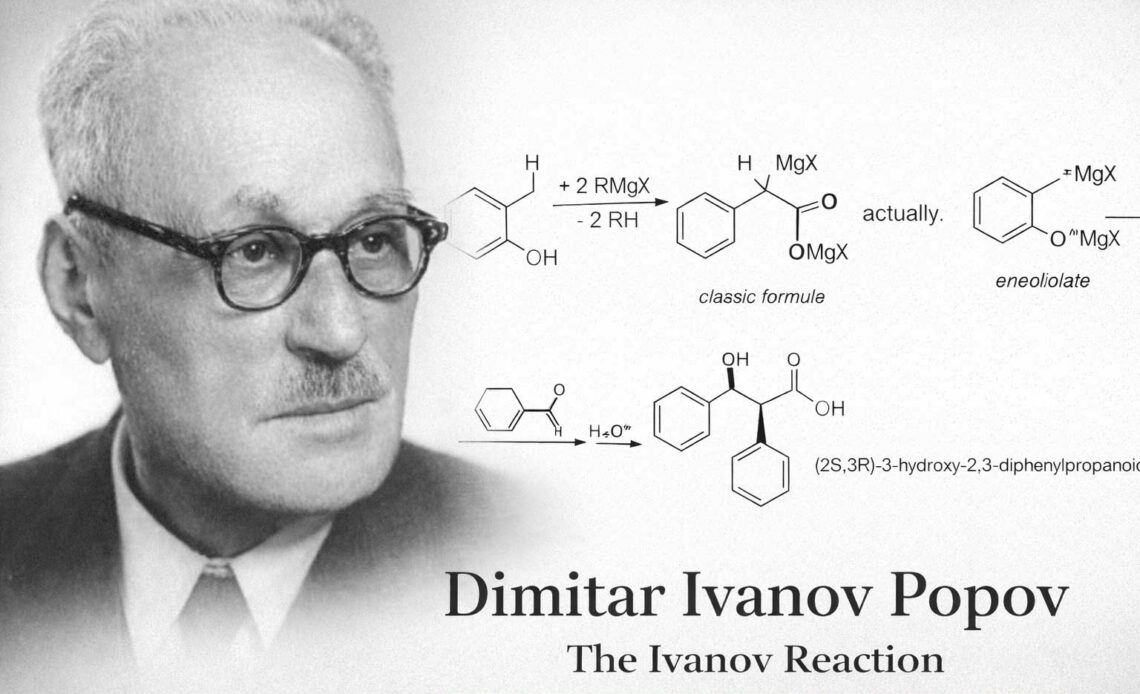

Dimitar Ivanov Popov (Bulgarian: Димитър Иванов Попов), widely known in scientific literature as Dimitar Ivanov, was one of the most influential Bulgarian chemists of the 20th century. Born on October 13, 1894, in the village of Makotsevo and passing away on October 25, 1975, in Sofia, he became a pioneering figure in organic chemistry, an esteemed professor, and a respected academician of the Bulgarian Academy of Sciences.
He is best known internationally for discovering the Ivanov reaction, a named reaction in chemistry that significantly advanced methods for forming carbon–carbon bonds—one of the most fundamental challenges in organic synthesis.
Dimitar Ivanov Popov is part of a remarkable generation of innovators who helped shape Bulgaria’s scientific identity. From groundbreaking microbiologists to aviation pioneers, the country has produced many world-class thinkers.
👉 If you want to explore more, see our complete guide on Bulgarian Scientists Who Changed the World, where we highlight the most influential figures in Bulgarian innovation.
But his legacy goes far beyond a single reaction.
Dimitar Ivanov Popov helped build modern Bulgarian chemistry, trained generations of scientists, and connected Bulgaria to the global scientific elite during a time when the country was still developing its research infrastructure.
Early Life and Education

Dimitar Ivanov was born in rural Bulgaria at a time when the country was still shaping its identity following liberation from Ottoman rule. His early life reflects a common pattern among great Bulgarian intellectuals of his era—humble beginnings, exceptional academic ability, and eventual integration into European scientific circles.
He began his education in Bulgaria but soon pursued higher studies at Sofia University, the country’s leading academic institution.
However, his intellectual journey did not stop there.
Recognizing the importance of international training, Ivanov continued his education in France, studying in Lyon and Nancy—two of Europe’s most important centers for chemical research at the time.
There, he was deeply influenced by the work of Victor Grignard, whose groundbreaking discoveries in organomagnesium chemistry would later shape Ivanov’s own research.
His journey reflects a broader historical trend in which talented Bulgarian students sought education abroad and later returned to build the country’s intellectual foundation.
👉 To better understand this transformation, read our in-depth article on the History of Bulgarian Science, which explores how Bulgaria developed its academic and research institutions.
The French Scientific Influence
France in the early 20th century was a global powerhouse in chemistry, serving as one of the primary centers of innovation in organic and industrial chemical research. Universities such as Lyon and Nancy were at the forefront of scientific progress, attracting some of the brightest minds in Europe. It was within this intellectually rich environment that Dimitar Ivanov refined his scientific thinking, gaining exposure not only to advanced laboratory practices but also to a rigorous culture of experimentation and theoretical precision.
By studying in France, Ivanov gained access to cutting-edge laboratory techniques, advanced theoretical frameworks, and a deeply disciplined scientific methodology. These institutions emphasized systematic experimentation, reproducibility, and the careful interpretation of results—principles that would later define Ivanov’s own research style. This experience allowed him to move beyond basic chemical knowledge and develop the ability to design and execute complex experimental procedures with confidence.
The influence of Victor Grignard was especially critical in shaping Ivanov’s intellectual trajectory. Grignard’s discovery of organomagnesium reagents, now known through the Grignard reaction, revolutionized organic chemistry by providing a reliable method for forming carbon–carbon bonds. This breakthrough opened entirely new pathways for constructing complex molecules, dramatically expanding the capabilities of chemists across multiple fields.
Ivanov did not simply adopt Grignard’s methods—he analyzed, adapted, and extended them. By exploring the reactivity of related compounds and modifying reaction conditions, he pushed beyond the limitations of existing techniques. This intellectual progression ultimately led to the development of the Ivanov reaction, a discovery that would secure his place in the history of chemistry.
This connection places Ivanov within one of the most important intellectual lineages in modern science. From the foundational work of Grignard to Ivanov’s own contributions, this chain of knowledge represents a continuous evolution of ideas that reshaped organic chemistry. It also highlights the importance of international collaboration and education in scientific advancement, demonstrating how exposure to global centers of excellence can lead to groundbreaking discoveries.
Academic Career and Scientific Leadership
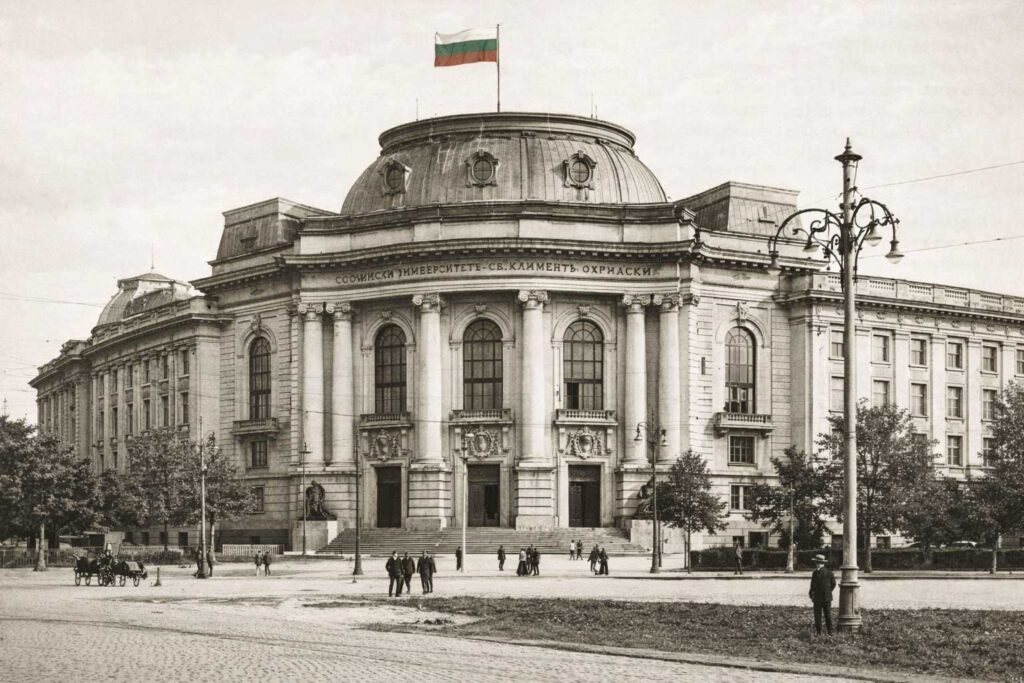
After completing his studies abroad, Ivanov returned to Bulgaria—a decision that would profoundly shape the future of Bulgarian science. At a time when many scholars chose to remain in Western Europe, Ivanov made the deliberate choice to bring his knowledge, training, and international perspective back to his homeland. This decision reflects not only personal commitment but also a broader mission to elevate Bulgaria’s scientific capabilities to a global standard.
At Sofia University, he quickly established himself as a central figure in the academic community. He became a professor of organic chemistry, where he introduced modern teaching methods and emphasized experimental precision. His lectures combined theoretical depth with practical laboratory application, helping students develop both conceptual understanding and technical skills. This approach significantly improved the quality of chemical education in Bulgaria.
Beyond teaching, Ivanov emerged as a research leader who helped define the direction of organic chemistry in the country. He established laboratory practices aligned with European standards, encouraged original research, and fostered a culture of scientific inquiry. Under his leadership, Sofia University became a hub for chemical research, attracting talented students and young scientists eager to contribute to the field.
Ivanov was also a dedicated mentor, guiding future generations of chemists who would go on to shape Bulgarian science. His influence extended far beyond his own work, as many of his students became professors, researchers, and innovators in their own right. This legacy of mentorship created a lasting scientific “school” that continued to develop long after his time.
Later in his career, Ivanov was elected as an academician of the Bulgarian Academy of Sciences, one of the highest honors in Bulgarian intellectual life. This recognition reflected not only his scientific achievements but also his contributions to national education and research. As a member of the Academy, he played an important role in shaping scientific priorities, promoting research initiatives, and strengthening Bulgaria’s position within the international scientific community.
Through his academic leadership, Ivanov helped transform Bulgaria from a developing scientific environment into a country capable of producing original and globally recognized research. His career stands as a testament to the power of knowledge transfer, mentorship, and institutional development in advancing science.
His role in Bulgaria was transformative
He didn’t just teach chemistry—he built the system:
- Established research methodologies
- Introduced modern laboratory practices
- Connected Bulgarian science to Europe
- Mentored future leaders in chemistry
In many ways, Ivanov was not just a scientist—he was a scientific architect of modern Bulgaria.
The Ivanov Reaction: His Greatest Contribution
Below is a simplified diagram of the Ivanov reaction mechanism:
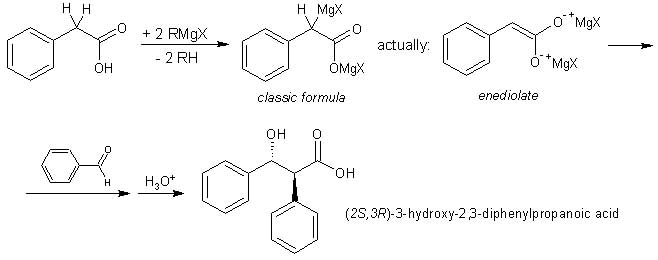
The Ivanov reaction, discovered in 1931, is the cornerstone of Dimitar Ivanov’s legacy.
What is the Ivanov reaction?
The Ivanov reaction is a carbon–carbon bond-forming reaction involving:
What does it produce?
- β-hydroxy acids
- Complex organic molecules used in synthesis
What makes the Ivanov reaction particularly significant is its ability to generate highly functionalized molecules with precision and efficiency. In organic chemistry, the formation of carbon–carbon bonds is one of the most essential yet challenging processes. By introducing a reliable method to achieve this transformation, Ivanov provided chemists with a powerful tool that could be applied across multiple fields, including pharmaceutical development, materials science, and natural product synthesis.
Another important aspect of the Ivanov reaction is its versatility. Unlike some earlier reactions that were limited in scope, the Ivanov reaction can be adapted to a wide range of substrates and conditions. This flexibility allows chemists to tailor reactions to specific needs, making it especially valuable in complex, multi-step syntheses. The ability to control reaction outcomes with greater precision represented a major advancement over previous methods and contributed to the reaction’s lasting relevance.
Furthermore, the Ivanov reaction highlights the evolution of organometallic chemistry in the early 20th century. Building on the foundation established by the Grignard reaction, Ivanov extended the application of reactive intermediates to create new synthetic pathways. This innovation not only expanded the chemical toolkit available to researchers but also demonstrated how incremental improvements in methodology can lead to transformative breakthroughs in science.
Today, the Ivanov reaction continues to be studied and referenced in academic literature, serving as a testament to its importance and durability. It stands as a clear example of how a single discovery can influence generations of research, shaping the way chemists approach molecular construction and synthesis.
Why This Matters
In organic chemistry, forming carbon–carbon bonds is essential.
Nearly every:
- Pharmaceutical drug
- Plastic
- Natural compound
- Flavoring agent
…relies on these types of reactions.
Ivanov’s work provided chemists with:
- A new synthetic pathway
- Greater efficiency in molecule construction
- Expanded possibilities for research and industry
At its core, organic chemistry is about building molecules, and carbon–carbon bonds form the backbone of nearly all organic structures. Without reliable methods to create these bonds, modern chemistry would be severely limited. The ability to construct complex molecular frameworks determines how effectively scientists can design new drugs, develop advanced materials, and replicate naturally occurring compounds. In this context, reactions like the Ivanov reaction are not just useful—they are foundational to the entire discipline.
The impact of such reactions extends far beyond the laboratory. In pharmaceutical chemistry, for example, the precise construction of molecular structures is critical for developing safe and effective medications. Small changes in molecular arrangement can drastically alter how a drug behaves in the human body. By providing more controlled and efficient ways to build these structures, Ivanov’s work indirectly contributes to advancements in medicine, biotechnology, and healthcare.
In addition, industries such as plastics, agriculture, and food science depend heavily on synthetic chemistry. From polymers used in everyday materials to flavor compounds used in food production, the ability to create complex molecules at scale is essential. The Ivanov reaction expanded the toolkit available to chemists, enabling more efficient production processes and opening the door to new innovations. This is why Ivanov’s contribution is considered not only scientifically important but also economically and technologically impactful.
Ultimately, the significance of Ivanov’s work lies in its long-term influence. By improving how chemists form carbon–carbon bonds, he helped shape the direction of modern organic synthesis. His discovery continues to support research and development across multiple fields, demonstrating how a single advancement in chemistry can ripple across science and industry for decades.
Recommended Resources for Learning Organic Chemistry
| Product | Level | Why It’s Great |
|---|---|---|
| Organic Chemistry as a Second Language | Beginner | Easy explanations |
| Clayden Organic Chemistry | Advanced | University standard |
| Named Reactions Book | Intermediate | Includes Ivanov reaction |
Disclosure: As an Amazon Associate, we earn from qualifying purchases. This helps support the site at no additional cost to you.
Scientific Context
Ivanov’s work built upon the earlier discovery of the Grignard reaction.
But instead of simply applying existing knowledge, he:
- Modified reaction conditions
- Introduced new reagents (Ivanov reagents)
- Expanded the scope of organometallic chemistry
This is what makes his contribution original and lasting.
To understand the originality of Ivanov’s work, it is important to recognize that scientific progress often occurs through refinement rather than complete reinvention. The Grignard reaction had already provided chemists with a powerful method for forming carbon–carbon bonds, but it also came with limitations in terms of selectivity, stability, and scope. Many reactions were sensitive to moisture, difficult to control, or restricted in the types of molecules they could produce. These constraints created an opportunity for further innovation.
Ivanov approached these challenges with a deep understanding of both theory and experimentation. By modifying reaction conditions and exploring new combinations of reagents, he was able to stabilize reactive intermediates and expand their applicability. The development of what are now referred to as Ivanov reagents allowed for more complex transformations, particularly involving arylacetic acid derivatives. This innovation made it possible to achieve reactions that were previously difficult or inefficient, opening new pathways in organic synthesis.
Equally important was Ivanov’s contribution to the broader field of Organometallic Chemistry. By extending the use of organometallic compounds beyond their original applications, he helped demonstrate their versatility and potential. His work encouraged further exploration into related reagents and reactions, influencing future developments in synthetic chemistry. This kind of expansion—from a single reaction to an entire field of study—is a hallmark of truly impactful scientific work.
Ultimately, Ivanov’s contribution stands out because it was both practical and conceptual. He did not merely improve an existing method; he redefined how chemists could think about reactivity and synthesis. This combination of innovation and applicability is what ensures his work remains relevant and respected in modern chemistry.
Research Beyond the Ivanov Reaction
Dimitar Ivanov was not a one-discovery scientist.
His work extended into multiple areas:
1. Organometallic Chemistry
He advanced the study of:
- Organomagnesium compounds
- Organolithium compounds
These are still fundamental tools in chemistry today.
2. Natural Product Chemistry
Ivanov also studied Bulgarian natural resources, including:
- Rose oil
- Lavender oil
These are key components of Bulgaria’s global reputation in perfumery and essential oils.
His work helped:
- Analyze chemical compositions
- Improve extraction methods
- Connect science with industry
3. Applied Chemistry
Ivanov’s research had real-world impact:
- Industrial chemistry
- Agricultural applications
- Aromatic compound development
This dual focus—pure science + applied science—made his work especially valuable.
Beyond his most famous discovery, Ivanov demonstrated a remarkable ability to work across multiple domains of chemistry, combining theoretical insight with practical application. In the field of Organometallic Chemistry, his research contributed to a deeper understanding of how reactive metal-containing compounds behave and interact. These compounds, particularly organomagnesium and organolithium reagents, remain essential tools in modern laboratories, used to construct complex molecules with precision and efficiency.
His work in natural product chemistry also had significant importance, especially in the context of Bulgaria’s rich botanical resources. By studying substances such as rose and lavender oils, Ivanov helped bridge the gap between traditional practices and scientific analysis. His research provided valuable insights into the chemical composition of these natural products, enabling improvements in extraction, standardization, and quality control. This not only enhanced Bulgaria’s position in the global essential oils market but also demonstrated the practical value of chemical research in supporting national industries.
Equally important was Ivanov’s contribution to applied chemistry, where his work had direct implications for industrial processes and agricultural development. By focusing on the synthesis and analysis of aromatic compounds, he contributed to fields ranging from perfumery to food science. His ability to translate laboratory discoveries into real-world applications highlights the broader significance of his work. It also reflects a forward-thinking approach, recognizing that the true impact of science lies not only in discovery but also in its ability to improve everyday life.
Taken together, these contributions reveal a scientist who was both versatile and visionary. Ivanov’s work extended far beyond a single reaction, influencing multiple branches of chemistry and demonstrating how interconnected the discipline truly is. His legacy in these areas continues to shape research and industry, reinforcing his status as one of Bulgaria’s most important scientific figures.
Contribution to Bulgarian Science
Dimitar Ivanov belongs to a generation of Bulgarian scientists who built the country’s scientific identity.
His contributions include:
Institutional Impact
- Strengthened Sofia University’s chemistry faculty
- Raised academic standards
- Introduced European research practices
Educational Legacy
- Trained generations of chemists
- Established mentorship culture
- Created a scientific “school”
National Impact
- Positioned Bulgaria on the global scientific map
- Demonstrated that Bulgarian scientists could innovate—not just follow
As an academician of the Bulgarian Academy of Sciences, Ivanov played a central role in shaping the direction of scientific development in the country. His work extended beyond individual research achievements, influencing how science was organized, taught, and practiced in Bulgaria. Through his involvement in academic institutions, he helped establish a framework that supported long-term scientific growth and collaboration.
One of Ivanov’s most important contributions was the elevation of academic standards. By introducing methodologies and practices learned during his time in France, he ensured that Bulgarian research aligned with leading European institutions. This included a stronger emphasis on experimental rigor, systematic documentation, and reproducibility—principles that are essential to modern scientific work. His efforts helped transform Bulgaria from a developing academic environment into a country capable of producing original and internationally recognized research.
Equally significant was his role as an educator and mentor. Ivanov did not simply teach chemistry; he cultivated a new generation of scientists who carried forward his approach to research and inquiry. Many of his students went on to become prominent figures in Bulgarian science, creating a lasting intellectual lineage. This mentorship established what can be described as a scientific “school,” ensuring that his influence extended well beyond his own lifetime.
On a national level, Ivanov’s achievements helped redefine Bulgaria’s place in the global scientific community. At a time when smaller nations often followed the lead of larger research centers, Ivanov demonstrated that Bulgarian scientists could contribute original ideas and discoveries. His work served as a source of inspiration and a model for future researchers, proving that innovation could emerge from dedication, education, and vision.
Through these combined efforts, Dimitar Ivanov helped lay the foundation for modern Bulgarian science. His impact was not limited to chemistry alone but extended to the broader development of scientific culture in the country. Today, his legacy continues to be felt in the institutions he strengthened, the students he mentored, and the standards he helped establish.
👉 Learn more in our full guide: Bulgaria’s Contributions to Global Science and Technology.
Honors and Recognition
Dimitar Ivanov received numerous recognitions:
- Academician of the Bulgarian Academy of Sciences
- International recognition from French scientific institutions
- Membership in foreign scientific societies
👉 Most importantly: His name became part of global chemistry through the Ivanov reaction
That is considered one of the highest forms of scientific recognition, as it signifies that a discovery has achieved lasting importance and widespread adoption within the field.
Recognition in science often reflects not only individual achievement but also the broader impact of a researcher’s work. In Ivanov’s case, his election as an academician placed him among the most respected intellectual figures in Bulgaria. This honor is reserved for scientists who have made substantial contributions to knowledge and have played a role in advancing their discipline at a national level.
His international recognition further underscores the significance of his work. At a time when scientific communication and collaboration were more limited than today, gaining acknowledgment from established European institutions—particularly in France—was a strong indication of the quality and relevance of his research. It demonstrated that his contributions were not confined to Bulgaria but were part of the wider scientific discourse.
Perhaps the most enduring form of recognition, however, is the continued use of his name in chemistry. Named reactions are reserved for discoveries that fundamentally shape how chemists approach synthesis and problem-solving. The Ivanov reaction’s presence in academic literature and teaching materials ensures that his legacy remains active, influencing new generations of scientists. This type of recognition transcends awards and titles, embedding a scientist’s contribution directly into the language of the discipline.
Historical Context: Why He Matters
To understand Ivanov’s importance, consider the time he lived in:
- Early 20th century
- Limited scientific infrastructure in Bulgaria
- Dominance of Western Europe in research
Despite this, he:
- Studied abroad
- Returned to Bulgaria
- Built a scientific legacy from within
This makes him not just a scientist—but a nation-builder through science.
The early 20th century was a period of rapid scientific advancement, but it was also marked by strong geographical inequalities in research and education. Western European countries such as France, Germany, and the United Kingdom dominated scientific discovery, supported by well-established universities, laboratories, and funding systems. In contrast, countries like Bulgaria were still developing their academic institutions, with limited resources and fewer opportunities for advanced research.
In this context, Ivanov’s achievements become even more significant. By gaining education abroad and then returning to Bulgaria, he became part of a small but influential group of scientists who transferred knowledge from leading European centers into emerging national systems. This process of knowledge transfer was critical for building local expertise and establishing scientific traditions that could sustain future generations. Ivanov was not simply participating in science—he was helping to create the conditions necessary for science to thrive in Bulgaria.
His decision to return rather than remain in Western Europe reflects a broader commitment to national development. Many scientists of his caliber could have pursued more established careers abroad, but Ivanov chose to invest his knowledge in his home country. This choice had long-term consequences, as it contributed to the creation of academic institutions, research culture, and educational standards that continue to shape Bulgarian science today.
Ultimately, Ivanov’s importance lies not only in his scientific discoveries but also in his role within a larger historical transformation. He represents a generation of intellectuals who helped integrate Bulgaria into the global scientific community while simultaneously building its national identity. His legacy illustrates how individual contributions can influence both scientific progress and societal development, reinforcing the idea that science is not only a pursuit of knowledge but also a driver of cultural and national advancement.
Comparison with Other Bulgarian Innovators

Dimitar Ivanov stands alongside other major Bulgarian figures such as:
- Stamen Grigorov – discovered Lactobacillus bulgaricus
- Dimitar Sasselov – astrophysics and exoplanets
- Assen Jordanoff – aviation pioneer
Each contributed to global science in different ways.
Ivanov’s domain was the invisible world of molecules—but his impact is just as significant.
What distinguishes these figures is not only their individual achievements but also the diversity of fields in which Bulgarian scientists have made global contributions. From microbiology to space science and aviation, each represents a different dimension of human knowledge and technological advancement. Stamen Grigorov’s discovery transformed our understanding of fermentation and health, while Dimitar Sasselov expanded humanity’s knowledge of planets beyond our solar system. Assen Jordanoff, on the other hand, contributed to the development of modern aviation, influencing how humans travel and explore the skies.
In contrast, Ivanov’s work operated at a microscopic and molecular level, often invisible to the naked eye but fundamental to all physical and biological systems. Organic chemistry may not always capture public attention in the same way as aviation or space exploration, yet it underpins nearly every modern technological and medical advancement. The molecules studied and constructed through reactions like the Ivanov reaction form the basis of pharmaceuticals, materials, and countless everyday products.
What unites all these innovators is their ability to push beyond the boundaries of their time and contribute knowledge that extends far beyond Bulgaria. Ivanov’s work demonstrates that groundbreaking contributions do not always need to be visible or immediately dramatic to be impactful. His influence is embedded in the very fabric of modern science, quietly supporting advancements across multiple disciplines.
Together, these figures illustrate the breadth and depth of Bulgarian contributions to global science. They highlight a shared legacy of innovation, resilience, and intellectual curiosity—qualities that continue to define Bulgaria’s role in the scientific world today.
Scientific Legacy Today
Key Takeaways
- Studied in organic chemistry courses
- Referenced in research literature
- Used in synthetic pathways
His work continues to influence:
- Pharmaceutical chemistry
- Materials science
- Industrial synthesis
This is the mark of timeless scientific contribution.
Timeline of Dimitar Ivanov Popov
- 1894 – Born in Makotsevo, Bulgaria
- Early 1900s – Studies in Bulgaria
- 1920s – Studies in France (Lyon, Nancy)
- 1931 – Publishes work leading to the Ivanov reaction
- 1937 – Becomes professor
- 1961 – Elected academician
- 1975 – Passes away in Sofia
Key Contributions Summary
- Founder-level figure in Bulgarian organic chemistry
- Discoverer of the Ivanov reaction
- Developer of new organometallic methods
- Researcher in essential oils and natural products
- Builder of Bulgaria’s scientific institutions
Student Lab Equipment
Disclosure: As an Amazon Associate, we earn from qualifying purchases. This helps support the site at no additional cost to you.
| Product | Use | Benefit |
|---|---|---|
| Molecular Model Kit | Learning | Visualize molecules |
| Glassware Set | Experiments | Essential tools |
| Beginner Chemistry Kit | Starter | Hands-on learning |
👉 If you’re studying organic chemistry, these tools can help you better understand reactions like the Ivanov reaction.
FAQ About Dimitar Ivanov Popov
What is Dimitar Ivanov Popov known for?
He is best known for discovering the Ivanov reaction, a key organic chemistry reaction used to form carbon–carbon bonds.
What is the Ivanov reaction used for?
It is used in organic synthesis to create β-hydroxy acids and complex molecules important in pharmaceuticals and materials science.
Why is Dimitar Ivanov important?
He helped establish modern chemistry in Bulgaria and contributed a globally recognized scientific discovery.
Where did he study?
He studied in Bulgaria and France, including Lyon and Nancy.
Final Thoughts
Dimitar Ivanov Popov represents the ideal of a scientist who:
- Masters global knowledge
- Returns to build national strength
- Leaves a permanent mark on humanity
His work reminds us that scientific greatness is not limited by geography.
It is defined by innovation, persistence, and impact.
In an era when scientific achievement was concentrated in a few dominant regions, Ivanov proved that meaningful contributions could emerge from anywhere. His journey—from a small Bulgarian village to the forefront of organic chemistry—demonstrates the power of education, determination, and intellectual curiosity. By absorbing knowledge from leading European institutions and applying it within Bulgaria, he created a bridge between global science and national development.
His legacy also highlights the importance of investing in people rather than just infrastructure. Laboratories and institutions are essential, but it is individuals like Ivanov who bring them to life. Through his teaching, mentorship, and research, he cultivated a generation of scientists who continued to advance Bulgarian chemistry long after his time. This ripple effect ensures that his influence extends far beyond his own discoveries.
Moreover, Ivanov’s story serves as an inspiration for future scientists, particularly those working in smaller or developing countries. It reinforces the idea that scientific progress is not confined to major global centers but can be driven by dedicated individuals willing to pursue excellence. His achievements show that innovation is not a matter of location, but of mindset and commitment.
Ultimately, Dimitar Ivanov Popov’s life and work stand as a testament to the enduring value of science as a universal human endeavor. His contributions continue to shape modern chemistry, while his example continues to inspire those who seek to expand the boundaries of knowledge.
Related Articles You Should Explore
If you found this article helpful, continue exploring Bulgarian science and chemistry:
These resources will give you a deeper understanding of both the scientific context and the global impact of Bulgarian researchers like Dimitar Ivanov Popov.
References
This article is based on academic publications, historical archives, and established chemistry literature to ensure accuracy and reliability.
- Bulletin de la Société Chimique de France. Ivanoff, D.; Spassoff, A. (1931). Condensation des phénylacétate et para-chlorphénylacétate d’éthyle au moyen des halogénures d’isopropyl-magnesium. Series [4], Vol. 49, p. 375.
- Bulgarian Academy of Sciences. Official academic archives and historical records. Available at: Bulgarian Academy of Sciences (Official Website)
- Sofia University, Faculty of Chemistry and Pharmacy. Faculty history and academic materials. Available at:
- Ivanov reaction. Reaction overview and mechanism. Available at: Ivanov Reaction (Wikipedia)
- Grignard reaction. Foundational organometallic chemistry method. Available at: Grignard Reaction (Wikipedia)
- Victor Grignard. Nobel Prize biography and research contributions. Available at: Victor Grignard – Nobel Prize Biography
- French Academy of Sciences. Institutional recognition and scientific history. Available at: French Academy of Sciences (Official Website)
- Organic Chemistry. General academic references and teaching materials. Available at: Organic Chemistry Overview (Wikipedia)
- Organometallic Chemistry. Research on organomagnesium and organolithium compounds. Available at: Organometallic Chemistry (Wikipedia)
- Natural Product Chemistry. Studies on essential oils and plant-based compounds. Available at: Natural Product Chemistry (Wikipedia)