


Bulgarian discoveries that saved lives are one of the most overlooked parts of global medical history. From microbiology and fermented food science to neurological treatment and cardiology diagnostics, Bulgarian scientists helped shape discoveries that improved health, supported treatment, and expanded the world’s understanding of medicine.
Bulgarian discoveries that saved lives continue to influence modern healthcare, often in ways that most people do not even realize.
When people think about life-saving medical discoveries, they often associate them with large scientific nations like the United States, Germany, or the United Kingdom. Yet, some of the most meaningful contributions to human health have come from smaller countries whose impact is rarely highlighted.
Bulgarian discoveries that saved lives represent one of the most overlooked chapters in global science. These breakthroughs did not just contribute to knowledge—they improved diagnosis, supported treatment, advanced microbiology, and influenced how modern medicine understands the human body.
From bacteria that shaped gut health research to neurological compounds used in Alzheimer’s treatment, Bulgarian scientists have played a role in improving millions of lives worldwide.
What Are Bulgarian Discoveries That Saved Lives?
Bulgarian discoveries that saved lives include Stamen Grigorov’s discovery of the bacterium linked to Bulgarian yogurt, Dimitar Paskov’s work connected to galantamine and Nivalin, and Ivan Mitev’s discovery of the sixth heart sound. These breakthroughs influenced microbiology, neurology, cardiology, diagnosis, treatment, and preventive health.
👉 For a broader overview of scientific development, explore Bulgarian Science and Technology History.
How Life-Saving Discoveries Actually Work
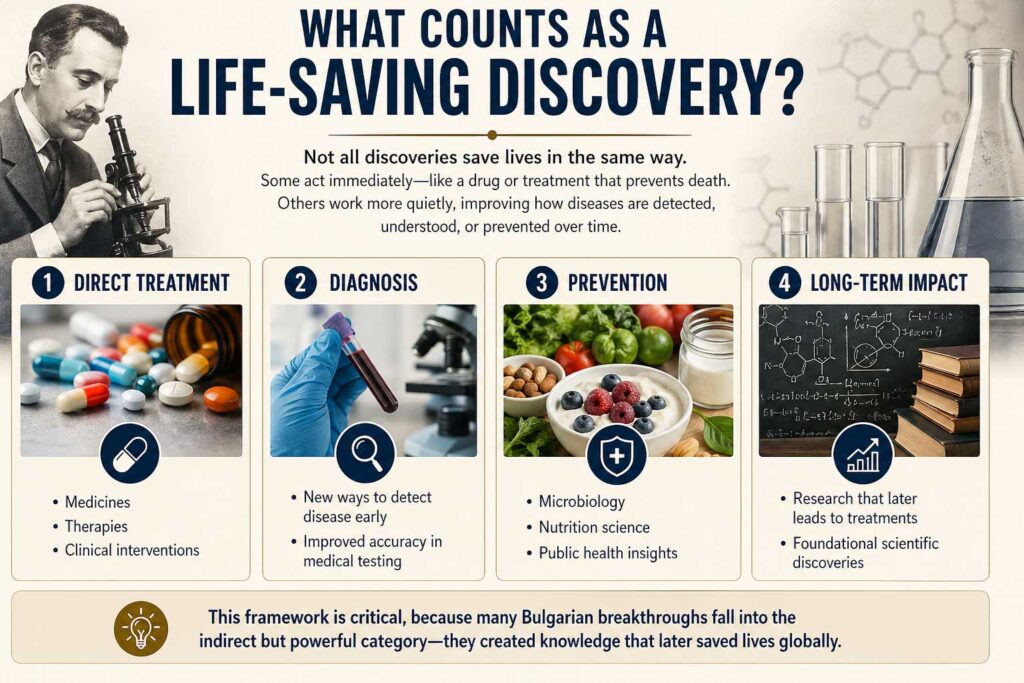
Bulgarian discoveries that saved lives do not all work in the same way. Some have an immediate impact—such as treatments or medical interventions that directly prevent death. Others operate more quietly, improving how diseases are detected, understood, or prevented over time.
In general, life-saving discoveries fall into four categories:
- Direct treatment – medicines, therapies, and clinical interventions
- Diagnosis – earlier detection and more accurate testing
- Prevention – microbiology, nutrition science, and public health insights
- Long-term impact – foundational research that later leads to major medical breakthroughs
This distinction is important, because many Bulgarian discoveries that saved lives belong to the indirect but powerful category—discoveries that built knowledge later used to improve global health.
Affiliate Disclosure: Some links below may be affiliate links. Bulgaropedia may earn a small commission at no extra cost to you.
Recommended Reading & Science Resources
Understanding Bulgarian discoveries that saved lives becomes much easier when you see how these ideas connect to modern science and health. The resources below help break down microbiology, brain function, and medical principles in a practical, easy-to-understand way.
👉 These are especially useful if you want to go beyond history and understand the science behind these life-saving breakthroughs.
| Product | Best For | Why It Fits This Article | Check Price |
|---|---|---|---|
| Gut Health & Probiotics Book | Digestive health | Connects to microbiology discoveries | Check Price |
| Fermentation Science Guide | Food science learners | Supports yogurt research section | Check Price |
| Brain Health Book | Neurology interest | Links to Alzheimer’s discussion | Check Price |
| Human Anatomy Atlas | Medical basics | Supports cardiology section | Check Price |
Why Bulgarian Medical Discoveries Matter
Bulgarian discoveries that saved lives are important not only because of their scientific value, but because of their real-world impact on human health across generations. While Bulgaria is often not seen as a global scientific powerhouse, its contributions to medicine prove that innovation is not limited by geography or size.
Medical discoveries matter when they do one or more of the following: improve diagnosis, enhance treatment, prevent disease, or expand understanding of the human body. Bulgarian scientists have contributed in all of these areas, often under challenging conditions and with limited resources. Their work reflects a strong tradition of scientific curiosity combined with practical application.
What makes these discoveries particularly significant is their long-term influence. Many were not immediately recognized as life-saving at the time they were made. Instead, they became foundational pieces of knowledge that later shaped entire fields such as microbiology, neurology, and cardiology. This delayed impact is common in science, but it often leads to under-recognition of the original contributors.
Another reason Bulgarian medical discoveries matter is their global integration. Today, research connected to Bulgarian scientists is used in hospitals, laboratories, and universities worldwide. From gut health research to neurological treatments, these contributions are embedded in modern healthcare systems.
👉 You can also discover more key figures in Bulgarian Scientists and Inventors You Should Know.
👉 This is why understanding Bulgarian discoveries that saved lives is not just about history—it is about recognizing their ongoing role in improving human life today.
Stamen Grigorov and the Discovery That Helped Shape Microbiology

Stamen Grigorov made one of the earliest and most influential contributions to microbiology through his work on fermented milk.
👉 Want to understand why this bacterium is so powerful? See Lactobacillus Bulgaricus Explained and Why It Matters for Your Health.
In 1905, while studying in Geneva, he identified the specific microorganism responsible for the fermentation of Bulgarian yogurt—later known as Lactobacillus bulgaricus. At the time, microbiology was still a developing field, and scientific understanding of bacteria was limited.
His discovery provided one of the clearest early examples that microorganisms are not only associated with disease, but can also be beneficial and essential to human life.
Grigorov’s work was not simply about identifying a bacterium. It demonstrated that microscopic organisms play a direct role in food transformation, digestion, and overall health—marking a major shift away from the earlier belief that bacteria were primarily harmful.
👉 One of the most important Bulgarian discoveries that saved lives began with this simple observation: that bacteria could support, not just threaten, human health.
How Lactobacillus Bulgaricus Changed Health Science
The identification of Lactobacillus bulgaricus had far-reaching consequences that extend well beyond traditional food preparation.
Today, this bacterium is recognized as part of the human microbiome—the complex ecosystem of microorganisms that live in and on the body. Modern research has shown that the microbiome is closely linked to:
- immune system regulation
- digestion and nutrient absorption
- inflammation control
- even mental and neurological health
👉 Curious how yogurt became one of the healthiest foods in the world? Read Bulgarian Yogurt: History, Science, and Health Benefits.
Grigorov’s discovery helped establish the early understanding that beneficial bacteria are essential for maintaining balance within the body. This insight directly contributed to the development of probiotics, which are now widely used in both preventive and therapeutic medicine.
How This Discovery Helped Save Lives
From a life-saving perspective, this discovery is a perfect example of indirect but powerful medical impact—a defining feature of many Bulgarian discoveries that saved lives.
1. Gut Health and Immunity
A balanced microbiome strengthens the immune system and helps the body resist infections, reducing the risk of illness.
2. Disease Prevention
Beneficial bacteria contribute to:
- improved metabolic health
- protection against harmful pathogens
- better nutrient absorption
These effects lower the long-term risk of chronic disease.
3. Preventive and Nutritional Medicine
Fermented foods like yogurt are now widely recommended as part of a healthy diet. They support:
- digestive health
- immune resilience
- overall wellbeing
This places Grigorov’s work within the field of preventive medicine, which focuses on maintaining health rather than only treating disease.
Fermentation & Yogurt Tools
Grigorov’s discovery is not just history—you can actually experience the science behind it yourself. Fermentation is one of the easiest ways to explore how beneficial bacteria work in real life.
👉 These tools make it simple to understand and apply the same principles that helped shape early microbiology.
| Product | Best For | Why It’s Relevant | Check Price |
|---|---|---|---|
| Yogurt Maker | Homemade yogurt | Direct link to Grigorov’s discovery | Check Price |
| Glass Fermentation Jars | Fermentation | Supports cultured food prep | Check Price |
| Kitchen Thermometer | Accuracy | Ensures proper fermentation | Check Price |
| Probiotic Recipe Book | Beginners | Connects food with science | Check Price |
Dimitar Paskov and the Discovery of Galantamine
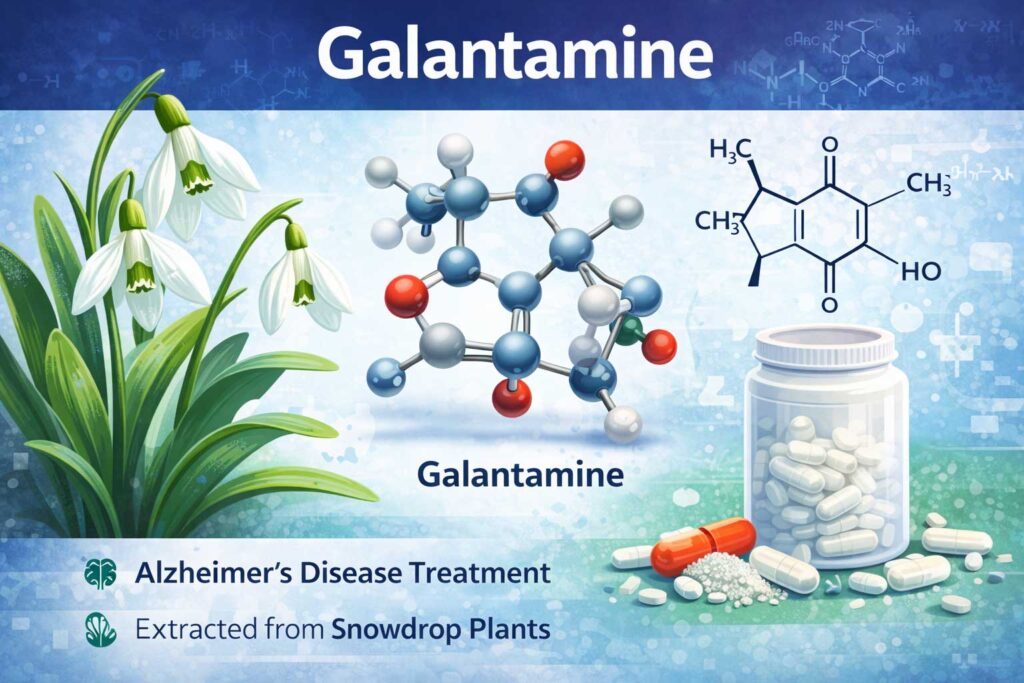
Dimitar Paskov is closely associated with one of the most important Bulgarian contributions to modern pharmaceutical science.
His work is linked to the development of Galantamine, a compound derived from plants such as the snowdrop (Galanthus nivalis). In Bulgaria, this compound was developed into a medication known as Nivalin, which became widely used in neurological research and treatment.
👉 Learn how this discovery became a real medicine → Dimitar Paskov and the Discovery of Nivalin.
At the time of its development, the full significance of galantamine was not yet fully understood. However, Paskov’s work demonstrated how naturally occurring substances could be transformed into compounds capable of influencing brain function.
This marked an important step in the intersection between plant-based chemistry and modern medicine, showing that complex neurological effects could be managed through targeted biochemical mechanisms.
👉 Another major example of Bulgarian discoveries that saved lives comes from this transition—from natural compounds to clinically relevant treatments.
How Galantamine Changed Neurological Science
Galantamine works by affecting neurotransmitters in the brain, particularly acetylcholine, which plays a key role in memory, learning, and cognitive function.
It functions by:
- inhibiting the breakdown of acetylcholine
- enhancing communication between nerve cells
- supporting cognitive processes
This mechanism made galantamine highly valuable in the study of neurodegenerative diseases, especially those involving memory loss and cognitive decline.
Its development helped scientists better understand how brain chemistry influences behavior, memory, and neurological health.
How This Discovery Helped Save Lives
Like many Bulgarian discoveries that saved lives, the impact of galantamine is not immediate in the sense of emergency treatment—but it is profound over time.
1. Slowing Cognitive Decline
Galantamine is used in the treatment of Alzheimer’s disease, where it helps:
- improve memory function
- slow the progression of symptoms
- support communication abilities
This allows patients to maintain independence for longer periods.
👉 Want a deeper look at Bulgaria’s role in brain and medical science? Explore Bulgarian Contributions to Medicine and Health.
2. Improving Quality of Life
Neurodegenerative diseases affect not only patients but also families and caregivers.
By stabilizing cognitive function, galantamine helps:
- reduce the burden on caregivers
- extend the ability to perform daily tasks
- improve overall wellbeing
These effects are critical in long-term healthcare.
3. Advancing Neuroscience and Drug Development
The discovery and development of galantamine contributed to:
- deeper understanding of neurotransmitter systems
- development of additional cognitive-enhancing drugs
- expansion of research in Alzheimer’s and related conditions
It helped establish a model for how biochemical pathways can be targeted to manage complex neurological diseases.
👉 This is another example of how Bulgarian discoveries that saved lives often operate through long-term medical impact—improving survival, extending independence, and shaping future treatments.
Brain & Neuroscience Resources
The discovery of galantamine opened the door to understanding how brain chemistry affects memory and cognitive function. While modern medicine continues to evolve, learning the fundamentals of brain health can provide valuable long-term benefits.
👉 These resources help you better understand how neurological science translates into real-world treatment and prevention.
| Product | Best For | Why It Fits | Check Price |
|---|---|---|---|
| Neuroscience Book | Beginners | Explains brain chemistry | Check Price |
| Alzheimer’s Guide | Caregivers | Practical support | Check Price |
| Memory Improvement Book | Health readers | Preventive angle | Check Price |
| Medical Biography Book | History fans | Discovery stories | Check Price |
Ivan Mitev and the Sixth Heart Sound

Ivan Mitev made a unique and highly specialized contribution to cardiology through his identification of the sixth heart sound, an additional acoustic phenomenon observed during cardiac auscultation.
👉 Learn how Bulgarian doctors contributed to modern diagnostics → Bulgarian Contributions to Medicine and Health.
At the time of his research, the understanding of heart sounds was already well established, with the first and second heart sounds forming the foundation of cardiac diagnosis. However, Mitev’s work expanded this framework by identifying a new, previously unrecognized sound associated with specific cardiac conditions.
This discovery demonstrated that the human heart produces more complex acoustic signals than previously thought, opening new possibilities for diagnostic precision.
👉 Another important example of Bulgarian discoveries that saved lives comes not from treatment, but from improving how diseases are detected.
How the Sixth Heart Sound Advanced Cardiology
The identification of an additional heart sound may appear subtle, but in clinical practice, even small diagnostic improvements can have major consequences.
Heart sounds are one of the most fundamental tools in medicine. They allow physicians to evaluate heart function using a stethoscope, often before more advanced imaging is available.
Mitev’s discovery contributed to:
- a deeper understanding of cardiac physiology
- improved recognition of abnormal heart function
- expanded knowledge of heart sound classification
By refining how doctors interpret what they hear, this discovery enhanced the ability to detect underlying conditions earlier and more accurately.
👉 Explore more breakthroughs beyond medicine → Bulgarian Discoveries That Shaped Global Science.
How This Discovery Helped Save Lives
Within the broader context of Bulgarian discoveries that saved lives, this is a clear example of how diagnostic innovation plays a critical role in medicine.
1. Earlier Detection of Heart Conditions
Recognizing subtle changes in heart sounds allows doctors to:
- identify abnormalities at an earlier stage
- detect conditions before symptoms become severe
- begin treatment sooner
Early diagnosis is one of the most important factors in improving survival rates.
2. Improved Clinical Decision-Making
More accurate diagnostic tools lead to:
- better treatment planning
- reduced risk of misdiagnosis
- more targeted medical interventions
This increases the effectiveness of care and reduces complications.
3. Preventing Severe Cardiac Events
By identifying problems early, physicians can help prevent:
- heart failure
- life-threatening arrhythmias
- sudden cardiac complications
This transforms a subtle diagnostic discovery into a life-saving tool.
👉 This reinforces a key idea: Bulgarian discoveries that saved lives are not always dramatic breakthroughs—sometimes they are precise improvements that help doctors act earlier and more effectively.
👉 You can also discover more key figures in Bulgarian Scientists and Inventors You Should Know.
Cardiology & Heart Health Learning Tools
Cardiology is one of the most critical areas of medicine, and even small diagnostic improvements can make a life-saving difference. Understanding how the heart works gives deeper insight into why discoveries like Mitev’s matter.
👉 These tools and resources help simplify complex heart functions and make medical concepts easier to grasp.
| Product | Best For | Why It Fits | Check Price |
|---|---|---|---|
| Anatomy Atlas | Students | Visual understanding | Check Price |
| Stethoscope | Learners | Hands-on learning | Check Price |
| Cardiology Book | Beginners | Foundation knowledge | Check Price |
| Physiology Guide | General readers | Supports full section | Check Price |
Bulgarian Medical Discoveries Beyond the Famous Names

While many of the most obvious Bulgarian discoveries that saved lives come from medicine, their impact extends far beyond hospitals, laboratories, and clinical treatment.
Some of the most powerful life-saving contributions are indirect—shaping how people live, eat, and maintain long-term health.
Bulgarian research and traditions have influenced areas such as:
- food science and fermentation
- nutrition and longevity patterns
- microbial balance and natural health
- public health observations in rural populations
For example, the global interest in fermented foods and gut health has strong connections to traditional practices observed in Bulgaria. These practices helped inspire modern research into longevity and disease prevention.
👉 See how Bulgaria influenced multiple industries → Bulgarian Achievements Across Science, Technology, and Culture.
In addition, Bulgarian contributions to scientific observation—particularly in smaller, community-based environments—have provided valuable insights into how lifestyle, diet, and environment influence health outcomes.
👉 This broader perspective highlights an important truth: Bulgarian discoveries that saved lives are not limited to direct treatment—they also shape the conditions that allow people to stay healthy in the first place.
Why Bulgarian Scientists Are Often Overlooked
Despite their contributions, many Bulgarian scientists remain relatively unknown outside academic or regional circles.
This lack of recognition is not due to limited impact, but rather a combination of historical, structural, and systemic factors that shaped how their work was shared and remembered.
Limited Global Visibility
Bulgaria has historically had less influence in global scientific communication compared to larger countries. As a result, many discoveries were published or circulated without widespread international promotion, limiting their global reach at the time.
Integration Into Global Scientific Systems
Many Bulgarian discoveries became part of broader international research frameworks. Once integrated, they were often no longer directly associated with their original source.
This is especially common in fields such as microbiology, pharmacology, and medical science, where discoveries are rapidly absorbed into global knowledge systems.
Political and Historical Context
During much of the 20th century, political and economic conditions limited collaboration between Bulgarian scientists and Western institutions. This reduced opportunities for international recognition and delayed the global visibility of their work.
Focus on Function Over Recognition
Many Bulgarian researchers prioritized practical application over personal recognition. Their work was often directed toward solving real-world problems rather than building international profiles, which contributed to lower visibility despite high impact.
Over time, this combination of factors has led to a situation where many Bulgarian discoveries are widely used but not widely attributed. As these breakthroughs became embedded in modern science and medicine, their origins were often overshadowed by larger international research narratives.
At the same time, this reflects a broader reality in global science: major innovations are not limited to large or well-funded countries. Bulgaria’s contributions demonstrate that meaningful scientific progress can emerge even in environments with limited resources, complex conditions, and reduced visibility.
👉 Understanding this context helps explain why Bulgarian discoveries that saved lives continue to influence modern medicine worldwide—while remaining less widely recognized.
👉 Discover why Bulgaria’s impact goes far beyond what most people realize → Why Bulgaria Matters to the World.
The Global Legacy of Bulgarian Discoveries That Saved Lives
Today, the legacy of these discoveries is embedded in modern science, medicine, and everyday life.
From microbiology and nutrition to neurology and cardiology, Bulgarian contributions continue to influence how the world approaches health and disease.
Bulgarian discoveries that saved lives continue to shape modern medicine, often in ways that are invisible to everyday life but essential to global health systems.
These discoveries are now part of:
- global healthcare systems
- pharmaceutical treatments
- medical education and training
- preventive health strategies
- nutrition and dietary guidelines
What makes this legacy particularly powerful is its continuity. These discoveries are not historical artifacts—they are active components of modern life.
👉 Want to explore even more global innovations? See Bulgarian Discoveries That Changed the World.
Every time someone consumes probiotic-rich food, benefits from neurological treatment, or receives early diagnosis of a condition, they are indirectly benefiting from knowledge shaped in part by Bulgarian science.
👉 The true significance of Bulgarian discoveries that saved lives lies in their ability to cross borders, generations, and disciplines—improving lives far beyond their place of origin.
Supplements & Preventive Health
Many of the ideas behind Bulgarian discoveries that saved lives connect to prevention and long-term health. Supporting your body through nutrition, gut health, and cognitive care is now a key part of modern wellness.
👉 These products are commonly used to support overall health and align with the principles discussed throughout this article.
Here are some recommended options:
| Product | Best For | Why It Fits This Article | Check Price |
|---|---|---|---|
| Probiotic Supplement (Multi-Strain) | Gut health | Supports microbiome balance linked to Lactobacillus research | Check Price |
| Omega-3 Fish Oil | Brain health | Supports memory and cognitive function | Check Price |
| Magnesium Glycinate | Nervous system | Helps with brain and muscle function | Check Price |
| Vitamin D3 + K2 | Immune support | Supports overall health and disease prevention | Check Price |
| Brain Support Supplement (Nootropic Blend) | Cognitive function | Aligns with neurological research like galantamine | Check Price |
FAQs About Bulgarian Discoveries That Saved Lives
What are Bulgarian discoveries that saved lives?
Bulgarian discoveries that saved lives are scientific and medical breakthroughs developed by Bulgarian researchers that improved treatment, diagnosis, prevention, and long-term health outcomes worldwide.
Who are the most important Bulgarian scientists in medicine?
Some of the most important figures include Stamen Grigorov, Dimitar Paskov, and Ivan Mitev.
Did Bulgaria contribute to Alzheimer’s treatment?
Yes. Research connected to Galantamine plays an important role in modern Alzheimer’s therapy.
Why is Lactobacillus bulgaricus important?
Lactobacillus bulgaricus is essential for yogurt fermentation and helped shape modern research into gut health and the human microbiome.
Are Bulgarian discoveries still used today?
Yes. Many Bulgarian discoveries are integrated into modern medicine, nutrition, and scientific research worldwide.
Why are these discoveries not widely known?
Because they often originated in a smaller country and were later absorbed into global scientific systems without strong attribution.
How did Bulgarian discoveries save lives indirectly?
Many contributions improved prevention, diagnosis, and long-term health rather than acting as immediate cures.
Conclusion: A Legacy That Quietly Saved Lives
Bulgarian discoveries that saved lives prove that global progress is built on contributions from many nations—large and small.
👉 Keep exploring Bulgaria’s innovation story → Bulgarian Contributions to Modern Technology and Innovation.
Together, these Bulgarian discoveries that saved lives show that global progress is not defined by size, but by impact. From microbiology and nutrition to neurology and cardiology, Bulgarian scientists have helped shape knowledge that continues to protect and improve human life worldwide. Their work remains deeply embedded in modern medicine—often unseen, but essential.
References
- “The Museum of Sour Milk: History Lessons on Bulgarian Yogurt.” Not Even Past. https://notevenpast.org/the-museum-of-sour-milk-history-lessons-on-bulgarian-yogurt/
- “Lactobacillus delbrueckii subsp. bulgaricus.” Wikipedia. https://en.wikipedia.org/wiki/Lactobacillus_delbrueckii_subsp._bulgaricus
- “Galantamine.” NCBI Bookshelf. https://www.ncbi.nlm.nih.gov/books/NBK547959/
- “Galantamine Hydrobromide Label.” U.S. Food and Drug Administration. https://www.accessdata.fda.gov/drugsatfda_docs/label/2017/021169s028lbl.pdf
- “The Story of Galantamine (Nivalin).” National Library of Medicine. https://catalog.nlm.nih.gov/discovery/fulldisplay?docid=alma9917175523406676
- “The Sixth Heart Sound.” PubMed. https://pubmed.ncbi.nlm.nih.gov/404983/
- “The Discoverer of the Sixth Heart Tone: The First Great Discovery of Bulgarian Medicine.” Medical University Sofia. https://mu-sofia.bg/en/the-discoverer-of-the-sixth-heart-tone-the-first-great-discovery-of-bulgarian-medicine/
- “Probiotics and Human Health.” National Institutes of Health / PMC. https://www.ncbi.nlm.nih.gov/pmc/articles/PMC5622781/
- “The Human Microbiome and Health.” National Institutes of Health / PMC. https://www.ncbi.nlm.nih.gov/pmc/articles/PMC3417565/
- “Alzheimer’s Disease Fact Sheet.” National Institute on Aging. https://www.nia.nih.gov/health/alzheimers-disease-fact-sheet
- “Yogurt.” Encyclopaedia Britannica. https://www.britannica.com/topic/yogurt
- “Cardiac Auscultation.” NCBI Bookshelf. https://www.ncbi.nlm.nih.gov/books/NBK470226/