

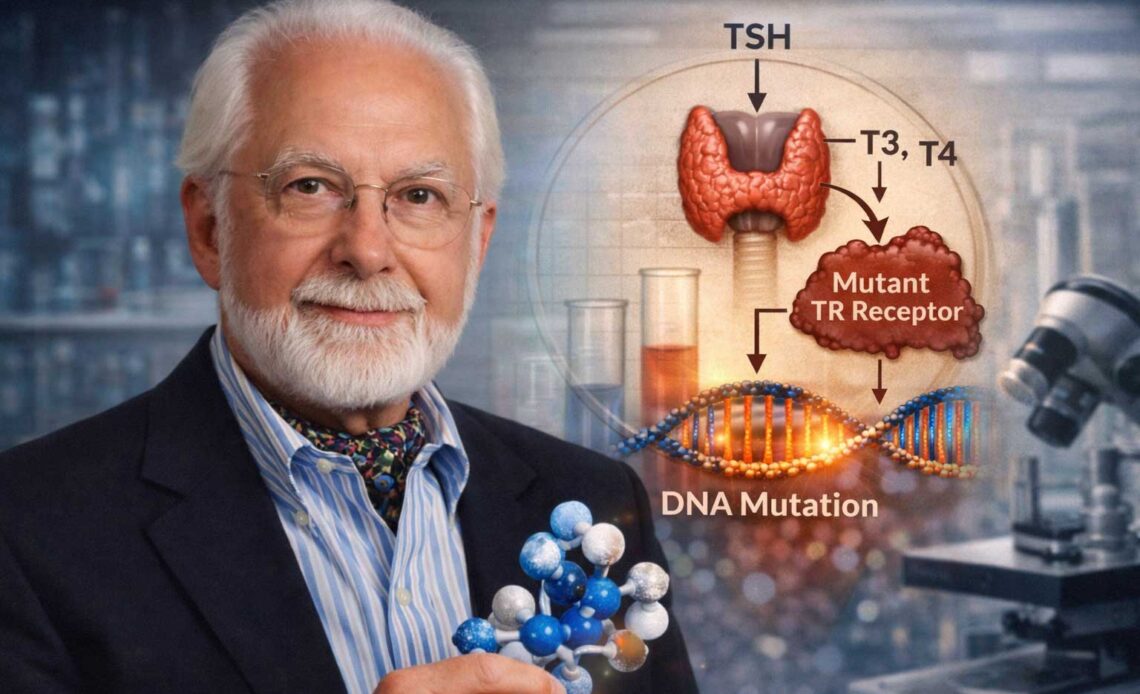

Samuel Refetoff is a Bulgarian-born physician-scientist whose groundbreaking discoveries reshaped modern endocrinology. Best known for identifying resistance to thyroid hormone (RTH), widely known as Refetoff syndrome—he helped redefine how scientists and clinicians understand hormone action, genetic disease, and thyroid physiology.
Born on June 11, 1937, in Ruse, Refetoff’s journey from Bulgaria to Western Europe and North America reflects both intellectual ambition and global scientific influence. His work sits at the intersection of clinical medicine, molecular genetics, and endocrine physiology, making him one of the most influential thyroid researchers of the 20th and 21st centuries.
His discoveries continue to influence modern endocrinology, clinical diagnostics, and genetic medicine worldwide.
👉 To better understand the condition discovered by Refetoff, see our full guide on Thyroid Hormone Resistance (Refetoff Syndrome).Early life and international education
Samuel Refetoff’s early life began in Bulgaria, but his academic path quickly became international. After leaving Bulgaria, he completed his secondary education in Antwerp, attending a French-speaking high school. This multilingual foundation would later support his global scientific collaborations.
He then moved to Canada, where he pursued higher education at the University of Montreal, earning his undergraduate degree in 1959. Shortly afterward, he enrolled in the prestigious McGill University Faculty of Medicine, where he obtained his medical degree in 1963.
This diverse training exposed him to both clinical complexity and research innovation—an ideal combination for a future medical pioneer.
Samuel Refetoff’s early journey is not just a story of geographic movement, but one of intellectual formation shaped by multiple cultures and academic traditions. Growing up in Bulgaria during a period of political and scientific transformation, he was exposed early to a disciplined educational system that emphasized strong foundations in science and mathematics. This early exposure played a critical role in shaping his analytical thinking and problem-solving abilities, traits that would later define his scientific career.
His transition to Belgium marked a significant turning point. Immersing himself in a French-speaking academic environment required both adaptability and resilience. This experience not only strengthened his linguistic abilities but also exposed him to Western European scientific thinking, which emphasized inquiry, experimentation, and critical reasoning. These formative years helped cultivate a global perspective that would later allow him to collaborate across borders and disciplines.
Moving to Canada for higher education further expanded his intellectual horizons. At the University of Montreal and later at McGill University, Refetoff entered some of the most rigorous academic environments in North America. These institutions were at the forefront of medical research, providing him access to cutting-edge knowledge and mentorship. His education during this time laid the groundwork for his dual identity as both a clinician and a researcher, allowing him to bridge the gap between patient care and scientific discovery.
The discovery that changed endocrinology
Refetoff syndrome (Resistance to thyroid hormone)
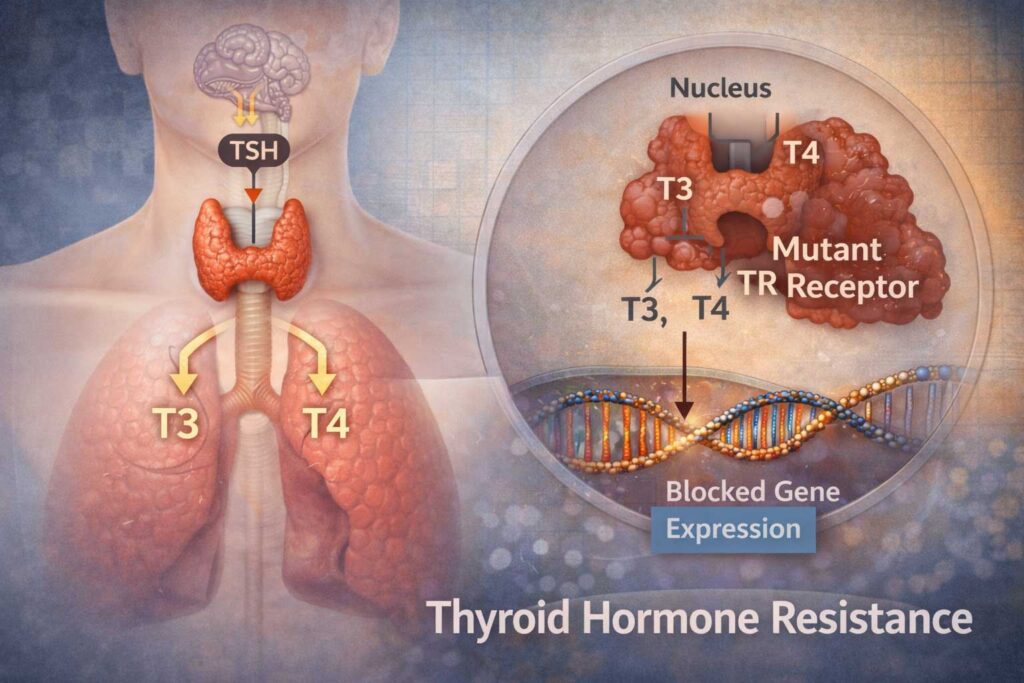
In 1967, Refetoff published a landmark study describing a puzzling condition: patients had high levels of thyroid hormones, yet their bodies did not respond normally.
This condition became known as:
- Resistance to thyroid hormone (RTH)
- Refetoff syndrome
What makes this discovery revolutionary?
Before Refetoff’s work, thyroid disease was understood in simple terms:
- High hormone → hyperthyroidism
- Low hormone → hypothyroidism
Refetoff proved something entirely new:
👉 The body can have normal or high hormone levels but still fail to respond properly
This happens because of defects in hormone receptors, not hormone production.
The discovery of resistance to thyroid hormone did not occur in isolation—it emerged from careful observation, critical thinking, and a willingness to question established medical assumptions. At the time, endocrinology operated under relatively straightforward models of hormone regulation. Physicians expected hormone levels to directly correlate with clinical symptoms, and deviations from this pattern were often misunderstood or misdiagnosed.
Refetoff’s identification of a condition where elevated thyroid hormone levels did not produce expected physiological effects challenged this paradigm. It introduced a new layer of complexity to endocrine physiology: the concept that hormone action depends not only on hormone concentration but also on cellular responsiveness. This insight fundamentally changed how endocrine disorders were conceptualized and diagnosed.
The implications of this discovery extended far beyond thyroid disease. It opened the door to understanding other forms of hormone resistance, influencing research in insulin resistance, steroid hormone disorders, and receptor signaling pathways. By demonstrating that the problem could lie at the level of the receptor rather than hormone production, Refetoff helped redefine the entire field of endocrinology.
Key physiological insight
In a healthy system:
- Thyroid hormones (T3, T4) regulate metabolism
- The pituitary gland releases TSH based on feedback
In Refetoff syndrome:
- Hormones are elevated
- TSH is not suppressed properly
- Tissues respond inconsistently
👉 This creates a mixed clinical picture—some symptoms of excess, some of deficiency.
Understanding the physiological mechanisms behind thyroid hormone resistance requires a deeper look at how hormones interact with target tissues. In a normal system, thyroid hormones bind to nuclear receptors within cells, regulating gene expression and influencing metabolism, growth, and development. This process is tightly controlled through feedback loops involving the hypothalamus and pituitary gland.
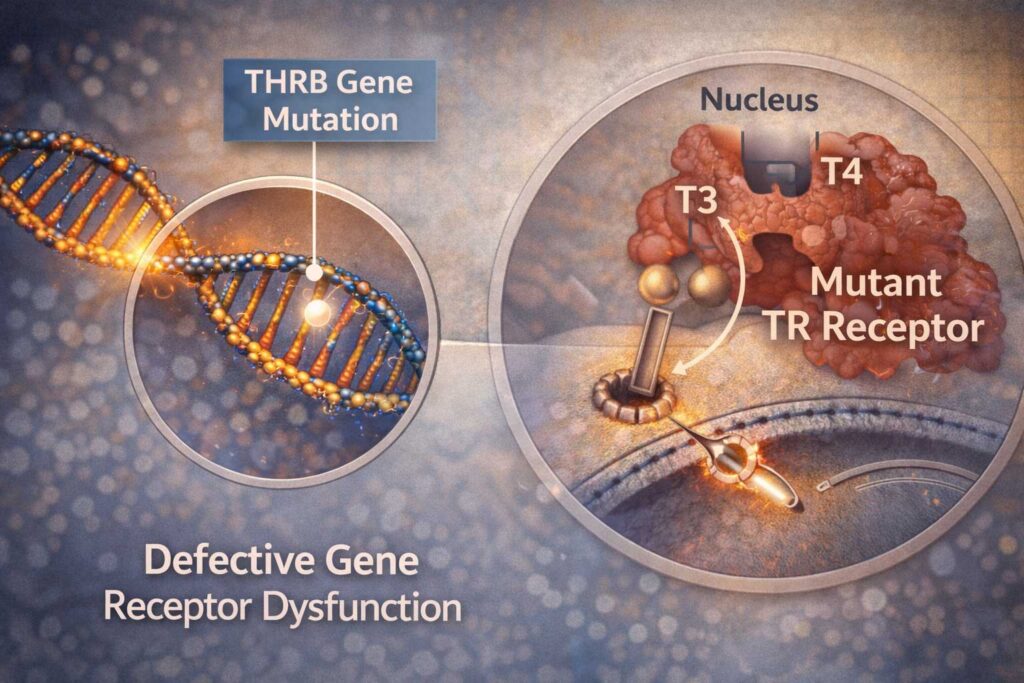
In patients with Refetoff syndrome, these mechanisms are disrupted at the receptor level. Mutations in the thyroid hormone receptor reduce the cell’s ability to respond to circulating hormones. As a result, the body attempts to compensate by producing more hormones, leading to elevated levels in the bloodstream. However, because the receptors are impaired, the expected physiological effects are not fully realized.
This creates a unique and often confusing clinical presentation. Some tissues may retain partial sensitivity, while others are more resistant, leading to a mix of symptoms that can resemble both hyperthyroidism and hypothyroidism. This variability makes diagnosis challenging and highlights the importance of understanding underlying molecular mechanisms rather than relying solely on laboratory values.
Molecular breakthrough (1989–1992)
Refetoff didn’t stop at clinical observation.
By the late 1980s and early 1990s, his research helped identify the genetic cause:
- Mutations in the thyroid hormone receptor beta (THRB) gene
These mutations prevent cells from responding properly to thyroid hormones.
The identification of mutations in the THRB gene marked a major milestone in the transition from clinical observation to molecular understanding. This breakthrough demonstrated that resistance to thyroid hormone was not merely a functional anomaly but a genetically defined condition with a clear biological basis.
By linking specific genetic mutations to clinical symptoms, Refetoff and his collaborators helped establish one of the earliest models of a receptor-based genetic disease. This work provided a framework for studying other inherited disorders involving nuclear receptors and transcription factors, influencing research across multiple fields of medicine.
The discovery also had practical implications for patient care. Genetic testing became an important tool for confirming diagnosis, identifying affected family members, and guiding management strategies. It allowed for more precise classification of thyroid disorders and reduced the likelihood of inappropriate treatments, such as unnecessary thyroid suppression therapy.
Why this matters
This discovery:
- Linked genetics → receptors → disease
- Helped define receptor resistance syndromes
- Influenced research across endocrinology, oncology, and molecular biology
Today, over 100+ mutations of the THRB gene have been documented.
Timeline of Key Discoveries
Understanding Samuel Refetoff’s impact is easier when viewed through a timeline of key milestones:
- 1937 – Born in Ruse, Bulgaria
- 1959 – Undergraduate degree, University of Montreal
- 1963 – Medical degree, McGill University
- 1967 – First description of resistance to thyroid hormone
- 1989–1992 – Identification of THRB gene mutations
- 2000s+ – Continued research into thyroid metabolism and genetics
This timeline highlights the progression from clinical observation to molecular discovery, demonstrating how Refetoff’s work evolved alongside advances in medical science.
Expanding the field: Beyond one syndrome
Refetoff’s contributions go far beyond a single discovery.
1. Resistance to thyrotropin (RTSH)
He identified another condition where tissues resist TSH (thyroid-stimulating hormone).
2. SECISBP2 gene mutations
He helped uncover defects in thyroid hormone metabolism linked to the SECISBP2 gene, which affects:
- Selenium metabolism
- Hormone activation
- Enzyme function
This discovery connected endocrinology with nutritional biochemistry and molecular genetics.
3. Thyroid transport and binding disorders
His work also clarified:
- Thyroxine-binding globulin abnormalities
- Familial dysalbuminemic hyperthyroxinemia
👉 These conditions affect how hormones travel in the bloodstream—not just how they’re produced.
Refetoff’s broader body of work demonstrates a consistent theme: exploring the many layers of hormone regulation beyond simple production and secretion. His research into resistance to thyrotropin (RTSH) further expanded the concept of hormone resistance, showing that similar mechanisms could affect different parts of the endocrine system.
The discovery of SECISBP2-related disorders added another dimension by connecting thyroid hormone metabolism to selenium biology. This work highlighted the importance of micronutrients in endocrine function and revealed how defects in seemingly unrelated pathways could have profound hormonal consequences.
Additionally, his investigations into thyroid hormone transport and binding proteins emphasized the complexity of hormone distribution within the body. These studies showed that abnormalities in transport proteins could alter hormone availability, leading to misleading laboratory results and diagnostic challenges. Together, these contributions created a comprehensive framework for understanding thyroid disorders at multiple biological levels.
Comparison with Other Thyroid Disorders
Refetoff syndrome differs significantly from more common thyroid disorders such as hypothyroidism and hyperthyroidism. In typical hypothyroidism, low hormone levels lead to slowed metabolism, fatigue, and weight gain. In hyperthyroidism, excessive hormone levels result in increased metabolism, weight loss, and nervousness.
In contrast, resistance to thyroid hormone creates a mixed picture. Despite elevated hormone levels, the body’s response is impaired due to receptor dysfunction. This leads to a combination of symptoms that may not fit neatly into traditional diagnostic categories.
This distinction is crucial for proper diagnosis and treatment. Misinterpreting the condition as hyperthyroidism, for example, could result in unnecessary treatments that worsen the patient’s condition rather than improve it.
Career at the University of Chicago

Refetoff spent the majority of his career at the University of Chicago, where he became:
- Professor of Medicine
- Professor of Pediatrics
- Professor of Genetics
He also served as:
- Director of the Endocrinology Laboratory
- Leader in genetic thyroid disease research
Clinical Presentation and Diagnosis
Thyroid hormone resistance presents a unique diagnostic challenge due to its highly variable symptoms and biochemical profile. Patients may exhibit signs typically associated with both hyperthyroidism and hypothyroidism, depending on which tissues retain sensitivity to thyroid hormones. Common clinical features include goiter, mild tachycardia, attention difficulties, and in some cases developmental or growth abnormalities.
Laboratory findings are often the key to diagnosis. Patients typically show elevated levels of circulating thyroid hormones (T3 and T4) alongside a thyroid-stimulating hormone (TSH) level that is not suppressed as expected. This pattern can initially be confusing and may lead to misdiagnosis if clinicians are unfamiliar with the condition.
Genetic testing has become an essential tool in confirming resistance to thyroid hormone. Identifying mutations in the THRB gene allows for accurate diagnosis, helps distinguish the condition from other thyroid disorders, and enables screening of family members who may also be affected.
Treatment and Management
Management of thyroid hormone resistance varies depending on the severity of symptoms and the specific tissues affected. In many cases, patients do not require aggressive treatment, particularly if they are clinically euthyroid despite abnormal laboratory values. The goal is often to avoid unnecessary interventions that could disrupt the body’s compensatory mechanisms.
In symptomatic cases, treatment strategies may include beta-blockers to manage cardiovascular symptoms such as tachycardia, or careful use of thyroid hormone analogs in specific situations. Because of the complexity of the condition, treatment plans must be individualized and closely monitored.
One of the most important aspects of management is education—both for patients and healthcare providers. Understanding the nature of the disorder helps prevent overtreatment and ensures that patients receive appropriate care tailored to their unique physiological profile.
Clinical impact

At Chicago, he helped build one of the world’s leading centers for inherited thyroid disorders, attracting patients from across the globe.
At the University of Chicago, Refetoff established himself not only as a leading researcher but also as a mentor and institution builder. His laboratory became a hub for studying rare endocrine disorders, attracting researchers, clinicians, and patients from around the world. This environment fostered collaboration and innovation, enabling breakthroughs that would not have been possible in isolation.
His role as a professor across multiple disciplines—medicine, pediatrics, and genetics—reflects the interdisciplinary nature of his work. By bridging these fields, he helped integrate genetic insights into clinical practice, contributing to the development of modern precision medicine.
Beyond his research, Refetoff played a key role in training future generations of endocrinologists. Many of his students and collaborators have gone on to become leaders in the field, extending his influence far beyond his own work. This legacy of mentorship is a critical part of his overall impact on medicine.
Scientific output and recognition
Samuel Refetoff’s influence is reflected in his extraordinary body of work:
- 500+ scientific publications
- Decades of NIH-funded research
- Editorial roles in multiple journals
Major honors
- NIH MERIT Award
- Fred Conrad Koch Award (Endocrine Society)
- Multiple honorary doctorates
His work is now cited globally in:
- Medical textbooks
- Clinical guidelines
- Genetic research
The sheer volume of Refetoff’s scientific output reflects decades of sustained innovation and dedication. His publications cover a wide range of topics within endocrinology, from molecular mechanisms to clinical case studies, providing a comprehensive body of knowledge that continues to guide research and practice.
Recognition from organizations such as the National Institutes of Health and the Endocrine Society underscores the significance of his contributions. Awards like the NIH MERIT Award are reserved for researchers who demonstrate exceptional productivity and impact, highlighting his role as a leader in the field.
His work’s influence extends beyond academic recognition. It has directly improved patient care by refining diagnostic criteria, guiding treatment decisions, and informing clinical guidelines. This combination of scientific excellence and real-world impact is a hallmark of truly transformative research.
Why Samuel Refetoff matters today
1. He changed how doctors diagnose thyroid disease
Before Refetoff:
- Abnormal labs = misdiagnosis risk
After Refetoff:
- Doctors consider receptor resistance
2. He helped launch modern endocrine genetics
His work bridged:
- Clinical medicine
- Molecular biology
- Genetic inheritance
3. He proved rare diseases unlock big discoveries
Refetoff syndrome is rare—but it revealed:
👉 Fundamental truths about how hormones work in every human body
Samuel Refetoff’s work has had a lasting impact on both clinical practice and biomedical research. His discovery of hormone resistance has influenced how physicians interpret laboratory results, particularly in cases where symptoms do not match expected hormone levels.
In research, his contributions have helped establish the importance of receptor biology and genetic mutations in disease. These concepts are now central to many areas of medicine, including oncology, endocrinology, and pharmacology.
Perhaps most importantly, his work has reinforced the idea that rare diseases can provide critical insights into fundamental biological processes. By studying these conditions, scientists can uncover mechanisms that apply broadly across human physiology.
In today’s era of personalized medicine, Refetoff’s work is more relevant than ever. His research laid the foundation for understanding how genetic variation influences disease, a concept that is central to modern healthcare. By showing that individual differences at the molecular level can significantly affect treatment outcomes, he helped pave the way for more tailored medical approaches.
His discoveries also highlight the importance of rare diseases in advancing scientific knowledge. Conditions like Refetoff syndrome may affect a small number of patients, but they provide critical insights into fundamental biological processes that apply to everyone.
Furthermore, his work continues to influence ongoing research into hormone resistance, receptor signaling, and genetic disorders. As new technologies emerge, such as advanced genomic sequencing, the principles he established remain essential for interpreting complex data and developing new therapies.
👉 Refetoff is part of a larger group of pioneers featured in our guide on Bulgarian Scientists Who Changed Medicine.
Bulgarian legacy in global science
Samuel Refetoff stands among the most important Bulgarian-born scientists in modern medicine.
Like many figures featured in Bulgaropedia:
- Born in Bulgaria
- Educated internationally
- Impact felt globally
His journey reflects a broader pattern of Bulgarian intellectual contribution across science, medicine, and innovation.
Samuel Refetoff’s achievements are part of a broader narrative of Bulgarian contributions to global science. Despite limited resources, Bulgaria has produced numerous scientists who have made significant impacts in their respective fields. This pattern reflects a strong emphasis on education, critical thinking, and scientific inquiry within the country’s academic tradition.
Similar to figures like Dimitar Paskov and Galantamine Discovery, Refetoff’s work has had a lasting global medical impact.
Many Bulgarian scientists, like Refetoff, have pursued careers abroad, contributing to international research while maintaining a connection to their origins. This global mobility has allowed them to access advanced research facilities and collaborate with leading institutions, amplifying their impact.
By examining these contributions collectively, it becomes clear that Bulgaria’s influence extends far beyond its geographic size. The achievements of scientists like Refetoff demonstrate how talent, dedication, and intellectual curiosity can transcend borders and shape the future of science and medicine.
👉 Explore more breakthroughs in our full article on Bulgarian Contributions to Global Science.
Fast facts
- Born: June 11, 1937
- Birthplace: Ruse
- Field: Endocrinology, genetics
- Famous for: Refetoff syndrome (RTH)
- Institution: University of Chicago
- Publications: 500+
👉 Discover more breakthroughs in healthcare and science in our guide to Medical Innovations from Bulgaria.
Legacy and Scientific Influence
Samuel Refetoff’s legacy extends far beyond his own discoveries. His work has influenced generations of endocrinologists, researchers, and clinicians who continue to build upon the foundations he established. By identifying the concept of hormone resistance, he opened entirely new avenues of research that continue to evolve today.
His contributions are now deeply embedded in medical education, shaping how students and professionals understand endocrine physiology. Concepts that were once revolutionary—such as receptor-level dysfunction—are now standard components of medical training, largely due to his pioneering work.
Perhaps most importantly, Refetoff’s career demonstrates the power of combining clinical observation with scientific curiosity. His ability to recognize patterns, question assumptions, and pursue deeper explanations has left a lasting imprint on medicine and continues to inspire future generations of scientists worldwide.
Explore more from Bulgaropedia
- Thyroid Hormone Resistance (Refetoff Syndrome)
- Bulgarian Scientists Who Changed Medicine
- Dimitar Paskov and Galantamine Discovery
- Bulgarian Contributions to Global Science
- Medical Innovations from Bulgaria
FAQ About Samuel Refetoff
What is Refetoff syndrome?
Refetoff syndrome is a genetic disorder where the body is resistant to thyroid hormone, causing elevated hormone levels but reduced tissue response.
Is resistance to thyroid hormone common?
No. It is considered a rare genetic disorder, though improved testing has identified more cases.
What causes RTH?
Most cases are caused by mutations in the THRB gene, affecting hormone receptors.
Can it be treated?
Treatment depends on symptoms. Some patients require no treatment, while others need careful hormone management.
Why is this discovery important?
It changed how doctors understand hormone disorders—from simple hormone levels to cellular response mechanisms.
Can you have high thyroid hormones but not be hyperthyroid?
Yes. In conditions like Refetoff syndrome, hormone levels may be elevated, but the body’s tissues do not respond normally, preventing typical hyperthyroid symptoms.
Is Refetoff syndrome inherited?
Yes. It is typically inherited in an autosomal dominant pattern, meaning a mutation in one copy of the gene can cause the condition.
How is it different from thyroid disease?
Traditional thyroid diseases involve hormone production issues, while Refetoff syndrome involves hormone resistance at the cellular level.
How rare is thyroid hormone resistance?
It is considered a rare disorder, but increased awareness and genetic testing have led to more diagnoses in recent years.
Who discovered thyroid hormone resistance?
The condition was first described by Samuel Refetoff in 1967, marking a major breakthrough in endocrinology.
References
- Chappelle M. Samuel Refetoff, MD. The Endocrine Society Oral History Collection, The Clark Sawin Library, 2011 — https://www.endocrine.org/-/media/endocrine/files/community/sawin/samuelrefetoff_9-2011.pdf
- Refetoff S, DeWind LT, DeGroot LJ. Familial syndrome combining deaf-mutism, stippled epiphyses, goiter and abnormally high PBI: possible target organ refractoriness to thyroid hormone. J Clin Endocrinol Metab. 1967;27(2):279-294. [PMID 4163616] [Refetoff Syndrome] — https://pubmed.ncbi.nlm.nih.gov/4163616/
- Refetoff Syndrome (1967) – syndrome of thyroid hormone resistance (TRH) — https://pubmed.ncbi.nlm.nih.gov/4163616/
- Samuel Refetoff’s Lab — https://labs.uchicago.edu/refetoff/
- University of Chicago Medicine — https://www.uchicagomedicine.org/find-a-physician/physician/samuel-refetoff
- NCBI Bookshelf – Thyroid Hormone Resistance — https://www.ncbi.nlm.nih.gov/books/NBK279066/
- PubMed – THRB mutations — https://pubmed.ncbi.nlm.nih.gov/2510172/
- PubMed – SECISBP2 research — https://pubmed.ncbi.nlm.nih.gov/16228000/